Selecting the best AC / DC power adapters for your B2B enterprise requires matching electrical specifications, safety certifications, and mechanical requirements to your hardware. Imagine launching a new, high-performance networking device or smart office system, only to face immediate complaints from your installation teams. Your power supply overheats, drops voltage under load, and suddenly shuts down during peak operational hours. This operational failure causes costly downtime, damages your hardware, and frustrates your valuable clients. To prevent these catastrophic failures, you need a high-quality, commercial-grade ac dc power adapter that delivers stable current, runs cool, and carries the required international safety certifications.
Why use a specialized ac dc power adapter?
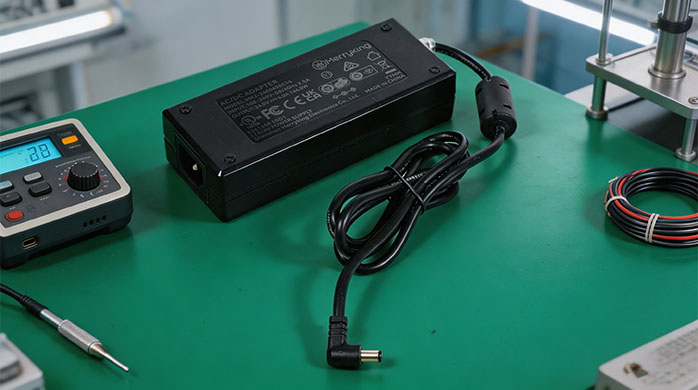
You should use a specialized ac dc power adapter because standard consumer-grade power units cannot handle continuous, high-duty cycles without degrading. These commercial-grade units are engineered with high-temperature internal components that maintain structural integrity and voltage precision during non-stop operation. If you rely on cheap, generic alternatives, your critical hardware will suffer from unexpected power fluctuations. Investing in specialized engineering pays off by protecting your valuable infrastructure from premature wear.
Furthermore, professional B2B installations demand advanced filtering to keep electromagnetic interference from disrupting sensitive data lines. Generic adapters often lack proper shielding, leading to high-frequency noise bleeding into your signal paths. When you deploy a custom power solution, you ensure that both electrical noise and heat dissipation remain strictly controlled. This results in cleaner signal transmission and vastly improved hardware longevity across your entire enterprise.
What are the risks of generic power units?
Using uncertified, mass-market power adapters in your enterprise environment is a recipe for operational disaster. These off-the-shelf components lack the robust capacitors and safety margins required to sustain continuous commercial use. Think about it:
- Catastrophic Thermal Runaway: Low-grade plastic enclosures melt under continuous thermal stress, posing severe fire hazards.
- Unfiltered Output Noise: Inadequate electromagnetic interference (EMI) filtering disrupts adjacent sensitive telecommunications lines.
- Premature Lifespan Decay: Poor component selection causes the unit to fail in less than a year of continuous use.
When generic units fail, they frequently pass high-voltage surges directly to your connected equipment. This can destroy expensive central processing units and mainboards instantly. By prioritizing certified commercial power components, you easily avoid these expensive, unscheduled equipment replacements.
How does application-specific design protect hardware?
Designing an application-specific power converter matches the exact electrical load profile and environmental demands of your device. This specialized configuration prevents sudden voltage drops and high-temperature hazards from affecting your motherboard. Here is why:
- Tailored Voltage Stability: The adapter maintains precise voltage regulation even during sudden load spikes.
- Advanced Materials: High-quality silicone potting and internal shielding block harmful heat buildup.
- Heavy-Duty Strain Relief: Reinforced cabling prevents cord fraying at crucial points.
These custom engineering steps protect your hardware investment from early wear and tear. You get peace of mind knowing that every component is optimized for performance. Selecting the right design prevents unexpected voltage fluctuations.
| Feature / Metric | Specialized Power Adapters | Generic Retail Adapters | |
|---|---|---|---|
| Component Grade | Industrial (A-Grade) | Consumer (B/C-Grade) | |
| MTBF Rating | > 100,000 Hours | < 20,000 Hours | |
| EMI Shielding | Advanced Metal/Shielded | Minimal/None | |
| Warranty Support | 2 – 5 Years B2B Warranty | 30 – 90 Days Retail |
Analyzing this comparison table shows that specialized adapters dramatically outlast generic retail units across every operational metric.
Key Takeaway: Choosing specialized power hardware shields your business from catastrophic downtime and minimizes your total cost of ownership.
How does an ac dc power adapter regulate current?
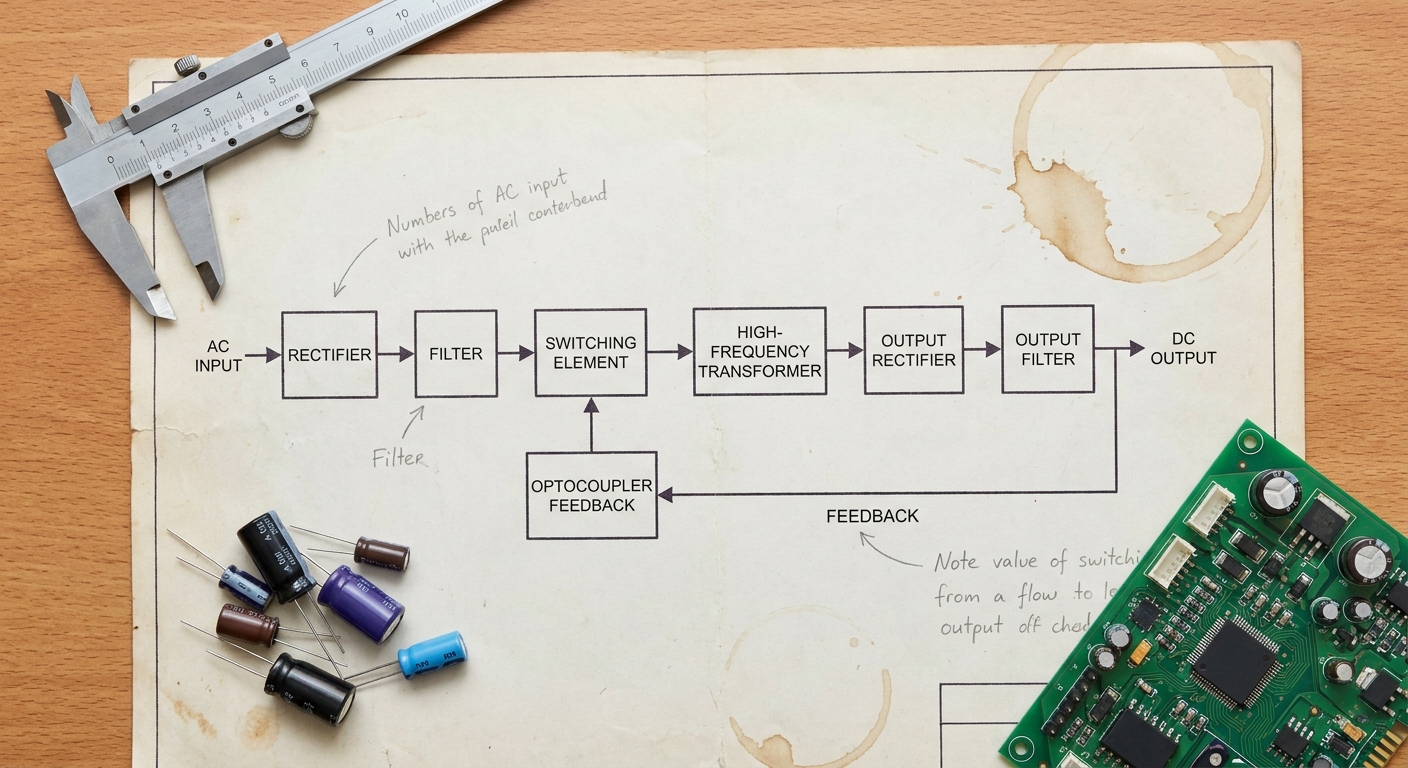
An industrial ac dc power adapter regulates current by utilizing high-frequency switching topologies that continuously monitor and adjust the output voltage. This active regulation ensures your devices receive a steady flow of direct current regardless of any fluctuations in the incoming AC grid. By transforming high-voltage AC input into low-voltage DC output through rapid pulse-width modulation, these systems maintain extreme stability. This level of precise regulation prevents delicate microelectronics from experiencing damaging power surges.
Unlike older linear power models, modern switching power devices are highly efficient and produce very little waste heat. They actively adapt to changing load requirements in microseconds, keeping the output voltage tightly locked. This high-efficiency performance means less energy is wasted as heat, keeping your equipment cabinet cooler. Ultimately, this active regulation makes switching adapters the gold standard for modern commercial hardware.
What is the role of active switching topologies?
Active switching topologies use an integrated controller chip that acts as the brain of the power converter. This controller measures the output voltage thousands of times per second and adjusts the duty cycle instantly. And it gets better:
- High Efficiency: Switching topologies achieve up to 90% efficiency, lowering energy bills.
- Compact Footprint: Smaller transformers allow the adapter to remain lightweight and highly portable.
- Universal Input: These systems easily handle standard input voltages from 90V to 264V AC.
This versatility makes it incredibly easy to distribute your products internationally without changing power hardware. You only need to supply the appropriate localized wall cord to achieve perfect compatibility. This simplifies your supply chain and reduces overhead costs significantly.
How do protection circuits prevent system failure?
High-quality switching adapters feature dedicated protection circuits that act as electronic shields for your hardware. These circuits continuously monitor current, voltage, and internal temperatures to prevent unexpected disasters. Look:
- Overvoltage Protection (OVP): Clamps output if voltage spikes, protecting delicate ICs.
- Overcurrent Protection (OCP): Shuts down the output if current draw exceeds safe parameters.
- Short-Circuit Protection (SCP): Instantly cuts power if a short is detected, eliminating fire risks.
These built-in features operate autonomously and reset automatically once the fault is cleared. This means your maintenance crews do not need to manually replace fuses after every grid spike. It provides an essential layer of safety for high-value installations.
| Protection Type | Trigger Event | Adapter Action | Hardware Benefit | |
|---|---|---|---|---|
| Overvoltage (OVP) | Voltage exceeds 120% of nominal | Clamps output voltage / Shuts down | Prevents IC board damage | |
| Overcurrent (OCP) | Current draw exceeds safe limit | Enters hiccup mode / Shuts down | Protects wiring from melting | |
| Short Circuit (SCP) | Zero-resistance path detected | Immediate output cutoff | Eliminates fire risks |
Analyzing this protection data shows how integrated safety circuits act as the ultimate defense mechanism for your valuable electrical components.
Key Takeaway: Selecting an adapter with comprehensive built-in protection circuits prevents grid-level power failures from damaging your downstream hardware.
Where is a wall mount ac dc power adapter best utilized?

A wall mount ac dc power adapter is best utilized in space-constrained commercial settings where auxiliary hardware must connect directly to localized electrical outlets. By plugging directly into a standard wall receptacle, these units eliminate the need for an intermediate AC power cord, which keeps your installation neat and clean. This compact design is highly popular for powering desktop peripherals, retail terminals, and localized networking devices. Utilizing direct-plug wall adapters helps your field technicians complete cleaner, faster installations.
These wall adapters are also excellent for compact consumer electronics and telecommunication hardware that require a small physical footprint. Their self-contained design isolates the heat generation directly at the outlet wall, away from your sensitive internal circuits. Because they are lightweight and easy to handle, they are perfect for high-density power strips. This allows you to maximize your available workspace without creating a tangled mess of cables.
How do smart home and IoT systems benefit?
Smart home hubs, security gateways, and IoT sensors rely heavily on direct wall power to maintain continuous wireless connectivity. When you use compact wall-mount adapters, you simplify the installation process for end-users and commercial clients alike. Best of all:
- Eliminated Cord Clutter: Removing the extra AC cable keeps utility and server closets highly organized.
- Vibration-Resistant Fit: Modern wall adapters are designed to fit snugly, preventing accidental unplugging in active zones.
- Unobtrusive Aesthetics: Sleek, low-profile designs blend seamlessly with modern commercial office spaces.
This clean aesthetic is especially important when deploying hardware in highly visible customer areas. It gives your commercial setups a highly polished, professional appearance that clients will appreciate. Choosing a reliable wall-mount unit ensures your smart networks remain powered without looking cluttered.
Why are security cameras and networking nodes ideal?
Localized security cameras and wireless access points frequently reside in tight spaces like junction boxes or above ceiling tiles. You need a compact power source that delivers maximum wattage without occupying valuable enclosure space. Here is why:
- High-Density Power: Delivers reliable operating current directly at the installation site.
- Easy Maintenance: Swapping a failed adapter takes seconds and requires no complex rewiring.
- Flexible Inputs: Easily handles standard household currents found in commercial buildings.
This setup allows your infrastructure to expand quickly without requiring extensive electrical upgrades. It makes scaling your surveillance and communications networks simple and highly cost-effective. These compact solutions solve many practical installation problems.
| Device Type | Average Power Load | Best Output Specs | Recommended Form Factor | |
|---|---|---|---|---|
| IoT Gateway Hub | 5W – 12W | 5V DC @ 2A | US/EU Wall Plug | |
| IP Security Camera | 12W – 24W | 12V DC @ 2A | Interchangeable Wall Plug | |
| Wireless Access Point | 24W – 36W | 24V DC @ 1.5A | Fixed Wall Plug |
Analyzing this device power data shows that wall-mount adapters provide customized, efficient, and direct power across various commercial hardware categories.
Key Takeaway: Implementing localized wall-mount adapters streamlines your hardware setup and ensures continuous, reliable operation for critical security nodes.
What features define a desktop ac dc power adapter?
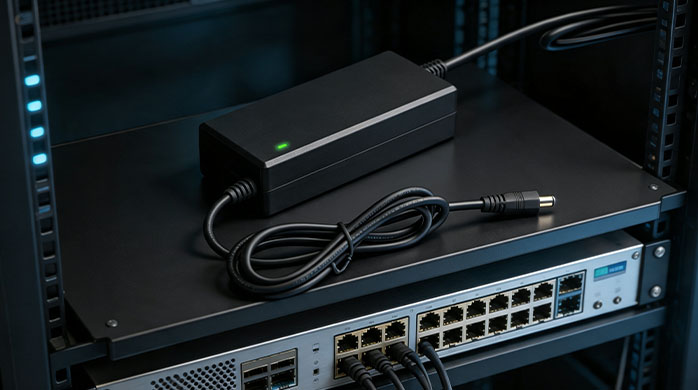
A desktop ac dc power adapter is defined by its external, standalone chassis configuration that sits inline between an AC wall cord and a DC output cable. This specific form factor allows a desktop power adapter to handle much higher wattages, up to 600W, because its larger surface area facilitates superior heat dissipation. By separating the power brick from the wall outlet, you gain greater flexibility in where you place your main hardware. This design keeps high-voltage components safely enclosed in a durable, external housing away from delicate internal systems.
Additionally, these desktop models are equipped with standard, interchangeable IEC power inlets that make global distribution incredibly simple. They are ideal for powering mid-to-high load hardware such as industrial networking switches, medical imaging tools, and advanced telecommunication nodes. The external brick configuration ensures that any heat generated during power conversion is dissipated safely into the surrounding air. This protects your primary equipment from experiencing performance degradation due to internal heat buildup.
Why are medium-to-high power loads supported?
Medium-to-high draw hardware requires a robust power delivery system that smaller wall-plug designs simply cannot provide without overheating. Desktop units utilize larger internal copper windings and aluminum heat sinks to safely manage these high currents. Now, why does this matter?
- Higher Wattage Capabilities: Easily supports power draws ranging from 45W up to several hundred watts.
- Active PFC Integration: Power Factor Correction optimizes electrical efficiency and reduces grid strain.
- Heavy-Duty Enclosures: Fire-retardant plastics and metal casings shield internal parts from external physical impact.
This durability is crucial for industrial environments where dust, vibration, and continuous usage are daily challenges. A robust desktop supply ensures your high-capacity hardware receives clean, uninterrupted power under any conditions. Investing in a heavy-duty desktop unit keeps your high-performance networks running smoothly.
What are the common AC input configurations?
Choosing the correct AC inlet is essential for ensuring your hardware remains compatible with different power grids worldwide. Desktop power supplies utilize standard IEC inlets, allowing you to use the exact localized power cord required for any given country. Think about it:
- IEC C6 (3-Pin Cloverleaf): Commonly used for medium-sized office peripherals and lighter laptops.
- IEC C8 (2-Pin Figure-8): Ideal for ungrounded devices requiring a compact and lightweight input.
- IEC C14 (3-Pin Kettle): The industry standard for heavy-duty networking switches and high-draw industrial hardware.
These standardized configurations keep your production lines lean and adaptable. You do not need to manufacture different internal power units for different international markets. It makes global supply chain management highly efficient.
| IEC Inlet Type | Pin Configuration | Grounding | Max Current Rating | |
|---|---|---|---|---|
| IEC C6 (Cloverleaf) | 3-Pin | Grounded | 2.5A / 10A | |
| IEC C8 (Figure-8) | 2-Pin | Ungrounded | 2.5A | |
| IEC C14 (Kettle) | 3-Pin | Grounded | 10A / 15A |
Analyzing this inlet specification table shows how different standard configurations match specific grounding and power requirements.
Key Takeaway: Selecting the correct IEC inlet configuration simplifies your international logistics by allowing easy adaptation to local electrical standards.
Why choose a medical grade ac dc power adapter?
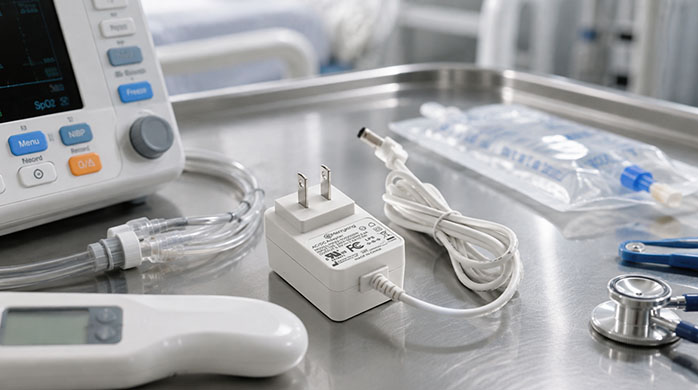
You should choose a medical grade ac dc power adapter in clinical environments because they are strictly certified to comply with the rigorous IEC 60601-1 safety standard. These adapters offer highly advanced levels of isolation to protect sensitive diagnostic equipment and patients from micro-shocks. When you require a custom power supply for specialized healthcare devices, maintaining ultra-low leakage current is an absolute necessity. This strict compliance ensures that patient-connected devices operate safely even during unforeseen electrical faults.
Standard commercial power units do not meet the stringent insulation and creepage distance requirements mandated for medical environments. Medical-grade adapters utilize dual layers of protection and advanced internal shielding to prevent stray currents from escaping. This high level of engineering prevents electromagnetic interference from disrupting nearby life-support monitors. By investing in certified medical-grade power supplies, you prioritize patient safety and protect your clinic from critical liability risks.
How do low leakage currents protect patient safety?
In clinical settings, even a tiny amount of stray electrical current can pass through a patient and cause severe, life-threatening injury. Medical power adapters restrict this leakage current to safe, near-zero levels to ensure absolute safety during diagnostic procedures. Let’s face it:
- Strict Isolation Barriers: High-dielectric insulation separates input AC lines from output DC lines.
- Ultra-Low Stray Current: Keeps stray electrical flow to less than 100 microamps.
- Enhanced EMI Compliance: Prevents electrical noise from distorting sensitive ECG and EEG monitor readouts.
This level of electrical hygiene is critical for maintaining clean signals in high-precision patient monitoring equipment. It ensures that medical staff receive accurate data without interference from adjacent power sources. Selecting medical-grade adapters is the only way to guarantee this level of critical safety.
What does compliance with medical standards require?
Deploying power adapters in patient-care environments requires strict adherence to international safety standards and regular factory audits. The components used must be fully traceable, and the design must undergo rigorous laboratory testing before receiving certification. But wait, there is more:
- Strict Design Testing: Units are subjected to extreme thermal and electrical stress tests.
- Traceable Component Sourcing: Every internal part must be documented and verified for quality.
- Continuous Factory Quality Audits: Manufacturing facilities must maintain ISO 13485 medical device standards.
These strict requirements ensure that every single unit leaving the assembly line performs flawlessly. This minimizes the risk of component failures during critical clinical operations. Compliance is non-negotiable when human lives are on the line.
| Specification | Medical Grade (IEC 60601-1) | Standard Commercial Grade (IEC 62368-1) | |
|---|---|---|---|
| Isolation Voltage | 4,000 VAC (MOPP) | 3,000 VAC | |
| Max Leakage Current | < 100 µA | < 250 µA | |
| Creepage Distance | Minimum 8.0 mm | Minimum 5.0 mm | |
| Safety Certification | UL/cUL 60601-1, CE | UL/cUL 62368-1, CE, FCC |
Analyzing this comparison table reveals that medical-grade power units provide significantly higher isolation voltage and tighter current controls than standard commercial alternatives.
Key Takeaway: Using IEC 60601-1 certified power adapters is essential for eliminating electrical risks and ensuring complete safety in patient-connected applications.
How do you match an ac dc power adapter to voltage?
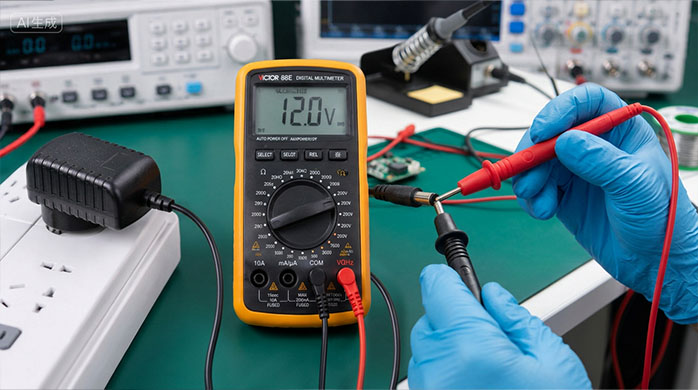
To match an ac dc power adapter to voltage, you must select an adapter with an output voltage that matches the input voltage rating of your target device. Using an adapter with a higher voltage can instantly burn out your internal electronics, while a lower voltage will prevent the device from booting up. When configuring an industrial power supply for heavy machinery, getting these electrical specifications right is critical to maintaining system stability. Matching these values carefully prevents expensive hardware damage and ensures smooth, continuous operation.
Additionally, the adapter’s current (amperage) rating must meet or exceed your equipment’s maximum draw requirements. This ensures the power supply can comfortably handle peak power draws without overheating or dropping voltage. Operating an adapter at its absolute limit will shorten its lifespan and lead to sudden power failures. By selecting an adapter with a safe power margin, you ensure long-term operational reliability.
What are the risks of mismatched electrical values?
Ignoring proper voltage and current alignment is one of the most common causes of immediate hardware failure in industrial settings. When you use an incorrect power unit, you risk causing irreversible electrical damage to your connected components. Look:
- Overvoltage Frying: Excessive voltage will quickly overload internal circuits and destroy delicate silicon chips.
- Undervoltage Glitches: Insufficient voltage causes unstable operations, data corruption, and frequent system reboots.
- Thermal Overload: Under-rated current supplies will overheat rapidly as they struggle to meet demand.
This thermal overload can melt internal insulation and cause a dangerous electrical short inside the power supply. This is why you must verify both the voltage and amperage specs before plugging in any new device. Ensuring complete compatibility protects your hardware investments from accidental damage.
How do you calculate required wattage and current?
Calculating your equipment’s total power requirements is a simple process when you understand the relationship between voltage, current, and wattage. You should always include a 20% safety margin to accommodate peak power draws during heavy workloads. Think about it:
- The Power Formula: Multiply voltage (V) by current (A) to find the total wattage (W) required.
- The 80% Rule: Plan to run your power supply at no more than 80% of its maximum rated capacity.
- Peak Load Headroom: Accounts for high startup currents required by motors or high-speed wireless transmitters.
Leaving this power buffer ensures that your equipment does not starve for energy during operational spikes. It keeps the power brick running cool and prevents early circuit degradation. This simple calculation saves you from massive field-support headaches.
| Device Power Requirement | Adapter Output Rating | Matching Status | Expected System Behavior | |
|---|---|---|---|---|
| 12V DC @ 1.5A (18W) | 12V DC @ 2.0A (24W) | Perfect Match | Safe, cool running with ample headroom | |
| 12V DC @ 1.5A (18W) | 9V DC @ 2.0A (18W) | Mismatched Voltage | Device fails to power on or boot up | |
| 12V DC @ 1.5A (18W) | 12V DC @ 1.0A (12W) | Insufficient Current | Adapter overheats and triggers safety cutoff |
Analyzing this matching status matrix shows that having sufficient current headroom is just as important as matching the voltage exactly.
Key Takeaway: Selecting a power supply with identical voltage and at least 20% more current than required ensures safe, efficient, and reliable long-term performance.
Which certifications must an ac dc power adapter have?
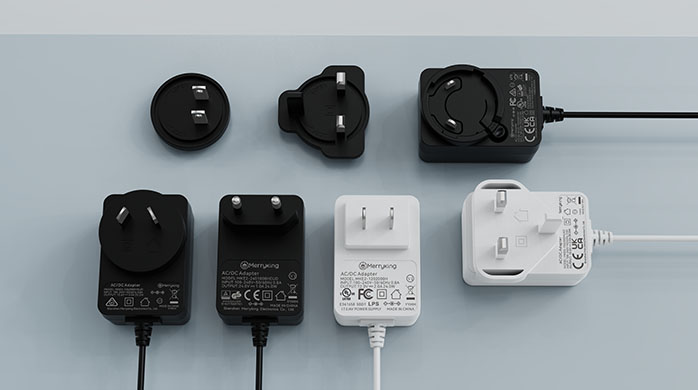
A high-quality ac dc power adapter must have major global safety and electromagnetic compatibility certifications, such as UL, CE, FCC, PSE, KC, and SAA, to be legally deployed in commercial environments. These marks indicate that independent laboratories have tested and approved the design for safety and efficiency. Deploying uncertified power units is a significant liability that can void your commercial insurance in the event of an electrical fire. Regulatory marks ensure your equipment respects grid guidelines and runs safely.
In addition, these certifications provide your clients and inspectors with the peace of mind that your installations meet local electrical codes. High-quality manufacturers display these symbols prominently on the adapter’s physical label. Buying certified units ensures that you will not face import delays or safety fines during regional distribution. Investing in certified equipment is the smartest way to protect your business reputation and minimize legal risks.
Why are UL, CE, and FCC listings mandatory?
When you distribute commercial hardware across international markets, you must comply with regional electrical and RF emission laws. These certifications prove that your power supplies have passed rigorous testing for fire hazards, electric shocks, and signal noise. This is crucial:
- UL Listing (North America): Verifies the device uses flame-retardant plastics and safe electrical isolation.
- CE Mark (Europe): Confirms compliance with all relevant European health, safety, and environmental protection directives.
- FCC Certification (United States): Guarantees the adapter’s electromagnetic emissions do not disrupt other wireless communication systems.
Without these critical certifications, you cannot legally sell or install electronic hardware in most developed nations. It is far better to invest in certified components upfront rather than facing costly product recalls later. Ensuring full compliance is the foundation of building a reliable, international hardware brand.
What is the significance of Level VI efficiency?
In addition to electrical safety, modern power adapters must comply with international green energy regulations such as the Department of Energy (DoE) Level VI standard. This standard targets standby energy waste by restricting how much power an adapter can consume when idling. Here is why:
- Reduced Standby Power: Limits idle power draw to less than 0.1W, saving massive amounts of energy over time.
- High Active Efficiency: Ensures the adapter converts AC to DC with minimal energy lost as heat.
- Lower Operating Costs: Directly reduces your commercial energy bills, especially in large-scale deployments.
This efficiency focus also helps your enterprise meet corporate sustainability goals. It shows your clients that your operations are optimized for green energy performance. Choosing Level VI compliant components is a smart choice for the planet and your budget.
| Certification Mark | Standard Type | Primary Region | Critical Compliance Requirement | |
|---|---|---|---|---|
| UL / cUL | Electrical Safety | United States / Canada | Flame-retardant housing, electrical isolation | |
| CE Mark | Safety & EMI | European Union | Harmonized EMC and low-voltage directives | |
| FCC Mark | RF Emissions | United States | Limits digital signal noise and radio interference | |
| DoE Level VI | Efficiency Standard | Global / US | < 0.1W standby power draw, high active efficiency |
Analyzing this regulatory overview table highlights how modern standards cover both active user safety and global environmental efficiency.
Key Takeaway: Utilizing fully certified Level VI power adapters protects your business from legal liabilities while significantly reducing long-term energy expenses.
How does a rugged ac dc power adapter survive heat?
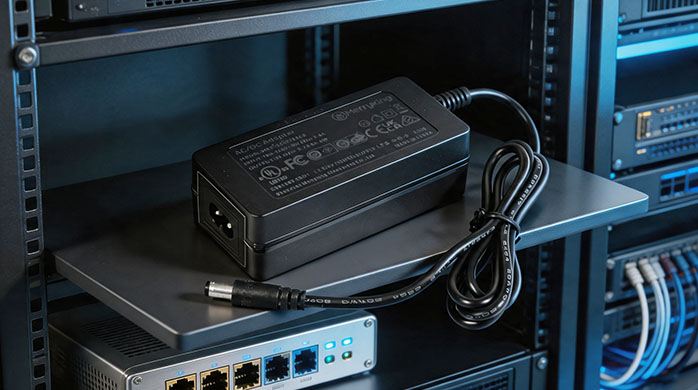
A rugged ac dc power adapter survives high temperatures by using advanced thermal design techniques, such as heavy-duty aluminum casings, potting compounds, and components rated for wide operating temperatures. These features allow the adapter to operate continuously in environments from -40°C to over 70°C without shutting down. This thermal management is critical for outdoor deployments like industrial yards, telecommunications towers, and hot mechanical rooms. Good thermal dissipation protects the adapter from overheating and extends its operational life.
These rugged designs prevent hot spots from developing within the unit, ensuring that delicate internal transistors remain within safe operating temperatures. They are built to withstand harsh, unventilated outdoor enclosures where standard adapters would fail in a matter of hours. By choosing a ruggedized solution, you eliminate the need for expensive external cooling fans. This lowers your hardware maintenance costs and prevents sudden field failures.
What thermal management techniques prevent overheating?
In outdoor or unventilated industrial settings, trapped heat is the number one cause of power supply failure. Ruggedized power units use specialized materials to move heat away from internal components and into the surrounding air quickly. And guess what:
- Thermo-Conductive Potting: Fills the casing with silicone compound to eliminate air pockets and transfer heat.
- Extruded Aluminum Housings: Features built-in cooling fins that maximize surface area for passive heat dissipation.
- High-Temp Capacitors: Uses robust Japanese capacitors rated to withstand continuous temperatures up to 105°C.
This heavy-duty construction makes the adapter immune to physical impacts, vibrations, and extreme thermal cycling. It allows your outdoor telecommunication systems and security nodes to run continuously through harsh winters and blistering summers. Opting for passive cooling ensures your setups remain highly reliable.
How does derating protect long-term performance?
When you operate power supplies in high-temperature environments, you must understand the manufacturer’s derating curve to prevent overloading the unit. Power derating curves show how much output capacity must be reduced as the surrounding ambient air gets hotter. Look:
- The Derating Curve: A technical graph showing the maximum safe wattage at various temperature levels.
- Thermal Safety Margins: Helps you select a larger adapter to compensate for power loss in hot weather.
- Active Cooling Solutions: Adding airflow allows the adapter to maintain higher output levels in warm zones.
Understanding these variables ensures that your outdoor hardware always has sufficient power to operate safely. It prevents premature hardware aging and stops heat-induced outages. Protecting your systems from thermal stress starts with correct design margins.
| Ambient Operating Temp | Available Output Power | Internal Thermal State | Required Airflow Speed | |
|---|---|---|---|---|
| 0°C to 40°C (Standard) | 100% Capacity | Optimal cooling | Natural Convection (No Fan) | |
| 50°C (High Heat) | 80% Capacity | Warm operating state | Minimal direct airflow | |
| 70°C (Extreme Heat) | 50% Capacity | Maximum safe limit | Force-air cooling (200 LFM) |
Analyzing this temperature derating table shows that available power output drops significantly as ambient temperatures reach extreme levels.
Key Takeaway: Planning your system layout around thermal derating curves ensures that your outdoor hardware always has sufficient power to operate safely.
What custom options exist for an ac dc power adapter?
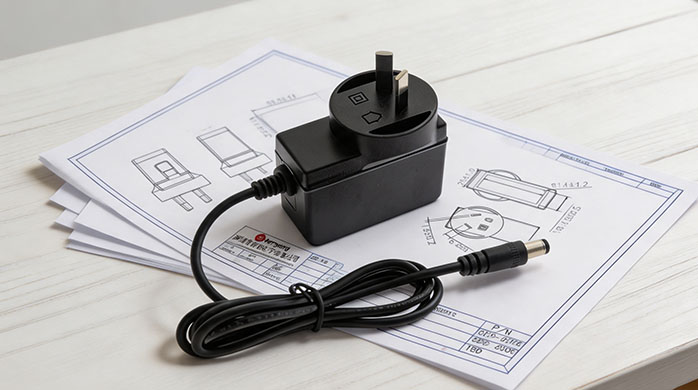
Many custom options exist for an ac dc power adapter, including tailored DC connector tips, custom cable lengths, unique housing designs, and OEM branding. These customization options let you adapt the power supply to meet your specific hardware dimensions and aesthetic goals. Working with an experienced custom manufacturer helps you integrate the power adapter seamlessly into your product kit. This customization also streamlines packaging and simplifies your end-user setup.
By customizing your power components, you ensure that your products stand out in a crowded market and look highly professional. You can specify exact cable thicknesses, right-angle connectors, or locking plugs to prevent accidental disconnections. This level of attention to detail improves your overall product user experience and reduces customer returns. Creating a custom-tailored package helps build stronger brand loyalty among your enterprise clients.
Why consider bespoke housing and cord lengths?
Standard power adapters often come with generic black plastic casings and standard cable lengths that may not fit your proprietary hardware layouts. Designing a custom enclosure allows you to integrate your adapter directly into your device brackets or server slots. Think about it for a second:
- Bespoke Shell Colors: Choose custom housing colors that match your company’s core brand identity.
- Locked Connections: Implement threaded aviation plugs or locking barrel jacks to prevent accidental power cuts.
- Exact Cable Lengths: Specify the exact cord length needed to prevent tangled wires inside your device packaging.
This customization gives your hardware kit a highly integrated and premium feel that generic parts simply cannot match. It also ensures that your installers do not have to struggle with excess cord slack during setup. Choosing customized cabling is a major step toward creating a polished commercial product.
How do OEM / ODM services speed up market entry?
Developing a brand-new power adapter from the ground up can take months and cost thousands of dollars in safety certification fees. Utilizing professional OEM / ODM services allows you to customize existing, pre-certified designs to speed up your launch. But wait, there is more:
- Pre-Certified Platforms: Leverage existing UL, CE, and FCC safety listings to save months of testing.
- Lower Development Costs: Modify existing structures instead of building new molds from scratch.
- Expert Engineering Help: Work directly with power specialists to tune electrical performance to your board.
This rapid deployment capability helps you capture market opportunities before your competitors can react. It reduces your upfront capital investment while guaranteeing professional-grade quality. OEM services give you a major competitive edge.
| Customization Area | Custom Options Available | Business Advantage | |
|---|---|---|---|
| Electrical Tuning | Custom output voltages (e.g., 5.2V, 14.5V) | Perfectly matches non-standard device boards | |
| Mechanical Packaging | Private label casing, custom color matching | Enhances your brand image and retail presentation | |
| Cable / Strain Relief | Right-angle connectors, reinforced boots | Extends cable life in tight, high-wear spaces |
Analyzing this customization matrix shows how tailoring small mechanical and electrical elements can yield significant product branding and performance benefits.
Key Takeaway: Partnering with an OEM / ODM provider allows you to launch your product lines quickly with customized, fully certified power hardware.
How can we help you choose your ac dc power adapter?

We can help you choose your ac dc power adapter by providing expert engineering consultations, technical evaluations of your hardware, and a wide selection of pre-certified power solutions. Our goal is to ensure your systems receive stable, efficient, and fully compliant power. Navigating different voltages, output connections, and global safety regulations can be challenging without specialized electrical expertise. If you require a compact wall-mount power adapter for a localized installation, our team can guide you toward the perfect hardware match.
We work closely with your product designers to match our adapters to your exact electrical load profiles and environmental needs. This joint approach ensures that your hardware achieves maximum performance, safety, and energy efficiency. We handle the entire process from custom prototyping to final safety certifications and mass production. This comprehensive support allows you to focus on developing your core product technology with complete peace of mind.
Why partner with specialized power experts?
Selecting the wrong power components can lead to unstable system performance, expensive field recalls, and damaged customer relationships. Our technical specialists analyze your system’s electrical loads and operating environments to recommend the safest adapter. That’s why we’re here:
- Direct Engineering Support: Work directly with experienced power engineers to optimize your device’s power board.
- Fast Sample Delivery: Receive functional testing samples quickly to speed up your product development cycle.
- Guaranteed Certifications: Rest easy knowing all our recommended products carry legitimate global safety marks.
This partnership eliminates the trial-and-error phase of sourcing power components, saving you valuable engineering hours. It ensures your next product deployment is completely safe, highly reliable, and fully compliant from day one. Partnering with specialists is the most effective way to protect your physical hardware investments.
What is the roadmap to perfect hardware integration?
Our team is ready to guide you from initial technical consultation through custom prototyping, final safety testing, and global logistics delivery. We encourage you to contact our team to find the ideal power supply solution for your commercial hardware projects. Here is why:
- Seamless Integration: We ensure the power supply matches your mechanical dimensions and layout exactly.
- Streamlined Logistics: We coordinate international shipping and custom clearance to keep your rollout on schedule.
- Long-Term B2B Support: We stand by our products with comprehensive warranties and dedicated technical account managers.
This systematic approach reduces project friction and guarantees a successful product rollout. You get a dedicated partner who manages all power supply complexities for you. Let our experts optimize your technical logistics today.
| Step | Phase Name | Typical Timeline | Action Items | |
|---|---|---|---|---|
| 1 | Technical Consultation | 1 – 2 Business Days | Define electrical needs, thermal limits, and certifications | |
| 2 | Prototyping & Sampling | 3 – 7 Business Days | Ship physical samples to your lab for evaluation | |
| 3 | Manufacturing & Delivery | 2 – 4 Weeks | Mass production, strict quality testing, and delivery |
Analyzing this structured engineering roadmap demonstrates how a systematic approach guarantees successful, risk-free hardware integration and timely product rollouts.
Key Takeaway: Collaborating with our engineering team from the early stages of product design eliminates costly power errors and ensures long-term operational success.
Conclusion
From initial voltage regulation and global safety certifications to customized private branding and outdoor climate resilience, selecting the right power supply is a vital step in safeguarding your hardware’s operational lifespan. Finding the perfect balance between electrical efficiency and mechanical constraints prevents sudden downtime and keeps your critical systems online. We are dedicated to delivering premium, commercial-grade adapters that meet your business’s exact design specifications.
Our capabilities include providing custom power cords, mechanical enclosure tailoring, and managing international safety certifications to streamline your product development. We encourage you to contact us today to discuss your project requirements and receive a customized engineering consultation. Together, let us power the future of your enterprise operations with absolute safety, efficiency, and engineering excellence.
Frequently Asked Questions
Can I use an adapter with higher amperage than required?
Yes, this is completely safe. Your device will only draw the amount of current it needs to operate, so using an adapter with a higher current capacity will not cause any damage. In fact, running an adapter below its maximum capacity helps it stay cooler and significantly extends its overall working lifespan.
How do I know if my adapter polarity is correct?
You must check the polarity symbol on your device’s technical label. This diagram consists of three rings indicating whether the inner pin is positive (center positive) or the outer sleeve is negative (center negative). Your adapter’s connector plug must match this polarity configuration exactly to prevent causing permanent short-circuit damage to your motherboard.
What’s the best adapter for global distribution?
An interchangeable plug adapter is the best option. These versatile adapters feature detachable wall prongs for different international standards, including US, EU, UK, and AU patterns. This design allows you to package a single power brick for global shipments, reducing your inventory management overhead and simplifying logistics.
How do I know if I need a medical grade adapter?
You require one if your hardware is deployed in clinical patient environments. Diagnostic tools and patient-monitoring devices must comply with the IEC 60601-1 standard to eliminate electric shock hazards. Medical-grade power supplies provide the necessary dual-layer isolation and ultra-low leakage current to keep both patients and healthcare operators completely safe.