To power your devices safely in Norway, you need a Type F (Schuko) or Type C (Europlug) plug adapter. When planning international business travel or organizing a corporate workforce deployment to Norway, electrical compatibility is often overlooked until it halts operations. Imagine your top executives or engineering team arriving in Oslo for a critical stakeholder meeting only to find their laptops and smartphones completely drained with no physical way to connect to local power grids. Trying to force non-compliant plugs into foreign sockets risks damaging expensive corporate hardware and creating serious fire hazards. Fortunately, securing a certified, robust norway power adapter solves this fundamental bottleneck, guaranteeing seamless power delivery throughout your trip.
What plug fits a norway power adapter?
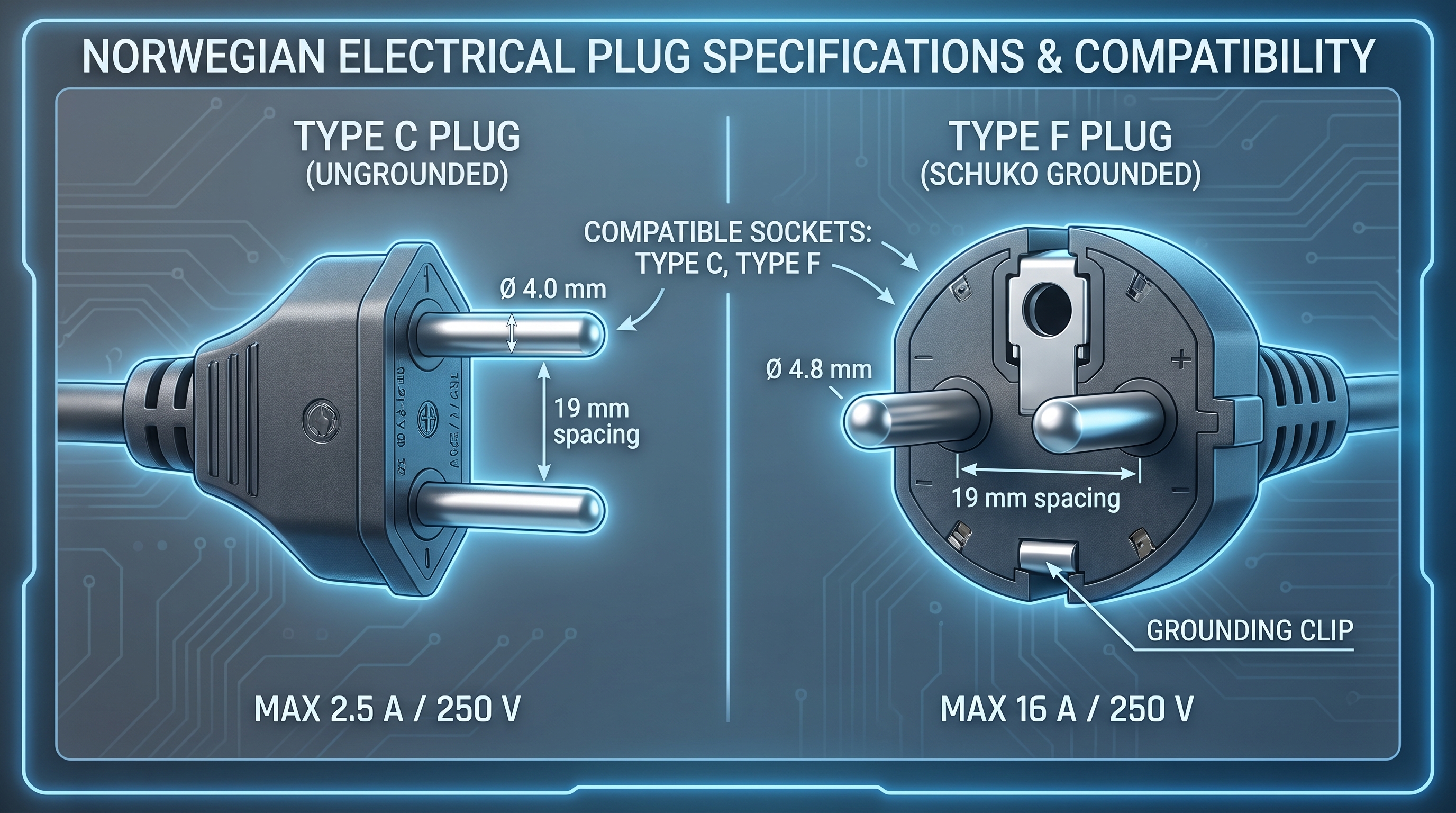
Norway standardizes on the Type F Schuko plug and the ungrounded Type C Europlug, meaning these are the primary shapes that must fit your adapter. This means your chosen norway power adapter must feature two round pins spaced 19 mm apart to seat securely in Norwegian wall receptacles. Selecting a precision-molded unit ensures zero physical wiggle, which protects your connection from dangerous electrical arcing.
The design of Type F Schuko plugs
Think about it: how often do you consider the grounding design of your wall plug? The Type F plug, famously known as the Schuko connector, features two thick 4.8 mm pins and dual earthing clips on the top and bottom.
This robust design is standard in Norway’s modern office spaces, business hotels, and research facilities.
- It supports currents up to 16 Amps safely.
- It features deeply recessed walls to shield you from accidental contact.
- It provides a continuous grounding path for enterprise laptops.
Are Type C Europlugs compatible?
Here is the thing: the flat Type C Europlug is fully compatible with Norwegian Type F outlets, although it lacks earthing contacts. These lighter plugs are perfect for low-power personal electronics that do not require maximum safety grounding.
Because they lack a dedicated grounding mechanism, you should only use them for double-insulated consumer devices like tablet chargers or electric shavers.
- They feature slightly thinner 4.0 mm round pins.
- They fit easily into deeply recessed Norwegian sockets.
- They operate safely at loads below 2.5 Amps.
Key TakeawayChoosing an adapter that natively interfaces with both grounded Type F and ungrounded Type C plugs allows your team to charge everything from a lightweight camera to a high-draw workstation laptop without safety compromises.
| Plug Standard | Pin Diameter | Earth Protection | Max Load Rating | Recommended Application | |
|---|---|---|---|---|---|
| Type F (Schuko) | 4.8 mm | Yes (Side clips) | 16 A / 3680 W | Laptops, Printers, Heavy Lab Gear | |
| Type C (Europlug) | 4.0 mm | No (Ungrounded) | 2.5 A / 575 W | Smartphones, Headsets, Tablets |
This technical breakdown illustrates why heavy-duty hardware requires the robust grounding architecture of a certified Type F adapter.
Do I need a norway power adapter?
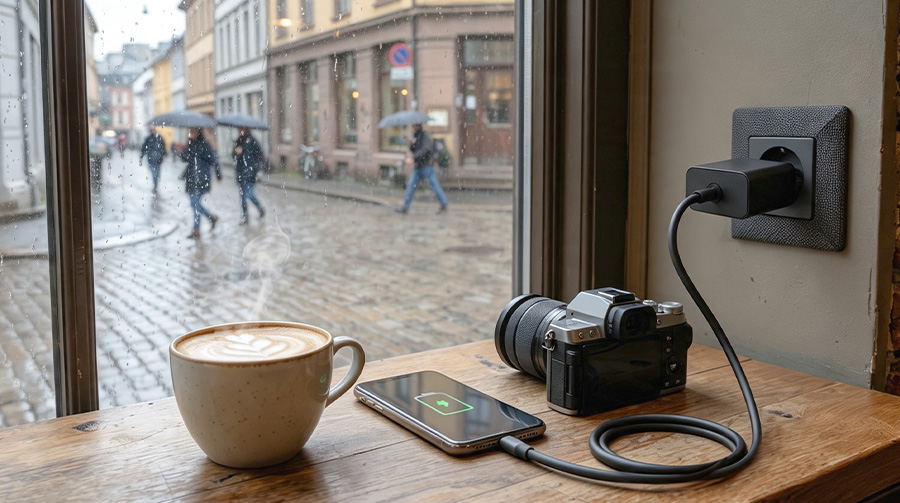
You absolutely need a power adapter for Norway if your business devices originate from regions outside continental Europe, such as the US, UK, or Australia. To determine if you require a norway power adapter, examine your current charger’s metal pins and match them against Norway’s round-pin Type F and Type C wall outlets. Without this physical interface, it is impossible to insert flat-blade or three-prong plugs into Scandinavian wall plates. This simple physical mismatch can halt your business operations instantly.
Do UK or US devices fit directly?
Look: trying to force a mismatched plug standard into a Norwegian outlet is highly dangerous. Standard US flat blades and UK three-prong plugs cannot physically enter the round, recessed sockets found in Oslo.
If you try to bypass this, you risk ruining both the wall outlet and your equipment’s pins.
- US plugs feature flat parallel blades (Type A/B).
- UK plugs require a large, rectangular grounded pin layout (Type G).
- Australian plugs utilize slanted flat blades (Type I).
Why outlet compatibility matters for business?
For any professional on a corporate trip, maintaining 100% device uptime is a baseline requirement. Uncertified, cheap adapters can fail under load, disrupting your work schedule and severing client communication.
Investing in a robust physical adapter ensures you maintain uninterrupted connectivity across your business trip.
- It prevents communication gaps with home offices.
- It secures seamless data transfers on-site.
- It protects your expensive corporate devices from damage.
Key TakeawayInvesting in a robust physical adapter ensures you maintain uninterrupted connectivity across your business trip, preserving both your schedules and your equipment’s health.
| Region / Plug Standard | Outlet Interface | Direct Fit in Norway? | Adapter Required? | Recommended Solution | |
|---|---|---|---|---|---|
| United Kingdom (Type G) | 3 Rectangular Pins | No | Yes | Grounded Schuko Travel Adapter | |
| United States / Canada (Type A/B) | 2 Flat Blades | No | Yes | Grounded Adapter + Dual-Voltage Check | |
| Australia (Type I) | 2 Slanted Blades | No | Yes | Modular International Adapter |
This table highlights why international travelers must acquire a specialized physical adapter prior to departing for Norway.
What voltage is safe for a norway power adapter?

Norway operates on a standard voltage of 230V with a frequency of 50Hz, meaning only dual-voltage or native 230V devices are safe to use with a basic adapter. When using a norway power adapter , you must ensure that your connected device is rated for high-voltage European grids. Connecting a single-voltage US device (110V-120V) directly to this system without active regulation will cause immediate equipment failure. This is why verifying technical labels is non-negotiable for business travelers.
Identifying dual-voltage electronics
Here is the thing: most modern professional devices are built to adapt automatically to global power standards. Laptops, smartphones, and camera chargers generally feature intelligent switching power blocks that accept a wide range of voltages.
To confirm, check the technical specifications printed on your device’s power supply:
- Look for the phrase “Input: 100V-240V”.
- Verify the frequency lists “50/60Hz”.
- Confirm the regulatory symbols are present.
What are the risks of mismatched voltage?
If your electronic device is strictly rated for 110V, introducing it to a 230V Norwegian outlet will fry its circuitry instantly. Heating elements in items like hair dryers, heating blankets, or specialized industrial equipment can burn out, creating severe fire risks.
To prevent this, look for warning signs on non-compatible hardware:
- Extreme heat coming from the power brick.
- Audible buzzing or humming during charging.
- Intermittent power delivery or failure to turn on.
Key TakeawayAlways verify that your high-end professional equipment supports dual-voltage ratings to prevent terminal damage when utilizing simple physical adapters.
| Device Type | Typical Input Voltage | Adapter Only? | Voltage Transformer Needed? | Operational Risk | |
|---|---|---|---|---|---|
| Enterprise Laptops | 100V – 240V (Dual) | Yes | No | Extremely Low | |
| Smartphones & Tablets | 100V – 240V (Dual) | Yes | No | Extremely Low | |
| High-Draw Hair Dryers | 110V Only | No | Yes (Avoid bringing) | Extremely High | |
| Professional Cameras | 100V – 240V (Dual) | Yes | No | Extremely Low |
This matrix shows that standard modern business hardware is highly safe with simple adapters, while single-voltage consumer items require extra caution.
How do I test a norway power adapter safety?
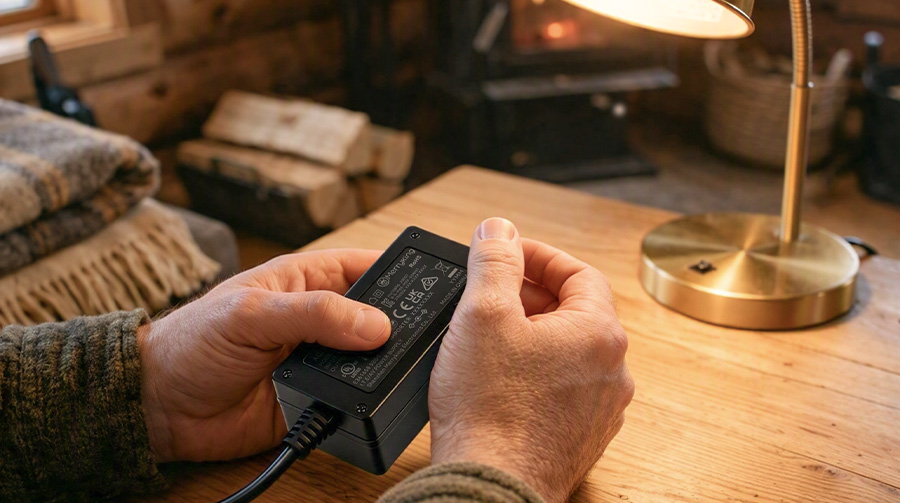
You can safety test a power adapter by examining its physical build quality and verifying its regulatory certification symbols before connecting it to a live circuit. Every norway power adapter deployed in your corporate travel kit must undergo a basic safety screening to prevent hazardous electrical failures in your lodging. Inspecting the casing for structural cracks and checking for certified safety markings are vital practices. Taking these precautionary steps protects your employees and your hardware.
Inspecting for physical wear and tear
Think about it: a single loose pin or a cracked plastic chassis can trigger a short circuit in an instant. You should physically inspect your adapter before every trip to ensure there are no rattling internal parts or bent copper prongs.
Ensure that the sliding mechanisms on multi-plug designs lock firmly into place.
- Look for discoloration or burn marks on the casing.
- Verify that metal pins do not twist or wobble inside their plastic housings.
- Avoid using units with exposed copper or frayed cabling.
Recognizing authentic regulatory stamps
Genuine business-grade travel gear always displays clear regulatory markings such as CE and RoHS on its surface. These marks prove that the manufacturing process complies with stringent European environmental and safety directives.
These certifications guarantee the following protections:
- Built-in surge protection and thermal cut-offs.
- Use of premium flame-retardant plastics.
- Over-current protection to shield connected hardware.
Key TakeawayPerforming a pre-travel physical check on your adapters keeps your devices protected from unsafe power flows and structural failures.
| Certification Stamp | Target Market | Core Safety Standard Tested | Corporate Necessity | Standard Benefit | |
|---|---|---|---|---|---|
| CE Mark | European Union | Over-current & Thermal Protection | Mandatory | Guarantees safe operation in EU | |
| RoHS Compliant | Global | Zero Hazardous Lead/Cadmium | High | Safe, eco-friendly manufacturing | |
| UL Listed | North America | Structural and Insulation Integrity | Highly Recommended | Rigorously tested for US safety |
This standard certification reference demonstrates how to quickly verify if your travel gear is legally compliant for use.
Where can I buy a norway power adapter?
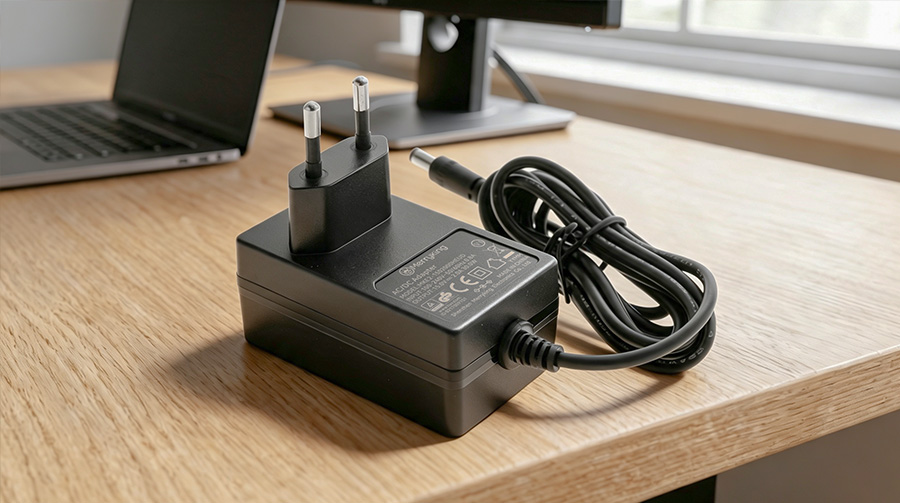
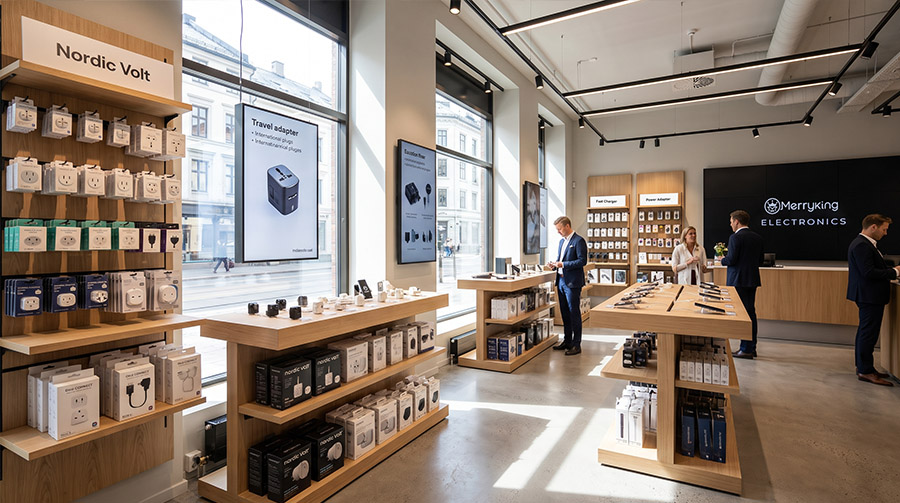
You can purchase a reliable power adapter through certified online B2B manufacturers or established electronics retailers before your trip begins. Sourcing your norway power adapter from an experienced factory guarantees you receive high-grade hardware with built-in surge suppression. While purchasing adapters last-minute might seem convenient, planning ahead secures much safer options. Here is how you can evaluate different retail paths.
Purchasing online before you travel
But wait, there’s more: buying your adapters in advance gives you access to complete technical specifications and volume corporate pricing. This is the optimal path for procurement teams looking to supply a mobile workforce with safe, identical equipment.
Online sourcing allows you to:
- Review certified test reports from third-party labs.
- Access bulk discounts and customize plug bundles.
- Select units with integrated multi-port USB options.
Why airport kiosks are a risky choice?
Airport retail shops are notorious for selling overpriced, ungrounded adapters that do not meet professional safety guidelines. These low-quality units frequently lack surge protection, leaving your premium corporate laptops vulnerable to sudden grid fluctuations.
These impulse buys present major corporate drawbacks:
- Up to 300% price markups.
- Cheap plastic builds prone to breaking.
- Lack of high-wattage fast charging capabilities.
Key TakeawayPre-ordering certified adapters online is the most cost-effective way to secure high-performance, surge-protected travel gear for your team.
| Sourcing Channel | Average Unit Cost | Build Quality | Customization / Bulk Orders | Procurement Recommendation | |
|---|---|---|---|---|---|
| B2B Factory Direct | Low | Excellent (CE/UL) | Yes | Highly Recommended for Teams | |
| Online Retail Sites | Medium | Variable | Limited | Good for Individual Travel | |
| Airport Kiosks | High | Basic (Ungrounded) | No | Emergency Backup Only |
The comparison clearly proves that procurement officers achieve the best safety-to-cost ratio by bypassing impulse airport retail entirely.
How does a norway power adapter handle grounding?
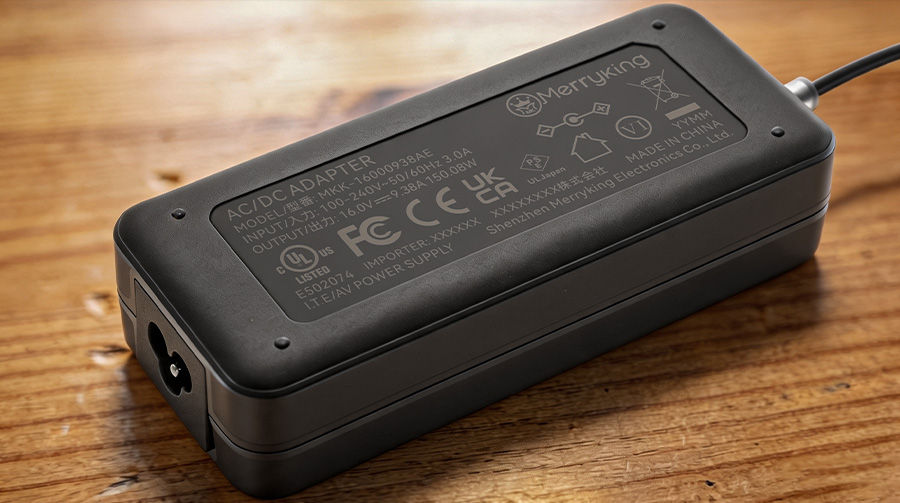
A premium power adapter handles grounding through physical metal grounding clips that interface with the side earth contacts inside a standard Type F Schuko wall outlet. Utilizing a grounded norway power adapter is the single most effective way to shield high-amp business appliances from dangerous electrical surges. Without a proper ground pathway, static charge can accumulate on metallic equipment casings, posing shock hazards. Ensuring grounding compatibility protects both your valuable corporate assets and your personnel.
Grounding mechanism in Type F sockets
Look: the Norwegian Type F Schuko socket does not use a traditional third pin for grounding. Instead, it relies on dual metal grounding clips located on the top and bottom of the recessed circular wall plate.
These clips align perfectly with the metal plates on your Type F plug.
- It instantly redirects any fault current to the earth.
- It provides maximum protection under heavy loads.
- It prevents spark hazards when connecting equipment.
Can ungrounded plugs damage hardware?
Running sensitive electronics on ungrounded connections can lead to minor static shocks or electromagnetic interference. This can degrade long-term battery health and cause erratic touchpad behavior on your professional notebooks.
This grounding deficiency can impact business trips:
- Flickering laptop screens or unstable connections.
- Slow charging times due to heat buildup.
- Exposure to hazardous current surges on the grid.
Key TakeawaySelecting an adapter with complete Schuko grounding ensures a stable electrical reference point, protecting high-end workstation laptops from damage.
| Plug System | Grounding Interface | Safe for High-Power Devices? | Shock Prevention Level | Recommended Application | |
|---|---|---|---|---|---|
| Grounded Type F | Top/Bottom Side Clips | Yes | Outstanding (Auto-trip) | Workstation Laptops, AV Equipment | |
| Ungrounded Type C | None | No | Basic | Mobile Phones, USB Accessories |
This safety matrix illustrates why corporate IT departments should mandate fully grounded Schuko adapters for travel.
Will a norway power adapter fit Type C sockets?
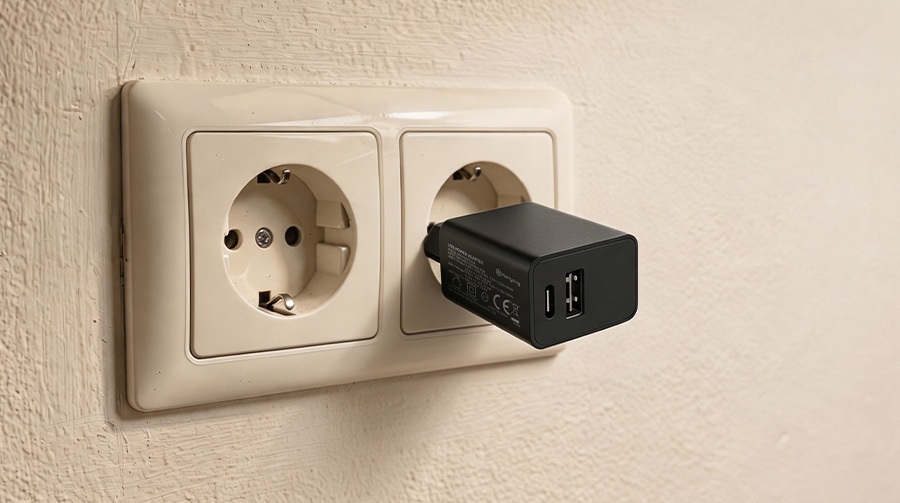
Yes, a standard Type F power adapter is physically designed to accommodate Type C Europlugs, offering seamless backward compatibility across most European sockets. Since Type C Europlugs use the same pin spacing as Type F plugs, your norway power adapter can easily connect both types without any physical issues. This flexibility allows you to charge low-draw equipment without needing to pack multiple, different regional plugs. Understanding this interchangeability simplifies your travel preparation significantly.
Understanding the flat Europlug design
Here is the thing: the flat Type C Europlug is the most popular plug style across continental Europe. Because its pins are slightly flexible, it can fit easily into both flat Type C and deeply recessed Type F wall sockets.
This makes it highly versatile:
- It features 4.0 mm round pins.
- It is rated up to 2.5 Amps.
- It easily fits compact traveling electronics.
When should you avoid ungrounded plugs?
While Type C plugs fit everywhere, they lack grounding protection. You should never use them to power high-draw equipment like travel kettles, laser printers, or large AV setups that demand a safe earthing connection.
These high-power scenarios demand grounded Type F adapters:
- Setting up a temporary server hub on-site.
- Charging powerful gaming or editing laptops.
- Connecting multi-plug extension strips.
Key TakeawayA Type F Schuko adapter is the ultimate travel tool because it safely accepts grounded Type F plugs while remaining fully compatible with ungrounded Type C accessories.
| Plug Style | Pin Thickness | Grounding Support | Ideal Business Use | Portability | |
|---|---|---|---|---|---|
| Type F (Schuko) | 4.8 mm | Yes | High-draw Laptops, Monitors | Medium (Bulky body) | |
| Type C (Europlug) | 4.0 mm | No | Phone Chargers, Earbuds | High (Slim, flat design) |
This comparison helps B2B buyers select the right plug type based on the specific power needs of their workforce.
Can a norway power adapter support USB fast charging?
Yes, advanced power adapters come equipped with high-speed USB-A and USB-C Power Delivery ports, allowing you to charge multiple mobile devices without separate charging bricks. Selecting a multi-port norway power adapter lets you charge your corporate smartphones, tablets, and wireless accessories concurrently from a single wall outlet. This feature is invaluable in busy hotel rooms or modern Norwegian co-working spaces where wall outlets are limited. Modern smart-charging technology optimizes the current flow dynamically to protect your battery.
The benefits of USB-C Power Delivery
Think about it: carrying three separate power bricks for your phone, tablet, and laptop is a hassle. High-wattage USB-C Power Delivery (PD) ports built into your travel adapter can output up to 65W of power, which is enough to fast-charge standard enterprise laptops.
This technology simplifies your travel packing list:
- It reduces total luggage weight.
- It eliminates tangled cables on your workspace desk.
- It charges modern USB-C laptops directly from the wall.
Intelligent power allocation features
Smart adapters feature built-in microchips that automatically detect the precise current requirements of your connected hardware. This prevents overcharging and minimizes heat generation, extending the overall lifespan of your expensive corporate assets.
This smart technology offers major performance perks:
- Up to 4x faster charging compared to basic adapters.
- Auto-shutoff when the battery reaches full charge.
- Dynamic power routing to prioritize high-demand devices.
Key TakeawayUpgrading to a USB-C PD equipped adapter keeps your devices charged quickly and safely, while significantly reducing the amount of gear you need to pack.
| Port Type | Output Standard | Max Wattage | Recommended Device Class | Speed Comparison | |
|---|---|---|---|---|---|
| USB-C PD | Power Delivery 3.0 | 65W | Workstation Laptops, MacBooks | Ultra Fast (Full charge < 90 mins) | |
| USB-A QC | Quick Charge 3.0 | 18W | Smartphones, Power Banks | Standard Fast (50% charge in 30 mins) |
This technical distribution chart demonstrates how smart power allocation keeps all your mobile work tools charged at peak efficiency.
Why select a modular norway power adapter?
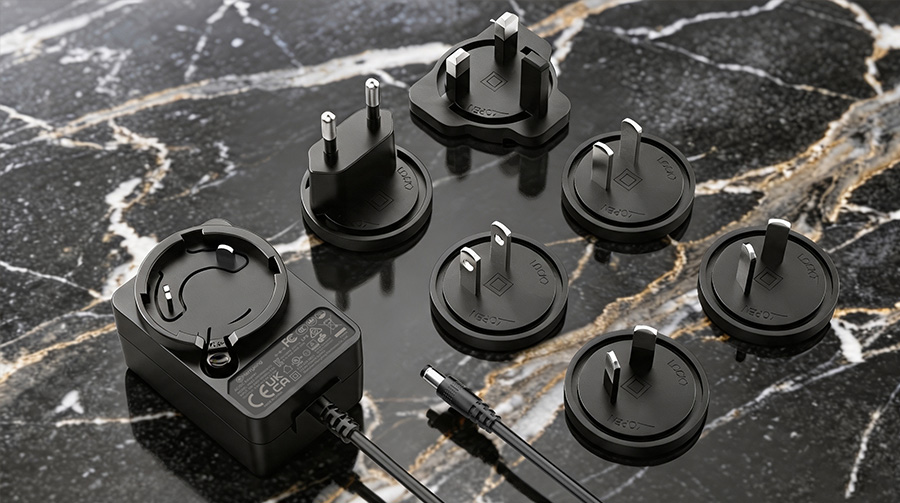
A modular power adapter offers exceptional value by allowing you to swap out different regional plug heads, making it a highly versatile tool for international business travel. By choosing a modular norway power adapter, your procurement team can easily configure travel kits for different international destinations, saving on overhead costs. This snap-on system eliminates the need to buy separate adapters for every country your team visits. It provides a highly efficient, professional solution for corporate travelers.
Streamlining your global travel kits
But wait, there’s more: modular plug adapters feature sliding rails or locking tabs that secure different country pins onto a single core charging block. This setup keeps your travel bag clean, organized, and free of tangled, single-use adapters.
These interchangeable sets simplify logistics:
- Use one core charger for US, EU, and UK trips.
- Swap regional tips in under three seconds.
- Maintain a uniform corporate equipment standard.
Maximizing long-term lifetime value
When a specific country prong gets damaged, you only need to replace that individual plug head rather than discarding the entire expensive charging block. This modular approach significantly reduces corporate electronic waste and lowers your long-term replacement costs.
This design delivers great long-term B2B advantages:
- Lowers equipment replacement costs by 60%.
- Supports corporate sustainability initiatives.
- Allows easy adaptation to changing global standards.
Key TakeawayStandardizing on modular adapter kits gives your mobile workforce a single, reliable charging system that works anywhere in the world.
| Adapter Design | Global Flexibility | Cable Clutter | Long-Term Durability | B2B Fleet Recommendation | |
|---|---|---|---|---|---|
| Modular Kit | Outstanding (Swap heads) | Extremely Low | Excellent (Replaceable heads) | Strongly Recommended | |
| Standard Single Plug | Limited (Europe only) | Low | High (Non-removable) | Good for dedicated routes |
This comparative assessment highlights why corporate buyers favor modular setups to lower overall procurement costs.
Does a norway power adapter convert voltage levels?
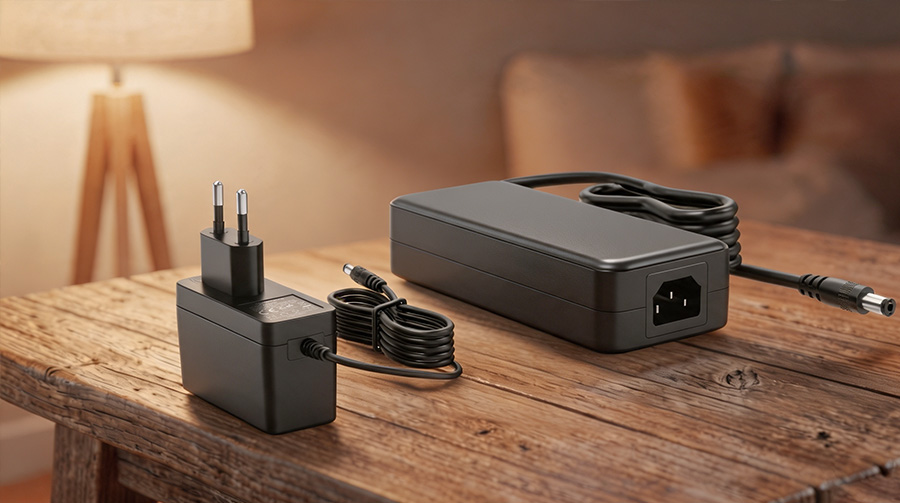
No, a standard power adapter does not convert electrical voltage levels; it simply matches the physical shape of your plug to the local wall outlet. It is a common misconception that a norway power adapter will automatically convert Norway’s 230V electricity to the 110V standard used by many US appliances. To safely operate single-voltage 110V hardware on Norway’s 230V grid, you must use an active step-down voltage converter. Understanding this distinction is vital to preventing electrical damage to your team’s hardware.
Adapters vs. electronic converters
Look: physical adapters only contain internal copper wiring that routes power from the wall pins to your device’s plug blades. An electronic converter or step-down transformer uses heavy internal copper coils to actively change the incoming voltage to a safe level.
If you connect a non-compatible device, you risk:
- Blowing internal fuses instantly.
- Melting plastic casings and sparking short circuits.
- Destroying the device’s internal power supply unit.
When is a step-down transformer needed?
High-power appliances that use heating elements or heavy mechanical motors require an active step-down transformer. We strongly recommend that business travelers leave single-voltage hair dryers and kettles at home and purchase dual-voltage equivalents instead.
Keep these guidelines in mind when evaluating heavy appliances:
- Standard electronic converters cannot handle high wattage loads safely.
- Transformers are bulky and heavy, adding unnecessary weight.
- Dual-voltage options are safer and more cost-effective.
Key TakeawayAlways verify your device’s input rating label to determine if you need a simple physical adapter or an active voltage converter for your trip.
| Appliance Category | Native Voltage | Active Converter Required? | Safe with Standard Adapter? | Operational Priority | |
|---|---|---|---|---|---|
| Dual-Voltage Charger | 100V – 240V | No | Yes | Plug and Play safely | |
| US Single-Voltage Dryer | 110V – 120V | Yes | No | Do not connect directly | |
| Enterprise Lab Equipment | 110V Only | Yes | No | Use heavy-duty step-down |
This guide clearly demonstrates how to identify when you need specialized voltage converters to protect your devices.
Conclusion
Maximizing the productivity of your global workforce requires removing every friction point, starting with basic power connectivity. Outfitting your corporate travelers with certified, high-quality, and grounded Type F power adapters ensures their laptops, tablets, and smartphones remain safe and operational under any grid condition. Don’t let cheap, uncertified chargers compromise your hardware security or interrupt critical business schedules.
We specialize in engineering robust, CE-certified B2B power adapter solutions with integrated USB Power Delivery and Schuko grounding safety features. Our products are designed to meet the strict demands of international corporate travelers, combining durability with compact, modular ease. To learn more about our bulk customization programs and competitive corporate pricing, contact us today to equip your team with the ultimate charging accessories.
Frequently Asked Questions
Can I use my standard US hair straightener in Norway with a simple plug adapter?
No, you cannot. A simple plug adapter only changes the physical shape of the prongs and does not convert the voltage. Because Norway operates on a high-voltage 230V system, plugging a single-voltage 120V US hair straightener into a Norwegian outlet will cause it to overheat rapidly, which can destroy the heating elements and pose a serious fire hazard.
What’s the best travel adapter to buy for a multi-city trip across the UK and Norway?
The best option is a modular, interchangeable-head travel adapter. A modular unit allows you to easily switch between a three-pronged UK Type G plug and a two-pronged European Type F Schuko plug. This setup provides a safe, grounded connection for both regions without the need to carry multiple bulky adapters.
How do I know if my electronic devices are dual-voltage and safe for Norway?
You can verify this by checking the technical specifications printed directly on your device’s power supply. Look for a tiny label that reads “INPUT: 100-240V”. If this range is printed on the power block, your device is dual-voltage and can safely handle Norway’s 230V grid using only a physical plug adapter.
Can I plug a flat Type C Europlug into a recessed Type F socket in Oslo?
Yes, you can do this safely. The round, recessed Type F sockets standard across Norway are fully backward-compatible with the thinner, flat Type C Europlugs. However, because Type C plugs are ungrounded, you should only use them for low-draw devices like phone chargers and electric shavers.