You need a combination of physical plug adapters and, occasionally, voltage converters to ensure your electronic devices function safely across the diverse electrical grids of the European continent. Traveling abroad often leads to the frustration of discovering your electronic devices won’t plug into the wall or, worse, smelling smoke as a non-compatible appliance fries under higher voltage.
Carrying heavy, bulky transformers or realizing you cannot charge your phone during a critical travel day can ruin a carefully planned itinerary. Navigating the maze of round prongs, rectangular pins, and voltage switches is a technical headache no traveler wants to face alone. This guide simplifies European electricity, explaining exactly when you need a european power adapter versus a converter, ensuring your gadgets stay powered safely from London to Rome.
Why do you need a european power adapter?
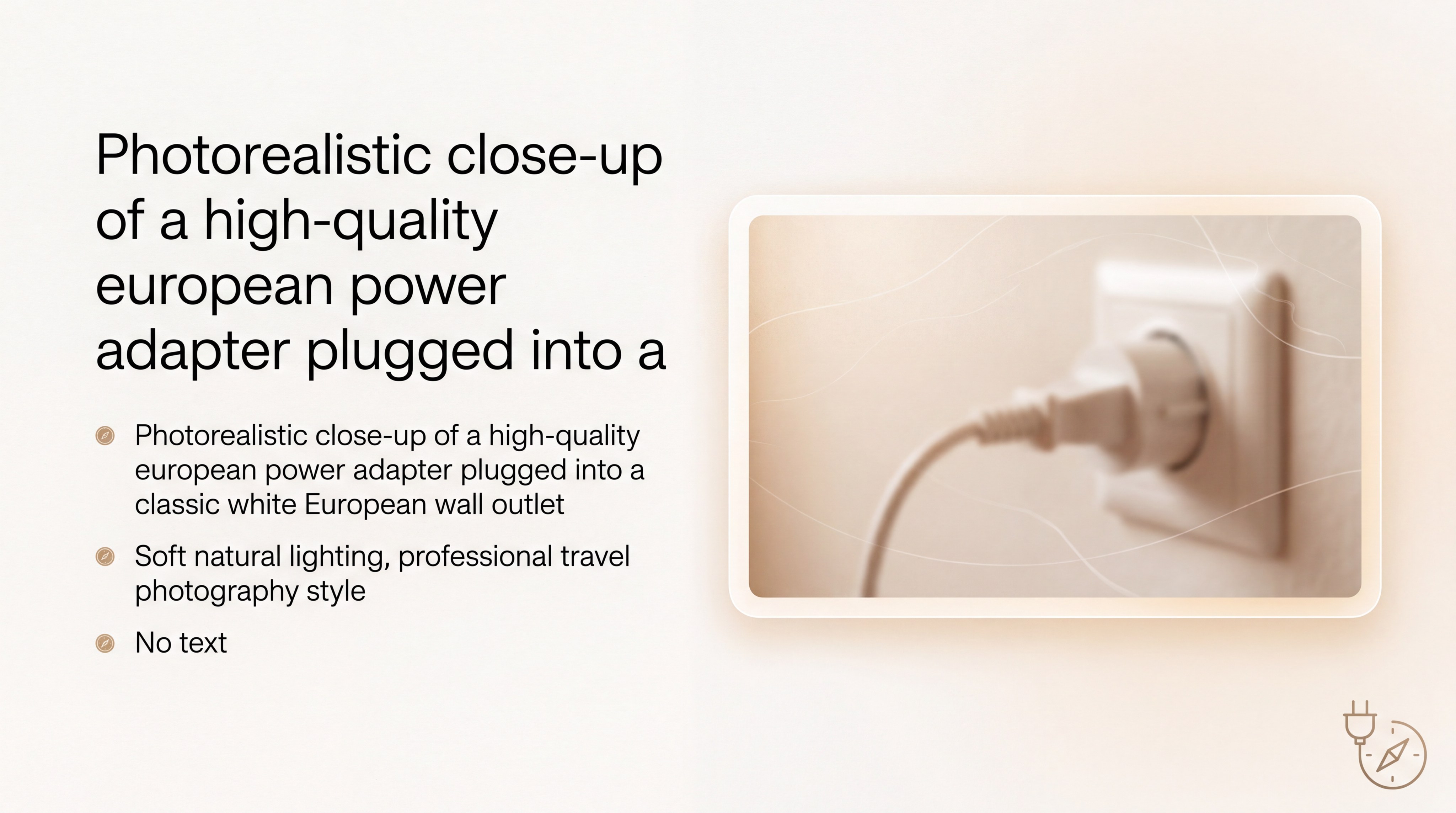
You need a european power adapter because the physical shape of wall outlets in Europe differs from the flat-prong sockets found in North America. Without this bridge, your device’s plug simply cannot make an electrical connection with the local grid.
Understanding Different Outlet Shapes
The most common European outlet is the Type C “Europlug,” characterized by two round holes.
- Standardized across most of the continent.
- Designed for low-voltage, ungrounded devices.
- Accepts the slim, hexagonal-shaped plugs found on many chargers.
Managing Local Voltage Variations
Even with the right shape, you must respect that European grids operate at a higher intensity.
- Most outlets deliver 230V compared to the US 120V.
- Higher voltage can destroy devices not built for it.
Ensuring Constant Device Connectivity
Staying connected requires a reliable interface between your tech and the local infrastructure. Look at it this way:
- Adapters provide the physical fit.
- Your device provides the internal regulation.
- The grid provides the raw power.
Key Takeaway: A physical adapter is the primary tool required for any international traveler to access European power.
| Feature | US Standard | European Standard | |
|---|---|---|---|
| Plug Shape | Flat Prongs (Type A/B) | Round Prongs (Type C/E/F) | |
| Standard Voltage | 120V | 230V |
The physical mismatch is the first barrier every traveler must overcome to keep their electronics functional.
Is your device compatible with a european power adapter?
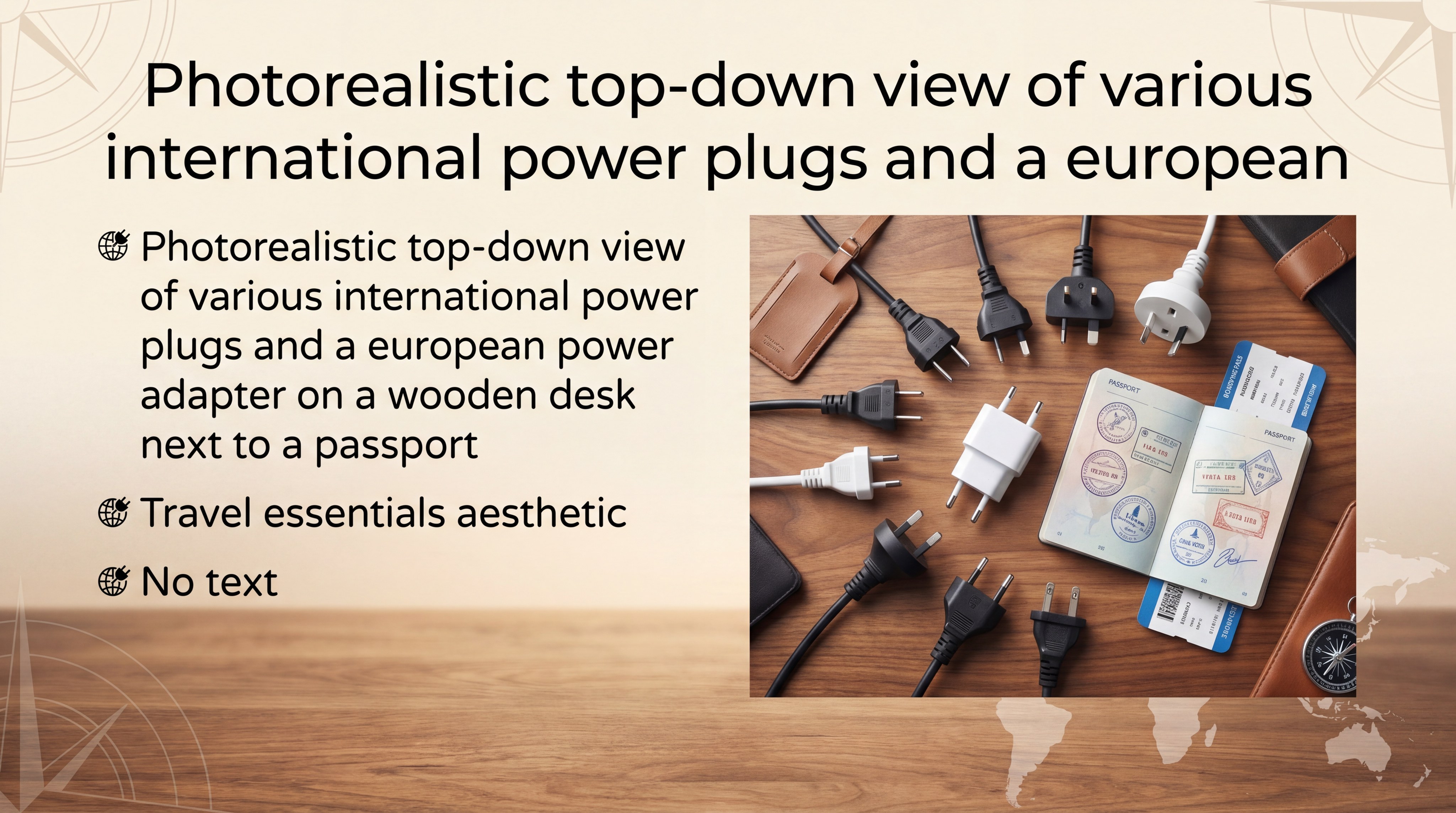
Compatibility depends entirely on whether your device is rated for “dual voltage,” meaning it can handle the 230V European standard. Every european power adapter will pass the full 230V through to your device, so checking the label is a mandatory safety step.
Checking the Input Voltage Range
You must locate the “Input” specifications usually printed in tiny text on the power brick.
- Look for the range “100-240V.”
- Check for the frequency “50/60Hz.”
- If you see “120V” only, do not plug it in.
Identifying Dual Voltage Labels
Most modern electronics like laptops and phones are built for global use and have these labels. But here is the catch: Older grooming tools or specialized medical equipment might only support a single voltage. Using these without a transformer will result in immediate hardware failure.
Evaluating Battery Charging Requirements
Slow charging often occurs if the adapter quality is poor or the voltage doesn’t match the internal draw.
- Ensure the adapter supports the correct amperage.
- Use high-quality chargers for sensitive lithium batteries.
- Verify the connection is secure to avoid arcing.
Key Takeaway: Always verify your device supports up to 240V before using a simple plug adapter to avoid permanent damage.
| Device Type | Compatibility | Requirement | |
|---|---|---|---|
| Smartphones | High (Dual Voltage) | Adapter Only | |
| Laptops | High (Dual Voltage) | Adapter Only | |
| Hair Dryers | Low (Single Voltage) | Converter Needed |
Modern consumer electronics are increasingly universal, but verification remains the gold standard for safety.
How does voltage affect your european power adapter?
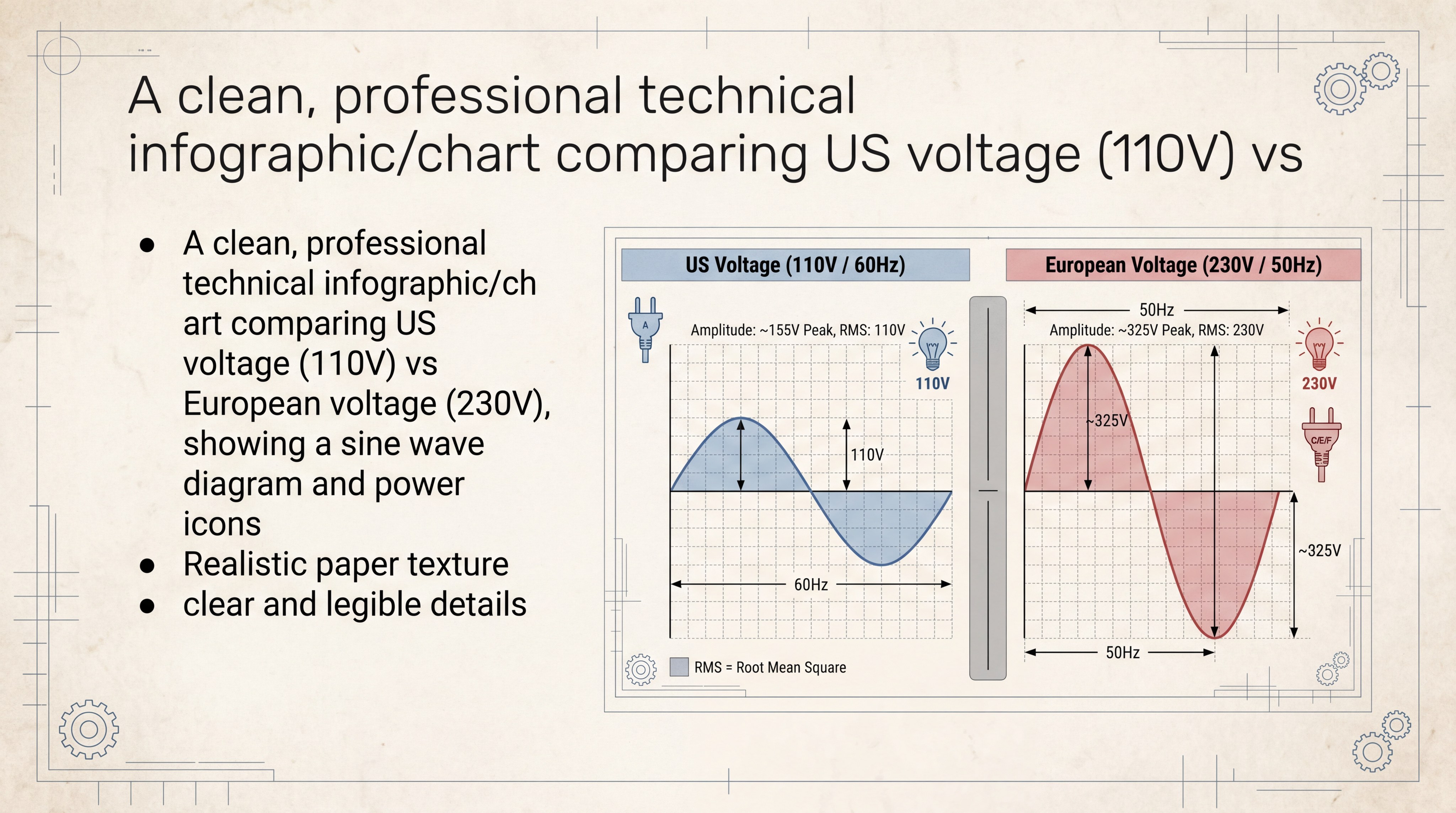
Voltage acts as the electrical pressure, and since Europe uses nearly double the pressure of North America, a european power adapter must safely facilitate this transfer. If the pressure is too high for the device’s internal components, they will overheat and fail.
US vs European Electrical Standards
The standard in the United States is 120V at 60Hz, while Europe typically uses 230V at 50Hz.
- Voltage is the “push” of the electricity.
- Frequency is the “timing” of the electrical waves.
- Discrepancies in both can affect motor-driven devices.
Risks of Overheating Sensitive Electronics
Excessive voltage leads to rapid heat buildup in circuits not designed to dissipate it. Think about this: Plugging a 120V-only device into a 230V outlet is like trying to fill a water balloon with a fire hose. The result is almost always a blown fuse or a melted internal circuit.
Impact of Frequency Differences on Motors
Devices with clocks or internal motors may run at the wrong speed due to the 50Hz cycle.
- Clocks may lose or gain time.
- Motors may run slower and hotter than intended.
- Modern digital circuits are usually immune to this.
Key Takeaway: European voltage is significantly more powerful, requiring strict adherence to device ratings to prevent fire hazards.
| Metric | North America | Europe | |
|---|---|---|---|
| Voltage | 120V | 230V | |
| Frequency | 60Hz | 50Hz |
The fundamental difference in electrical pressure is why the distinction between adapters and converters is so critical.
Which plug type works with a european power adapter?
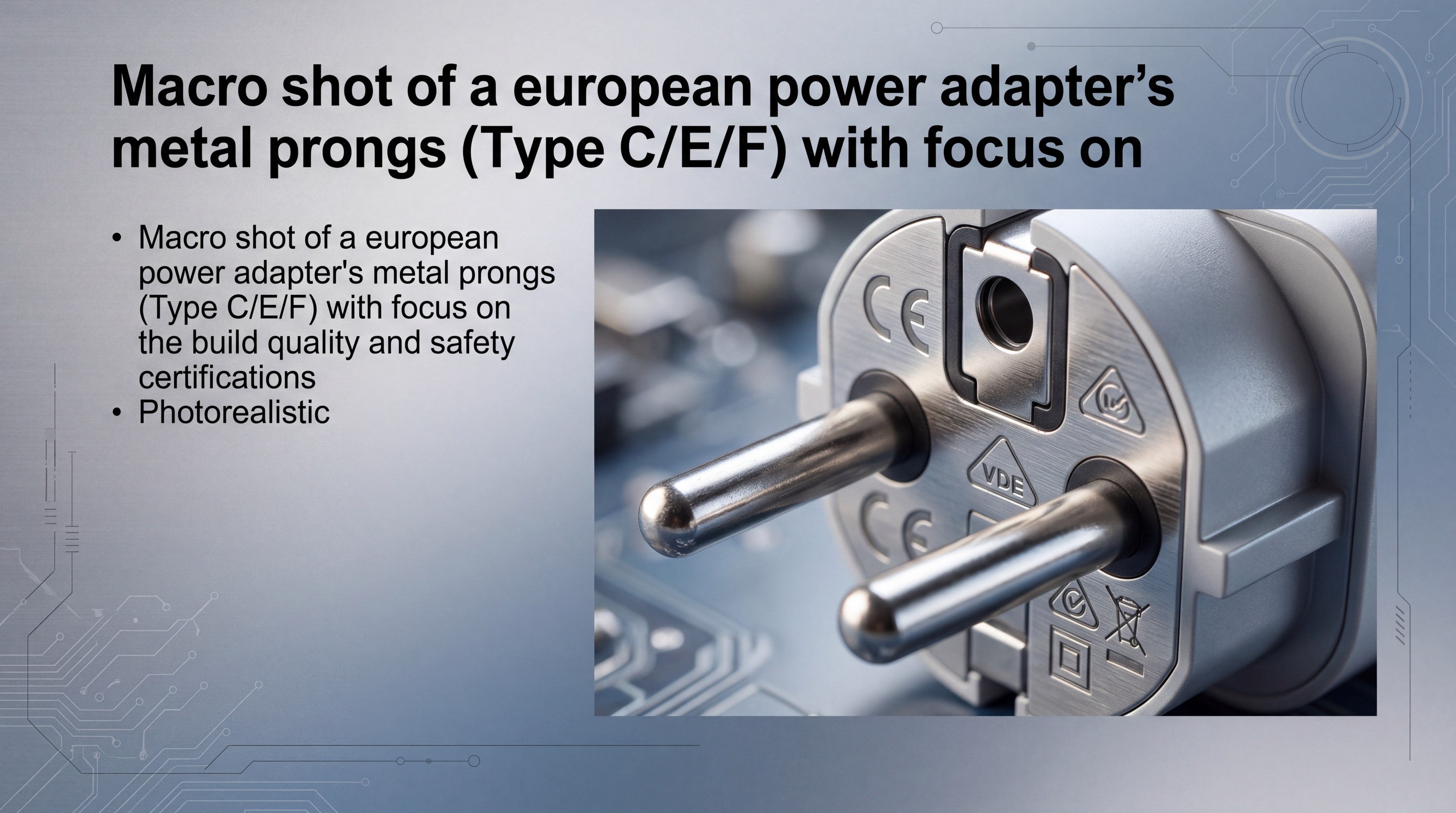
The Type C, E, and F plugs are the primary styles that work with a european power adapter across the mainland. These are all characterized by two round metal prongs, though they differ slightly in how they handle grounding connections.
Continental Two-Round-Prong Plugs
The Type C “Europlug” is the universal standard for non-grounded, low-power devices.
- It fits into almost every outlet in Europe.
- The pins are slightly flexible to accommodate variations.
- It is perfect for phone and camera chargers.
Regional Variations in Italy and Switzerland
While these countries have unique three-pin standards, they are usually compatible with Type C. Here is the deal:
- Switzerland uses Type J (three pins in a flat triangle).
- Italy uses Type L (three pins in a straight line).
- Standard two-pin adapters usually fit into the outer holes.
Compatibility with Recessed Wall Outlets
Many European sockets are deeply recessed into a round “well” in the wall.
- Adapters must have a circular face to fit.
- Boxy adapters may be blocked by the outlet’s rim.
- Ensuring a flush fit prevents loose connections.
Key Takeaway: The two-round-prong design is the most versatile shape for travel throughout mainland Europe.
| Country | Outlet Type | Compatibility | |
|---|---|---|---|
| Germany/France | Type E/F | Full | |
| Switzerland | Type J | Two-Pin Compatible | |
| Italy | Type L | Two-Pin Compatible |
Selecting the right prong shape ensures your device can physically access the power grid in various nations.
When should you use a converter with a european power adapter?
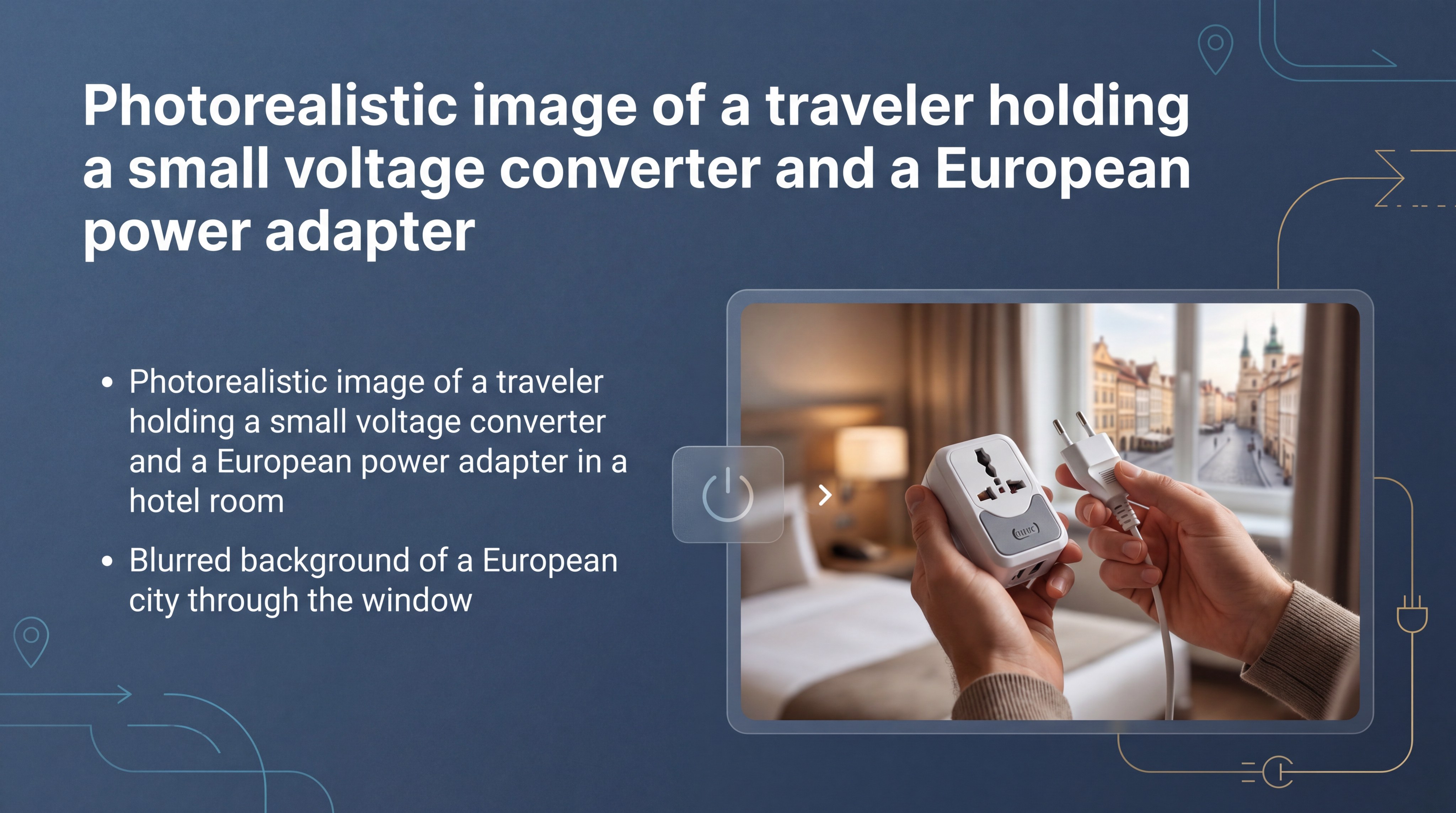
You should use a converter with a european power adapter only when you are using high-wattage, single-voltage appliances like hair dryers or curling irons. A converter actively steps down the 230V European electricity to the 120V your American appliance expects to receive.
Differences Between Adapters and Converters
It is vital to distinguish between a physical shape changer and an electrical transformer.
- Adapters only change the plug configuration.
- Converters change the actual voltage levels.
- Using an adapter where a converter is needed causes damage.
Safe Use of High-Wattage Heat Appliances
Heating elements are the most common victims of voltage mismatches during international travel. Just remember: If your hair dryer doesn’t have a voltage switch, it will likely burn out in seconds. Converters for these items are heavy and expensive, often making it cheaper to buy a local version.
Why Most Modern Tech Skips the Converter
Silicon chips in phones and laptops are designed to handle variable input automatically.
- Check the “AC Input” on your charger.
- If it says “100-240V,” no converter is needed.
- This saves weight and space in your luggage.
Key Takeaway: Converters are specialized tools for non-digital appliances; most travelers only need simple adapters for modern tech.
| Tool | Function | Best For | |
|---|---|---|---|
| Adapter | Changes Shape | Laptops, Phones, Tablets | |
| Converter | Changes Voltage | Hair Dryers, Irons, Steamers |
Determining the internal capabilities of your gear dictates whether you need the extra weight of a voltage converter.
Can a european power adapter handle dual voltage devices?
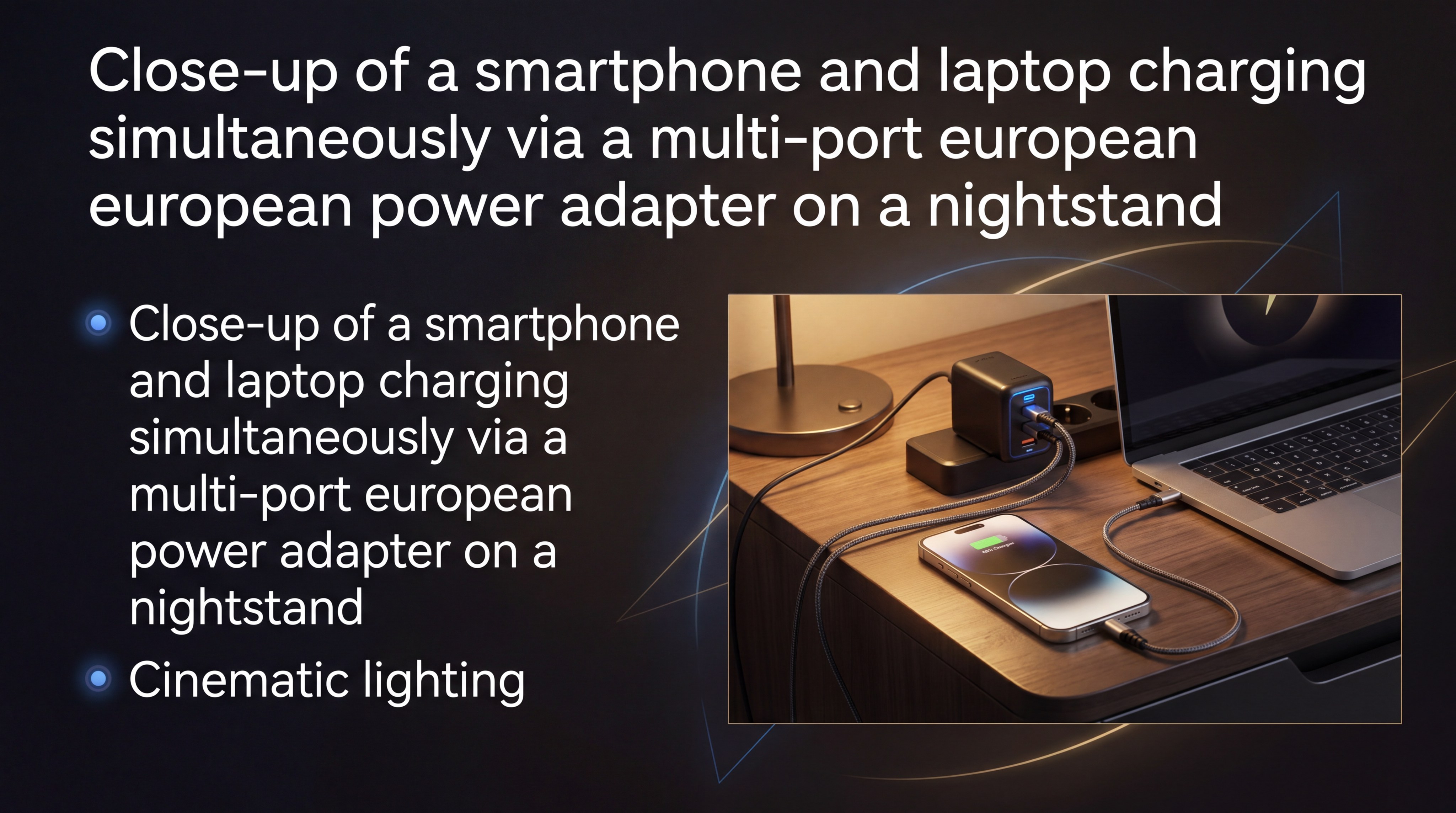
Yes, a european power adapter is specifically designed to work seamlessly with dual voltage electronics. These devices have internal switching power supplies that automatically regulate the incoming 230V down to the specific DC voltage required by the battery.
Charging Smartphones and Laptops
These devices are the most travel-friendly because they are almost universally dual voltage.
- The adapter passes the raw current through.
- The “power brick” does the heavy lifting.
- Charging speeds remain consistent with domestic use.
Powering Tablets and Digital Cameras
Similar to phones, these gadgets typically only require a physical plug adjustment to function. Here is the truth: You can charge multiple devices through a single adapter if you use a multi-port USB hub. This reduces the number of individual wall adapters you need to pack for your journey.
Using Modern High-Speed USB-C Chargers
USB-C technology has standardized power delivery even further across international borders.
- USB-C chargers are inherently designed for global grids.
- They negotiate the correct power draw for each device.
- High-quality adapters ensure these chargers don’t overheat.
Key Takeaway: Dual voltage devices are perfectly safe when used with a standard adapter, as they manage the voltage conversion internally.
| Device | Voltage Rating | Protection Method | |
|---|---|---|---|
| iPhone | 100-240V | Internal Switching | |
| MacBook | 100-240V | Power Adapter Brick | |
| Camera | 100-240V | External Charger |
The internal intelligence of modern chargers makes international travel much simpler for the average digital user.
How to choose a reliable european power adapter for travel?
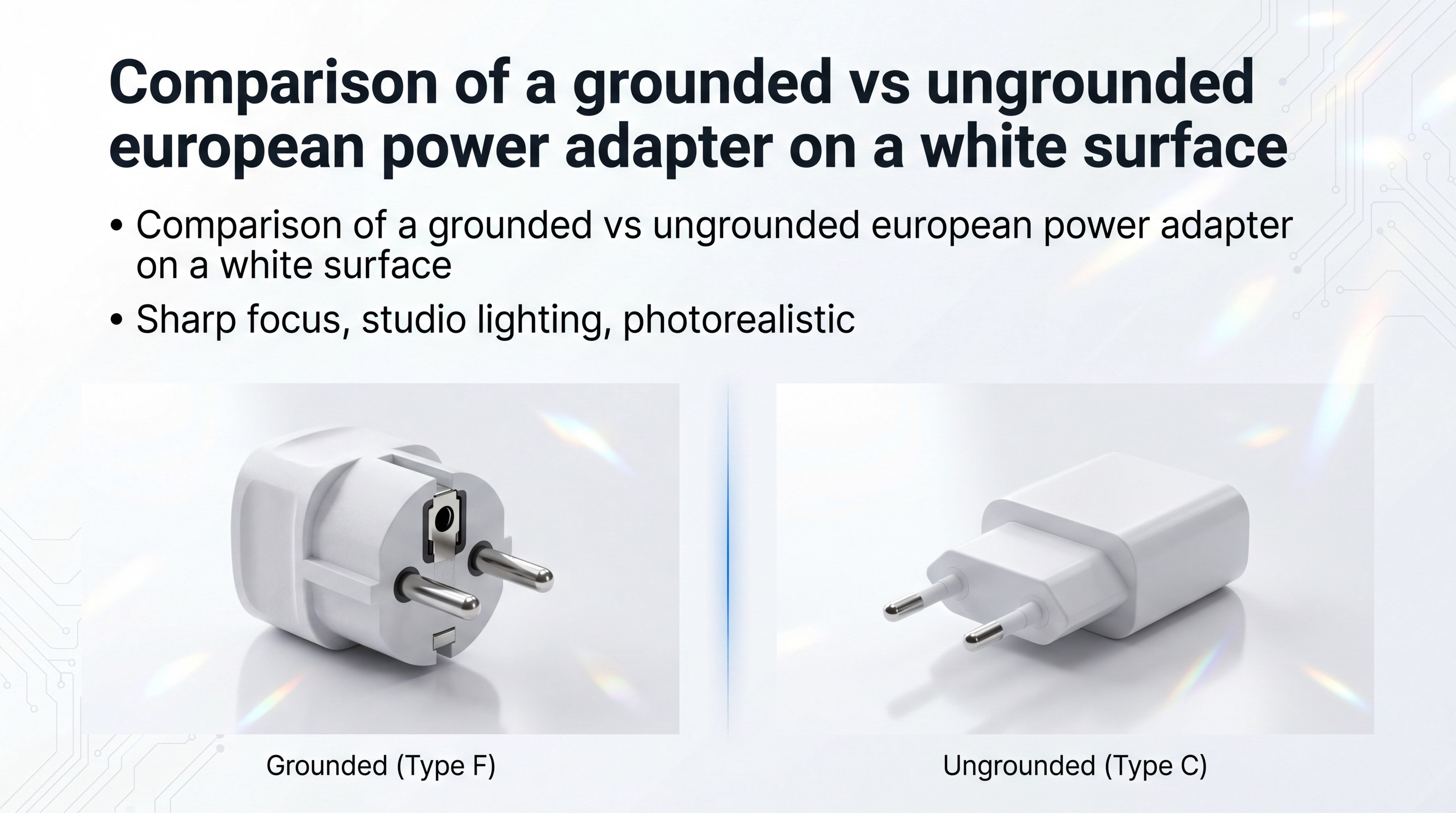
Choosing a reliable european power adapter requires looking for certified safety marks and a build quality that ensures a tight fit. A poor adapter can cause sparking or damage the delicate internal charging circuits of your expensive smartphones and laptops.
Grounded vs Ungrounded Adapter Designs
Grounded adapters feature three pins or metal strips to provide an extra layer of electrical safety.
- Essential for high-power devices like laptops.
- Prevents static buildup on metal casings.
- Grounded sockets in Europe use “Schuko” side clips.
Benefits of Compact Travel Sizes
A smaller footprint is often better when dealing with crowded European hotel outlets. Think about this: Many outlets are placed close together or near furniture. A bulky, oversized adapter might block the adjacent socket or prevent you from pushing a nightstand flush against the wall.
Integrated USB Ports for Multiple Devices
Modern adapters often include built-in USB-A and USB-C ports for direct charging.
- Reduces the number of separate chargers you carry.
- Allows you to charge a laptop and phone simultaneously.
- Check the total wattage to ensure fast charging.
Key Takeaway: Prioritize safety certifications and grounded designs when selecting an adapter for high-value electronic equipment.
| Factor | Low-Quality Adapter | High-Quality Adapter | |
|---|---|---|---|
| Build Material | Thin Plastic | Fire-Retardant Polycarbonate | |
| Connection | Loose/Wobbly | Snug/Secure | |
| Certifications | None | CE, RoHS, FCC |
Investing in a premium adapter protects your electronics from the unpredictable surges of unfamiliar power grids.
Are universal sockets compatible with a european power adapter?
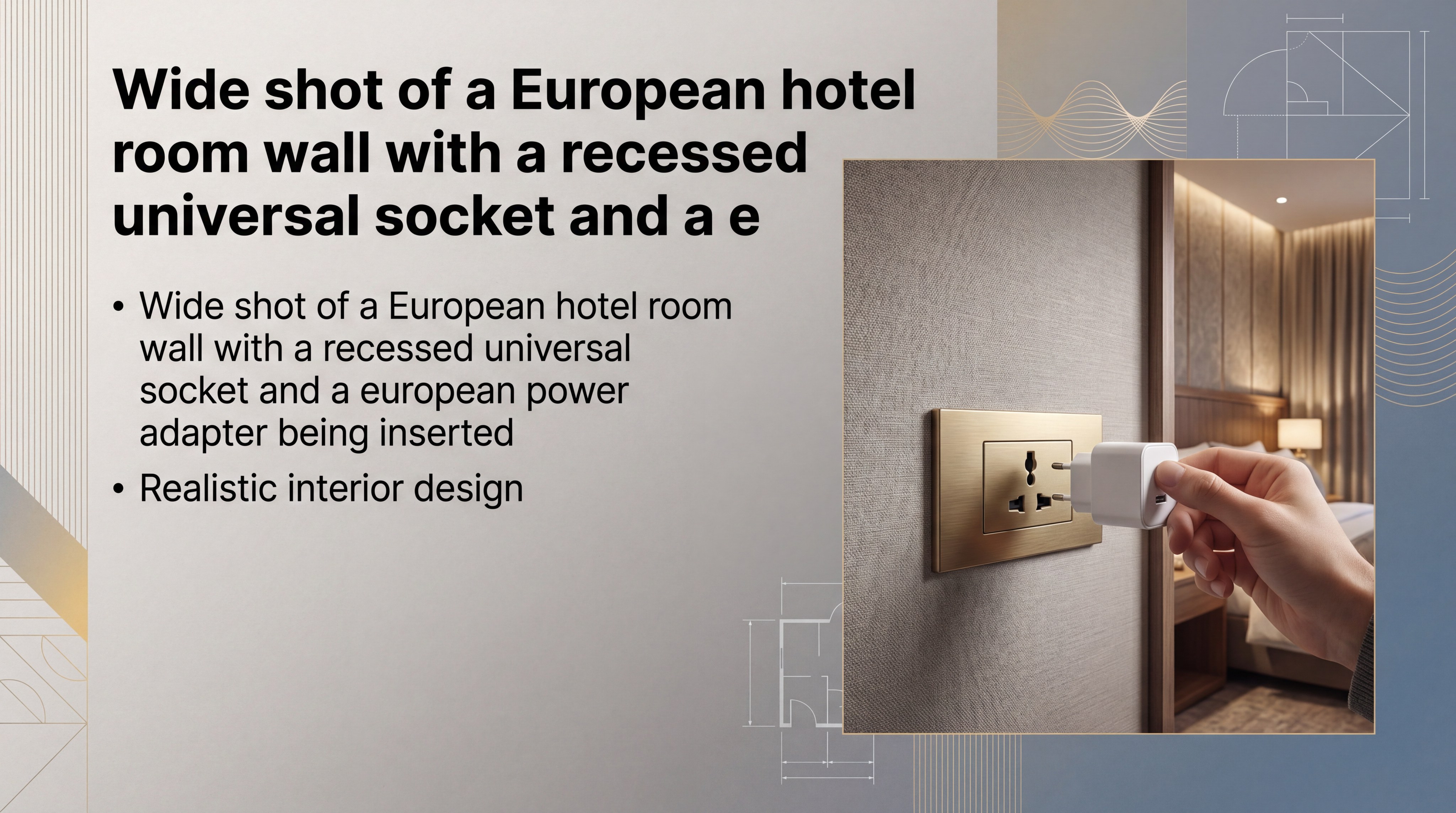
Universal sockets are generally compatible with a european power adapter, but their design can sometimes make it difficult to achieve a stable connection. These outlets are designed to accept multiple plug styles, which often results in a shallower grip compared to dedicated single-standard sockets.
Dealing with Deeply Recessed Wall Outlets
European walls often feature “Type F” sockets that are sunken two inches deep into the masonry.
- Standard rectangular adapters cannot reach the pins.
- You need a “round-face” adapter to fit the hole.
- Forced connections can damage the wall plate.
Solving the Problem of Limited Room Outlets
Older European hotels frequently have only one or two available sockets for guests. It is a common struggle: If you have three devices but only one plug, you are in trouble. Bringing a small power strip or a multi-port adapter is the most effective way to manage limited resources.
Using Multi-Plug Strips in Budget Hotels
Portable power strips allow you to use one adapter to power multiple domestic devices.
- Connect the adapter to the wall.
- Plug the power strip into the adapter.
- Charge all your gear from one point.
Key Takeaway: Recessed sockets are the biggest physical hurdle; ensure your adapter has a slim, round profile to fit them.
| Outlet Condition | Challenge | Solution | |
|---|---|---|---|
| Deeply Recessed | Blocked Pins | Round-faced Adapter | |
| Single Socket | Limited Charging | Multi-port Hub | |
| Loose Grip | Intermittent Power | High-friction Prongs |
Understanding the physical environment of European infrastructure allows you to prepare for common charging frustrations.
Does a european power adapter work in the UK and Ireland?
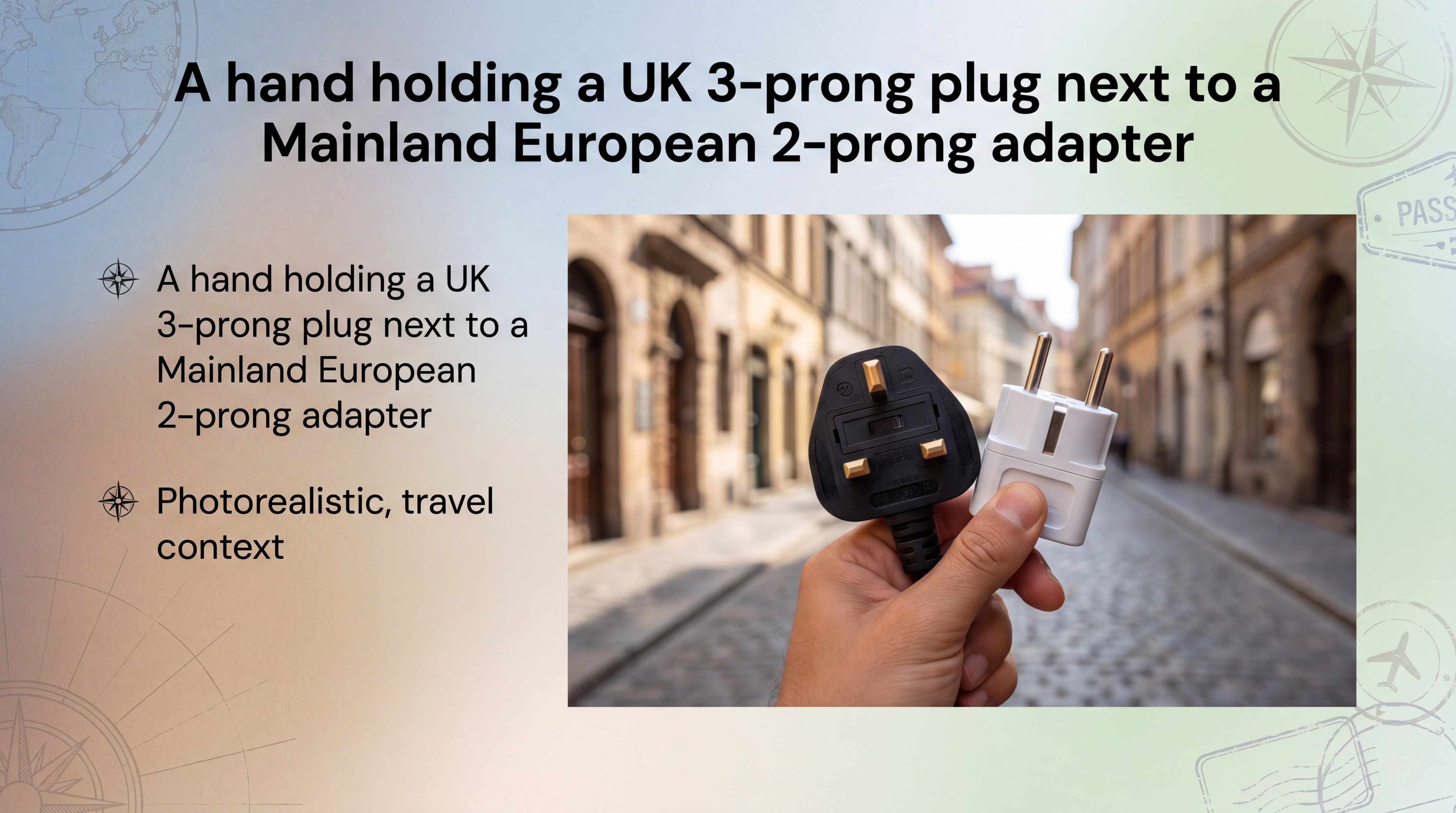
A standard continental european power adapter will not work in the UK or Ireland because they use the Type G three-prong rectangular system. Despite being part of the same geographic region, the electrical infrastructure in the British Isles is entirely different from that of the mainland.
Three-Prong Rectangular Plug Requirements
The Type G plug is famous for its large size and three heavy, rectangular brass pins.
- Includes a built-in fuse for safety.
- The top pin is a dedicated ground.
- Requires a unique “UK Adapter” for travelers.
Using British Adapters During Airport Layovers
If your flight connects through London or Dublin, you will need a Type G adapter to charge. Here is the reality: Don’t get stranded with a dead phone at Heathrow. Keeping a small UK adapter in your carry-on is a wise move, even if your final destination is Paris or Berlin.
Regional Electrical Commonalities
While the plug shapes differ, the voltage and frequency are identical to the mainland.
- The UK also uses 230V power.
- The frequency remains a steady 50Hz.
- Your dual voltage electronics are safe in both regions.
Key Takeaway: Always pack a separate Type G adapter if your itinerary includes the United Kingdom or Ireland.
| Region | Plug Type | Pin Shape | |
|---|---|---|---|
| Mainland Europe | Type C / E / F | Round | |
| UK & Ireland | Type G | Rectangular |
The divide between the British Isles and the continent is purely physical, not electrical, in nature.
Where can you find a high-quality european power adapter?
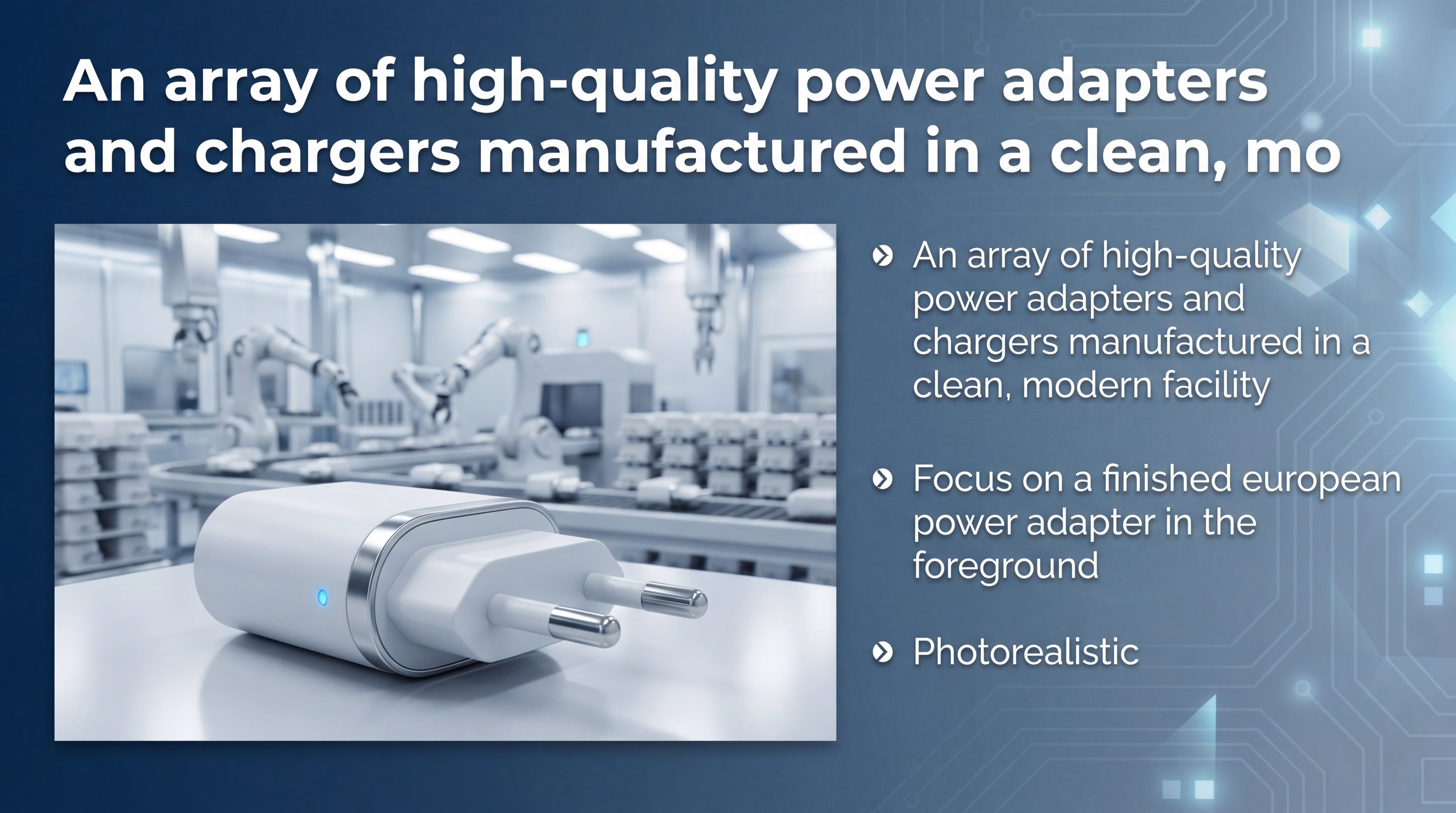
Finding a high-quality european power adapter involves identifying manufacturers that adhere to global safety standards and rigorous testing protocols. Professional-grade power solutions are built to withstand travel wear and provide stable electricity to sensitive high-end electronics.
Sourcing Certified Global Charging Solutions
Reliable products are backed by certifications such as CE, RoHS, and UL listed marks.
- Ensures the plastic is fire-retardant.
- Guarantees the metal prongs are high conductivity.
- Protects against short circuits and surges.
Selecting Efficient Power Supplies for Travel
Efficiency is about getting the maximum charge with the least amount of heat generation. Consider this: Modern GaN (Gallium Nitride) technology allows for much smaller adapters that stay cool. These are the gold standard for travelers who need to pack light without sacrificing performance.
Identifying Trusted Manufacturing Standards
A reputable manufacturer will perform “aging tests” and quality control on every batch produced.
- Tested for thousands of plug cycles.
- Designed for precision tolerances.
- Backed by comprehensive warranties.
Key Takeaway: Trust only certified manufacturers for power solutions to ensure the longevity and safety of your mobile devices.
| Quality Standard | Cheap Generic | Professional Grade | |
|---|---|---|---|
| Material | Recycled Plastic | High-grade PC/ABS | |
| Protection | None | Over-voltage/Over-heat | |
| Longevity | Months | Years |
Quality power components are the unsung heroes of a successful international business trip or vacation.
Conclusion
Navigating the electrical landscape of Europe doesn’t have to be a source of travel anxiety. By understanding the critical difference between shape-changing adapters and voltage-regulating converters, you can protect your investments and stay connected. At Merryking, we envision a world where global power is seamless, safe, and efficient for every user. We are dedicated to manufacturing world-class charging solutions that meet the highest international standards of safety and performance. To find the perfect charging solution for your next project or journey, contact us today .
Frequently Asked Questions (FAQ)
Can I use my American hair dryer in Europe with just an adapter?Generally no, because most American hair dryers are single-voltage (120V) and will be destroyed by the 230V European current. You would need a bulky voltage converter, though it is usually safer and easier to buy a dual-voltage travel dryer or use the one provided by your hotel.
What is the best way to charge multiple devices at once?The best solution is a multi-port USB-C travel adapter that offers both a standard AC pass-through and several high-speed USB ports. This allows you to charge your laptop, phone, and tablet simultaneously from a single wall outlet, which is a common limitation in older European buildings.
How do I know if my laptop is dual voltage?You can confirm this by reading the “Input” section on the bottom of your laptop’s power brick. If it lists a range such as “100V-240V,” it is dual voltage and only requires a physical plug adapter to work anywhere in Europe.
Do I need a separate adapter for Switzerland and Italy?While Switzerland (Type J) and Italy (Type L) have their own three-pin standards, the standard two-round-prong “Europlug” (Type C) will fit into almost all modern outlets in these countries. It is still a good idea to carry a dedicated adapter if you have heavy, grounded equipment that requires a three-pin connection.
Can a poor-quality adapter damage my phone?Yes, because a loose or cheaply made adapter can cause electrical arcing or intermittent power delivery, which stresses the battery and charging circuitry. Using a certified, snug-fitting adapter is essential to maintaining the long-term health of your high-end mobile electronics.