You need a travel adapter that matches the physical plug configuration of your destination and a power supply that supports the local voltage standard. Business travel is stressful enough without discovering your critical equipment won’t charge in a foreign boardroom. Arriving at an international site only to find incompatible outlets can halt productivity and even damage expensive industrial hardware. Learning How to Choose the Right Power Adapter for Different Countries ensures your global operations remain seamless regardless of the local electrical grid.
Why do you need an international power adapter for business?
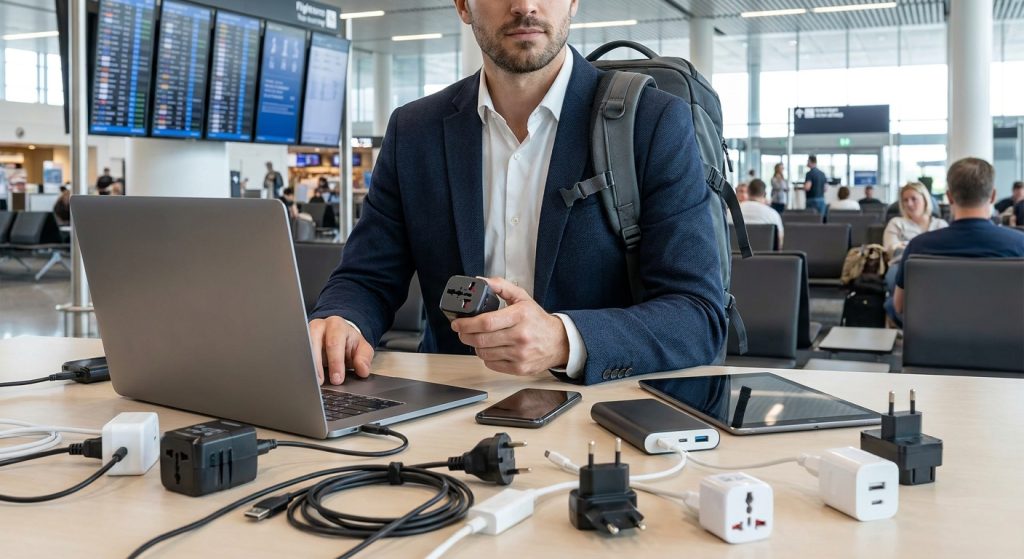
You need an international power adapter to bridge the physical gap between your device’s plug and foreign wall outlets. When deploying equipment globally, understanding How to Choose the Right Power Adapter for Different Countries is the first step in maintaining operational continuity. Without the correct interface, your team cannot power laptops, medical monitors, or specialized diagnostic tools. Think of the adapter as a vital mechanical bridge for your electrical needs.
Ensuring operational continuity in foreign markets
Maintaining a steady workflow requires constant access to power, regardless of where your business takes you. Modern professionals often carry multiple high-value devices that require specific charging protocols.
- Avoid downtime during critical presentations or site inspections.
- Maintain communication channels with your home office.
- Support high-performance hardware in field environments.
Believe it or not, a simple plug mismatch can delay a multi-million dollar project.
Protecting your expensive professional hardware
Using a high-quality adapter prevents physical damage to your device’s original plug pins and ensures a stable connection. Cheap, uncertified adapters often fit loosely, which can lead to arcing or intermittent power loss.
- High-grade materials resist heat and prevent casing deformation.
- Secure fitment reduces the risk of electrical shorts.
- Robust designs withstand the rigors of frequent international transport.
Key Takeaway: Professional-grade adapters are essential for physical compatibility and protecting your equipment from mechanical wear.
| Feature | Importance | Business Impact | |
|---|---|---|---|
| Mechanical Fit | High | Prevents plug damage | |
| Material Quality | High | Reduces fire risk | |
| Portability | Medium | Simplifies logistics |
A secure physical connection is the foundation of electrical safety in any international business setting.
What is the difference between an adapter and a converter?
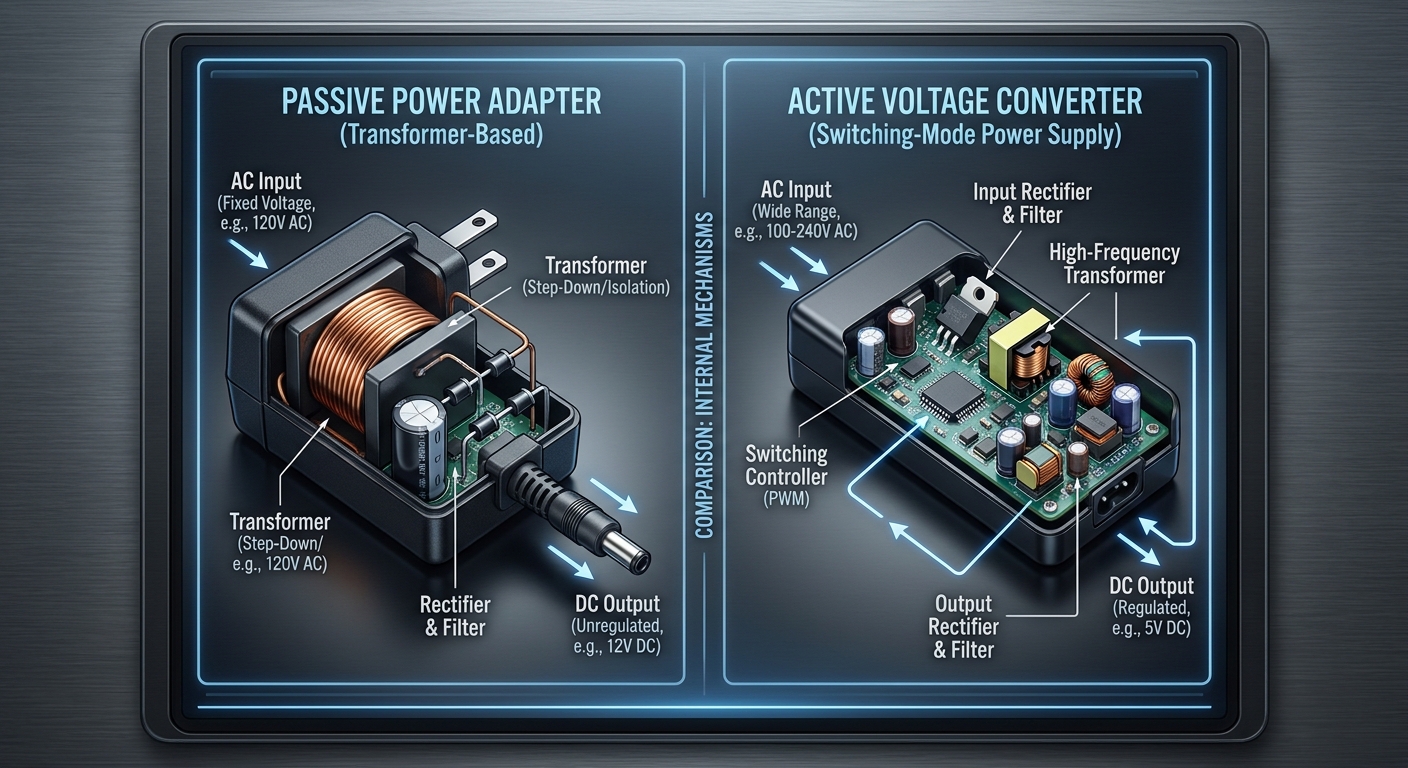
An adapter changes the physical shape of the plug, while a converter modifies the actual electrical voltage coming from the wall. Knowing How to Choose the Right Power Adapter for Different Countries requires distinguishing between these two functions to avoid frying your electronics. Most modern electronics use a switching power supply that handles various voltages, making a converter unnecessary. However, for older or single-voltage equipment, a converter is mandatory.
Understanding the role of passive adapters
Passive adapters are simple plastic and metal devices that allow a specific plug to fit into a different socket type. They do not contain any internal electronics to change the voltage or frequency of the electricity.
- Lightweight and highly portable for travel.
- Compatible with dual-voltage devices like laptops and smartphones.
- Cost-effective for bulk deployment to international teams.
The bottom line is: if the voltage is the same, an adapter is all you need.
When to deploy active voltage converters
Voltage converters use internal transformers or electronic circuits to step up or step down the voltage to match your device’s requirements. This is critical when using 110V equipment in a 220V region, or vice-versa.
- Essential for high-draw items like industrial heating tools.
- Prevents catastrophic failure in single-voltage legacy equipment.
- Heavier and bulkier than standard passive adapters.
But here is the kicker: using the wrong one can destroy your device in seconds.
Key Takeaway: Always check if your device is “Dual Voltage” before deciding between a simple adapter and a heavy converter.
| Device Type | Mechanism | Primary Use Case | |
|---|---|---|---|
| Adapter | Physical Reconfiguration | Plug compatibility | |
| Converter | Voltage Transformation | Single-voltage legacy gear | |
| Transformer | Induction-based Change | High-wattage industrial tools |
Choosing based on your device’s internal power capabilities prevents hardware loss.
How do voltage differences impact your electronic devices?
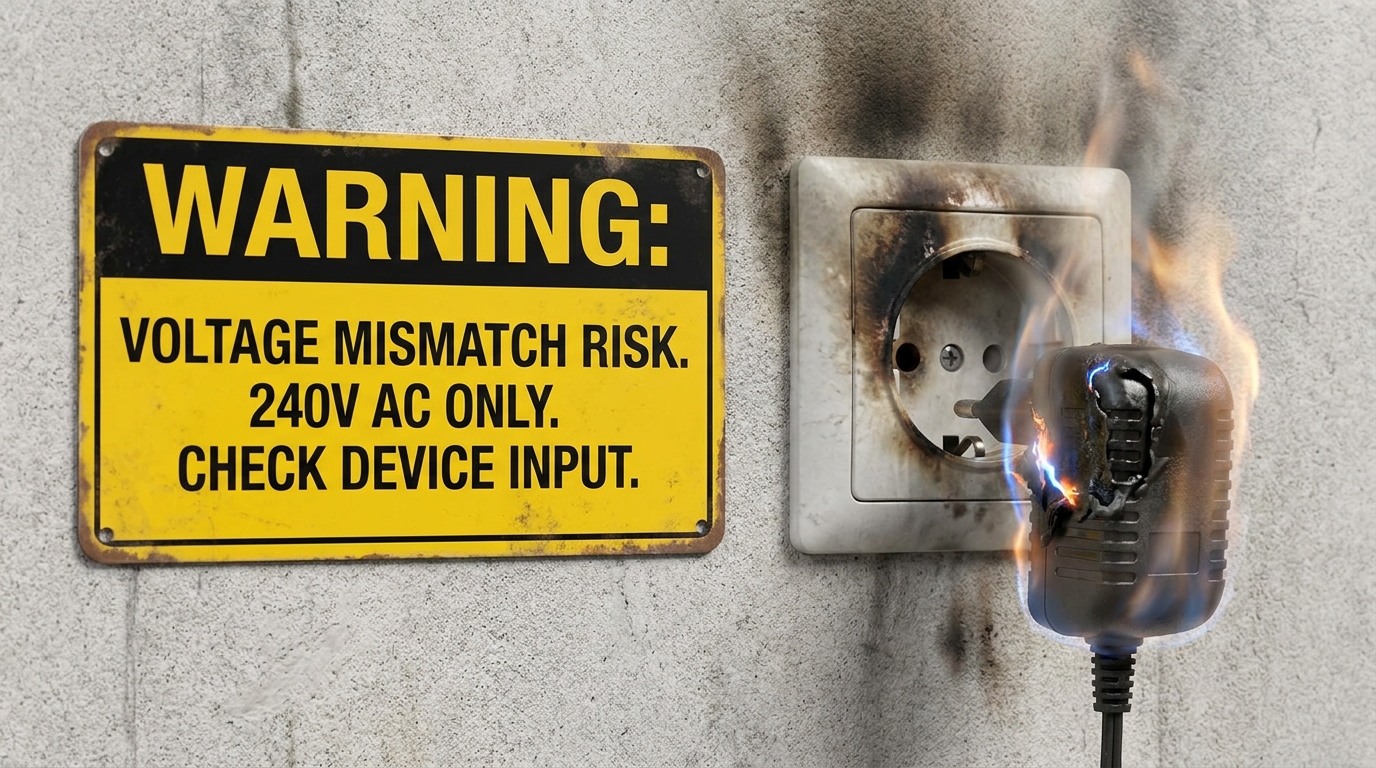
Voltage mismatches can cause your electronics to overheat, malfunction, or suffer permanent internal circuit failure. Understanding How to Choose the Right Power Adapter for Different Countries involves recognizing that global grids typically operate at either 100-120V or 220-240V. Plugging a 110V device directly into a 230V outlet without a converter is a recipe for disaster. This mismatch forces more current through the device than it was designed to handle.
The danger of high-voltage surges
When a device receives double the intended voltage, the internal components are subjected to extreme electrical stress. This often results in a “blown” fuse, a scorched motherboard, or even an external fire.
- Capacitors inside the power supply may explode.
- Insulating materials can melt due to excessive heat.
- Sensitive microprocessors are often the first to fail.
Think about it: is it worth risking your
2,000laptopona
5 adapter?
Impacts of under-voltage on performance
Conversely, providing too little voltage can also be harmful, as the device may draw more current to compensate for the lack of power. This “brownout” effect can cause motors to stall or digital circuits to behave erratically.
- Screens may flicker or fail to turn on entirely.
- Charging times for batteries will increase significantly.
- Internal components may wear out faster due to inefficient operation.
You might be wondering: does this apply to modern chargers?
Key Takeaway: Matching the device’s input rating to the local grid’s output is non-negotiable for safety and longevity.
| Region | Standard Voltage | Frequency | |
|---|---|---|---|
| North America | 120V | 60Hz | |
| Europe/UK | 230V | 50Hz | |
| Japan | 100V | 50/60Hz |
Consistent voltage delivery is the most critical factor in preventing electrical fires and hardware damage.
Should you choose single or dual voltage power supplies?
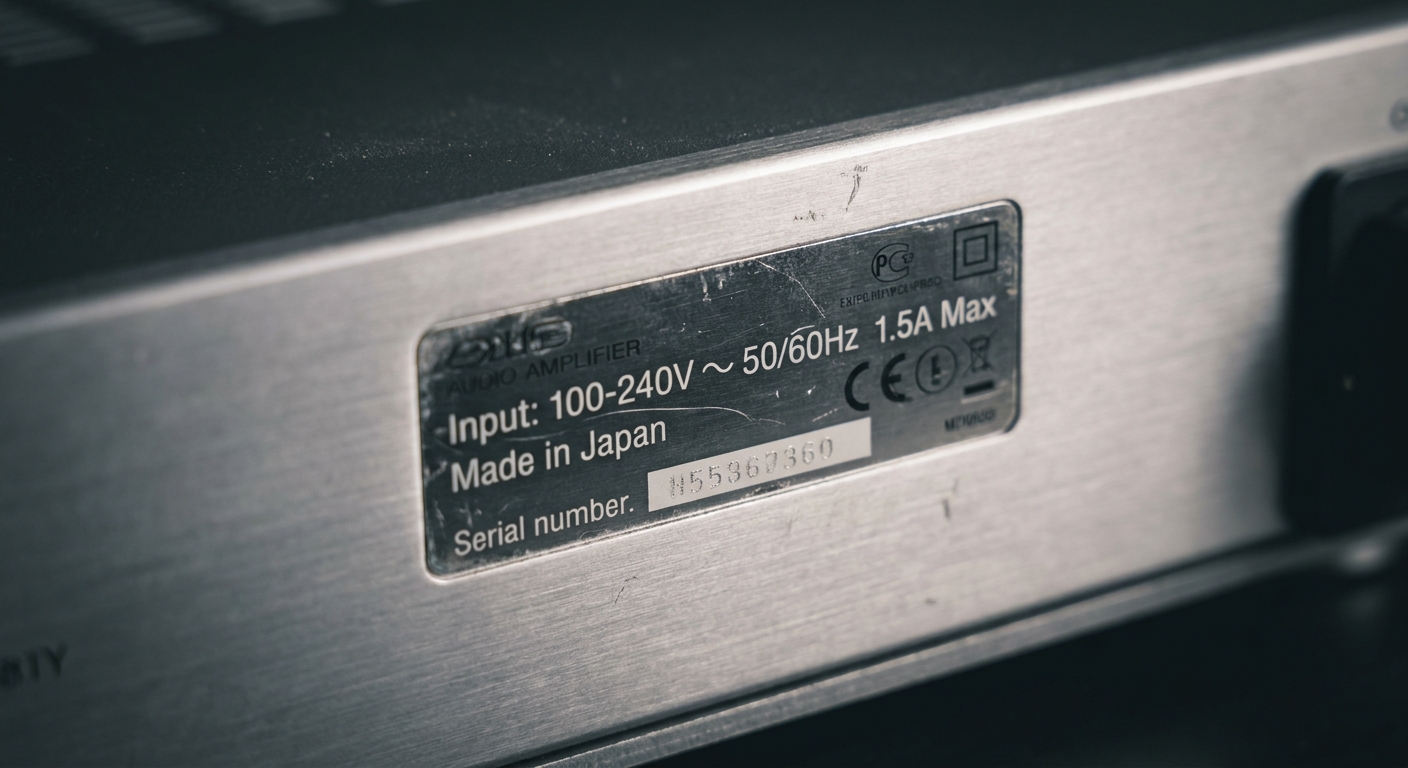
Dual voltage power supplies are the best choice for international business because they automatically adapt to any local voltage between 100V and 240V. When learning How to Choose the Right Power Adapter for Different Countries , you should prioritize devices equipped with switching power supplies for maximum flexibility. These units use high-frequency switching to regulate power efficiently across a wide range of inputs. Single-voltage devices are far more limited and require external converters for global use.
Identifying dual voltage labels
Most modern electronics, like those produced by top manufacturers, clearly state their input range on the product label. Look for text that says “Input: 100-240V ~ 50/60Hz” to confirm compatibility.
- Covers the standard voltage of almost every country on earth.
- Eliminates the need for heavy and expensive voltage converters.
- Provides peace of mind for employees traveling between continents.
It’s as simple as reading the fine print on the back of your charger.
Risks associated with single-voltage hardware
Single-voltage devices are designed for one specific grid, such as 110V in the US or 230V in the EU. Using these abroad without a transformer is the most common cause of electrical failure for business travelers.
- Common in older industrial equipment and specialized tools.
- Often requires a dedicated, heavy-duty voltage transformer.
- Increases the risk of accidental user error during setup.
Let’s be honest: carrying a heavy transformer is a logistical nightmare.
Key Takeaway: Wide-range dual voltage inputs are the industrial standard for portable international equipment.
| Specification | Single Voltage | Dual Voltage | |
|---|---|---|---|
| Input Range | Fixed (e.g., 110V) | 100V – 240V | |
| Global Utility | Low | High | |
| Converter Required | Yes (usually) | No |
Standardizing on dual-voltage hardware significantly reduces the risk of accidental equipment destruction.
Which plug types are used in major global regions?
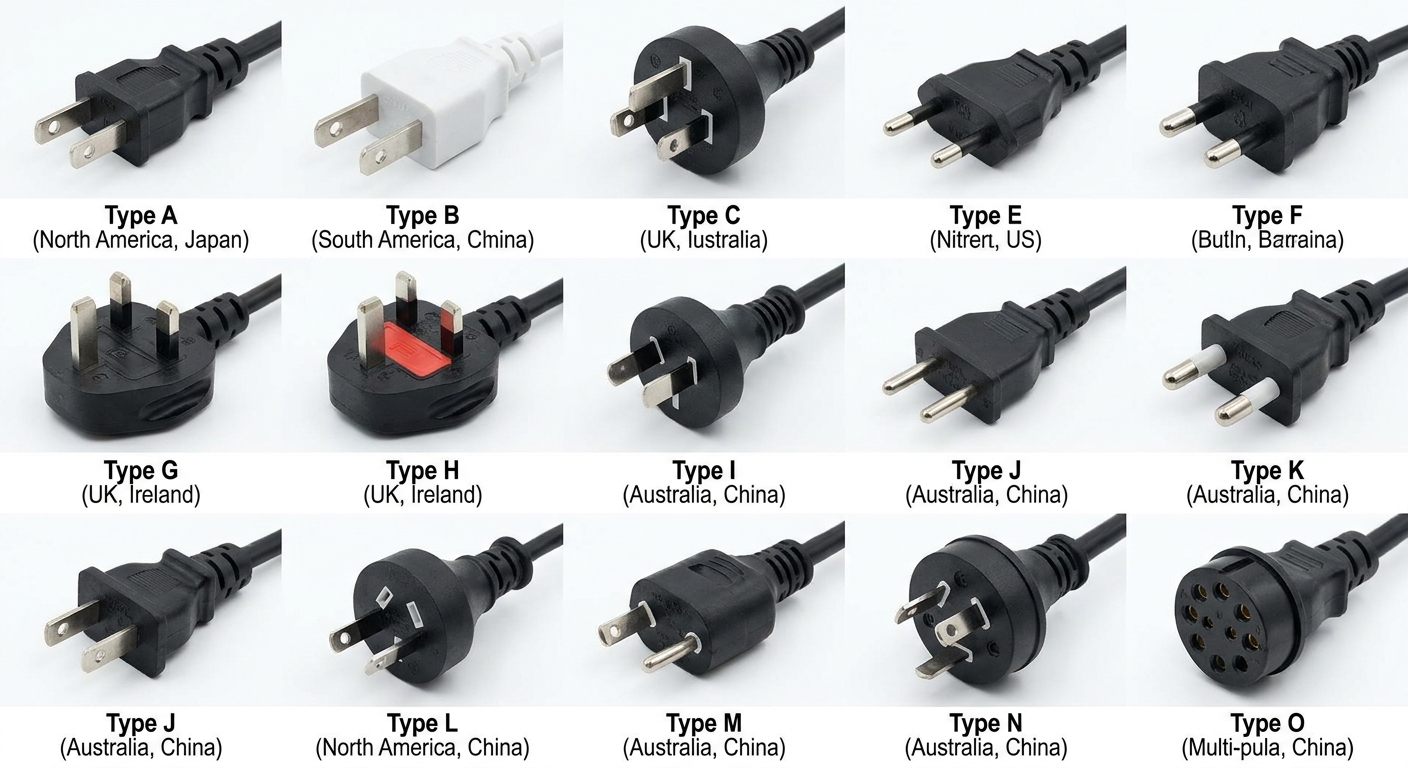
There are 15 main plug types currently in use globally, labeled Type A through Type O. Understanding How to Choose the Right Power Adapter for Different Countries requires knowing which letter corresponds to your specific destination. For example, North America uses Types A and B, while the United Kingdom relies on Type G. Identifying these standards beforehand allows you to source the correct adapters for your entire fleet.
Navigating the European and UK standards
Europe primarily uses Types C, E, and F, which feature two round pins, though the UK and Ireland use the distinctive Type G with three rectangular blades. These standards are highly reliable but vary significantly in their grounding methods.
- Type C (Europlug) is the most common for low-power devices.
- Type G is known for its robust safety features and internal fuses.
- Type E/F are common in Germany, France, and neighboring nations.
Here is the deal: one size definitely does not fit all in Europe.
Asian and Oceanic plug variations
China, Japan, and Australia use a mix of Type A, C, and I, often requiring unique adapter heads. Japan uses a two-pin system similar to the US, while Australia and New Zealand use the slanted Type I plug.
- China uses a combination of A, C, and I depending on the region.
- Japan’s Type A plugs are usually unpolarized (even pins).
- Australia’s Type I is polarized and grounded for safety.
The truth is, even neighboring countries can have completely different outlets.
Key Takeaway: Mapping your destination to the specific plug letter (A-O) is the most effective way to ensure physical compatibility.
| Region | Common Plug Types | Description | |
|---|---|---|---|
| North America | A, B | Two flat pins / Grounded | |
| UK / Singapore | G | Three rectangular blades | |
| Europe | C, E, F | Two round pins | |
| Australia | I | Slanted flat pins |
Maintaining a regional plug chart prevents last-minute hardware compatibility issues during international deployments.
What are the benefits of interchangeable plug adapters?
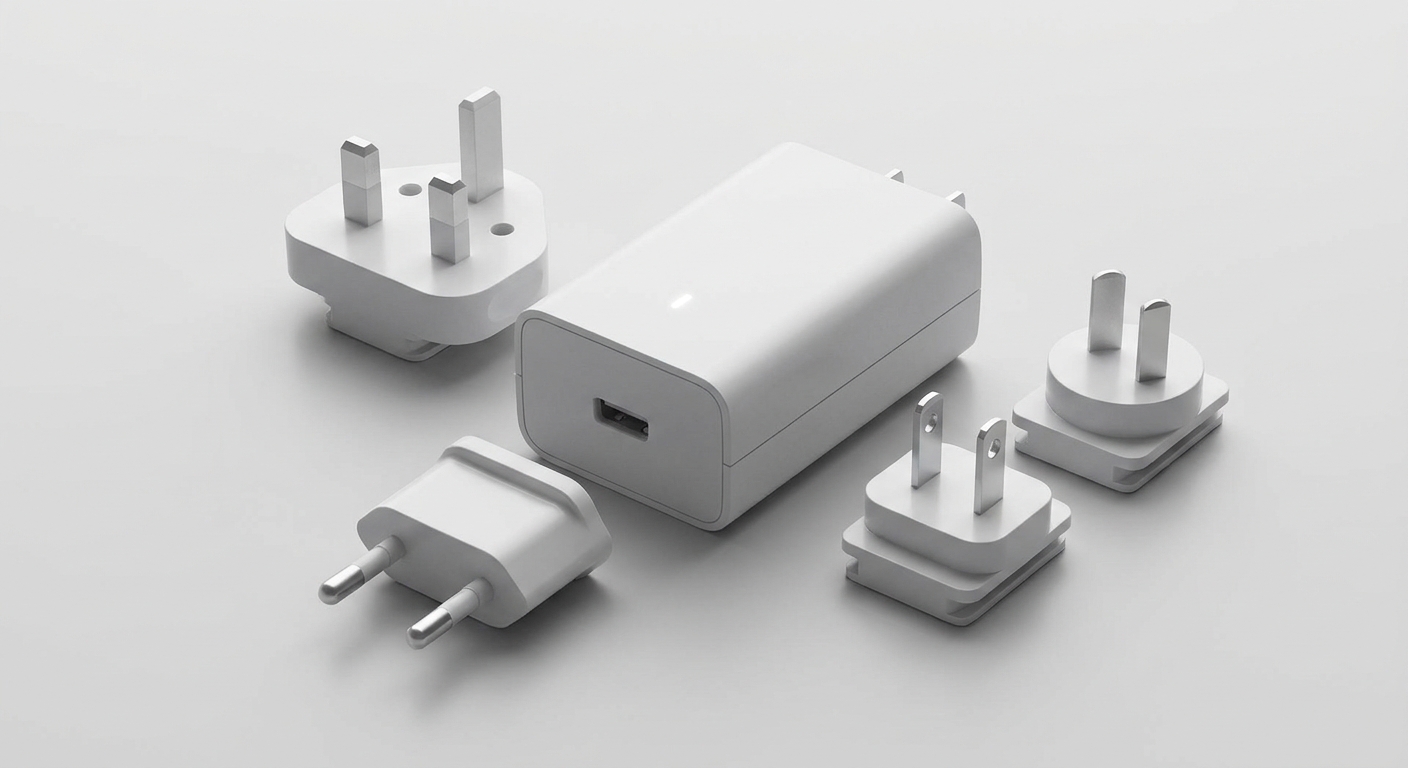
Interchangeable plug adapters allow you to swap the AC head of a single power supply to match any global outlet. When you learn How to Choose the Right Power Adapter for Different Countries , you will see that an interchangeable adapter is the most versatile solution for global businesses. Instead of buying 10 different chargers, you simply stock one high-quality unit with a kit of regional heads. This design simplifies inventory management and ensures your team is always prepared.
Streamlining logistics for global fleets
For companies shipping products internationally, interchangeable heads reduce the need for regional SKUs. You can manufacture one core power supply and ship it with the appropriate plug head for the target market.
- Drastically reduces inventory storage requirements.
- Simplifies the packaging process for international shipments.
- Lowers production costs by standardizing the internal electronics.
Think about how much time you’ll save on supply chain management.
Improving portability for frequent travelers
For the individual professional, a single adapter with swappable heads is far more compact than carrying a handful of fixed-plug bricks. These systems often feature a secure locking mechanism to ensure the head doesn’t stay in the wall when unplugged.
- Reduces the weight of your travel kit.
- Provides a clean, professional aesthetic for client meetings.
- Allows for quick transitions between countries on multi-stop trips.
Let’s dive in: why would you ever go back to bulky fixed plugs?
Key Takeaway: Interchangeable plug designs offer the best balance of portability, scalability, and regional flexibility.
| Feature | Fixed Plug | Interchangeable | |
|---|---|---|---|
| Global Utility | Single Region | Universal | |
| Bulkiness | Medium | Low | |
| Fleet Cost | High (Multiple SKUs) | Low (Single SKU) |
Moving to an interchangeable platform is the most efficient way to manage power needs for a global workforce.
How does wattage affect your adapter selection?
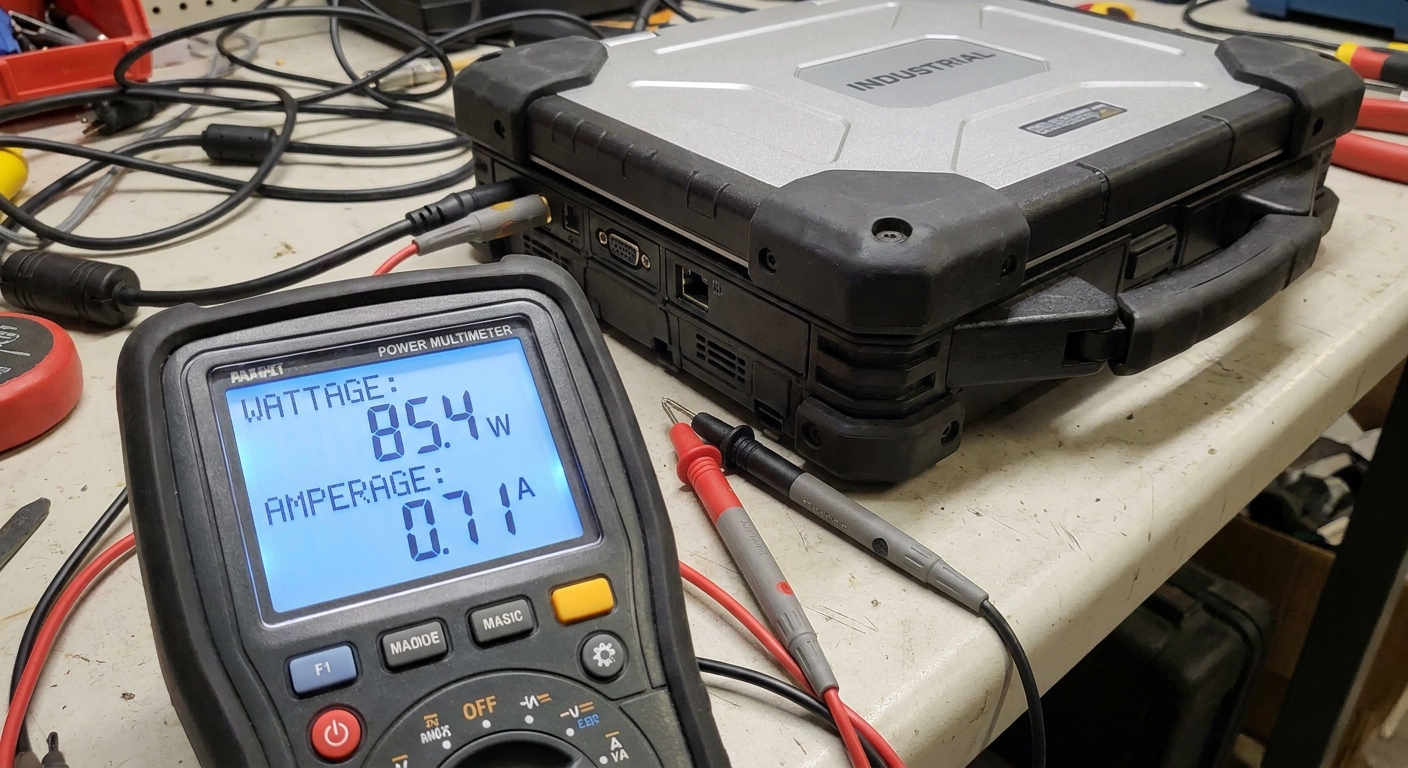
Wattage determines the total amount of power an adapter can safely deliver to your device at any given time. In the context of How to Choose the Right Power Adapter for Different Countries, selecting an adapter with insufficient wattage will cause slow charging or device failure. Conversely, using an adapter with a higher wattage than your device requires is perfectly safe, as the device will only draw what it needs. Always ensure your adapter’s wattage rating meets or exceeds the original equipment manufacturer’s specs.
Calculating the power draw of your gear
Wattage is calculated by multiplying voltage (V) by amperage (A). If your industrial laptop requires 19V at 4.74A, you need an adapter capable of at least 90 watts of output.
- Check the “Output” section of your original power supply label.
- High-performance workstations typically require 65W to 130W.
- Specialized medical or industrial gear may require significantly more.
The math is simple, but getting it wrong can stall your hardware.
Avoiding the dangers of under-powered adapters
When you use a 30W adapter for a device that needs 60W, the adapter will work at 100% capacity, leading to extreme heat buildup. This can eventually trigger a thermal shutdown or cause the internal components to melt.
- Devices may lose battery charge even while plugged in.
- The adapter may emit a buzzing or high-pitched sound.
- Increased risk of premature power supply failure.
Wait, there is more: under-powering can also corrupt your data if the system shuts down unexpectedly.
Key Takeaway: Always select an adapter with a wattage rating equal to or higher than your device’s maximum requirement.
| Device Category | Typical Wattage | Business Use Case | |
|---|---|---|---|
| Smartphone/Tablet | 15W – 45W | Communication | |
| Standard Laptop | 65W – 90W | General Office Work | |
| Industrial Station | 120W – 240W | Data Processing / CAD |
Prioritizing high-wattage capacity ensures your hardware runs at peak performance without thermal stress.
Are specialized adapters required for medical equipment?
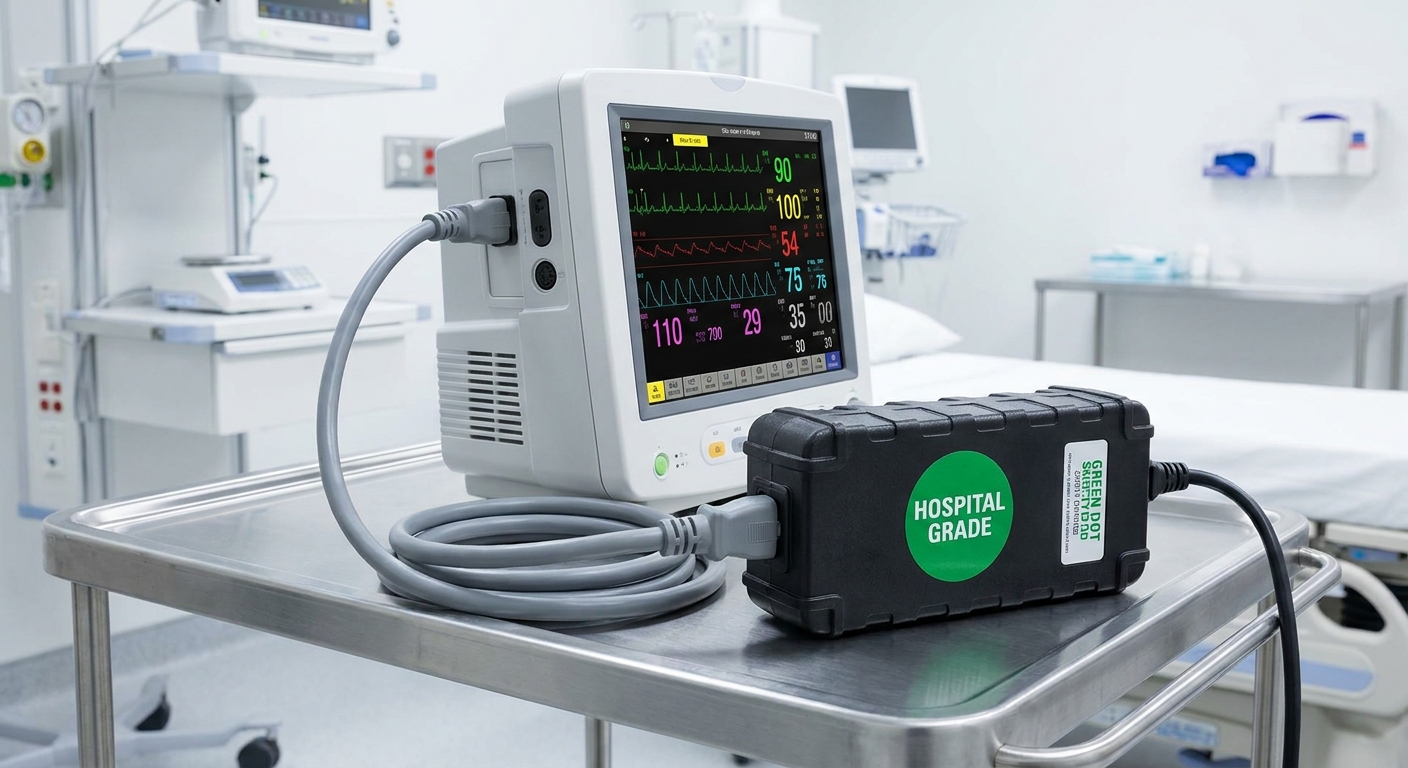
Yes, medical equipment requires specialized power adapters that meet strict IEC 60601-1 safety standards for patient and operator protection. When considering How to Choose the Right Power Adapter for Different Countries , a medical power supply must be used in any healthcare environment. These units feature enhanced insulation, low leakage current, and high electromagnetic compatibility. Standard consumer adapters do not provide the level of safety required for life-critical or diagnostic hardware.
Meeting global healthcare safety standards
Medical-grade adapters undergo rigorous testing to ensure they do not interfere with other hospital equipment or pose a shock hazard to patients. This is especially critical in regions with unstable or poorly grounded electrical grids.
- 2 x MOPP (Means of Patient Protection) isolation is standard.
- Extremely low leakage current prevents accidental cardiac interference.
- Robust shielding reduces EMI (Electromagnetic Interference).
In this business, safety isn’t just a feature—it’s a requirement.
Ensuring reliability in critical care settings
The reliability of a power supply in a medical setting can literally be a matter of life or death. These adapters are built with higher-quality components to ensure a longer MTBF (Mean Time Between Failures) and consistent performance.
- Designed for 24/7 continuous operation.
- Enhanced surge protection for sensitive monitoring circuits.
- Fire-retardant enclosures are mandatory for hospital use.
Let’s face it: standard adapters simply aren’t built for this level of stress.
Key Takeaway: Only use certified medical-grade power supplies for healthcare equipment to ensure patient safety and regulatory compliance.
| Feature | Consumer Adapter | Medical Adapter | |
|---|---|---|---|
| Safety Standard | IEC 62368-1 | IEC 60601-1 | |
| Isolation | Standard | 2 x MOPP | |
| Leakage Current | High (Relative) | Ultra-Low |
Using the correct medical-grade power solution is essential for both clinical success and legal compliance.
Can USB-C and GaN technology simplify your travel?
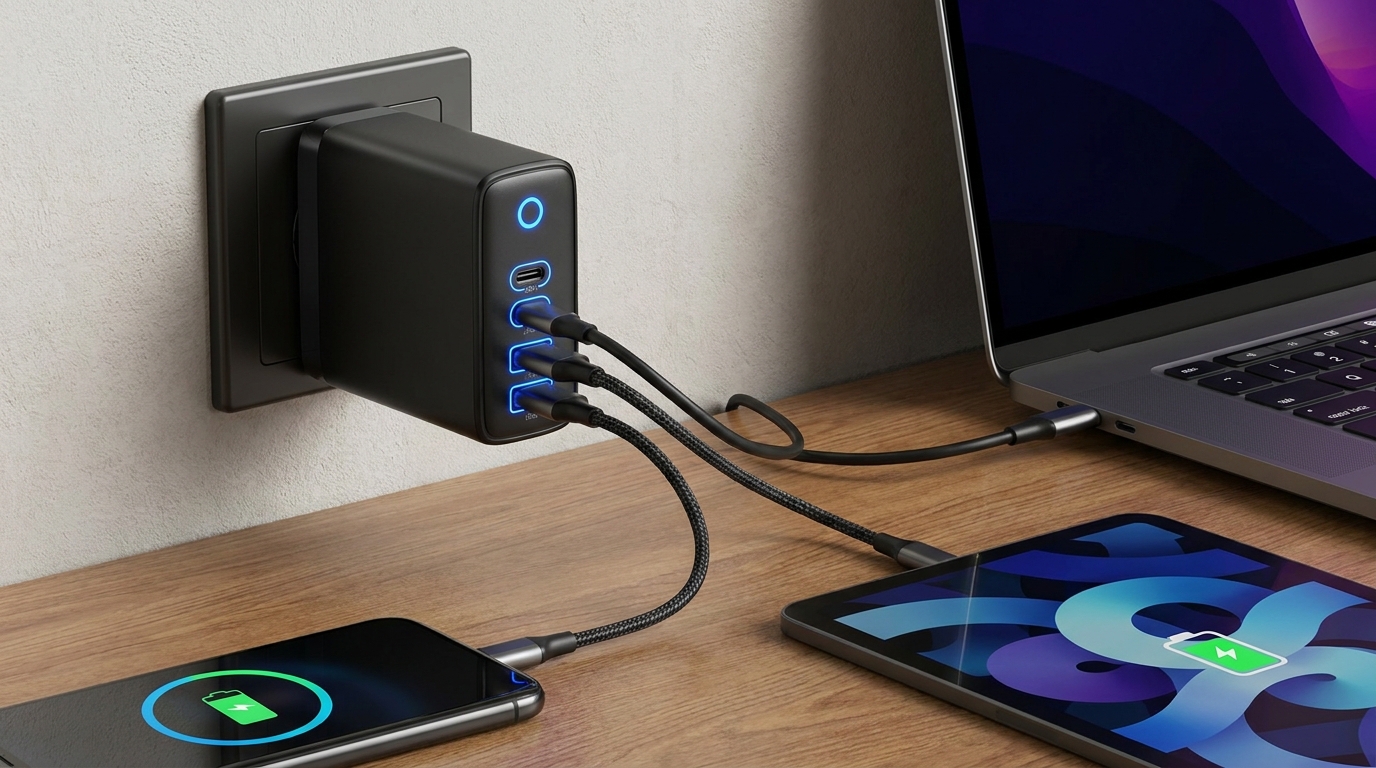
Gallium Nitride (GaN) and USB-C Power Delivery (PD) technology allow for much smaller, more powerful chargers that can handle multiple devices simultaneously. As you learn How to Choose the Right Power Adapter for Different Countries, you’ll find that a single high-wattage PD charger can replace several bulky bricks. GaN transistors are more efficient than silicon, meaning they produce less heat and allow for a more compact form factor. This is the modern gold standard for the mobile business professional.
The efficiency of Gallium Nitride (GaN)
GaN technology has revolutionized the power industry by allowing for chargers that are 40% to 50% smaller than traditional silicon models. This efficiency means less energy is wasted as heat, making them safer for use in confined travel spaces.
- Enables high-power output in a pocket-sized device.
- Stay cool even when charging a laptop and phone at once.
- Superior energy efficiency reduces operational costs over time.
It’s like getting more power out of a smaller engine.
Universal charging with USB-C Power Delivery
USB-C PD is a unified charging standard that communicates with your device to deliver exactly the right amount of power. This eliminates the need for proprietary laptop tips and makes it easy to share chargers among team members.
- One cable for your phone, tablet, and high-end laptop.
- Intelligent negotiation prevents overcharging or voltage spikes.
- Supports fast-charging protocols for minimal downtime.
The best part? You’ll never have to hunt for a “specific” laptop cable again.
Key Takeaway: High-wattage GaN-based USB-C chargers are the most efficient way to consolidate your international power needs.
| Technology | Benefit | Business Value | |
|---|---|---|---|
| GaN | Compact Size | Easier travel logistics | |
| USB-C PD | Universal Fit | Reduced cable clutter | |
| Multi-Port | Simultaneous Charging | Maximizes single outlets |
Consolidating power needs into a single GaN-PD unit significantly improves mobility for the modern global traveler.
How to verify the safety of an international adapter?
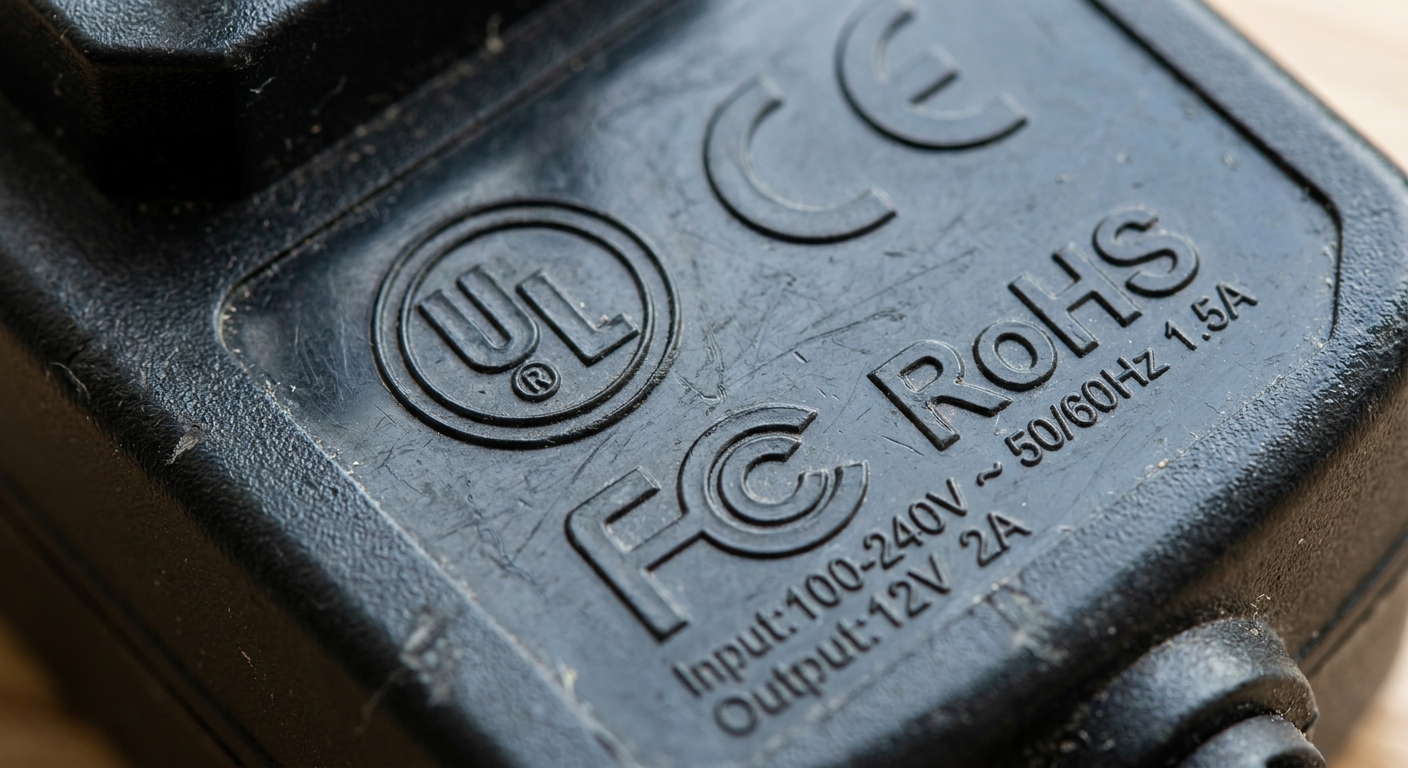
You can verify safety by checking the product label for globally recognized certification marks like UL, CE, FCC, and RoHS. When deciding How to Choose the Right Power Adapter for Different Countries , these logos are your primary evidence that the manufacturer has met rigorous safety and environmental standards. For businesses, sourcing tailored power solutions from a certified factory like Shenzhen Merryking Electronics is essential to avoid liability and ensure hardware reliability.
Decoding global compliance marks
Each major market has its own safety requirements, and a truly global adapter should carry multiple certifications. These marks indicate that the device has passed tests for electrical insulation, heat resistance, and fire safety.
- UL/cUL: Necessary for the North American market.
- CE/UKCA: Mandatory for the European Union and United Kingdom.
- CCC/PSE/KC: Required for China, Japan, and Korea respectively.
Believe it or not, an uncertified adapter is legally prohibited in many commercial settings.
Assessing build quality and materials
Beyond the labels, a high-quality adapter should feel solid and be made of flame-retardant PC (Polycarbonate) materials. Avoid adapters that feel hollow, rattle when shaken, or use thin, flimsy metal pins.
- Look for a high “Level VI” efficiency rating to save energy.
- Ensure the casing is ultrasonically welded for durability.
- Professional manufacturers provide detailed datasheets and warranties.
Now, you might ask: are these certifications really that different?
Key Takeaway: Never purchase uncertified power adapters; prioritize hardware with UL, CE, and Level VI efficiency ratings.
| Mark | Meaning | Target Region | |
|---|---|---|---|
| UL | Underwriters Laboratories | USA/Canada | |
| CE | Conformité Européenne | European Union | |
| RoHS | Restriction of Hazardous Substances | Global Environmental |
Relying on certified hardware is the only way to guarantee safety and professional compliance in global markets.
Choosing the right international travel power adapter is a critical business decision that directly impacts equipment lifespan and team productivity. From understanding voltage differences to selecting GaN-powered USB-C solutions, being prepared ensures you are never left without power in a foreign market. At Shenzhen Merryking Electronics, our vision is to provide high-quality, certified power solutions that solve your most complex international electrical challenges. If you are looking to secure reliable, bulk adapters for your global operations, contact us today to find the perfect fit for your industrial or medical needs.
FAQ
Can I use a power adapter without a converter?Yes, but only if your electronic device is “dual voltage” (100-240V). If your device is single voltage (e.g., 110V only) and the local grid is 230V, you must use a voltage converter to prevent damage.
What’s the best travel adapter for multiple countries?The best option is a universal travel adapter with built-in USB-C PD ports and interchangeable AC heads. This allows you to power laptops and mobile devices in over 150 countries with a single, compact unit.
Can I plug my US laptop into a European outlet with just an adapter?Almost certainly yes. Most laptop power bricks are designed to handle 100-240V automatically. Check the label for “Input: 100-240V” to be sure you only need a physical plug adapter.
What power adapter specifications matter most for B2B buyers?B2B buyers should focus on safety certifications (UL, CE, FCC), energy efficiency (Level VI), and wattage capacity. For medical or industrial use, specialized compliance like IEC 60601-1 is non-negotiable.
Can a high-wattage adapter damage a low-power phone?No, a high-wattage adapter will not damage your phone. Modern electronics only “draw” the power they need, so using a 100W GaN charger for a 20W phone is perfectly safe and efficient.