Understanding power supply symbols on a power adapter label is the key to ensuring device safety, compatibility, and optimal performance. When you reach for an unmarked power supply in a busy B2B environment to keep a critical network gateway online, finding a plug that fits perfectly is only the first step. Operating blind by connecting a power supply with mismatched specifications risks frying your expensive hardware, causing a short circuit, or triggering a workspace fire. Deciphering these standardized rating plate markings protects your infrastructure and ensures absolute electrical safety.
Why read a power adapter label before use?
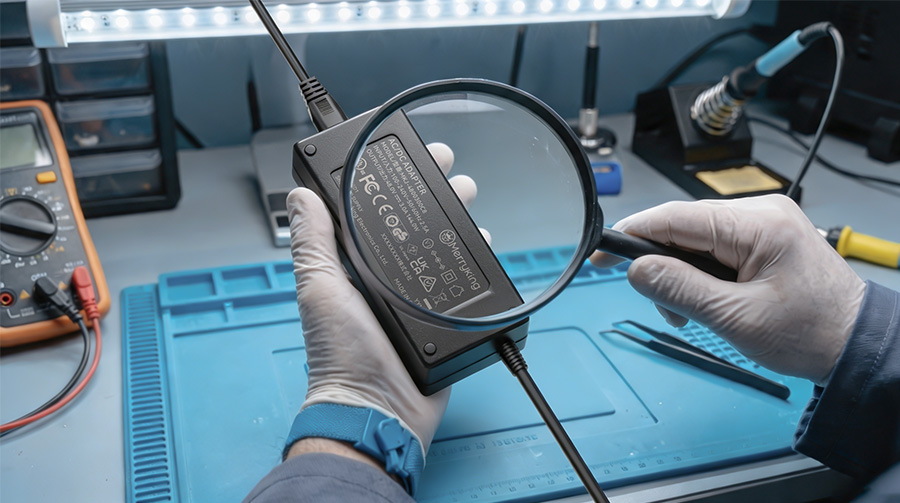
Reading a power adapter label before deploying any hardware is essential to prevent costly equipment damage and electrical failures. By confirming critical metrics like voltage, amperage, and safety certifications beforehand, B2B operators can guarantee long-term system reliability. Operating blind without checking these specifications is a leading cause of industrial component failure.
How do you systematically scan the rating plate?
When you hold a power supply, finding the crucial specifications quickly is a valuable field skill. Here is the deal: most manufacturers divide the label into clear sections for inputs, outputs, and compliance marks.
- Mains Input Section: Typically listed first, showing the required voltage and frequency ranges.
- DC Output Section: Displays the exact voltage, current capacity, and connector polarity.
- Safety Approvals: Clustered at the bottom or sides to prove legal regional compliance.
Key Takeaway: Taking ten seconds to verify these specifications safeguards your equipment against irreversible electrical damage and thermal hazards.
| Rating Plate Section | Primary Metric | Purpose | |
|---|---|---|---|
| Input Section | AC Volts, Hertz | Confirms local grid compatibility | |
| Output Section | DC Volts, Amperes | Matches exact load requirements | |
| Safety Section | Isolation, Agency Marks | Ensures legal and physical safety |
This systematic layout allows installation technicians to isolate critical ratings on any compliant power brick instantly.
What does polarity mean on a power adapter label?
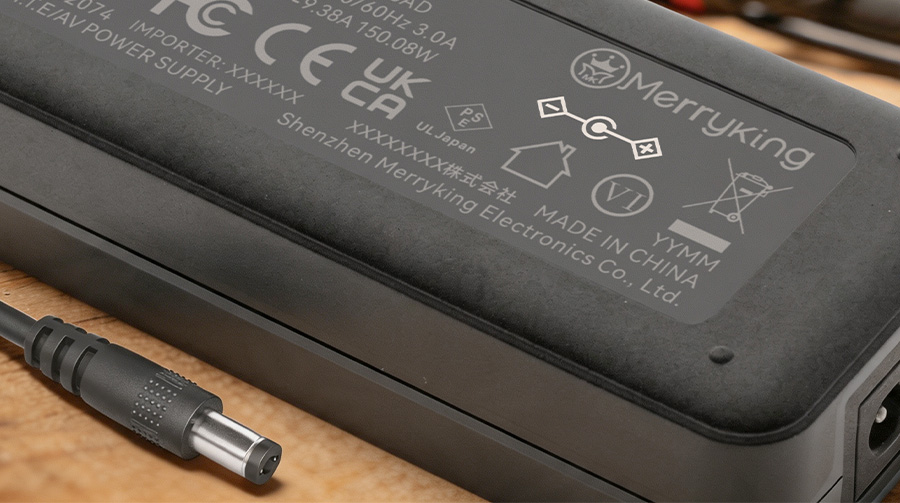
Polarity on a power adapter label indicates whether the central contact pin of the low-voltage DC barrel connector is positive or negative relative to the outer metallic sleeve. This graphical representation is the most critical check for DC-powered equipment. If you connect an adapter with reversed polarity, the sensitive internal circuits of your B2B hardware will face immediate and catastrophic burnout.
How to identify center positive and negative symbols
The standard polarity diagram consists of a center dot surrounded by an open ring, connected to positive (+) and negative (-) signs. Think about it: a center-positive adapter has the positive sign linked to the center dot, whereas a center-negative adapter points the negative sign to that dot.
- Center Positive: The internal contact pin carries positive voltage; this is the standard for most IT gear.
- Center Negative: The internal contact carries negative voltage; common in audio gear and musical pedals.
- Checking Polarity: Always verify the diagram on both your device and the adapter before connecting.
Key Takeaway: Aligning the polarity diagrams perfectly protects sensitive microprocessors from instant overvoltage destruction.
| Polarity Type | Center Pin Sign | Outer Ring Sign | Common Industry Use Cases | |
|---|---|---|---|---|
| Center Positive | Positive (+) | Negative (-) | Routers, switches, CCTV cameras, monitors | |
| Center Negative | Negative (-) | Positive (+) | Audio equipment, guitar effects, legacy gear |
Always refer to this polarity breakdown when sourcing replacement supplies for sensitive enterprise infrastructure.
How do AC and DC differ on a power adapter label?
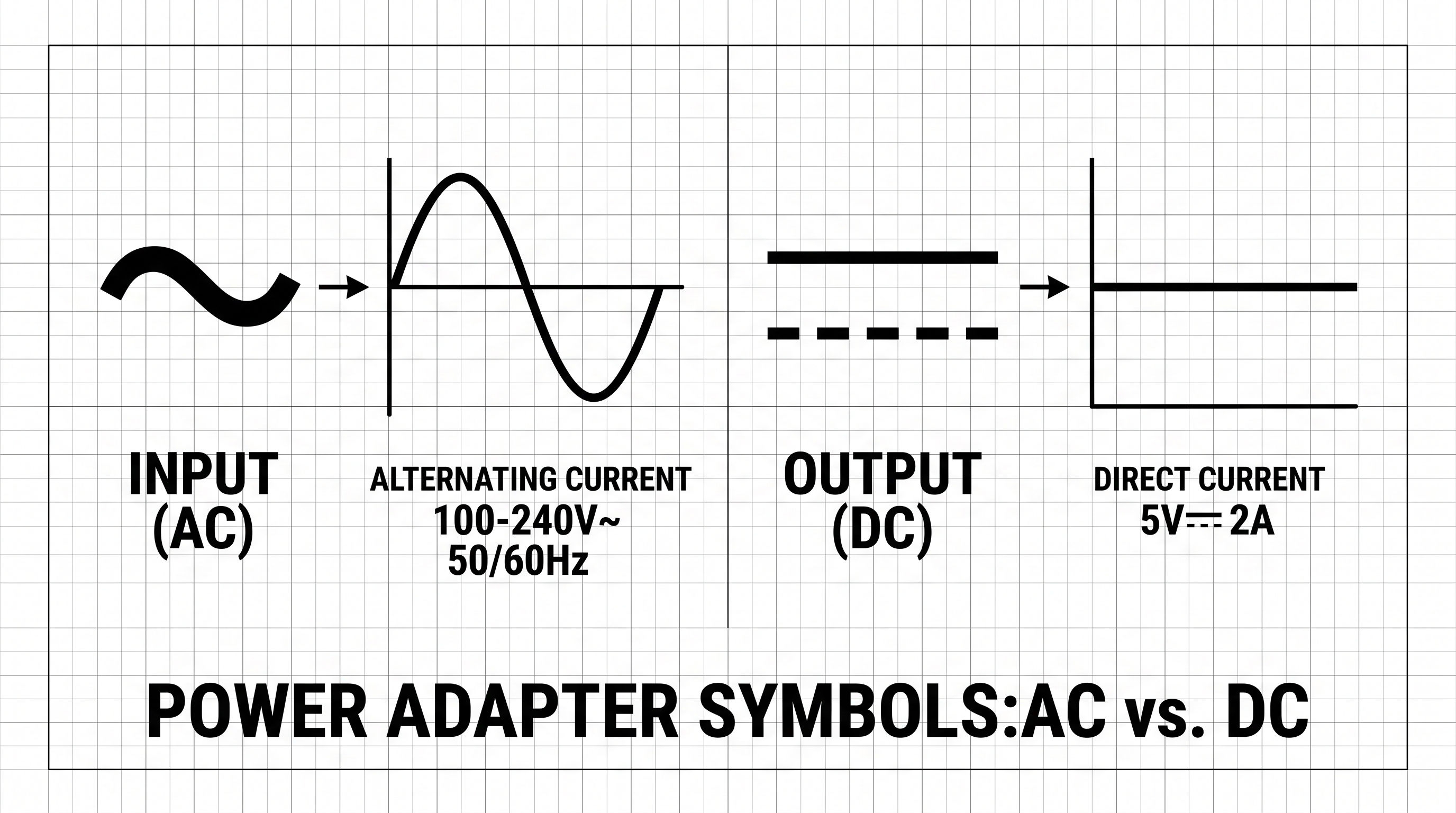
The difference between AC and DC on a power adapter label is represented by distinct wavy and straight-line symbols that indicate the directional flow of electrical current. Alternating Current oscillates periodically back and forth, whereas Direct Current flows in a single constant direction. Technicians must understand these waveform indicators to ensure they do not feed raw alternating current into a direct-current load.
Decoding the AC wavy line and the DC straight bar
A wavy line or tilde symbol represents AC, while a solid line positioned above a dashed line represents DC. Let’s face it: getting these confused is an easy path to short circuits and damaged electronics.
- AC Symbol (~): Found in the input section, signifying standard municipal grid power.
- DC Symbol (⎓): Displays in the output section, signifying clean, regulated low-voltage power.
- Universal Input: A rating of 100-240V AC means the adapter operates globally.
Key Takeaway: Distinguishing input AC ranges from output DC ratings ensures your device receives clean, safe power.
| Symbol Type | Graphic Icon | Typical Rating Location | Power Function | |
|---|---|---|---|---|
| Alternating Current | Wavy Line (~) | Input Specification | Grid-derived power supply | |
| Direct Current | Solid / Dashed (⎓) | Output Specification | Clean, filtered load delivery |
These wave symbols define the boundaries between hazardous utility voltages and safe, regulated device power.
Why is the double square on a power adapter label?
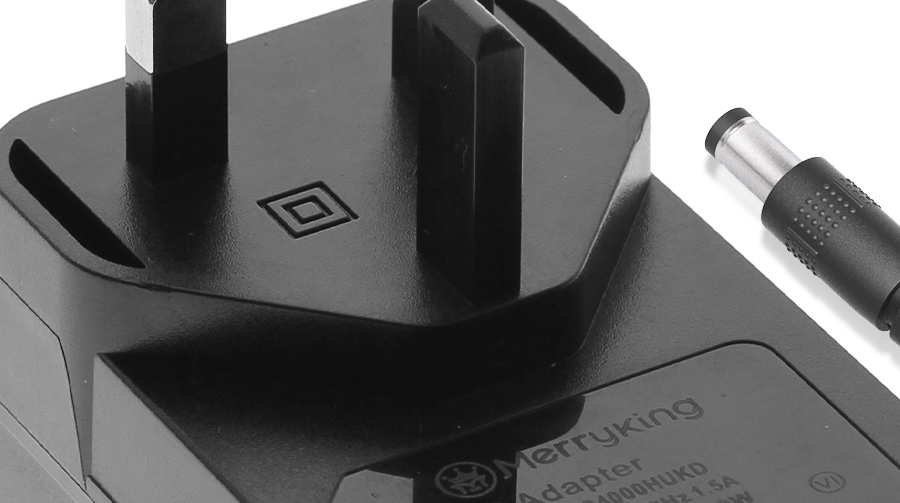
The double square symbol on a power adapter label indicates Class II construction, meaning the device features double-insulated protection against high-voltage electrical shock. This design uses two separate layers of insulation between the internal high-voltage components and the user. Consequently, these power supplies do not require a protective copper earth ground connection to operate safely.
Understanding electrical equipment safety classes
Safety classes dictate how a power supply isolates you from hazardous voltages. Here is why this matters: Class II adapters allow safe operation with a standard two-prong AC cord, making them ideal for office and home settings.
- Class I (Earthed): Relies on basic insulation plus a physical earth ground path (3-prong plug).
- Class II (Double Insulated): Utilizes double insulation layers, omitting the earth ground path (2-prong plug).
- Class III (SELV): Operates strictly from Safety Extra Low Voltage, requiring no internal safety grounds.
Key Takeaway: Recognizing Class II double-insulation symbols helps you choose the correct replacement cable setups safely.
| Safety Class | Graphic Icon | Insulation Type | Ground Required | |
|---|---|---|---|---|
| Class I | Downward Ground Triangle | Basic + Earth Ground | Yes (3-Prong Plug) | |
| Class II | Concentric Double Square | Double / Reinforced | No (2-Prong Plug) | |
| Class III | Roman Numeral “III” | Extra-Low Voltage | No (SELV Input) |
Use this classification guide to determine if your facility’s grounding architecture is compatible with your chosen adapter.
Which safety marks appear on a power adapter label?
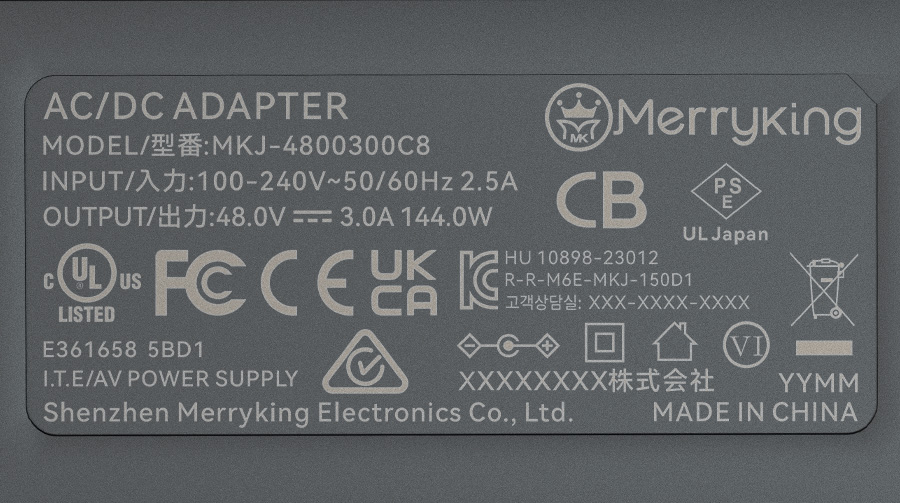
Safety marks on a power adapter label demonstrate that the device complies with rigorous regional electrical safety, electromagnetic compatibility, and environmental protection standards. These logos are issued by recognized testing laboratories only after the device passes demanding quality audits. B2B buyers must prioritize these markings to avoid serious legal liability and equipment failure risks.
Recognizing major global safety logos
Leading global safety marks confirm that the adapter is fully compliant with regional grid standards. Let’s dive deeper: without these marks, you have no guarantee of short-circuit, overvoltage, or thermal runaway protection.
- UL / cUL: Demonstrates compliance with strict North American safety standards.
- CE Mark: Indicates conformity with safety, health, and environmental rules within the European Economic Area.
- FCC Logo: Confirms electromagnetic emissions do not interfere with wireless communication.
Key Takeaway: Relying on verified safety marks protects your personnel, equipment, and B2B brand reputation.
| Compliance Mark | Primary Region | Testing Agency Focus | Legal Status | |
|---|---|---|---|---|
| UL Listed | North America | Electrical and Thermal Safety | Crucial for commercial sales | |
| CE Mark | European Union | Safety, Health, Environment | Mandatory for European import | |
| FCC Logo | United States | Electromagnetic Emissions | Required for wireless devices |
Sourcing adapters with these verified safety logos ensures compliance with global supply chain regulations.
What is the Level VI mark on a power adapter label?
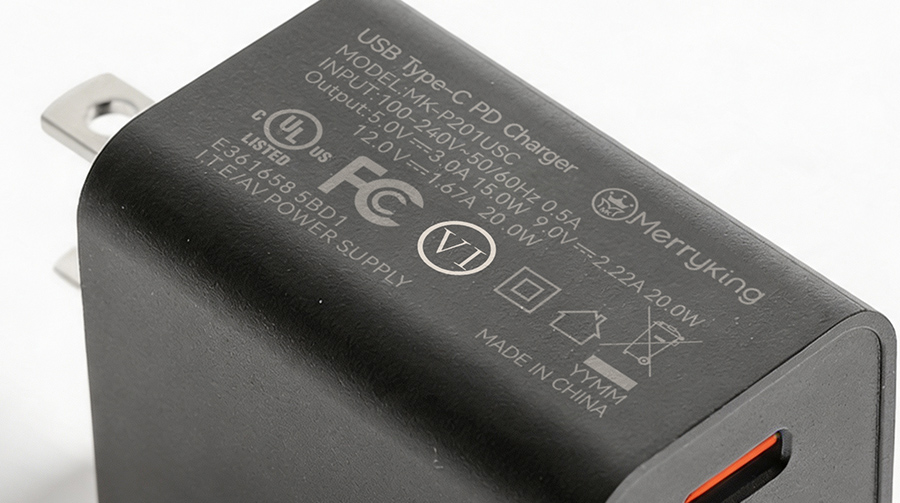
The Roman numeral VI on a power adapter label indicates compliance with the Level VI energy efficiency standards mandated by global regulatory agencies. This standard regulates the maximum allowable no-load standby power consumption and the minimum average active efficiency of external power supplies. Meeting these levels ensures the adapter wastes minimal energy and runs cooler during daily operation.
The importance of modern active efficiency levels
Energy codes restrict wasted energy to minimize global carbon footprints and lower operating costs. Look at it this way: a lower-efficiency adapter wastes power as heat, accelerating the degradation of internal capacitors.
- No-Load Standby Power: Consumes less than 0.1W when plugged into a wall without a load.
- Active Efficiency: Converts AC to DC with minimal heat generation under high-load conditions.
- Regulatory Compliance: Mandatory for exporting external power supplies to major global markets.
Key Takeaway: Specifying Level VI energy-efficient adapters reduces operational overhead and thermal fatigue in heavy-duty installations.
| Efficiency Standard | Standby Power Limit | Typical Active Efficiency | Global Enforcement | |
|---|---|---|---|---|
| Level V (Legacy) | < 0.3W | Moderate (~75-80%) | Phase-out across major markets | |
| Level VI (Modern) | < 0.1W | High (>85-90%) | Mandatory in USA, Canada, and EU |
This efficiency comparison illustrates why modern designs generate less waste heat than legacy power supplies.
What is the RCM symbol on a power adapter label?
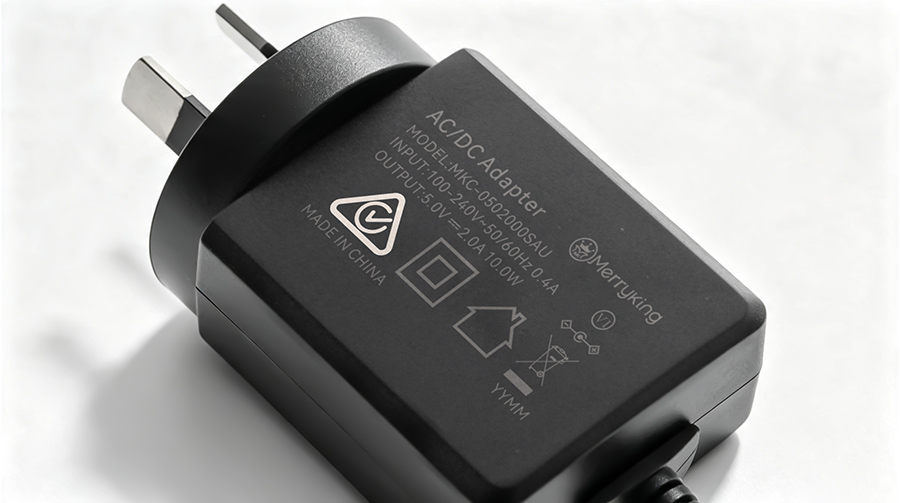
The RCM symbol on a power adapter label is the Regulatory Compliance Mark, indicating that the device meets Australian and New Zealand standards for electrical safety and electromagnetic compatibility. This integrated compliance logo replaces older, fragmented marking schemes to streamline imports. Sourcing adapters with this mark is legally required for distribution in Oceania.
Understanding the integrated RCM system
The RCM mark combines electrical safety, telecom, and radio emissions compliance into a single graphic. Here is why: it provides quick proof to customs and inspectors that your product is safe for local grids.
- Check in Triangle: The unique symbol indicating complete regulatory compliance.
- Electrical Safety: Verifies insulation can handle local 230V, 50Hz grid fluctuations.
- EMC Approval: Guarantees the supply does not emit harmful radio noise.
Key Takeaway: Ensuring the RCM symbol is present protects Australian importers from heavy regulatory fines and liability.
| Regulatory Mark | Region Coverage | Key Standards | Importer Liability | |
|---|---|---|---|---|
| RCM Symbol | Australia, New Zealand | AS/NZS 4417, AS/NZS CISPR 32 | High (Requires registered local agent) |
Always look for the RCM logo to ensure seamless, legally compliant distribution in Oceania.
What does the LPS marking mean on a power adapter label?
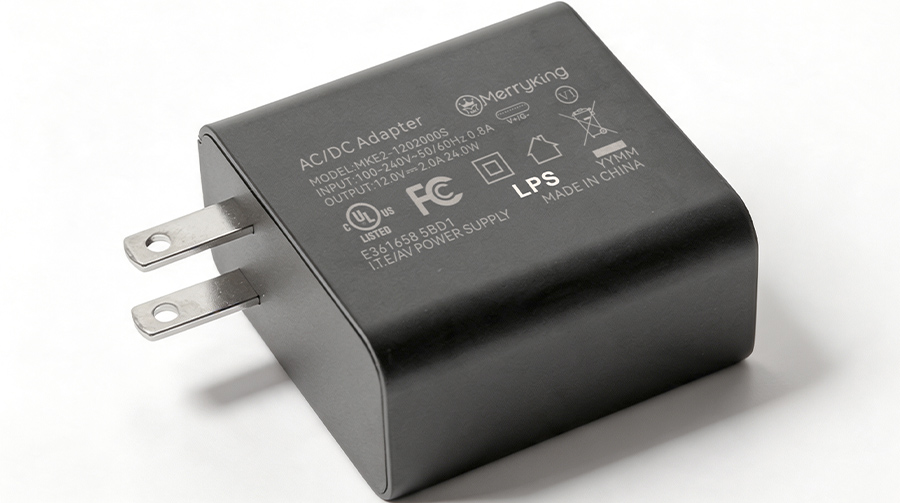
The LPS marking on a power adapter label stands for Limited Power Source, signifying that the power supply’s output voltage and current are capped at safe limits to reduce the risk of fire and electrical shock. This designation ensures that the output will not exceed 100 Volt-Amperes (VA) or 100 Watts, even under fault conditions. Consequently, installers can use lower-cost wiring methods when connecting these power supplies.
How LPS ratings simplify system installations
The safe electrical limits of an LPS supply reduce the fire risks associated with high-current faults. Here is the deal: systems powered by LPS adapters do not require robust fire enclosures, significantly lowering material costs.
- Power Cap: Limited to 100W maximum continuous output during standard operation.
- Reduced Fire Risk: Limits heat generation under short-circuit conditions.
- Installation Savings: Enables you to use thinner, more flexible low-voltage wiring.
Key Takeaway: Utilizing LPS-certified adapters reduces both material costs and long-term installation hazards.
| Specification | LPS Limit | Safety Benefit | Material Savings | |
|---|---|---|---|---|
| Output Power | ≤ 100 Watts | Limits heat under faults | Standard enclosures allowed | |
| Output Current | ≤ 8.0 Amps | Reduces short-circuit risk | Thinner gauge wiring acceptable |
This technical summary highlights why choosing an LPS adapter simplifies system-level B2B engineering design.
What do IP ratings indicate on a power adapter label?
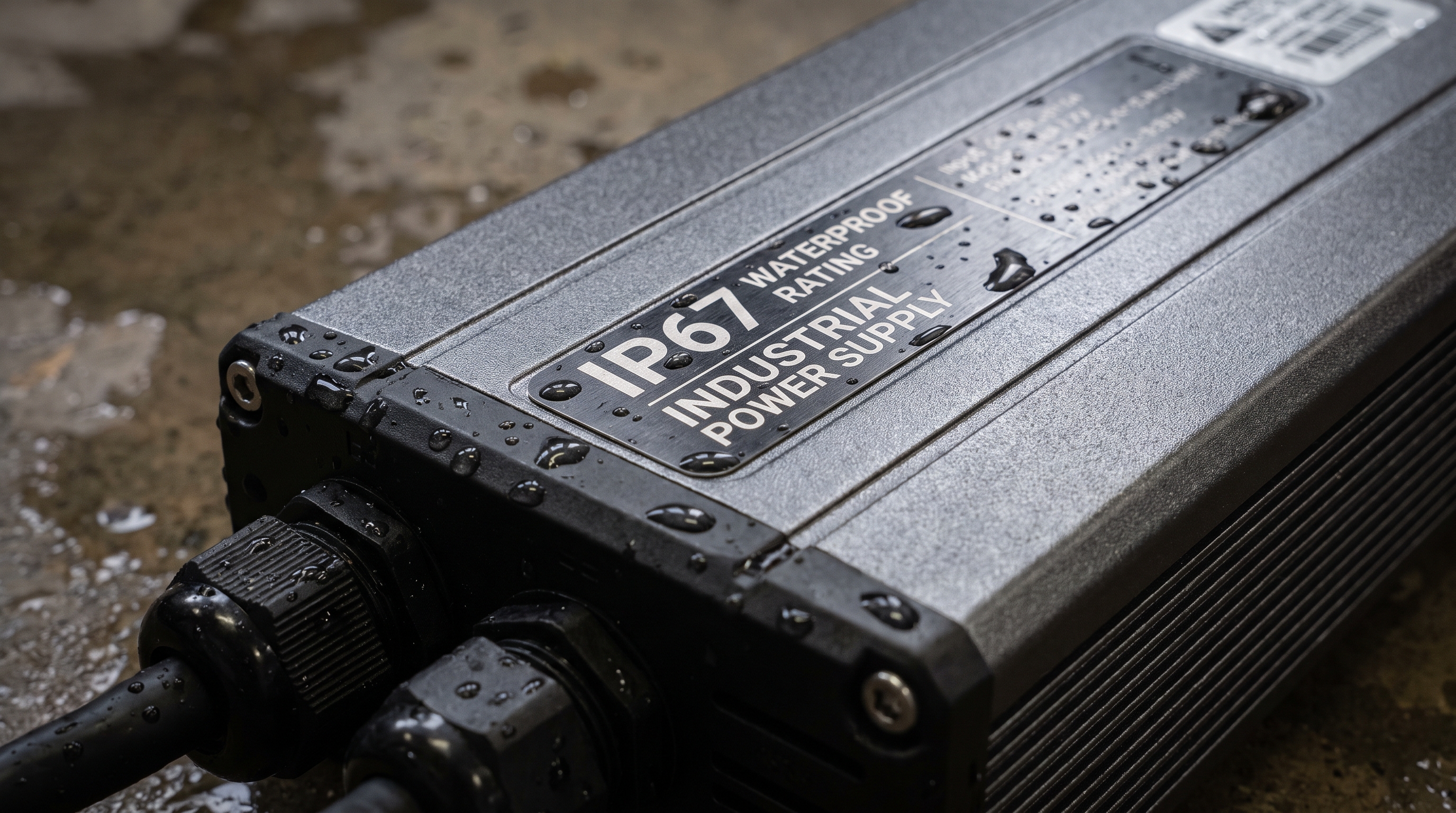
IP ratings on a power adapter label indicate the degree of physical protection the enclosure provides against the entry of solid particles like dust and liquid hazards like water. This Ingress Protection rating is written as “IP” followed by two distinct digits that represent specific test levels. Technicians must check these ratings before deploying power adapters in harsh or outdoor environments.
Breaking down the dust and liquid digits
The first digit of an IP rating defines particle resistance, while the second digit details liquid protection. Let’s face it: using an indoor-rated supply in a damp outdoor setting leads to catastrophic electrical arcing.
- First Digit (0-6): Defines protection against dust and solid objects (6 means dust-tight).
- Second Digit (0-9K): Measures protection against moisture (7 means immersion up to 1 meter).
- Industrial Standard: IP67 provides robust protection against both dust storms and heavy rainfall.
Key Takeaway: Sourcing adapters with appropriate IP ratings ensures reliable performance in dusty or wet settings.
| IP Code | Solid Protection (1st Digit) | Liquid Protection (2nd Digit) | Target Environment | |
|---|---|---|---|---|
| IP20 | Finger-sized objects | No protection against liquids | Controlled indoor offices | |
| IP65 | Complete dust protection | Low-pressure water jets | Covered outdoor/industrial bays | |
| IP67 | Complete dust protection | Temporary immersion (1m depth) | Exposed outdoor applications |
Use this IP rating table to choose the correct enclosure design for your project’s environmental conditions.
Where are warning signs found on a power adapter label?
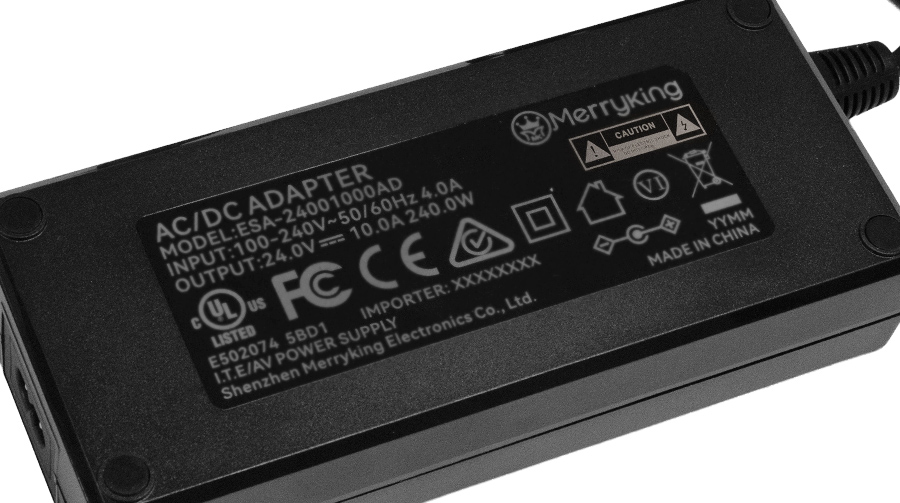
Warning signs on a power adapter label are located in highly visible sections of the rating plate, using standardized icons to alert technicians to immediate physical hazards and operational limits. These symbols highlight risks like electric shock, excessive heat, and improper disposal methods. Respecting these indicators is critical to avoiding injury, electrical fires, and environmental compliance issues.
Decoding environmental and safety warning icons
Standard warning icons on power adapter labels alert you to immediate physical safety risks. Think about it: a house symbol indicates that the adapter is rated for indoor use only and must never be exposed to rain.
- Indoor Use Only: Symbolized by a house contour, warning of moisture risks.
- High Voltage Hazard: Represented by a lightning bolt inside a triangle.
- Recycling Directive: Shown as a crossed-out wheelie bin (WEEE), prohibiting standard landfill disposal.
Key Takeaway: Following safety warnings on power adapters protects your staff from high-voltage hazards.
| Warning Icon | Visual Design | Hazard Indicated | Required User Action | |
|---|---|---|---|---|
| Indoor Only | House Contour | Moisture/dust short-circuit | Deploy only in dry indoor spaces | |
| Shock Risk | Lightning in Triangle | High-voltage internal charge | Do not open, pierce, or service | |
| WEEE Symbol | Crossed-out Wheelie Bin | Hazardous e-waste landfill risk | Recycle at certified e-waste facilities |
This warning directory helps you easily identify and avoid common installation hazards.
Conclusion
Properly decoding power supply symbols is the foundation of electrical safety and system uptime in B2B environments. From verifying connector polarity to matching safety classes and regional certifications, reading rating plates prevents catastrophic equipment failures. Partnering with a reliable, safety-certified manufacturer ensures your devices receive clean, compliant power. If you need custom-engineered power solutions or certified product samples, contact us to speak directly with an application engineer.
Frequently Asked Questions
Can I use an adapter with a higher output current rating?
Yes, you can safely use an adapter with higher current capacity as long as the voltage and connector polarity match the original specifications exactly. The connected device only draws the current it needs to operate. An adapter with higher capacity provides extra safety headroom, runs cooler, and lasts longer.
What’s the best way to determine if my power adapter is center positive?
The best way is to locate the polarity diagram on the rating label and verify that the positive (+) sign points directly to the center dot. This icon represents the barrel tip of the connector. If the label is worn, you can confirm this by setting a digital multimeter to DC voltage, placing the red probe inside the barrel tip, and touching the black probe to the outer sleeve.
How do I know if my power adapter label shows Class II construction?
You will see a concentric double square symbol printed directly on the rating plate of a Class II device. This icon indicates that the adapter features double or reinforced isolation layers to prevent high-voltage shocks. Because of this built-in protection, the adapter does not require a physical grounding wire.
Can I deploy an indoor-rated power supply in a covered outdoor cabinet?
No, you should never deploy an indoor-rated supply outdoors unless the device is specifically engineered and certified with an appropriate weather protection rating. Standard indoor adapters lack the seals needed to resist moisture, humidity, and temperature fluctuations. Over time, environmental exposure leads to corrosion, internal arcing, and short circuits.
How do I know if a power supply is legally approved for sale in Oceania?
You must confirm the presence of the Regulatory Compliance Mark (RCM) on the rating plate. This checkmark-in-triangle symbol shows the device meets Australian and New Zealand electrical safety and electromagnetic standards. Importing or selling external power supplies without this visible certification is illegal in these markets.