Finding the right custom power supply partner requires evaluating potential manufacturers on their engineering capabilities, component quality, and global regulatory experience. Imagine spending months refining a brilliant new medical device or industrial automation system, only to have the entire project stall because of power instabilities. Choosing the wrong industrial power supply manufacturers can lead to persistent voltage sags, overheating in enclosed spaces, or costly safety certification failures. The ultimate solution lies in securing a dedicated, direct-source custom manufacturing partner who can engineer a tailored electrical and mechanical architecture optimized specifically for your equipment’s unique load profiles.
Why trust industrial power supply manufacturers?
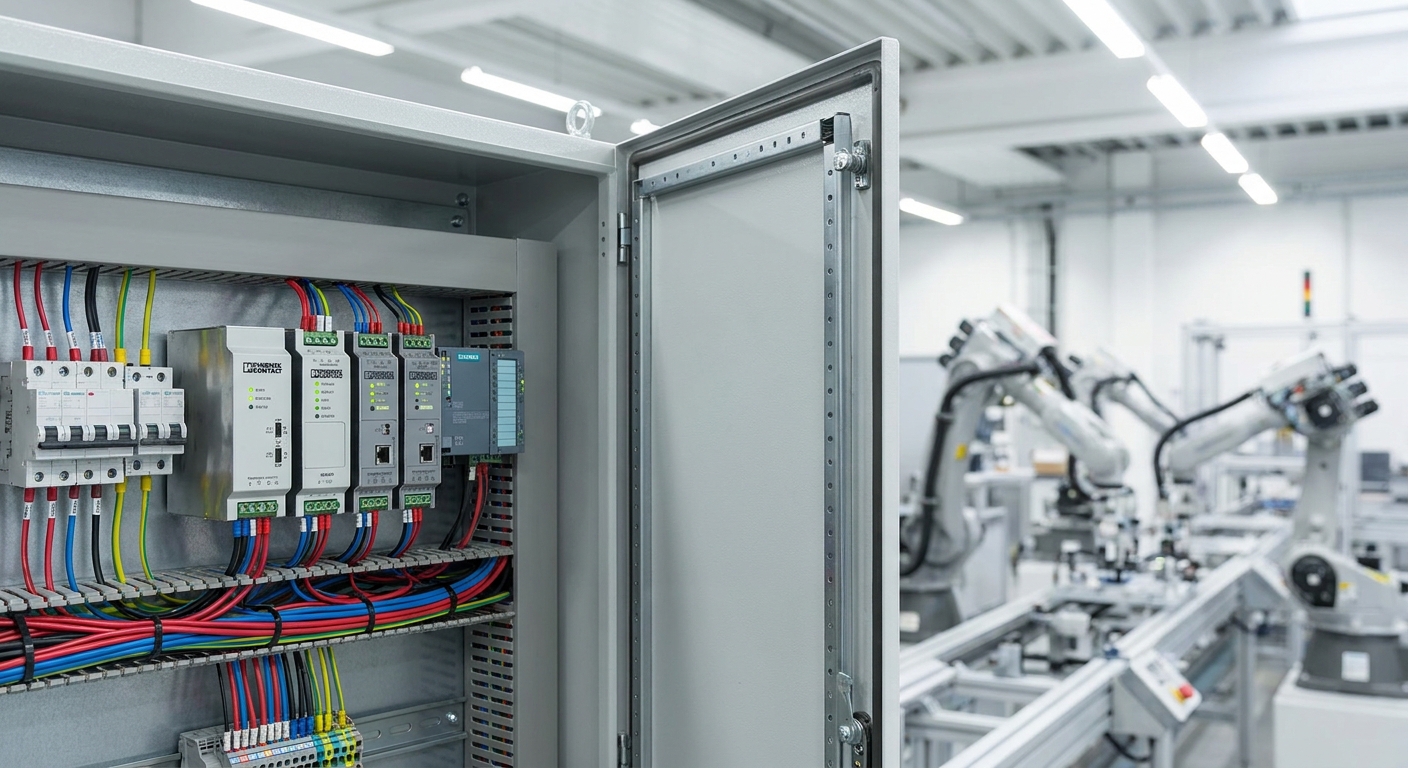
You should trust dedicated industrial power supply manufacturers because they design power systems capable of handling the volatile load profiles of critical OEM machinery. Standard commercial power bricks frequently fail under industrial-grade thermal and electrical stress, which risks damaging your downstream components. Partnering with specialized experts ensures your system has a foundation of reliable, long-term power delivery. This protection safeguards your hardware assets and preserves your brand’s reputation in high-stakes environments.
Is off-the-shelf power holding your hardware back?
Using standard commercial-grade power bricks can severely limit the operational potential of your specialized B2B hardware. If your machinery operates in harsh environments with fluctuating voltages, standard models will degrade quickly and fail.
Think about it: Standard adapters are engineered for simple office environments rather than demanding industrial floors. Choosing an optimized electrical design ensures that your hardware receives clean, stable power continuously.
- Voltage Sags: Commercial adapters suffer from output drops under sudden load surges.
- Component Stress: Poor voltage regulation wears down downstream silicon.
- Early Shutdowns: Inadequate power margins lead to unexpected system resets.
How does custom engineering protect your reputation?
Custom-engineered power supplies are built specifically to handle your equipment’s unique electrical profiles and thermal conditions. This precise match eliminates the risk of field failures, ensuring that your clients enjoy uninterrupted performance.
Here is the deal: When you invest in custom power solutions, you protect your brand from costly warranty claims and negative reviews. This approach ensures your hardware performs flawlessly under unpredictable, real-world conditions.
Key Takeaway: Custom power engineering prevents premature device failures and ensures your B2B hardware performs optimally under variable electrical loads.
| Power Parameter | Commercial Power Supply | Industrial Custom Supply | |
|---|---|---|---|
| Operating Temp Range | 0°C to 40°C | -40°C to 85°C | |
| Design Life Span | 2 to 3 Years | 7 to 10+ Years | |
| Surge Protection | 1kV differential | 4kV+ industrial grade | |
| Component Grade | Consumer / Standard | Industrial / Traceable |
Reviewing these core parameters reveals how choosing specialized electrical architectures directly boosts your product’s survival rate in extreme environments.
Who are top industrial power supply manufacturers?
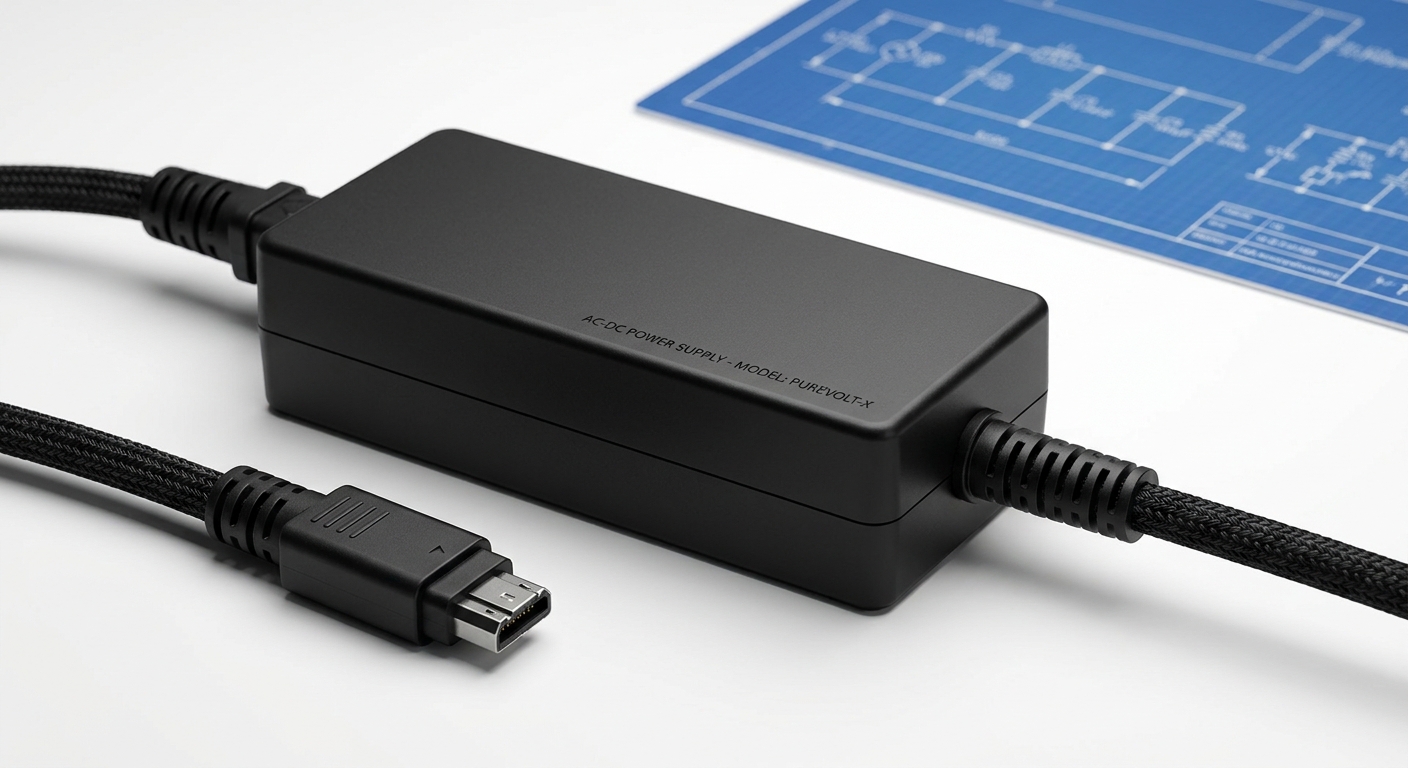
The top industrial power supply manufacturers are direct-source, tier-one factories that control their entire production ecosystem from raw silicon sourcing to automated testing. Working directly with these established organizations eliminates the quality variances and marked-up pricing associated with brokers or distributors. They employ in-house research and development teams who can solve complex engineering challenges on demand. Choosing a partner with these integrated capabilities ensures your production runs remain cost-effective and on schedule.
What makes a tier-one manufacturing partner stand out?
A tier-one manufacturing partner maintains direct control over their SMT lines, material procurement, and design verification processes. This complete ownership allows them to guarantee consistent assembly quality across high-volume production runs.
The best part? You get direct access to their in-house engineering team to solve complex electromagnetic interference challenges in real time. This immediate collaboration saves your team weeks of development frustration and troubleshooting.
- In-House SMT: Absolute quality control over surface-mount PCB placement.
- Component Auditing: 100% verification of raw silicon and magnetic parts.
- Direct Engineering: Direct communication with the actual design team.
Where can you find a complete power catalog for OEMs?
You can explore extensive product portfolios containing standard, pre-certified designs that are ready for rapid customization. Starting with a pre-certified platform reduces your upfront engineering costs and accelerates your time to market.
Think about it: This strategic approach allows you to secure robust power architectures without paying full development fees. Selecting the right base model forms a reliable foundation for your custom specifications.
Key Takeaway: Partnering directly with a tier-one factory ensures direct engineering collaboration and reduces upfront non-recurring engineering expenses.
| Operational Metric | Direct Factory Source | Distributor / Broker | Design House Only | |
|---|---|---|---|---|
| Engineering Depth | High (In-house R&D) | Low to None | Extremely High | |
| Unit Manufacturing Cost | Lowest (Direct pricing) | Marked-up (Middleman) | High (Outsourced) | |
| Lead Time Control | Direct & Transparent | Variable & Indirect | No direct control | |
| Customization Capability | Full bespoke & semi-custom | Limited modifications | Design only |
Analyzing this organizational comparison helps you select a partner model that aligns perfectly with your production scale and budget requirements.
How do industrial power supply manufacturers design?
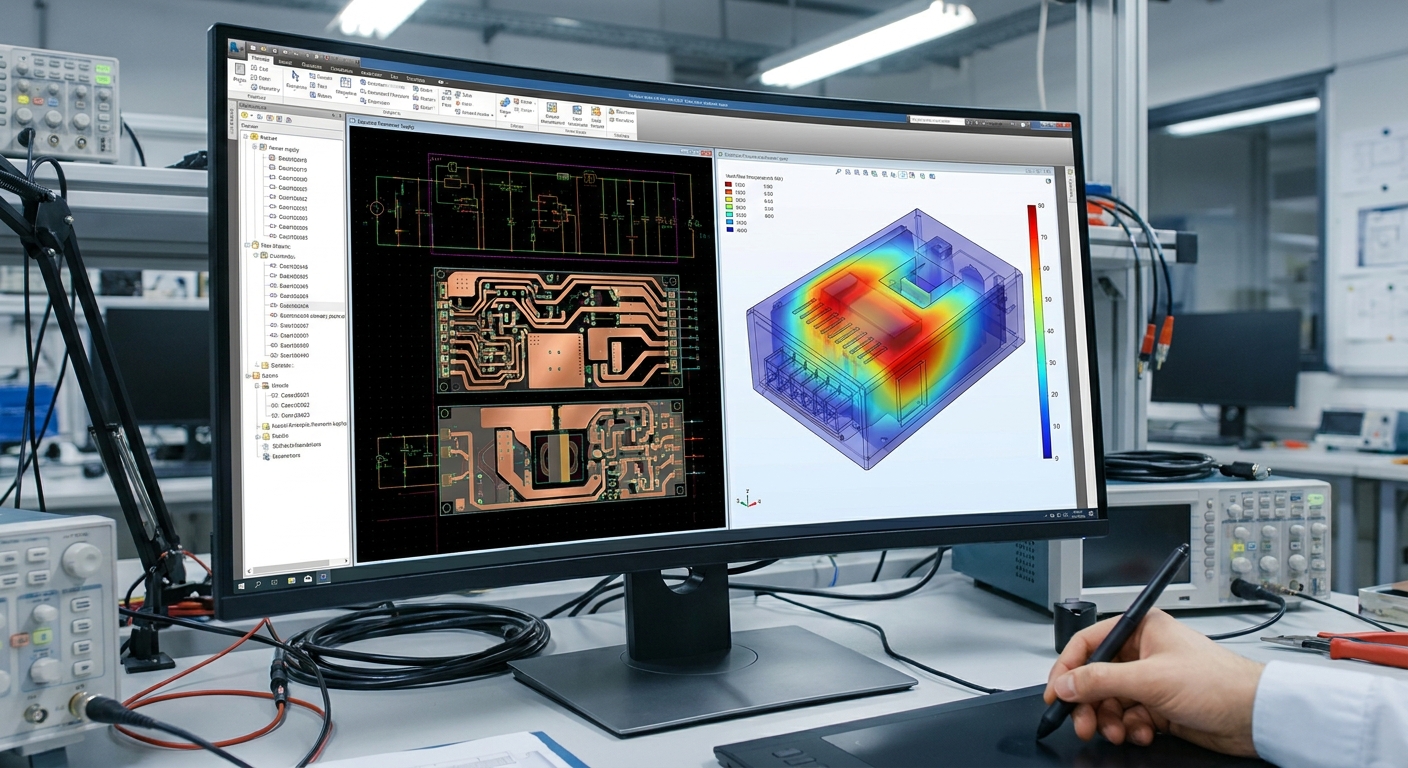
Experienced industrial power supply manufacturers design their systems using advanced thermal modeling software and active power topologies that maximize electrical efficiency. By utilizing precise simulations, they can optimize internal heat dissipation and prevent localized thermal bottlenecks in compact enclosures. This design approach enables higher power density without requiring loud or failure-prone mechanical cooling fans. Ultimately, these robust design architectures ensure your equipment runs cool and operates safely over long cycles.
What thermal management techniques protect your system?
Advanced thermal management is critical for protecting power components from extreme heat and thermal wear inside sealed enclosures. Designers use specialized conduction plates and heat-conductive potting materials to spread heat evenly across the assembly.
Here is the deal: Uncontrolled heat is the primary cause of electrolytic capacitor failure in modern industrial electronics. Utilizing custom thermal simulation models allows engineers to optimize dissipation paths and prevent localized hotspots.
- Aluminum Heat Sinks: Strategically placed to draw heat away from power MOSFETs.
- Thermal Potting: High-conduction compounds that distribute heat evenly.
- Convection Design: Vent patterns optimized for natural passive airflow.
How does active power factor correction boost efficiency?
Active power factor correction shapes the input current waveform to maximize real power draw and reduce harmonic noise on the grid. Integrating this technology allows your custom power supply to achieve conversion efficiencies of over 90 percent.
The best part? This high efficiency reduces electrical loss, lowers operating temperatures, and ensures full compliance with international energy regulations. Your hardware benefits from a cleaner, cooler, and highly optimized power system.
Key Takeaway: Advanced thermal management combined with active PFC circuits ensures long-term operational safety and compliance with global efficiency standards.
| Cooling Methodology | Heat Dissipation Efficiency | Cost Impact | Enclosure Size Requirement | Typical Application | |
|---|---|---|---|---|---|
| Passive Convection | Moderate | Low | Medium to Large | Sealed IoT Sensors | |
| Thermal Potting | High | Medium to High | Compact | Rugged Outdoor Devices | |
| Active Fan Cooling | Extremely High | High | Large | High-Power Telecom | |
| Conduction Plate | High | Medium | Compact | Medical Cart Systems |
Comparing these distinct cooling strategies allows you to select the optimal thermal architecture based on your device’s space constraints.
What do industrial power supply manufacturers test?
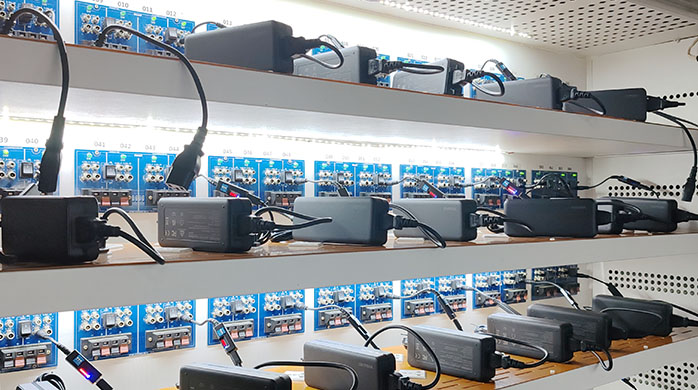
Premium industrial power supply manufacturers test their hardware against extreme environmental conditions, electrical surges, and physical impacts to ensure bulletproof reliability. Every unit undergoes automated screening protocols, high-voltage isolation checks, and full-load burn-in cycles to eliminate component defects before shipping. This extensive validation protocol guarantees that your power supplies will operate safely in harsh, real-world deployments. Investing in thoroughly tested power adapters prevents expensive field failures and reduces long-term warranty claims.
Why is the physical drop test critical for B2B devices?
Portable and rugged B2B devices frequently endure accidental drops and rough handling during daily operations. Ensuring your power supply remains electrically safe and structurally sound after an impact is vital for customer safety.
Make no mistake: A single cracked enclosure or fractured solder joint can cause short-circuits or catastrophic device failures. Rigorous drop testing protocols simulate these harsh real-world impacts to ensure maximum structural durability.
- Multi-Angle Drops: Units are dropped from standard heights onto solid steel plates.
- Structural Audits: Enclosures are scanned for microscopic fractures after testing.
- Safety Re-Verification: High-voltage isolation is tested again post-impact.
How do burn-in tests prevent early component failure?
Burn-in testing involves running completed power adapters at maximum load inside elevated thermal chambers for several hours. This continuous stress forces weak or defective components to fail before the batch leaves the factory.
Here is the deal: By filtering out early-life component mortalities, this screening ensures that only highly reliable hardware reaches your clients. Your products will experience significantly fewer field failures and warranty claims.
Key Takeaway: Rigorous environmental testing ensures your custom adapters survive physical impacts, thermal cycles, and prolonged electrical stress.
| Test Profile | Primary Failure Detected | Test Conditions | Industry Standard | |
|---|---|---|---|---|
| Physical Drop Test | Structural failure, loose solder joints | Multiple drops from 1.0m to 1.5m | IEC 60068-2-31 | |
| Full-Load Burn-In | Infant component mortality | 4 hours at 40°C under 100% load | MIL-STD-810H | |
| Hi-Pot Testing | Insulation breakdown, safety hazards | 3000V AC isolation barrier check | IEC 62368-1 | |
| Surge Immunity | Over-voltage susceptibility | 1kV differential, 2kV common mode | EN 61000-4-5 |
Reviewing these safety and validation tests demonstrates how modern testing regimes protect your products from early component failures.
Can industrial power supply manufacturers custom build?
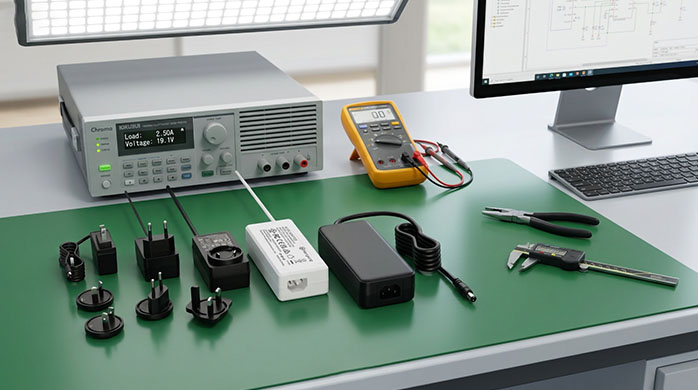
Yes, highly capable industrial power supply manufacturers can custom build adapters to meet your exact mechanical dimensions, electrical voltage rails, and unique cabling needs. They provide tailor-made options ranging from semi-custom modifications of standard platforms to fully bespoke, ground-up hardware engineering. This flexible manufacturing process allows you to integrate a high-performance power solution directly into space-constrained designs. Consequently, you can achieve a perfect aesthetic and functional match without compromising on your core specifications.
When should you choose full custom over semi-custom?
Semi-custom designs modify existing certified platforms to save time, whereas full custom builds design an electrical architecture from scratch. Full custom engineering is ideal when space is extremely restricted or when unique multiple-rail outputs are required.
Look: Choosing a semi-custom approach can save you thousands of dollars in upfront certification fees and development time. This path allows you to modify output cables and branding while using a pre-approved chassis.
- Custom Strain Reliefs: Built to handle specific bending angles and high mechanical pulls.
- Specialized Plugs: Lockable connectors that prevent accidental disconnects in critical areas.
- Branded Enclosures: Color-matched plastic with your company’s engraved logo.
How do tailored enclosures solve tight space constraints?
Custom-molded enclosures allow power supplies to fit cleanly into specialized product shapes without restricting cooling airflow. This precise mechanical design enables sleeker product dimensions and simplifies your assembly line workflows.
Think about it: By avoiding bulky standard adapters, you can improve both the physical look and overall utility of your final system. Designing custom mechanical structures yields a more refined end-user product.
Key Takeaway: Customization balances cost and performance, allowing you to choose between semi-custom and bespoke engineering paths.
| Engineering Parameter | Semi-Custom Modification | Fully Bespoke Customization | Off-the-Shelf Standard | |
|---|---|---|---|---|
| Upfront NRE Cost | Low (2,000−2,000 -2,000−5,000) | High (15,000−15,000 -15,000−50,000+) | Zero | |
| Time-to-Market | 6 to 10 weeks | 16 to 24+ weeks | Immediate | |
| Certification Cost | Minimal (Family additions) | High (Full brand new safety tests) | Zero | |
| Minimum Order (MOQ) | 1,000 units | 3,000 – 5,000 units | 100 units |
Comparing these development pathways helps your design team balance your customization requirements against budget and time constraints.
How do industrial power supply manufacturers certify?
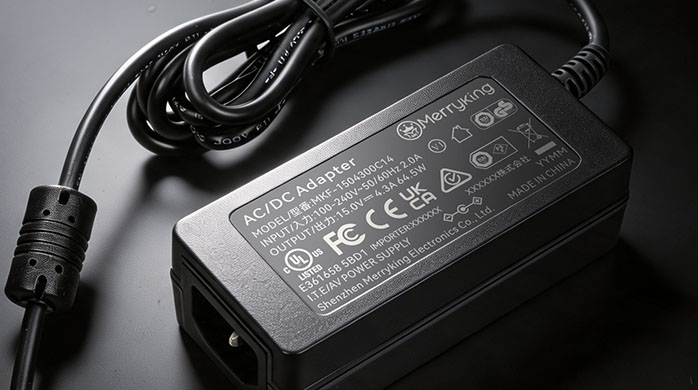
Leading industrial power supply manufacturers certify their designs by submitting them to accredited international laboratories for rigorous compliance testing. This process ensures that your power adapter bears mandatory global safety markings such as UL, CE, PSE, and FCC before shipping. Navigating these regional requirements allows your finished electronic products to clear customs inspections smoothly and legally. Ultimately, relying on verified certificates protects your company from legal liabilities and costly international trade delays.
Which global safety marks are mandatory for your market?
Mandatory safety markings are legal requirements for selling any electronic hardware in major global economies. Each regional territory requires specific testing protocols to protect end-users from shock, fire, and interference hazards.
Believe it or not: Importing uncertified power units can result in immediate customs seizures, legal liabilities, and massive brand damage. Securing verified safety approvals is essential for a successful product launch.
- UL/cUL (North America): Assures absolute safety compliance for US and Canadian markets.
- CE/TUV (Europe): Mandates compliance with strict European safety and environment directives.
- PSE (Japan): Required for importing AC-DC power adapters into the Japanese market.
How does creepage distance impact safety compliance?
Creepage is the shortest path along the surface of insulating materials between two conductive high-voltage tracks on a PCB. Maintaining sufficient creepage distance prevents dangerous electrical arcing, especially in humid or dusty industrial conditions.
The best part? Experienced designers use precise spacing and safety cutouts to isolate high-voltage paths from low-voltage user outputs. This design practice ensures that your devices remain exceptionally safe even under fault conditions.
Key Takeaway: Sourcing power supplies with active, certified global marks protects your business from customs delays and costly regulatory liabilities.
| Target Market Region | Primary Safety Standard | Mandatory Certification Mark | Efficiency Requirement | |
|---|---|---|---|---|
| United States | UL 62368-1 | UL / cUL Mark | DOE Level VI | |
| European Union | EN 62368-1 | CE Mark / TUV GS | ErP Stage 2 / CoC Tier 2 | |
| Japan | J62368-1 | PSE Mark (Category A) | Denan Law compliance | |
| Global Markets | IEC 62368-1 | CB Scheme Report | GEMS / CoC Tier 2 |
Reviewing this compliance matrix ensures your engineering team designs for the correct safety certifications based on your export regions.
Where do industrial power supply manufacturers source?
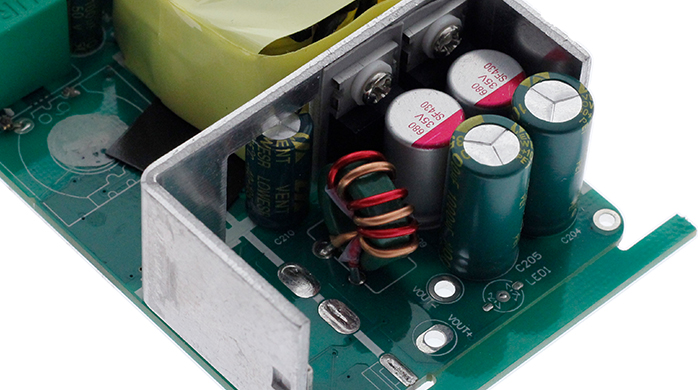
Reliable industrial power supply manufacturers source their components exclusively from authorized, first-tier component fabricators with complete traceability records. Sourcing premium capacitors, high-grade silicon switching transistors, and pure copper transformer windings guarantees consistent electrical performance under load. This strict material control eliminates the risk of incorporating counterfeit or low-grade parts into your power infrastructure. As a result, your custom power solutions maintain excellent efficiency, low heat output, and exceptional operational lifespans.
How do strict sourcing rules prevent supply delays?
Top-tier manufacturers maintain highly transparent, auditable supply chains by sourcing parts directly from verified electronic component fabricators. This strict material tracking ensures that every capacitor, transistor, and transformer meets precise quality requirements.
The reality is simple: Using unbranded or low-grade capacitors causes power adapters to break down prematurely when subjected to continuous heat. Sourcing premium, high-temperature components ensures your hardware functions reliably for years.
- First-Tier Silicon: Sourced from global industry leaders to guarantee stable switching characteristics.
- High-Temp Capacitors: Rated at 105°C to ensure exceptionally long lifespans in compact casings.
- Pure Copper Transformers: Prevents high resistive losses and unwanted heat build-up.
What steps kickstart your custom OEM power design?
Launching a custom power supply project requires detailing your electrical specs, mechanical dimensions, and regional compliance targets. Discussing these specifications with your manufacturer early prevents design misunderstandings and saves development cycles.
Look: Sharing your expected production volumes and target cost metrics also allows engineers to select the most cost-efficient design path. Effective communication at this stage builds a solid foundation for a successful partnership.
Key Takeaway: Enforcing strict component traceability and using premium materials protects your hardware from infant component mortality and premature field failures.
| Critical Component | Tier-One Standard | Low-Cost Alternative Risks | Impact on Power Supply | |
|---|---|---|---|---|
| Capacitors | Japanese 105°C (Rubycon/Nichicon) | Chinese unbranded 85°C | Rapid capacitance loss, early failure | |
| Switching MOSFET | Infineon / STMicroelectronics | Unbranded / Reclaimed silicon | Thermal runaway, efficiency drops | |
| Transformer Core | Pure copper wire, PC40 ferrite | Copper-clad aluminum, low grade | High core losses, overheating | |
| Enclosure Plastic | 94V-0 Fire-Retardant PC | Non-rated recycled ABS | Melts under fault conditions, fire hazard |
Evaluating these material standards helps you understand how component quality directly affects your power supply’s reliability and thermal safety.
How do industrial power supply manufacturers scale up?
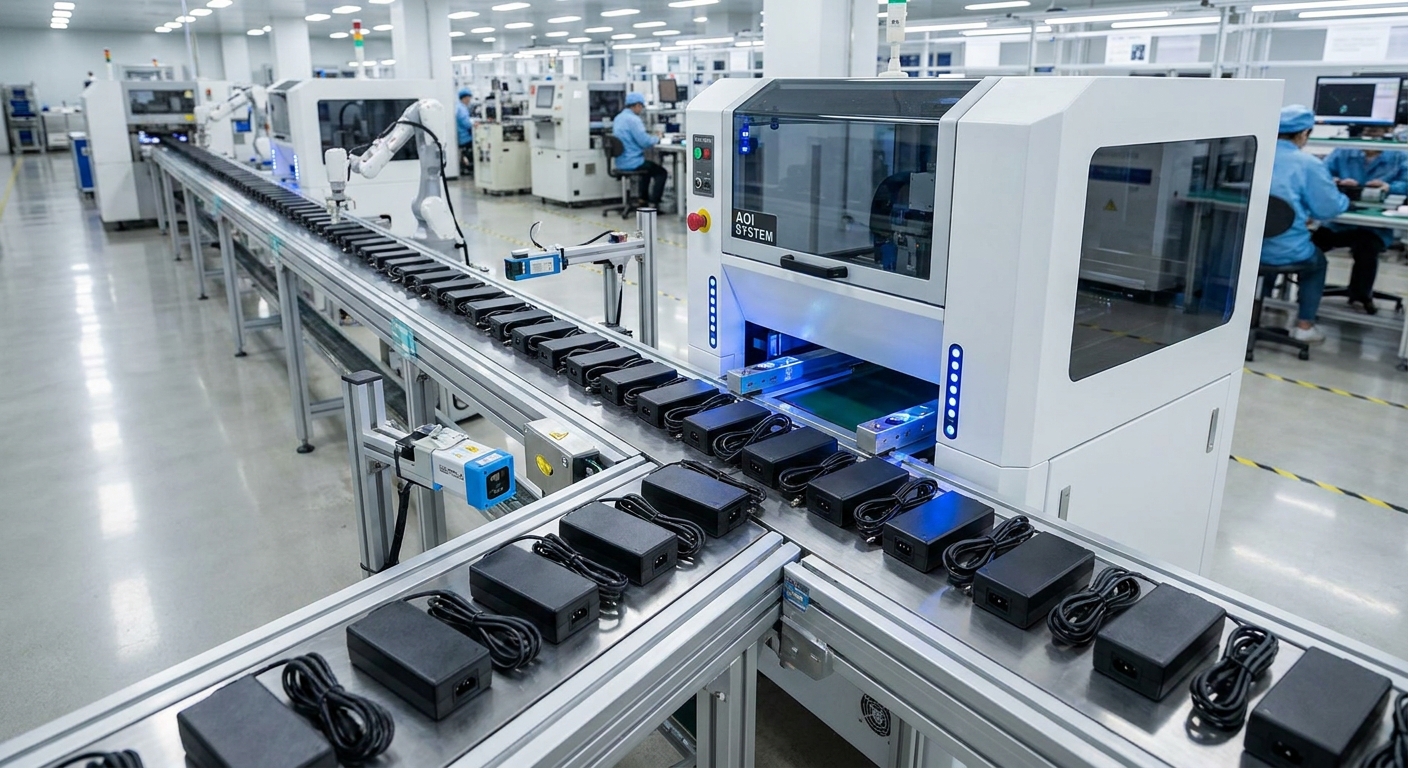
Highly efficient industrial power supply manufacturers scale up by deploying automated SMT assembly lines, robotic wave soldering, and automated functional testing systems. This mechanical consistency minimizes human assembly errors, resulting in high production yields and predictable lead times for volume orders. Standardized production workflows allow them to maintain strict unit-to-unit consistency across thousands of manufactured devices. Consequently, you can launch high-volume products with complete confidence in the reliability of each power adapter.
How do automated production lines ensure high yield?
Automated surface mount assembly lines and robotic wave soldering machines eliminate human errors during component placement. This mechanical precision ensures that every printed circuit board is populated exactly to specification, maintaining high yield rates.
Think about it: Inconsistent solder joints can introduce subtle variances in high-frequency electrical signals and electromagnetic emissions profiles. Robotic assembly guarantees that every production run easily passes strict safety and EMI standards.
- Automated Optical Inspection: Scans assembled PCBs for solder bridges and component misalignment.
- Robotic Wave Soldering: Guarantees perfect mechanical and electrical joints on through-hole pins.
- Automated Functional Testers: Rapidly validates key voltage, current, and ripple limits in seconds.
What quality control systems monitor manufacturing?
Comprehensive quality management systems monitor every assembly phase, scanning for defects from the SMT phase to final enclosure sealing. Digital tracking allows factories to trace every shipped power supply back to its original component batches.
Here is the deal: If a material defect is ever discovered, this complete traceability allows for quick, targeted resolutions rather than complete product recalls. Your supply chain remains secure, transparent, and resilient against unexpected quality events.
Key Takeaway: High-volume automated manufacturing ensures exceptional unit-to-unit consistency, high production yields, and highly predictable delivery timelines.
| Production Phase | Automation Level | Key Inspection Milestone | Targeted Defect Prevention | |
|---|---|---|---|---|
| PCB Assembly | Fully Automated SMT | Solder Paste Inspection (SPI) | Solder bridging, dry joints | |
| Component Insertion | Semi-Automated | Visual Inspection Guide | Incorrect component values | |
| Soldering | Automated Wave Soldering | Automated Optical Inspection | Cold solder joints, open contacts | |
| Final Assembly | Robotic Enclosure Sealing | Functional Tester (ATE) | Mechanical sealing gaps, dead units |
Analyzing these automated assembly checkpoints shows how manufacturing precision yields a highly consistent, defects-free power supply product run.
Why partner with industrial power supply manufacturers?

You must partner with dedicated industrial power supply manufacturers because it is the only way to guarantee the long-term viability, safety, and regulatory compliance of your high-performance hardware. Overcoming complex power challenges requires direct collaboration with factory engineers who can design and scale custom electrical architectures. This strategic alliance ensures that your systems are robust enough to withstand severe environmental and electrical stress. Ultimately, choosing a dedicated partner safeguards your development timeline and accelerates your path to market.
What critical questions should you ask during a tour?
An on-site factory audit allows your engineering team to verify cleanroom standards, worker safety training, and ESD protective procedures. You should ask to inspect their testing laboratories and check if their measurement equipment has active calibration records.
But that is not all: Checking how raw materials are physically segregated prevents the accidental mixing of non-compliant metals on the assembly line. Direct observation provides the objective truth about their manufacturing discipline.
- Calibration Verification: Checking active NIST-traceable stickers on oscilloscope units.
- ESD Control Check: Ensuring workers wear functioning grounding wrist straps on line.
- RoHS Material Control: Verifying lead-free assemblies are kept completely separate.
How does on-site testing verify long-term stability?
Reviewing on-site environmental chambers and vibration testing rigs confirms that the manufacturer can validate hardware under extreme conditions. Watching real-time testing builds deep confidence that your custom designs will survive real-world deployment.
The best part? This hands-on inspection confirms that your design specifications are fully met and validated by qualified, in-house QA teams. Your partnership starts with clear, verified engineering proof rather than empty promises.
Key Takeaway: Structured factory audits verify a manufacturer’s real-world capabilities, quality control processes, and commitment to standards.
| Audit Focus Area | Critical Standard to Verify | Red Flags to Watch For | Risk Level | |
|---|---|---|---|---|
| Electrostatic Discharge (ESD) | Continuous ground monitoring, ESD smocks | Workers without straps, ungrounded tables | High | |
| Calibration Management | NIST-traceable calibration certificates | Outdated stickers, uncalibrated testers | High | |
| Quality Control Tracking | Barcoded components, digital traceability | Paper logs with missing information | Medium | |
| Worker Competency | Standard Operating Procedures at every station | Workers operating without instructions | Medium |
Evaluating these critical audit parameters ensures you can select a manufacturing partner who maintains rigorous quality control discipline.
Strategic Conclusion & Next Steps
Selecting the right power partner is a critical engineering decision that dictates your product’s reliability, certification timeline, and field performance. By moving past the constraints of standard off-the-shelf power adapters and choosing specialized custom solutions, you can eliminate the dangers of voltage fluctuations, inadequate cooling, and compliance delays. Our team specializes in engineering highly optimized, high-efficiency power architectures that integrate seamlessly with your hardware to deliver stable performance under the most grueling conditions. We believe that exceptional power design is the cornerstone of tomorrow’s industrial and medical innovation. Please contact us today to schedule a consultation with our system engineers and receive a custom solution tailored to your system’s exact specifications.
What are FAQs on industrial power supply manufacturers?
These FAQs on industrial power supply manufacturers answer your critical questions regarding safety certifications, factory ownership, and active power factor correction needs. Navigating these technical topics helps your engineering and procurement teams make informed decisions when selecting an OEM power partner. By clarifying these common issues, you can streamline the development process and avoid costly design iterations. Let us review the primary questions that B2B product developers encounter during the sourcing cycle.
Can you modify standard power designs safely?
Modifying an existing, certified power supply platform is highly efficient for most B2B electronic developers. It allows you to obtain tailored power outputs quickly without initiating full regulatory approvals from scratch.
Here is the deal: Working with standard approved architectures keeps your development costs low while allowing you to configure precise cable specifications.
- Can I customize output voltages without losing safety certifications?
- Judgment: Absolutely.
- Explanation: Experienced manufacturers build pre-certified base architectures that allow minor output voltage modifications under existing safety file approvals. This strategy significantly reduces both your validation costs and time to market.
- Can I request a low-volume trial before mass production?
- Judgment: Yes, you should secure this trial period.
- Explanation: Direct-source factories routinely support small pilot runs to let your engineering team validate real-world compatibility. This evaluation stage eliminates system integration risks before you commit to high-volume manufacturing investments.
How do active PFC and factory ownership checks work?
Identifying whether a prospective partner owns their production facilities or relies on third-party subcontractors is vital for your long-term supply chain security. Directly owning the factory ensures absolute control over assembly standards.
Believe it or not: Many entities claiming to be manufacturers are actually distributors that lack direct engineering or assembly resources.
- What’s the best way to verify if a manufacturer owns their factory?
- Judgment: You must request localized registration documents and live video audits.
- Explanation: True tier-one manufacturers will instantly share ISO certificates that match their primary corporate registration. Intermediaries often delay these requests or show general materials that lack specific facility addresses.
- How do I know if my design requires active power factor correction?
- Judgment: You must verify if your equipment draws more than 75W of power.
- Explanation: International standards like EN61000-3-2 strictly require active power factor correction (PFC) above this consumption threshold to prevent electrical grid noise. Incorporating active PFC is necessary if you intend to export hardware into European markets.
Key Takeaway: Collaborating with an experienced, direct-source manufacturer simplifies the design process, lowers certification costs, and ensures global market compliance.