Choosing a low noise power adapter for Android kiosks requires evaluating output ripple, safety certifications, and EMI design to ensure stable touchscreen operation and long-term hardware reliability. Imagine deploying a network of beautifully designed self-service retail kiosks across high-traffic shopping centers, only to find that users are walking away in frustration due to completely non-responsive screens. Behind the scenes, customer support lines are lighting up with field service calls about screen freezes and erratic cursor behaviors. It is easy to blame the touchscreen panel or Android system software, but the root cause of these costly outages is almost always high-frequency electrical noise leaking from an inferior power brick. To secure your interactive digital displays and ensure seamless, uninterrupted daily operations, equipping your hardware configuration with a dedicated low noise power adapter is the absolute standard for B2B deployments.
What Is a Low Noise Power Adapter for Android Kiosks?
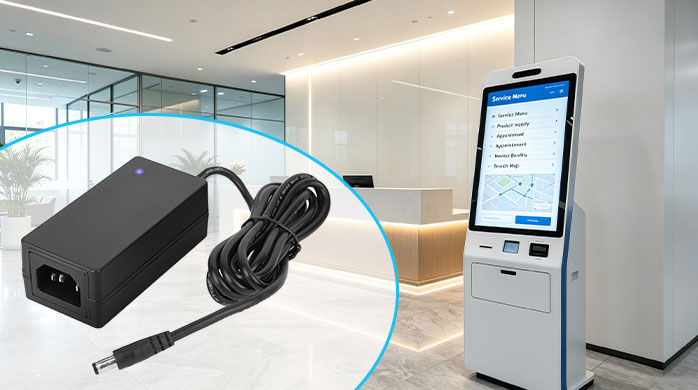
A low noise power adapter for Android kiosks is a highly specialized electrical power supply designed with advanced internal filtration circuits to deliver extremely stable DC voltage with minimal electromagnetic and radio-frequency interference. By implementing premium component layouts and enhanced shielding, this low noise power adapter isolates the kiosk’s sensitive processing hardware and capacitive digitizers from raw AC power fluctuations. Choosing the correct power architecture is vital to preventing erratic touch screen behavior on public-facing terminal interfaces.
Standard power blocks prioritize manufacturing speed and raw output cost over electrical cleanliness, releasing high levels of high-frequency noise that disrupts modern microcontrollers. By contrast, a dedicated low noise adapter filters out these critical interferences before they can reach the system’s primary motherboard.
What Makes a Power Adapter “Low Noise”?
You must look closely at the internal electrical architecture to understand what separates these professional units from cheap, off-the-shelf consumer chargers. Standard chargers allow raw electromagnetic noise to pass directly into your devices, creating invisible performance bottlenecks and thermal stress.
But that is not all.
Advanced low noise power units utilize multiple stages of filtration and high-performance components to systematically absorb unwanted electrical spikes.
Think about it:
- Dual-Stage EMI Filters: Block both common-mode and differential-mode noise at the input.
- Low-ESR Solid Capacitors: Stabilize output voltage while running significantly cooler.
- Shielded Transformers: Wrap high-frequency magnetic fields inside copper and ferrite barriers.
Key Takeaway: Selecting a low noise adapter guarantees that your interactive kiosks remain completely responsive under heavy public usage.
| Feature | Standard Charger | Low Noise Power Adapter | |
|---|---|---|---|
| Output Ripple | > 150mVp-p | < 50mVp-p | |
| Component Shielding | Minimal or None | High-density Copper / Ferrite | |
| System Stability | Frequent Touch Freezes | Continuous uptime |
Investing in high-grade power delivery translates directly into reduced service calls and higher customer satisfaction.
Why Do Android Kiosks Need a Low Noise Power Adapter?
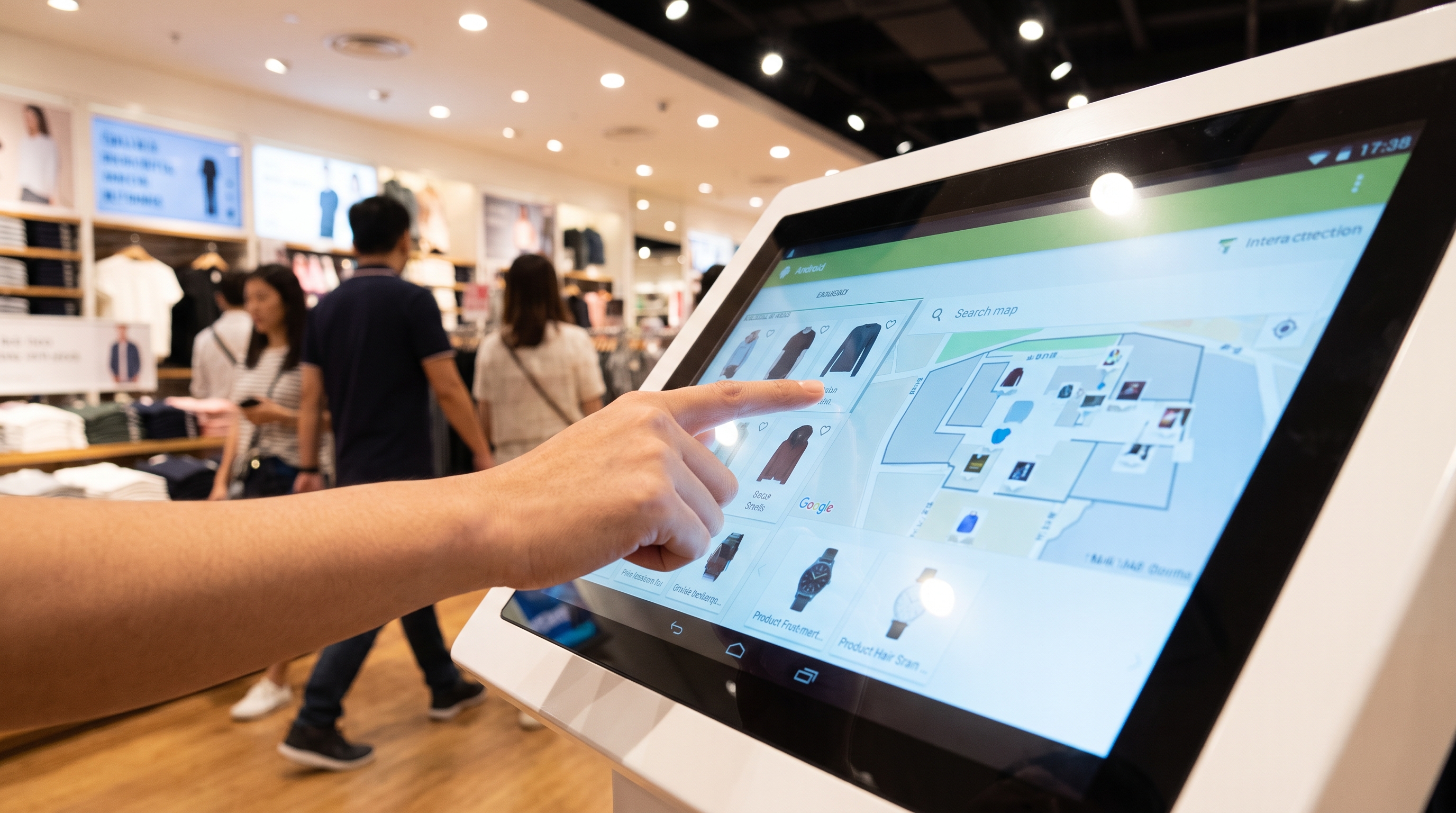
Android kiosks need a low noise power adapter to shield their highly sensitive capacitive touch panels from electromagnetic interference that causes misregistered inputs, erratic cursor movements, and application lag. High-frequency electrical noise acts as a continuous disruptor, altering the tiny capacitive charges that coordinate touch placement on your screen. Utilizing a dedicated low noise power adapter keeps these voltage boundaries flat and highly predictable.
If the power adapter emits significant noise, the touchscreen controller struggles to distinguish between real physical touches and background noise. This leads directly to system lockups, poor user experience, and ultimately, lost transactional revenue.
The Danger of Phantom Touches
You can easily lose customers and damage your brand’s reputation when your public kiosks start registering “ghost” or phantom inputs without anyone actually touching them. This frustrating behavior occurs when high-frequency AC ripple mimics the electrical charge of a human finger, tricking the digital display controller.
Here is why:
- Unreliable User Input: Frustrated users repeatedly tap non-responsive menus, eventually abandoning their transactions mid-way.
- Transaction Failures: Accidental touches can select incorrect payment options or unwanted retail products.
- Software Lockups: Continuous false touch inputs flood the Android operating system, leading to unexpected application crashes.
Key Takeaway: Preventing touch screen anomalies ensures a seamless transactional experience for your end users.
| Kiosk Symptom | Root Cause | Power Adapter Solution | |
|---|---|---|---|
| Ghost Touches | High-frequency AC line leakage | Active common-mode noise suppression | |
| Slow Response | Processor throttling from power sag | High-current reserves with low ripple | |
| Erratic Scrolling | Unstable ground reference voltage | Isolated ground circuitry |
Securing your hardware configuration with correct power architecture eliminates unexpected system vulnerabilities.
How Can a Low Noise Power Adapter Prevent Touch Screen Interference?
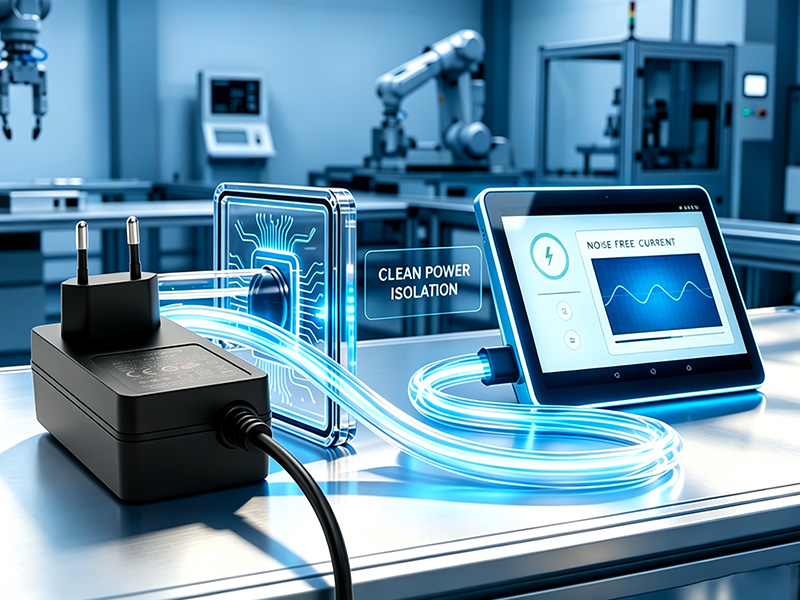
A low noise power adapter prevents touch screen interference by isolating the output DC voltage from common-mode AC noise and establishing a highly stable electrical ground reference. This low noise power adapter mitigates stray currents that would otherwise flow through the screen’s ITO sensor matrix and cause structural signal distortion. Maintaining a pristine, isolated grounding path is absolutely critical for precise touch coordinate tracking.
By eliminating these random high-frequency voltage spikes, the touchscreen’s capacitive sensors can instantly identify genuine physical inputs. This results in a fast, ultra-responsive interface that behaves exactly as your software developers intended.
Establishing Electrical Isolation
You must protect the delicate capacitive screen matrix from back-end electrical interference to prevent touch errors. When raw grid power fluctuates, it can introduce ground-loop noise that directly interferes with the kiosk’s touchscreen controllers.
It gets better:
- Isolated Power Paths: Completely separate primary AC lines from sensitive secondary DC paths.
- Y-Capacitor Optimization: Balance electrical safety leakage currents with high-frequency noise absorption.
- Ground Noise Rejection: Prevent ground loops from injecting electrical artifacts into the display digitizer.
Key Takeaway: Proper isolation ensures high touch-screen precision regardless of local power grid instability.
| Isolation Element | Function | Impact on Touchscreen | |
|---|---|---|---|
| Y-Capacitors | Shunts RF noise to ground | Eliminates jittery cursor tracking | |
| Optocouplers | Transmits control signals optically | Isolates high voltage hazards | |
| Common-Mode Chokes | Blocks high-frequency AC noise | Prevents screen desensitization |
Clean grounding architecture serves as the foundation for modern interactive device reliability.
What Causes Electrical Noise in a Low Noise Power Adapter?
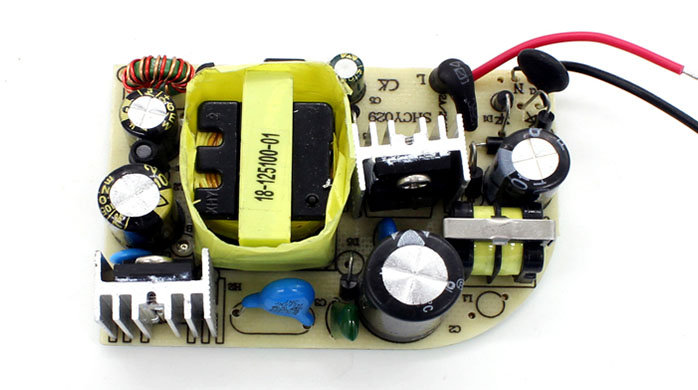
Electrical noise in a power supply is primarily caused by high-frequency switching transistors, poor PCB component layouts, and sub-optimal capacitor selections. Managing these factors with a highly engineered low noise power adapter prevents toxic parasitic capacitance from affecting external Android hardware. Utilizing high-performance components inside the chassis limits electromagnetic emissions.
When low-grade components heat up, their filtering performance degrades, allowing high-frequency noise to leak out through the DC output cord. Restricting this noise at the hardware level is essential to preserving touch sensitivity.
Deciphering Switching Harmonics
You need to understand how high-speed switching transistors generate unwanted electromagnetic noise during normal operation. As the adapter converts high AC voltage to low DC voltage, these components turn on and off millions of times per second.
What does this mean?
- Switching Spikes: Extreme voltage changes create sharp harmonic peaks.
- Parasitic Inductance: Poor PCB traces behave like miniature antennas, broadcasting noise to surrounding hardware.
- Thermal Variations: Standard capacitors lose capacitance as temperature rises, increasing electrical noise.
Key Takeaway: Eliminating switching harmonics through smart PCB layout keeps output current reliably clean and smooth.
| Noise Source | Physical Origin | Countermeasure | |
|---|---|---|---|
| MOSFET Switching | Rapid on/off cycles | Snubber circuits and soft-switching | |
| Parasitic Capacitance | Poor winding insulation | Shielded transformer design | |
| Thermal Derating | Low-grade capacitors | High-temp, low-ESR solid capacitors |
Investing in robust internal design safeguards your deployments against premature component failure.
How Does Output Ripple Affect a Low Noise Power Adapter?
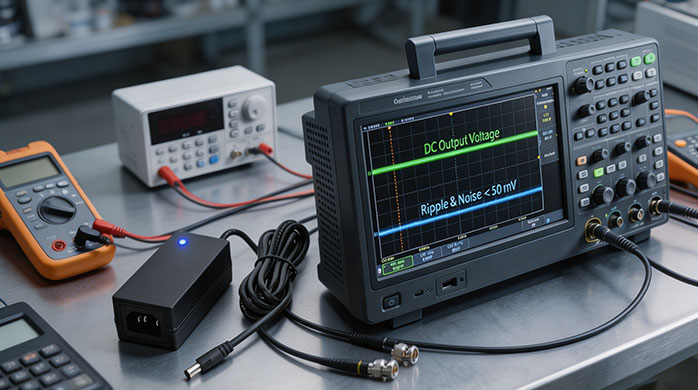
Output ripple affects system stability by injecting residual AC voltage fluctuations directly into the DC power rail of the connected kiosk. This low noise power adapter is designed to hold ripple and noise below 50mVp-p, preserving the exact reference voltage required by digital circuit chips. Minimizing these voltage fluctuations prevents data corruption in the Android SBC.
When output ripple exceeds critical thresholds, the internal power management ICs must work overtime, raising overall temperature. High thermal strain eventually triggers thermal throttling, degrading user experience.
Understanding the Ripple Effect
You can visualize output ripple as a constant wave riding on top of your clean DC voltage line. If this wave is too tall, it pushes sensitive microprocessors out of their safe operational thresholds.
Here is the deal:
- Signal Degradation: High ripple interferes with high-speed RAM and flash memory read/write cycles.
- Display Flickering: Backlight drivers fail to receive flat voltage, leading to subtle screen flickering.
- Shortened Lifespan: Continuous voltage stress speeds up the degradation of critical internal capacitors.
Key Takeaway: Maintaining output ripple below 50mVp-p ensures sustained operating speeds and zero display distortion.
| Ripple Level (Vp-p) | Operational Effect | Kiosk Performance Status | |
|---|---|---|---|
| < 30mVp-p | Highly stable DC power | Flawless touchscreen, longest lifespan | |
| 50mV-100mVp-p | Marginally stable DC power | Potential screen lag in warm conditions | |
| > 150mVp-p | Unstable DC power | Frequent ghost touches, application crashes |
Ensuring strict ripple limits keeps your self-service units working at peak efficiency round-the-clock.
What Specs Does a Low Noise Power Adapter for Kiosks Need?
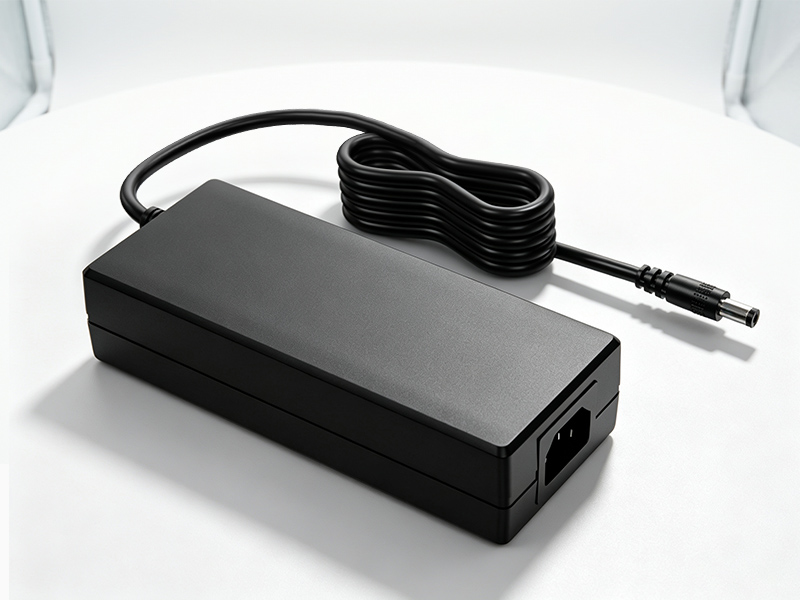
A low noise power adapter for kiosks needs a combination of low output ripple, comprehensive short-circuit protection, high energy efficiency, and wide temperature tolerance. Utilizing a premium low noise power adapter ensures that the power unit can output a sustained wattage without experiencing dangerous voltage drops. Selecting the right specs protects your overall investment from electrical spikes.
Commercial environments demand continuous operation under extreme conditions, meaning standard consumer chargers are completely out of the question. You must target components with proven MTBF ratings to lower your maintenance costs.
Critical Specs to Look For
You should carefully evaluate technical data sheets to make sure the unit matches your specific environmental challenges. Standard configurations can fail when deployed in non-climate-controlled public lobbies or high-humidity regions.
But that is not all.
- Wide AC Input Range: 90V to 264V compatibility ensures stable power globally.
- Active PFC: Active Power Factor Correction reduces power loss and stabilizes incoming lines.
- Extended MTBF: Look for mean time between failures of over 100,000 hours.
Key Takeaway: Selecting industrial-grade specifications secures uninterrupted performance and minimizes replacement overhead.
| Specification Parameter | Ideal Target Range | Business Benefit | |
|---|---|---|---|
| AC Input Range | 90V – 264V (Universal) | Global deployment with single SKU | |
| MTBF Rating | > 100,000 Hours | Reduced field maintenance cost | |
| Efficiency Level | DoE Level VI | Lower energy bills, cooler operating temps |
Specifying robust electrical tolerances ensures your kiosk fleet remains bulletproof in any operating environment.
Which Safety Certifications Should a Low Noise Power Adapter Meet?
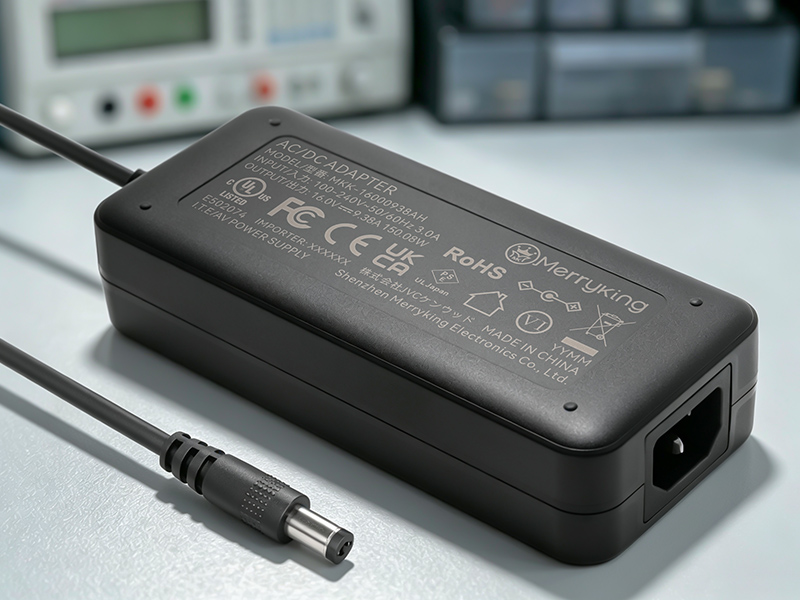
A low noise power adapter must meet stringent global safety certifications including UL, CE, FCC, PSE, and RoHS to guarantee safe and legal operation in public spaces. Deploying this low noise power adapter means your hardware conforms to the highest fire and shock protection standards in the industry. Regulatory compliance is mandatory to protect your business from legal liabilities.
These safety seals prove that the design has passed demanding physical and thermal testing. Certification labels must be clearly visible and registered with official oversight bodies.
Navigating Global Compliance Standards
You cannot afford to deploy uncertified power supplies in high-traffic public areas due to serious fire hazards. If an electrical issue occurs, unlisted hardware can void your business insurance policies immediately.
Here is why:
- UL/cUL Certification: Guarantees thermal safety and component insulation limits.
- FCC/CE Compliance: Verifies that electromagnetic emissions do not interfere with nearby communication networks.
- RoHS Compliance: Ensures no hazardous substances are used in manufacturing, meeting modern eco-friendly guidelines.
Key Takeaway: Sourcing fully certified power hardware protects your customers, your brand, and your business from legal risks.
| Certification Logo | Market Coverage | Primary Focus Area | |
|---|---|---|---|
| UL / cUL | North America | High Voltage Safety & Fire Prevention | |
| CE / GS | European Union | Public Health, Safety, and Eco-design | |
| FCC / UKCA | US & UK | Electromagnetic Interference Control |
Adhering to verified safety regulations guarantees hassle-free customs clearance and operational legality.
How Can EMI and EMC Design Improve a Low Noise Power Adapter?
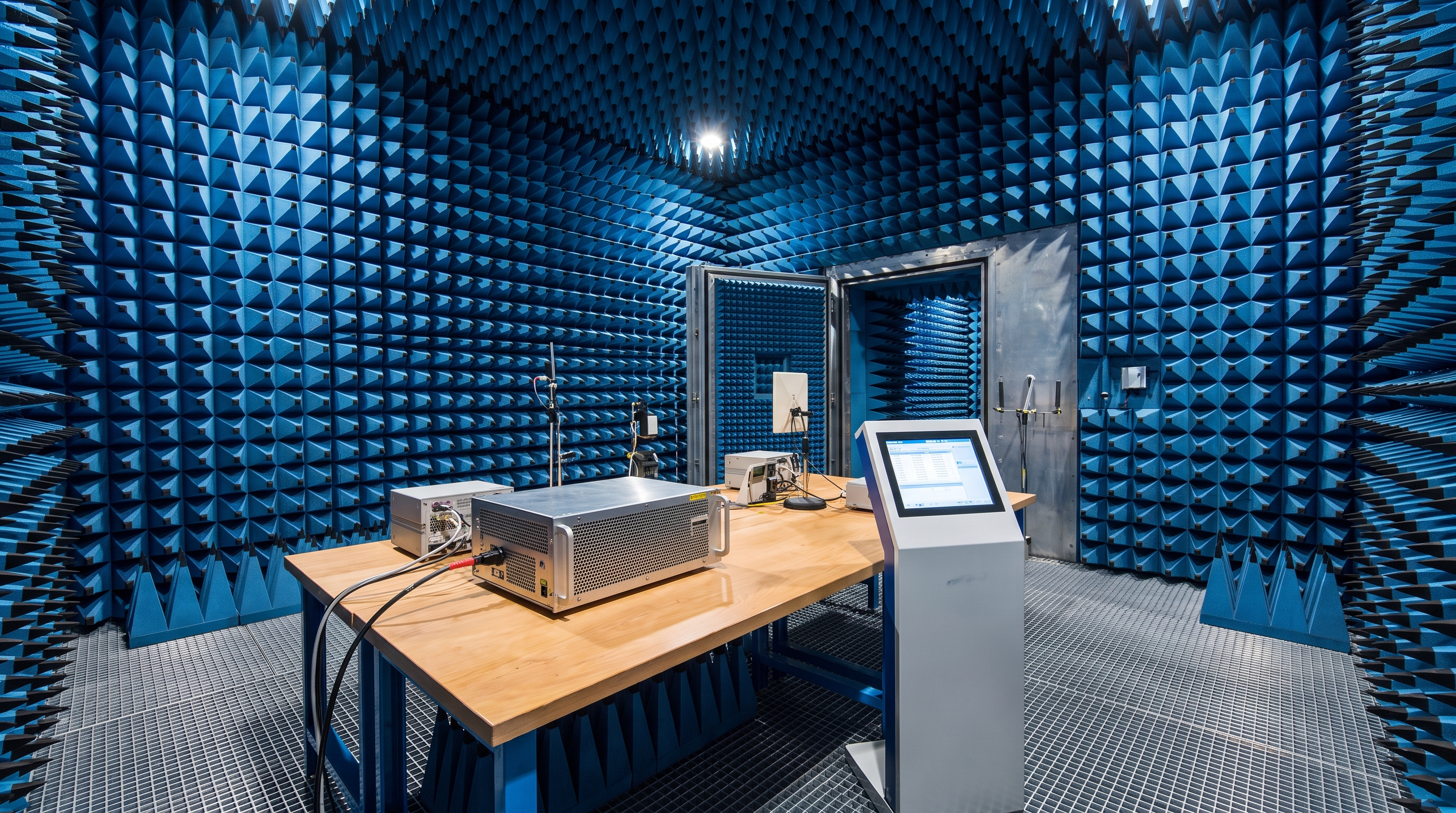
EMI and EMC design improves a low noise power adapter by containing electromagnetic radiation within the casing and filtering out high-frequency conductive interference before it reaches the kiosk. Integrating these advanced shielding methods into your low noise power adapter protects other nearby equipment from radio-frequency interference (RFI). This double layer of protection is vital for retail and medical kiosk environments.
Dedicated testing in anechoic chambers ensures that emission peaks do not cross regulatory boundaries. This rigorous engineering approach makes certain that your device remains quiet both electrically and acoustically.
Shielding Out the Noise
You will find that superior EMC design is what separates a long-lasting industrial power supply from cheap consumer blocks. Highly shielded units prevent radio frequency signals from leaking out and disrupting wireless networks.
Think about it:
- Internal Copper Shielding: Wraps around the transformer to capture stray magnetic fields.
- Ferrite Beads: Dampen high-frequency noise spikes directly on the output cable.
- Metal Enclosures: Provide robust physical protection alongside electrical shielding.
Key Takeaway: Implementing comprehensive EMC shielding eliminates localized wireless signal drops and screen lag.
| Shielding Component | Shielding Function | Performance Advantage | |
|---|---|---|---|
| Ferrite Core | Suppresses high-frequency cable EMI | Reduces touch jitter on nearby touchscreens | |
| Anechoic Isolation | Absorbs stray magnetic waves | Conforms to strict medical emission standards | |
| Chassis Grounding | Dissipates electrostatic energy | Prevents shock damage during public usage |
Utilizing fully shielded adapters secures robust performance even in radio-congested retail spaces.
What Should B2B Buyers Check in a Low Noise Power Adapter?

B2B buyers should evaluate manufacturer credentials, component sourcing quality, custom cable options, and the exact ripple profiles under full load. This low noise power adapter selection must be supported by transparent testing data and full safety certification documentation. Verifying these aspects up front guarantees that your kiosk fleet remains functional for years to come.
Partnering with manufacturers who provide physical testing reports rather than self-declared checklists is crucial for serious projects. This meticulous validation helps you bypass cheap imitations that fail within months of deployment.
Assessing Supplier Quality Metrics
You need to look beyond the unit price when sourcing electrical components for large-scale digital kiosk rollouts. Cheap units often save money by using low-tier capacitors that degrade rapidly when run 24/7.
Here is the deal:
- True Testing Reports: Request actual oscilloscope screenshots showing ripple under maximum operating temperature.
- Component Brand Transparency: Demand Japanese-made or top-tier Taiwanese electrolytic capacitors for longevity.
- Prototyping Support: Work only with suppliers who offer physical samples for benchtop verification.
Key Takeaway: Verifying component quality prevents premature hardware wear and saves thousands in field replacement labor.
| Procurement Metric | Standard Supplier | Premium B2B Partner | |
|---|---|---|---|
| Capacitor Lifecycle | < 2,000 Hrs (Unbranded) | > 5,000 Hrs (Premium Japanese) | |
| Sample Validation | No engineering samples | Full testing samples with active support | |
| Factory Auditing | No ISO verification | ISO 9001 certified manufacturing |
Sourcing from verified manufacturers eliminates the financial risk of massive field recalls.
How to Customize a Low Noise Power Adapter for Kiosk Projects?
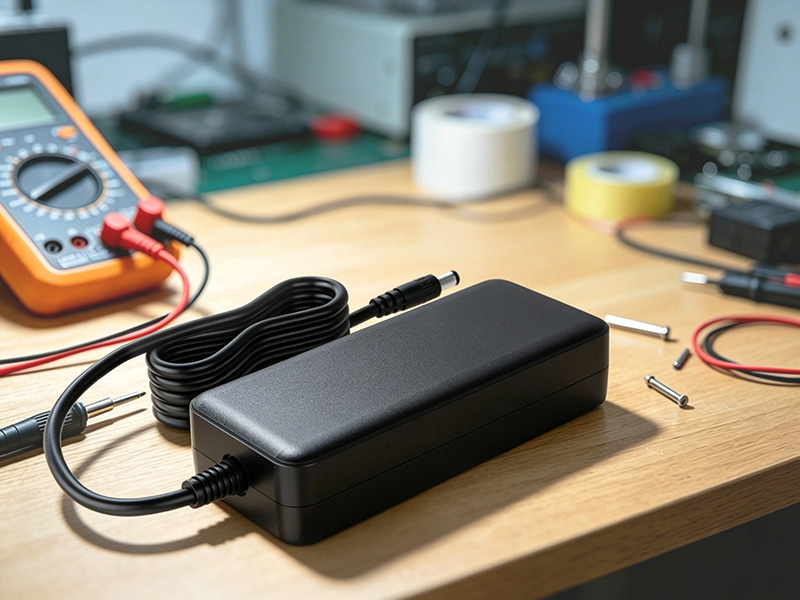
Customizing a low noise power adapter involves selecting optimal cable lengths, specifying ruggedized connectors like locking DC jacks or USB-C, and tuning internal PCB filters to match the kiosk’s exact power profiles. Adjusting these physical and electrical parameters ensures the low noise power adapter integrates seamlessly into tight internal metal frames. This tailored approach eliminates loose internal cables and electrical mismatches.
By engineering custom output channels, you can power both the primary Android SBC and secondary receipt printers from a single source. This streamlined setup optimizes interior space and lowers overall material costs.
Tailoring the Electrical Interface
You can achieve a much cleaner internal cabinet layout when your power lines are built to the exact lengths required. Standard long cords require manual bundling, creating heat pockets and acting as antennas for high-frequency interference.
But that is not all.
- Locking DC Connectors: Prevent accidental power disconnections from minor vibrations or public tampering.
- Angled Plugs: Save valuable interior depth within ultra-thin kiosk enclosures.
- Multi-Rail Outputs: Single-source power rails simplify cable runs and distribution boards.
Key Takeaway: Designing a custom power delivery setup reduces assembly time and prevents internal cable chaos.
| Customization Option | Mechanical Benefit | Electrical Advantage | |
|---|---|---|---|
| Locking DC Barrel | Vibrational pull-out prevention | Stable, non-sparking contact point | |
| Optimized Cable Length | Clean internal cable routing | Decreased line resistance and lower EMI | |
| Integrated Multi-Rail | Single adapter solution | Synchronized power-on sequences for SBCs |
Working with experienced engineering teams ensures custom designs transition smoothly from blueprint to production.
Conclusion
Sourcing the right power hardware is not just a standard procurement step—it is a critical pillar of your digital kiosk project’s overall ROI. Low-grade power adapters might shave a few dollars off initial component costs, but they pave the way for massive field failures, high-frequency screen interference, and continuous technical support headaches. Elevating your hardware architecture with specialized, highly shielded power units ensures that every user tap registers flawlessly, maximizing transactional volume and consumer trust.
At MK Power Adapter, we design and manufacture elite, custom-engineered low noise power adapters tailored precisely to the complex demands of modern industrial and commercial kiosk deployments. From custom PCB filtering layouts to robust safety compliance, our solutions are engineered to keep your hardware stable and profitable. To secure your hardware deployments and take full control of your system’s performance, contact us today to schedule an engineering consultation and request high-reliability power samples.
Frequently Asked Questions
Can I use a standard mobile charger to power an Android kiosk?
No, standard mobile chargers do not have the necessary dual-stage filtration, advanced EMI shielding, or long-term thermal capacity required for continuous 24/7 public operations. Utilizing low-grade power bricks will lead to unstable touch tracking, phantom touches, and shortened overall component lifespans.
What is the ideal output ripple level for a touchscreen kiosk?
Yes, keeping output ripple below 50mVp-p is the absolute industry target to prevent touchscreen interference. Lower voltage fluctuations directly ensure that the capacitive display controllers can reliably register inputs without signal distortion.
How do I know if my touchscreen is failing because of power supply noise?
Yes, you can identify power supply noise by testing the kiosk with a temporary battery power source. If all ghost touches and response lag instantly disappear when running on battery, your primary power adapter is generating excessive electrical noise and must be replaced with a low-noise unit.
Do low noise power adapters support custom cable types?
Yes, professional B2B power adapters can be fully customized with locking DC jacks, heavy-duty USB-C cords, custom cable lengths, and custom mounting tabs. Tailored cable lengths prevent interior heat buildup and stop long wires from acting as antennas for stray electromagnetic noise.
Are safety certifications mandatory for public kiosk power adapters?
Yes, safety certifications such as UL, CE, FCC, and RoHS are absolutely legally and operationally mandatory for any public-facing hardware. Utilizing unlisted power hardware introduces critical fire and shock safety hazards and will void standard business insurance policies in the event of an electrical failure.