Power adapter certifications are official regulatory markings that verify a power supply has been tested and approved to meet strict global safety, electromagnetic compatibility, and environmental standards. When sourcing electronics, you might import a massive batch of custom chargers only to discover they fail to clear international borders or, worse, overheat on a client’s factory floor. The administrative stress of dealing with customs clearance delays, combined with the catastrophic brand damage of a product safety recall, can devastate your business reputation. Implementing a strict verification process for power adapter certifications eliminates these financial liabilities entirely, giving your enterprise a clear path to market success.
What Are Power Adapter Certifications?
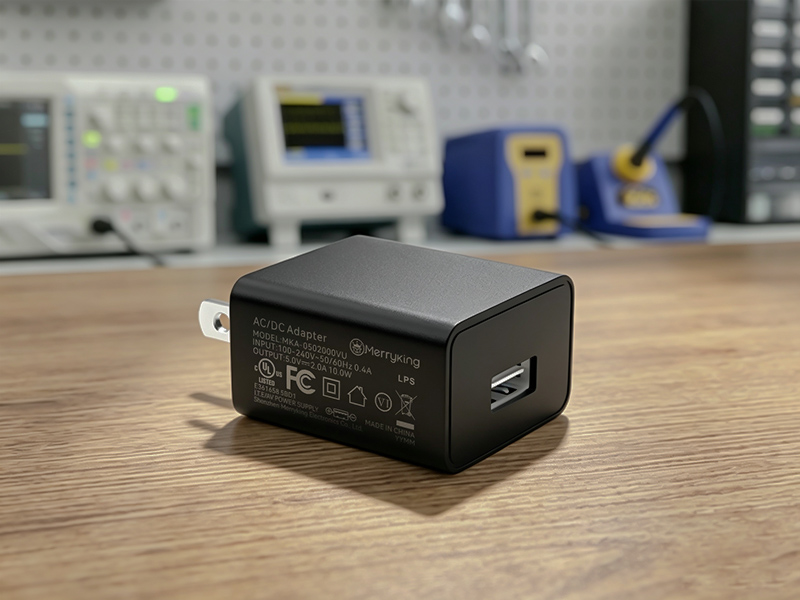
Power adapter certifications are official approvals indicating that a power supply complies with mandatory global safety and performance rules. When purchasing electronic equipment for commercial distribution, choosing products with verified power adapter certifications ensures safety and compliance. These regulatory approvals confirm that independent laboratories have audited the product’s design to prevent electrical shock, fire, and emission issues. Sourcing certified power accessories shields your enterprise from legal risks and costly product liabilities.
How Do These Compliances Validate Adapter Safety?
Independent laboratories run comprehensive power adapter reliability testing to push each component to its physical limits. They measure thermal thresholds, insulation resistance, and voltage breakdown limits under intense operational stress.
Think about it:
- Creepage and clearance distances are strictly measured to prevent electrical shorting.
- Enclosure materials are tested for flame-retardant properties under high temperatures.
- Internal safety components must reliably shut down the unit during a power overload.
Evaluating these electrical boundaries ensures that your hardware remains completely safe even during sudden power surges. This systematic screening is essential for maintaining high standard power adapter manufacturing quality.
Key Takeaway: Verifying these regulatory parameters helps you select robust devices that protect both your terminal equipment and your corporate reputation.
| Certification Element | Test Metric | Compliance Benchmark | |
|---|---|---|---|
| Insulation Resistance | Voltage leakage under high stress | Zero measurable leakage at peak levels | |
| Thermal Limits | Maximum surface heat emission | Remains safely below 65°C under load | |
| Flame Retardancy | Plastic housing combustion test | Must self-extinguish within 10 seconds |
Understanding these technical criteria allows you to identify genuine compliance marks and avoid hazardous, low-quality counterfeits.
Why Do Power Adapter Certifications Matter for B2B Buyers?
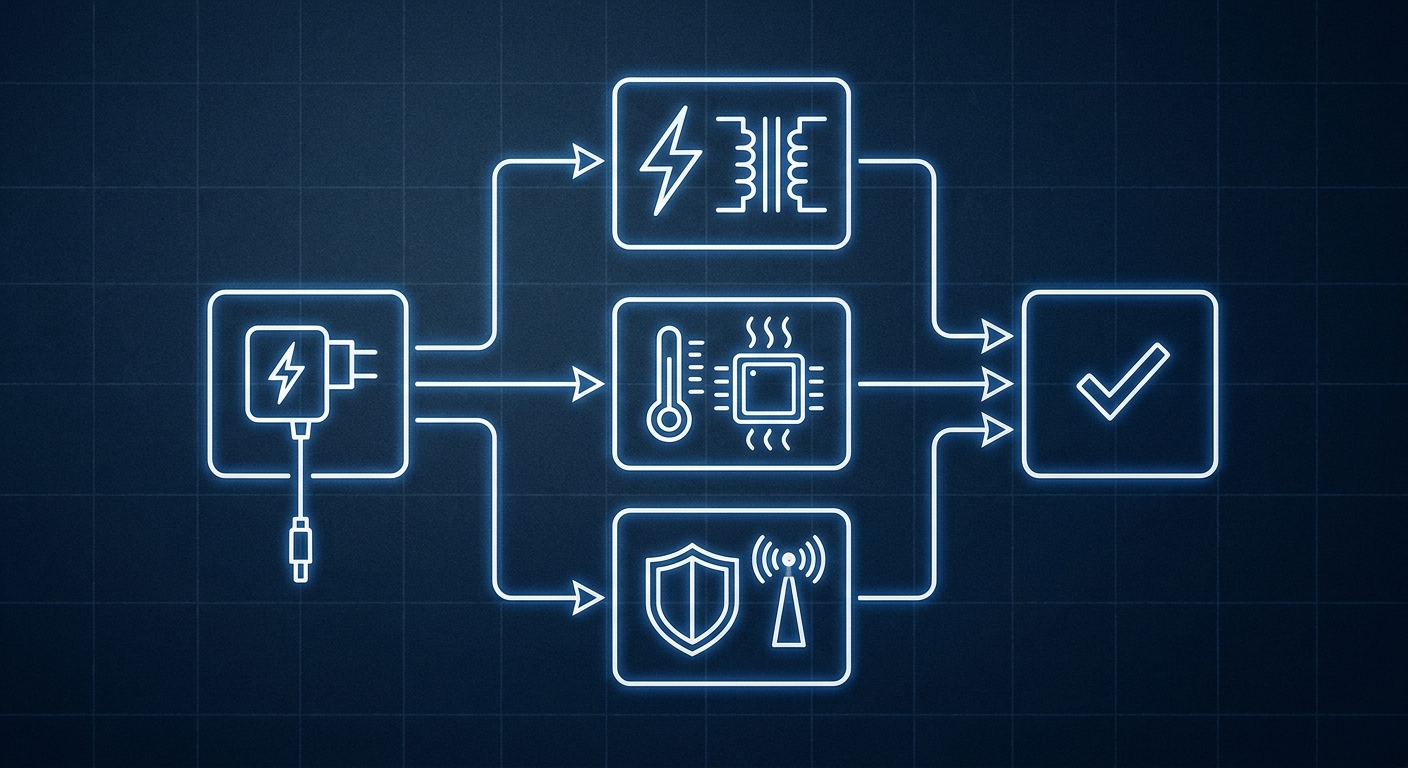
Power adapter certifications are critical for B2B buyers because they minimize legal liabilities, protect assets, and ensure seamless market access. Deploying non-certified power solutions dramatically increases the power adapter failure rate across your hardware deployments. By prioritizing certified accessories, you protect your system investments and preserve the trust of your commercial end-users. Consistent power adapter quality control represents the bedrock of a healthy, reliable hardware ecosystem.
How Do Safe Designs Protect Corporate Assets?
Using certified hardware directly lowers the technical risks of your commercial product rollouts. High-quality power devices feature active overcurrent protection and thermal cutoffs to shield your expensive primary devices.
Here is why:
- Certified adapters limit the risk of voltage spikes damaging sensitive internal circuits.
- Multi-layered safety designs reduce the frequency of expensive warranty claims.
- Commercial clients strongly prefer systems built with globally recognized, safe sub-components.
Reducing failure risks keeps your operational expenses predictable and eliminates unplanned engineering costs. Incorporating these safety factors helps maintain a robust brand presence in competitive commercial markets.
Key Takeaway: Implementing certified power components significantly lowers long-term operational expenses and protects downstream hardware systems.
| Business Metric | Uncertified Hardware | Certified Hardware | |
|---|---|---|---|
| Average Failure Rate | Typically exceeds 2.0% annually | Kept below 0.02% via strict QC | |
| Legal Liability Exposure | High risk of lawsuits and fines | Mitigated via third-party approvals | |
| Warranty Claim Costs | Unpredictable and highly expensive | Low and highly manageable |
This performance divergence underscores the financial benefits of sourcing premium, fully tested hardware components.
Which Power Adapter Certifications Are Required for Global Markets?

Specific regional power adapter certifications are legally mandated before electronic power supplies can be sold in major international markets. If your commercial distribution spans multiple continents, missing these localized approvals can lead to severe penalties and import blocks. Sourcing power supplies with proper power adapter certifications is key to clearing international customs smoothly. Let us look at how these international regulatory requirements are organized.
What Are the Primary Regional Compliance Marks?
Different jurisdictions enforce unique regulatory marks to verify safety, electromagnetic limits, and environmental impact. For instance, the United States relies heavily on UL and FCC approvals, while the European Union mandates the CE mark and RoHS compliance.
Think about it:
- The CE mark covers electrical safety and EMC limits across Europe.
- The FCC certification regulates electromagnetic interference for the US market.
- RoHS and REACH directives guarantee the absence of hazardous chemical substances.
Acquiring these markings requires completing detailed laboratory testing, including a thorough burn-in test for power adapters. Ensuring your components meet these standards is necessary for successful international product compliance.
Key Takeaway: Knowing which certifications are mandatory in your target regions prevents expensive customs delays and product seizures.
| Compliance Mark | Target Region | Core Regulatory Objective | |
|---|---|---|---|
| UL Mark | North America | Comprehensive high-voltage electrical safety | |
| CE Mark | European Union | Mandatory safety, EMC, and environmental compliance | |
| FCC Mark | United States | Electromagnetic interference emission limits |
Fulfilling these baseline regional requirements is essential for launching your products on a global scale.
How Do Power Adapter Certifications Differ by Country?
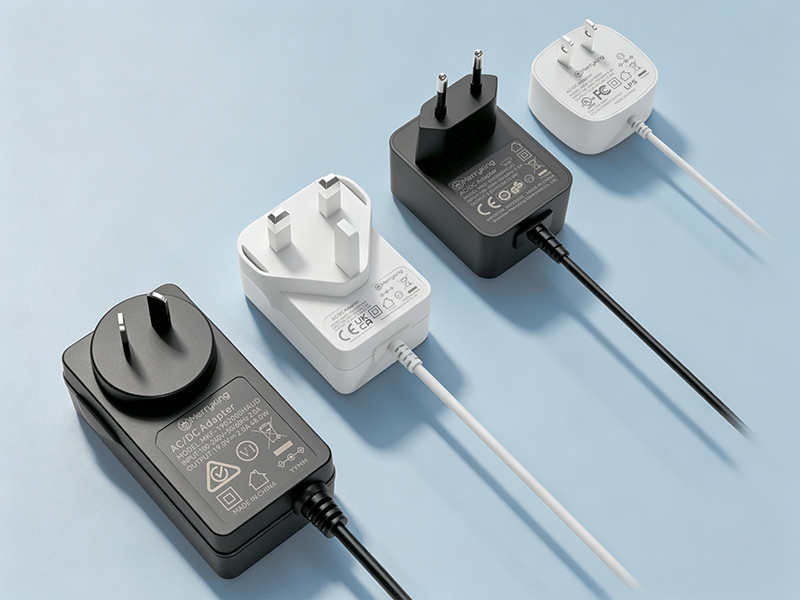
Country-specific power adapter certifications differ significantly because of variations in local utility grids, wall outlet shapes, and environmental laws. While some countries accept standard CB scheme reports, others require separate local testing and factory inspections. Understanding these differences helps B2B buyers select appropriate power adapter certifications for their specific target markets. Working with a versatile manufacturer keeps your global product rollouts efficient and fully compliant.
Why Do Asian and Western Rules Vary?
Countries like Japan and South Korea require distinct safety reviews that vary from Western frameworks. For example, Japan’s PSE mark requires testing of the adapter’s internal insulation materials along with audits of the production line.
But wait, there’s more:
- Japan’s PSE Diamond certification is mandatory for all imported external power supplies.
- South Korea’s KC system requires local testing in accredited domestic laboratories.
- Australia’s SAA mark focuses on local plug configuration and insulation safety.
Understanding these local nuances prevents costly import bottlenecks and ensures your devices operate reliably on local grids. Designing products to meet these varied specifications is crucial for international distribution success.
Key Takeaway: Partnering with a manufacturer who understands regional requirements ensures smooth market entry worldwide.
| Target Market | Mandatory Safety Mark | Primary Focus | |
|---|---|---|---|
| Japan | PSE Diamond | Local grid compatibility and material safety | |
| South Korea | KC Mark | Safety, EMC, and wireless communication compliance | |
| Australia | SAA Mark | Thermal limits and wall plug dimensions |
Planning for these unique country rules during early design phases prevents costly engineering modifications later.
What Safety Standards Are Covered by Power Adapter Certifications?
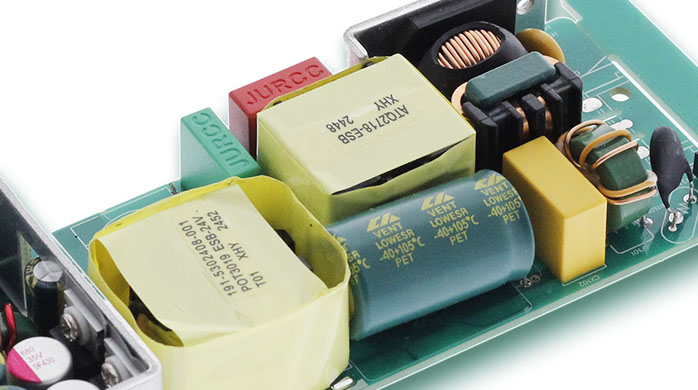
Modern power adapter certifications cover several essential safety parameters, including high-voltage isolation, thermal safety limits, and electromagnetic emissions. These standards are designed to prevent dangerous situations like electric shocks, physical burns, and fires during everyday operation. Sourcing products with recognized power adapter certifications ensures your equipment is built to handle electrical faults safely. Let us look at how modern safety standards keep electronics safe.
How Does UL 62368-1 Define Modern Safety?
The UL 62368-1 standard uses a hazard-based model to analyze energy transfer inside information technology and audio-visual gear. Manufacturers utilize automated ATE testing for power adapters to verify compliance with these safety thresholds.
Think about it:
- The standard requires physical spacing inside the PCB to prevent high-voltage arcing.
- Active overvoltage protection shuts down the circuit during an electrical spike.
- Flame-retardant materials prevent internal component failures from spreading.
This focus on protection safeguards users from energy transfers under normal, abnormal, and single-fault conditions. This rigorous engineering approach dramatically reduces field failure rates and liability risks.
Key Takeaway: Sourcing power supplies that meet UL 62368-1 standards reduces electrical risks for your customers.
| Safety Feature | Standard Metric | Protection Goal | |
|---|---|---|---|
| Overcurrent Protection | Shuts down if current exceeds safe limits | Prevents internal wiring from overheating | |
| Overvoltage Protection | Absorbs high-voltage surges safely | Protects connected terminal devices | |
| Creepage & Clearance | Minimum spacing between PCB traces | Prevents electrical shorts and sparks |
Using certified designs ensures your products have a reliable, high-quality safety foundation.
How Do Power Adapter Certifications Affect Product Compliance?
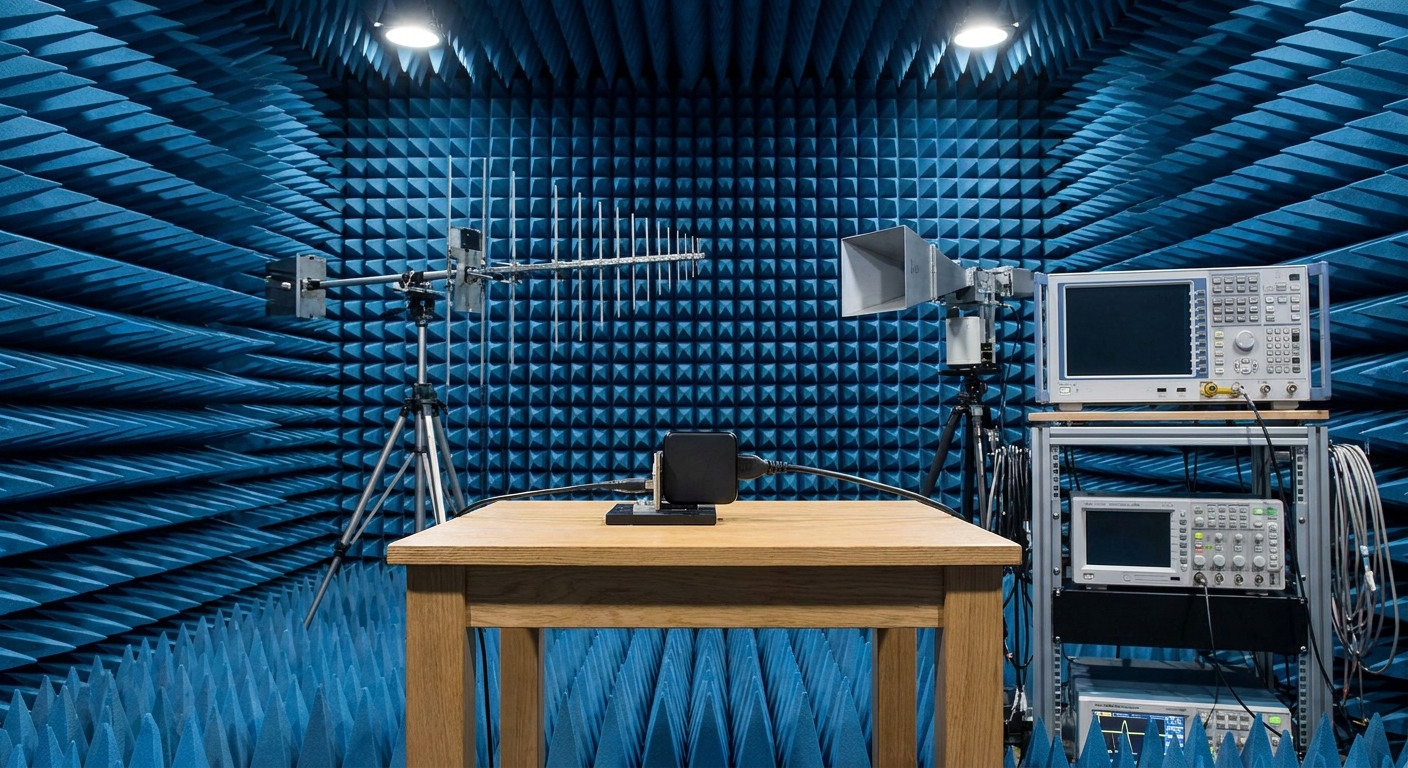
Power adapter certifications directly impact your system-level compliance because regulatory agencies evaluate power components as critical safety-critical parts of your overall device. Utilizing uncertified power supplies can complicate your testing process and lead to failures during final system-level certification. Sourcing hardware with valid power adapter certifications helps your team pass regulatory audits quickly and cost-effectively. This proactive strategy keeps your product launches on schedule and within budget.
How Do Pre-Certified Parts Speed Up Testing?
Selecting pre-certified external power supplies allows your testing laboratory to bypass redundant component-level safety checks. This structural benefit avoids the delay and cost of resolving common power adapter production defects during your primary product’s evaluation.
Here is why:
- Pre-certified power supplies reduce the number of tests required for your device.
- Independent test data can be transferred directly to your product’s compliance file.
- Pre-approved components provide a solid safety baseline that testing labs trust.
Streamlining this process helps your engineering team focus on optimizing system performance rather than fixing component issues. This approach shortens development cycles and gives you a clear edge in competitive markets.
Key Takeaway: Pre-certified power components streamline your testing process and help you launch products faster.
| Testing Stage | With Uncertified Adapters | With Certified Adapters | |
|---|---|---|---|
| Component Evaluation | Required; adds weeks of laboratory testing | Waived; relies on existing certificates | |
| Testing Costs | Significantly higher due to custom safety reviews | Minimized; only system-level testing needed | |
| Time-to-Market | Frequently delayed by compliance issues | Highly predictable and streamlined |
Using pre-approved sub-components provides a faster, more predictable path to final system compliance.
What Documents Should Buyers Check for Power Adapter Certifications?
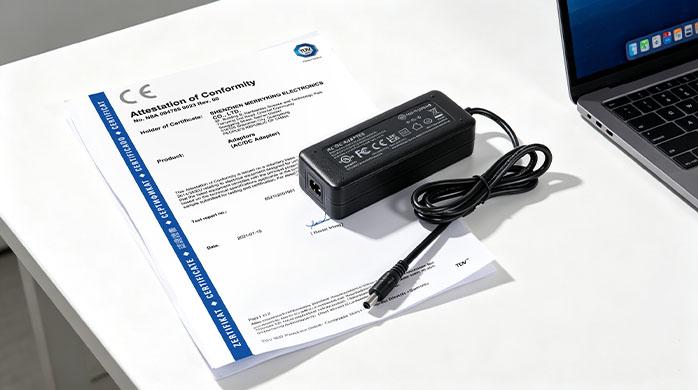
B2B buyers must review official laboratory test reports and certification files to confirm their supplier’s compliance claims are legitimate. Relying on printed safety marks alone is highly risky, as counterfeit labels are common among low-cost suppliers. Verifying original power adapter certifications through official agency databases ensures your supply chain remains safe and legally compliant. Let us examine the specific safety documents you need to request from your suppliers.
Which Key Safety Documents Must You Ask For?
To confirm safety compliance, you should request full CB reports, UL file numbers, and Declarations of Conformity. These technical files provide complete visibility into the power adapter testing process and laboratory credentials.
Think about it:
- The CB Test Report provides detailed safety test data recognized globally.
- The UL File Number lets you verify the certification status directly in the UL iQ database.
- The Declaration of Conformity shows that the manufacturer takes full legal responsibility for compliance.
Evaluating these official files protects your business from counterfeit components and ensures your products clear international borders smoothly. This documentation is essential for maintaining a secure and reliable supply chain.
Key Takeaway: Verifying compliance documents shields your business from counterfeit products and legal liabilities.
| Document Type | Crucial Information to Verify | Verification Source | |
|---|---|---|---|
| CB Test Certificate | Registered model numbers and standards | IECEE verification database | |
| UL File Number | Factory identity and active listing status | UL Product iQ portal | |
| Declaration of Conformity | Legal manufacturer details and CE standards | Direct manufacturer technical file |
Maintaining an organized file of these certificates protects your business during regular customs audits.
How Can Power Adapter Certifications Reduce Import and Sales Risks?

Power adapter certifications protect your business from customs seizures, expensive shipping delays, and unexpected product recalls. Customs officials regularly inspect incoming electronics shipments to check that all safety markings and regulatory files are correct. Sourcing components with active power adapter certifications helps keep your logistics running smoothly and avoids expensive storage fees. Let us look at how certified components help protect your supply chain.
How Do Approved Designs Protect Your Supply Chain?
Using certified power supplies helps you avoid logistics delays and maintain a stable, predictable supply chain. By working with suppliers who focus on high power adapter manufacturing quality, you receive consistent performance with every shipment.
Here is why:
- Active certifications ensure your shipments pass customs inspections smoothly.
- Rigorous quality control processes prevent high defect rates in your inventory.
- Reliable components reduce customer complaints and keep your brand reputation strong.
This consistent quality prevents shipping bottlenecks and builds strong, long-term relationships with your retail and commercial distributors. Protecting your inventory from compliance risks is key to steady sales growth.
Key Takeaway: Sourcing certified adapters protects your logistics and ensures a reliable supply chain.
| Supply Chain Threat | Sourcing Uncertified Hardware | Sourcing Certified Adapters | |
|---|---|---|---|
| Customs Inspection Delays | High risk of seizure and fines | Smooth clearance with valid safety files | |
| Product Defect Rates | High and unpredictable | Kept very low via strict testing | |
| Retail Partner Trust | Damaged by compliance issues | Built on reliable quality and safety |
Reducing shipping and quality risks allows you to scale your business with confidence.
What Mistakes Should Buyers Avoid with Power Adapter Certifications?
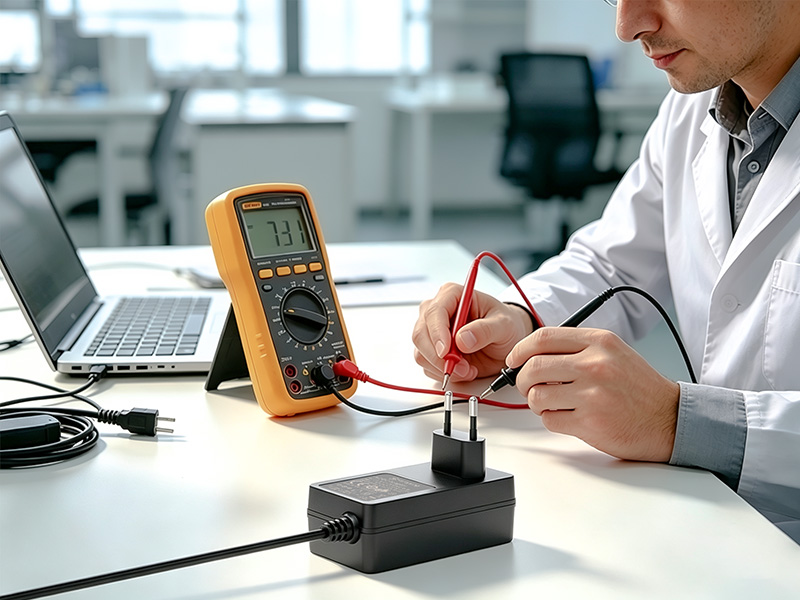
The most common mistake B2B buyers make is assuming that generic safety markings on an adapter are always valid and legal. Many low-cost suppliers print safety logos on their products without completing the required laboratory testing. Relying on these unverified power adapter certifications can lead to serious compliance failures and product liabilities down the road. Let us explore how you can avoid these common sourcing mistakes.
What Risks Exist When You Skip Verification?
Skipping compliance verification can expose your business to dangerous hardware issues like high voltage leaks and thermal failures. Without proper power adapter defect analysis, sub-standard components can trigger unexpected field failures and safety hazards.
But wait, there’s more:
- Fake certificates are common among low-cost suppliers who skip compliance testing.
- Lack of proper shielding can cause electromagnetic interference issues.
- Unverified components often skip critical environmental tests like RoHS.
Protecting your business from these quality issues requires checking safety certificates directly with the testing laboratories. This proactive approach saves your team time and prevents expensive product redesigns later.
Key Takeaway: Verifying compliance documents before purchasing prevents costly quality issues and protects your brand.
| Sourcing Mistake | Potential Business Impact | Prevention Strategy | |
|---|---|---|---|
| Trusting Printed Logos Only | Legal liabilities and customs issues | Cross-check model numbers in safety databases | |
| Ignoring Test Scope | Safety gaps in target markets | Review complete laboratory test reports | |
| Skipping Factory Audits | Inconsistent manufacturing quality | Partner with manufacturers who hold active ISO certs |
Avoiding these common sourcing mistakes keeps your procurement pipeline running smoothly and safely.
How to Find Reliable Power Adapter Certifications Manufacturers?
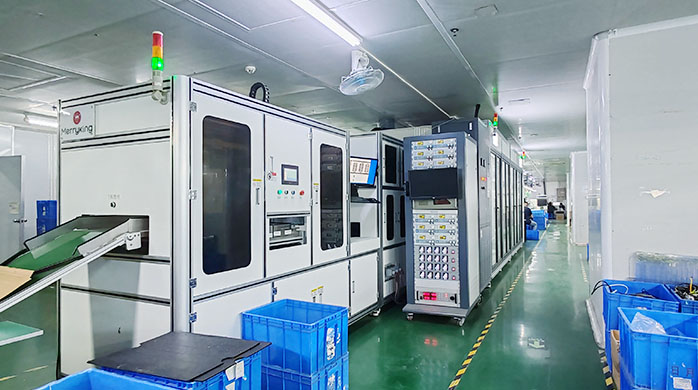
Finding a manufacturing partner with reliable power adapter certifications requires checking their testing processes, factory audit records, and history of compliance. A professional manufacturer will show complete transparency by providing original safety documents and explaining their quality control systems. Working with a compliant manufacturer ensures you receive reliable power adapter certifications that protect your product line. Let us examine how a professional factory keeps production safe and consistent.
What Quality Systems Ensure Long-Term Reliability?
A reliable partner maintains a robust OEM power adapter quality control system that monitors production from incoming components to final packaging. They perform essential checks like a 100% burn-in test for power adapters to catch assembly defects before shipment.
Here is why:
- Incoming quality checks verify that all sub-components match compliance standards.
- In-process quality monitoring ensures consistent assembly and soldering.
- Final functional testing guarantees that every adapter operates safely.
This focus on quality control keeps your defect rates low and ensures consistent product performance. Partnering with an experienced manufacturer gives your business a strong foundation for long-term success.
Key Takeaway: Partnering with a manufacturer who prioritizes strict quality processes ensures safe, reliable components for your products.
| Quality Stage | Key Process | Sourcing Advantage | |
|---|---|---|---|
| Incoming Quality Control (IQC) | Component verification and testing | Ensures all raw materials meet specifications | |
| In-Process Quality Control (IPQC) | Real-time monitoring and assembly checks | Catches defects early in production | |
| Outgoing Quality Control (OQC) | Final safety and functional testing | Guarantees only compliant units ship |
Partnering with an experienced manufacturer gives your business a strong foundation for long-term success.
Article Conclusion & Action Plan
Navigating global safety compliances does not have to be a major obstacle for your business. By understanding safety standards, verifying compliance files, and partnering with experienced manufacturers, you can protect your business from customs issues and safety liabilities. Merryking is dedicated to providing high-quality, pre-certified power adapters that meet strict global standards and ensure smooth market entry. Let our compliance engineering team help you find the perfect power solution for your next project. To secure your supply chain and protect your brand reputation, contact us today to discuss your custom project requirements and request pre-certified samples. Our vision is to power global innovation through uncompromised safety, absolute manufacturing transparency, and robust engineering design.
Frequently Asked Questions
Can I transfer a manufacturer’s safety certification to my own branded product?
Yes, you can easily transfer existing certifications using the official multiple listing process. Reputable manufacturers provide the necessary UL, CE, and CB technical files to let you register these approvals under your brand name without doing expensive new tests. This streamlines your brand’s market entry while keeping compliance costs manageable.
What’s the best way to verify if a power adapter’s UL mark is authentic?
The best way is to search the official UL Product iQ database online. You should cross-reference the unique UL file number printed on the adapter’s rating label directly within the portal to confirm that the file is active and registered to the correct manufacturer. If the model number or supplier details do not match the database records, the certificate is invalid.
How do I know if my power adapter needs a PSE Diamond or PSE Circle mark for Japan?
You must use a PSE Diamond mark because external power adapters are classified as specified electrical appliances under Japan’s electrical safety laws. Sourcing an adapter with a PSE Diamond mark requires the manufacturer to pass independent safety evaluations and complete regular factory audits. This ensures your products comply with Japan’s strict safety laws.
Can I import power adapters that only carry a CE mark into the United States?
No, importing adapters with only CE markings is highly risky because the CE mark is a European safety standard that is not officially recognized in the United States. To safely distribute electronic hardware in the North American market, your power adapters must carry a valid UL safety mark and comply with FCC Part 15 electromagnetic emission limits. Relying on CE marks alone in the US can lead to customs seizures and legal issues.
How do I know if my supplier is performing reliable quality testing?
Absolutely, you can verify this by requesting their quality control documentation and test reports. A reliable manufacturer will provide proof of systematic testing, including incoming material inspections, active board-level testing, and complete burn-in testing. If a supplier is hesitant to share these records, you should look for a more transparent partner.