German power sockets exclusively use the Type F “Schuko” standard, so you will definitely need a germany power adapter if your device uses a non-European plug. Arriving at your Berlin hotel or a high-stakes trade fair only to find your laptop’s three-prong plug won’t fit the wall is an avoidable disaster. Watching your battery drain while you scramble for a solution in a foreign city creates unnecessary stress for any professional. Choosing the wrong adapter can even risk frying your expensive hardware if you ignore voltage differences. This guide breaks down everything you need to know about German electricity to keep your business trip running smoothly.
Which socket type requires a germany power adapter?
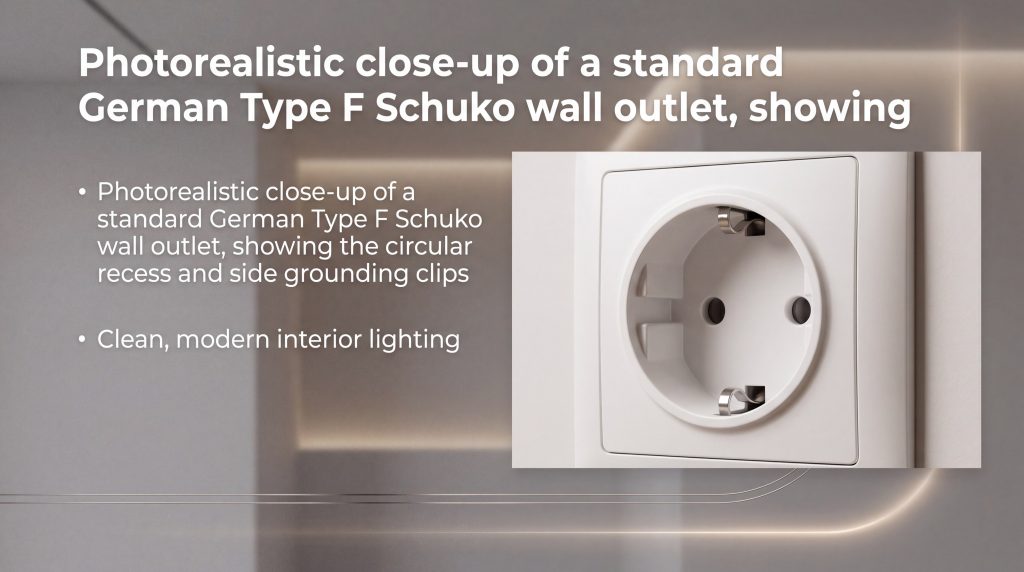
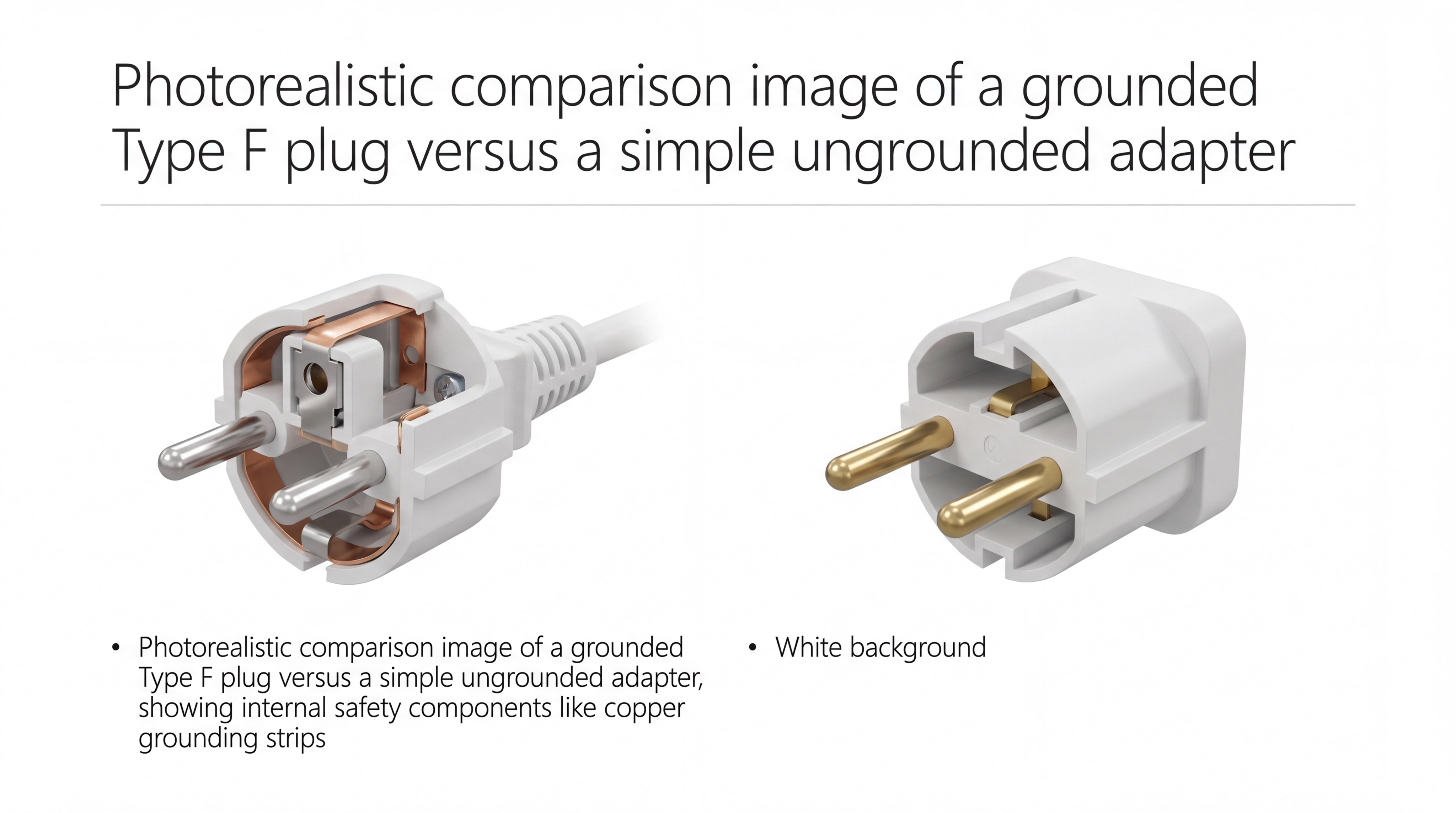
Germany uses the Type F power outlet, which is characterized by two round holes and two metal grounding clips on the sides. If your cables do not have the specific circular shape and side-strips, you will require a germany power adapter to establish a secure connection. You can find this germany power adapter in most travel stores or specialized electronics retailers.
Understanding the Schuko Type F standard
The name “Schuko” is an abbreviation of the German term Schutzkontakt, which literally translates to “protective contact.” This design is deeply rooted in safety, as the grounding clips make contact before the live power pins do.
Here is the kicker: This system is designed to prevent accidental shocks by ensuring any fault current is immediately grounded.
- Recessed circular design for safety.
- Two 4.8 mm round pins.
- Side grounding clips.
Compatibility with CEE 7 standards
Most modern European hardware uses the CEE 7/7 hybrid plug, which fits perfectly into German sockets. This hybrid design allows the same cable to work in both German Type F and French Type E outlets.
Make no mistake: Using a plug that lacks the side grounding strips in a Schuko socket leaves your device unprotected from surges.
Key Takeaway: Always verify your adapter has the side metal strips to ensure your hardware remains grounded and safe in a German Schuko outlet.
The following table summarizes the physical characteristics of the German Type F power system.
| Feature | Specification | |
|---|---|---|
| Socket Type | Type F (Schuko) | |
| Standard | CEE 7/3 | |
| Grounding | Side clips/strips | |
| Pin Diameter | 4.8 mm |
What voltage must your germany power adapter support?
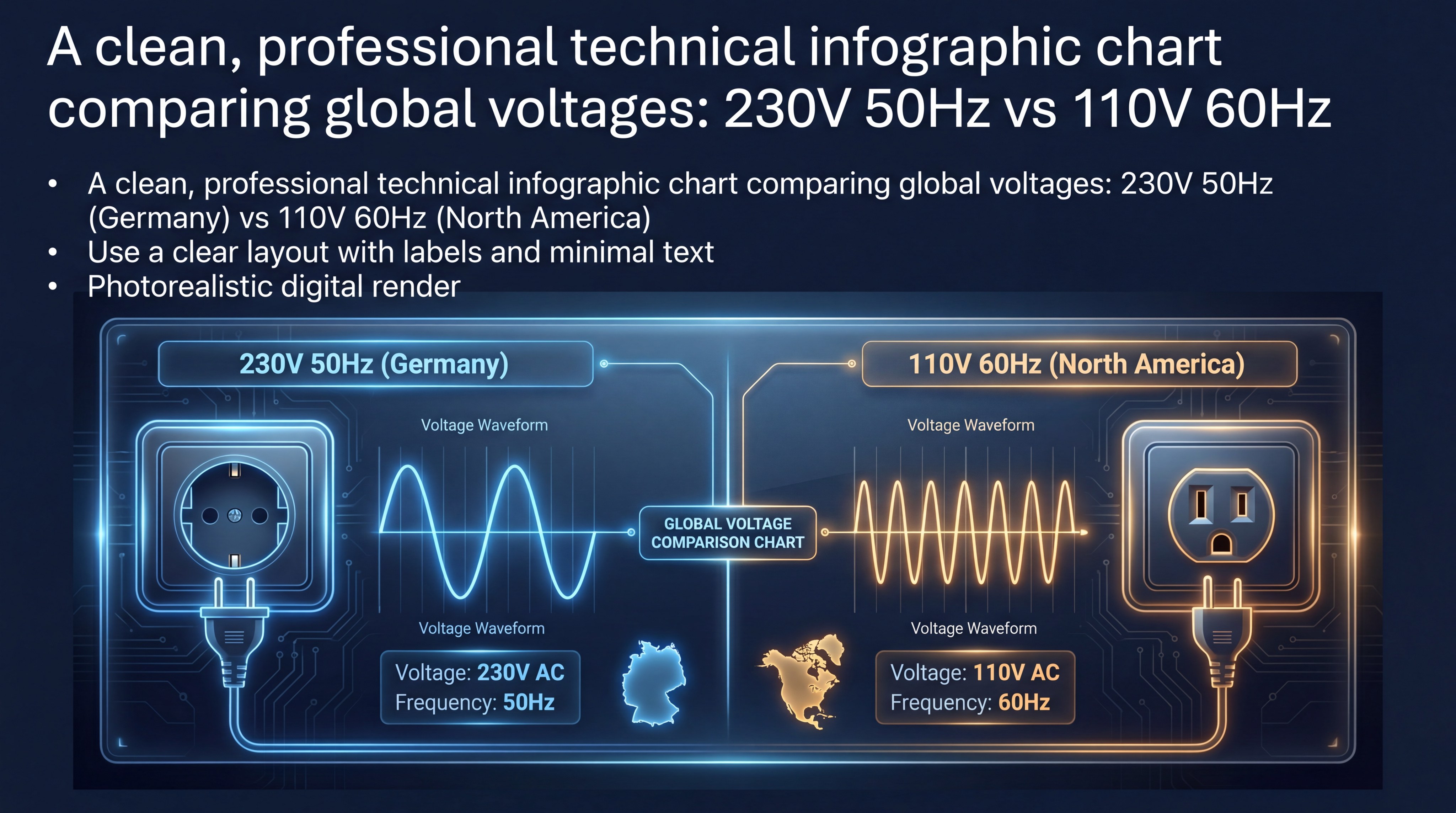
The German power grid operates at a standard voltage of 230V and a frequency of 50Hz, which is significantly higher than the North American standard. Your germany power adapter must be used in conjunction with dual-voltage devices or a transformer if your hardware is rated only for 110V. This is particularly critical for sensitive audio / video equipment that may not have internal voltage regulation.
Checking for dual-voltage ratings
Most modern laptop and phone chargers are “dual-voltage,” meaning they automatically handle anything from 100V to 240V. You can confirm this by looking at the fine print on the power brick itself.
The best part? If it says 100-240V , you only need a simple physical plug converter.
- Check the “Input” label.
- Confirm 50/60Hz compatibility.
- Verify max wattage.
Handling frequency differences
While voltage is the primary concern, the 50Hz frequency in Germany can affect devices with internal motors or clocks. Some hardware designed for 60Hz might run slower or overheat if the power supply isn’t designed for both frequencies.
But wait, there is more: Using a frequency-sensitive device without a proper converter can lead to long-term internal damage.
Key Takeaway: Always confirm your hardware is rated for 230V/50Hz input before plugging it into a German outlet to avoid catastrophic equipment failure.
See the technical grid specifications below for a comparison of German and North American standards.
| Parameter | Value (Germany) | Value (North America) | |
|---|---|---|---|
| Standard Voltage | 230 V | 120 V | |
| Frequency | 50 Hz | 60 Hz | |
| Tolerance | +/- 10% | +/- 5% |
Does a Europlug require a germany power adapter?
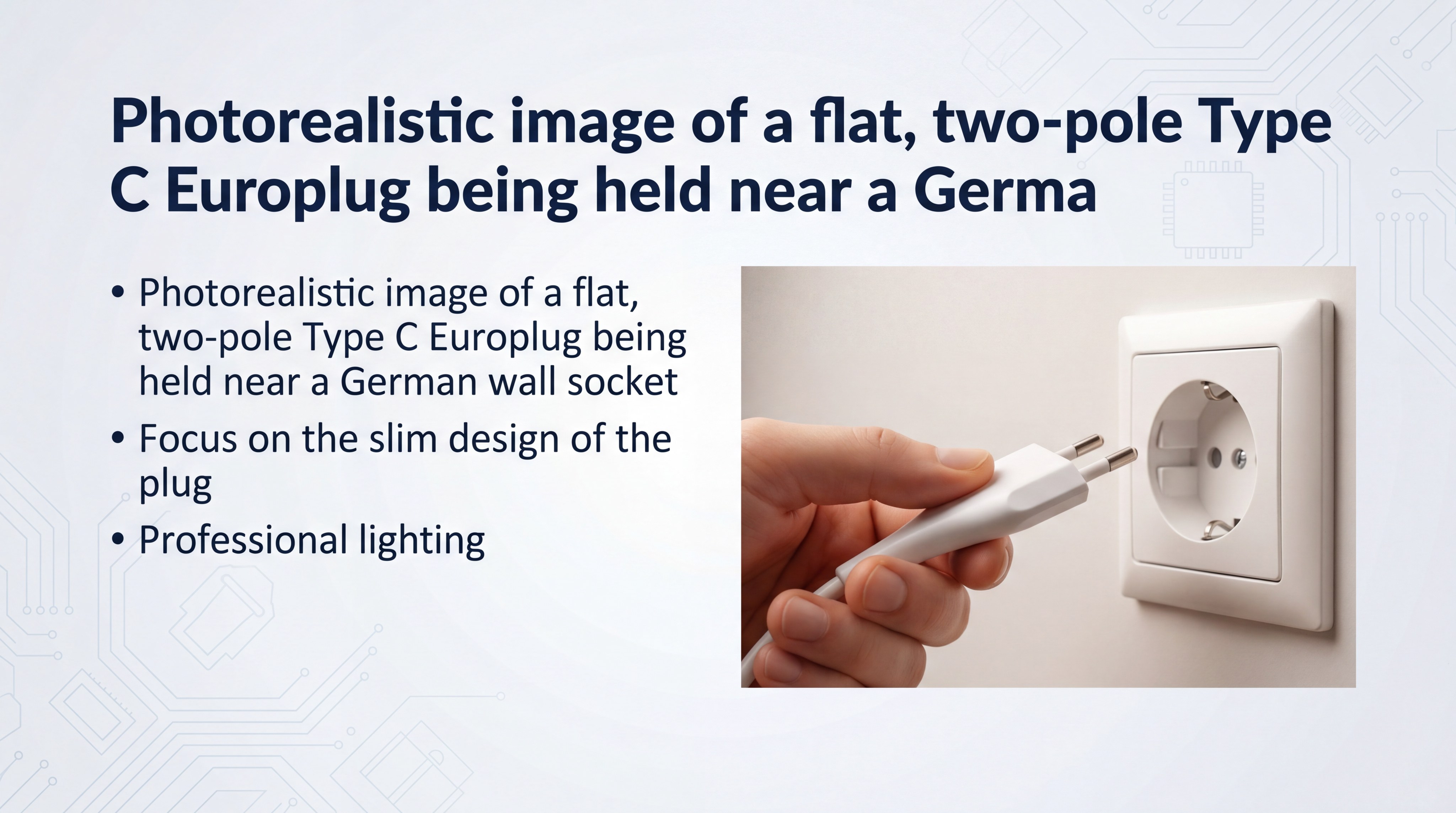
A standard Type C Europlug does not require a germany power adapter because it is designed to fit into the round holes of the Type F socket. These flat, two-pole plugs are ubiquitous for low-power consumer electronics throughout Europe. However, you should still check if a germany power adapter is needed for your specific three-prong devices.
Limitations of the Type C Europlug
The Europlug is ungrounded and is strictly limited to devices that draw less than 2.5 Amps. It is ideal for phone chargers or small lamps, but it lacks the safety features of the full Schuko plug.
Think about it: Plugging a high-draw device into a thin Europlug could cause the pins to overheat.
- Ungrounded connection.
- Maximum 2.5 Amp load.
- Fits most European sockets.
When to upgrade to Schuko
If your device has a metal casing, it likely requires a grounded connection for safety. In these cases, even if a Europlug-style adapter fits, you should use a full Type F adapter to engage the grounding clips.
The kicker is: Ungrounded metal devices can occasionally give you a small “static” tingle if the internal shielding is insufficient.
Key Takeaway: Use Europlugs for low-power electronics, but always switch to a grounded Schuko adapter for any device with a metal chassis or high power draw.
The table below outlines the differences between the Europlug and the full Schuko standard.
| Plug Type | Max Current | Grounded | Use Case | |
|---|---|---|---|---|
| Type C (Europlug) | 2.5 A | No | Mobile Chargers | |
| Type F (Schuko) | 16 A | Yes | Laptops/Appliances | |
| CEE 7/17 | 16 A | No | Double-insulated |
Can a germany power adapter fit French Type E plugs?
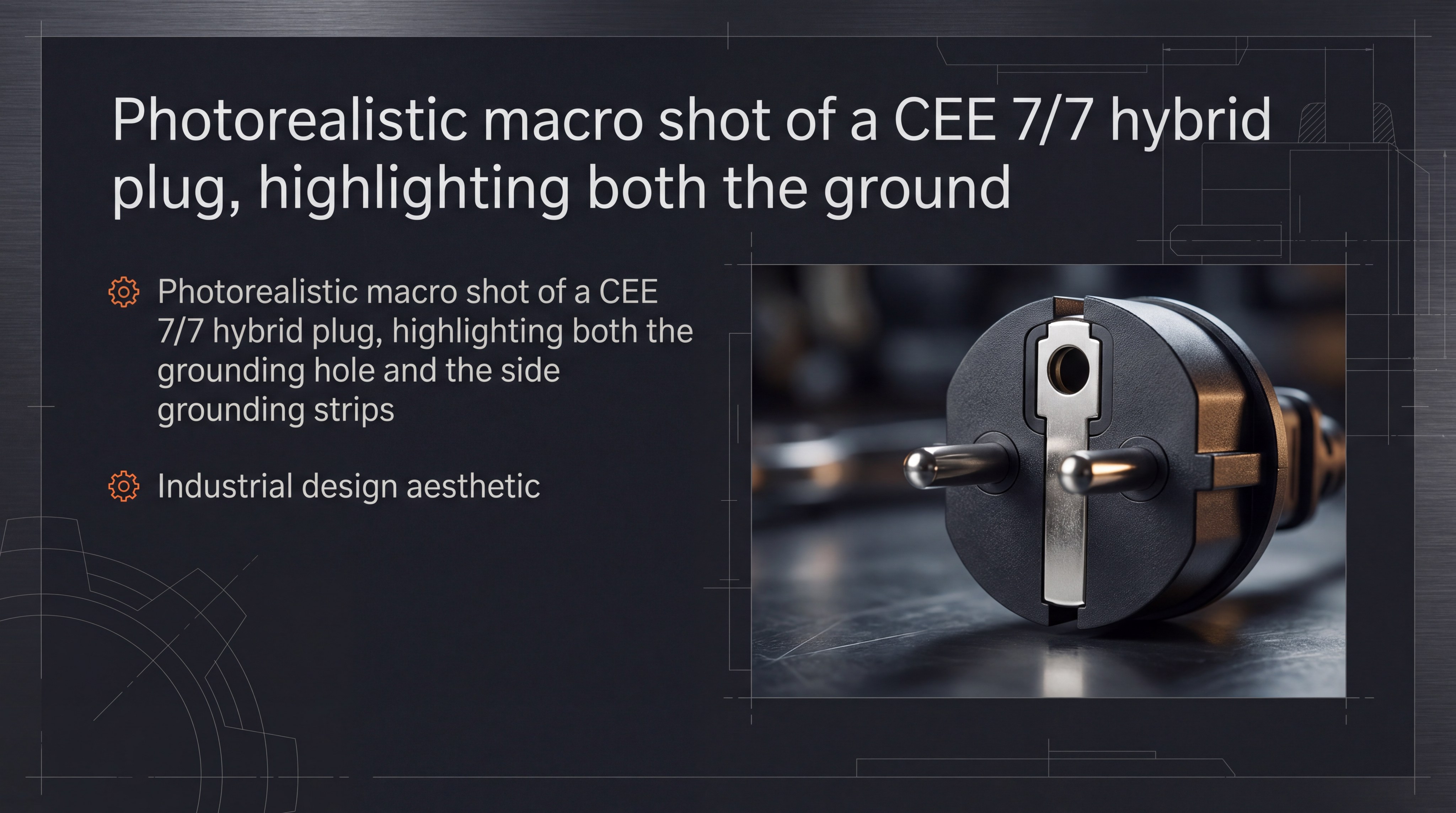
Yes, a modern germany power adapter or cable using the CEE 7/7 hybrid standard will fit perfectly in both German Type F and French Type E sockets. These two systems are physically similar but use different grounding methods—France uses a protruding pin, while Germany uses side clips. Most professional-grade chargers now include hybrid plugs to ensure seamless travel across the EU.
The hybrid CEE 7/7 solution
The CEE 7/7 plug is a clever piece of engineering that includes a female hole for the French pin and metal strips for the German clips. This makes it the most versatile plug for B2B travelers moving between Berlin, Paris, and Brussels.
Believe it or not: This single plug standard has unified the power requirements for most of continental Europe.
- Includes grounding hole (Type E).
- Includes side strips (Type F).
- Rated for 16 Amps.
Compatibility with old Type E plugs
If you have an older, “pure” Type E plug that lacks the side grounding slots, it will physically slide into a German socket but will not be grounded. This is a significant safety risk for industrial or high-voltage equipment.
The bottom line is: Never compromise on grounding when operating expensive hardware in a foreign office.
Key Takeaway: Use CEE 7/7 hybrid adapters to maintain safety and grounding whether you are working in Germany, France, or neighboring countries.
The following chart compares the compatibility of different European plug standards.
| Plug Standard | Fits Germany (F) | Fits France (E) | Grounding Type | |
|---|---|---|---|---|
| CEE 7/4 (Type F) | Yes | No | Side Clips | |
| CEE 7/5 (Type E) | No | Yes | Ground Pin | |
| CEE 7/7 (Hybrid) | Yes | Yes | Both |
Where can you buy a germany power adapter in Berlin?

If you arrive without the correct equipment, you can purchase a germany power adapter at major electronics retailers like Saturn or MediaMarkt located at Alexanderplatz or Hauptbahnhof. Most hotel receptions also keep a stash of loaner adapters for guests, though these are often ungrounded. For high-quality, long-term solutions, choosing a germany power adapter from a certified manufacturer is always the safer professional choice.
Retail options in the city
Large electronics chains are your best bet for finding certified, high-amperage adapters. Avoid buying from small souvenir kiosks near tourist landmarks, as these are often overpriced and lack proper safety ratings.
Here is the kicker: Airport prices can be three times higher than what you would pay at a local city store.
- Saturn/MediaMarkt (Best selection).
- Bauhaus/OBI (Heavy-duty options).
- Rossmann/DM (Basic adapters).
Hardware and convenience stores
For more robust industrial-grade adapters or power strips, visit hardware stores like Bauhaus or OBI. These are excellent if you need to set up a temporary workstation or trade fair booth that requires multiple grounded outlets.
But wait, there is more: Many larger supermarkets like Rewe Center or Kaufland also have small electronics aisles with basic travel gear.
Key Takeaway: Purchase your adapters at reputable electronics retailers like Saturn to ensure you are getting a safety-certified product at a fair price.
The table below lists the best locations in Berlin to find power solutions.
| Store Type | Best For | Location Examples | |
|---|---|---|---|
| Saturn/MediaMarkt | Professional gear | Alexanderplatz, Europa Center | |
| Bauhaus/OBI | Heavy duty strips | Westend, Schöneberg | |
| Spätkauf (Späti) | Late-night emergency | Every street corner |
Do appliances need a specific germany power adapter?
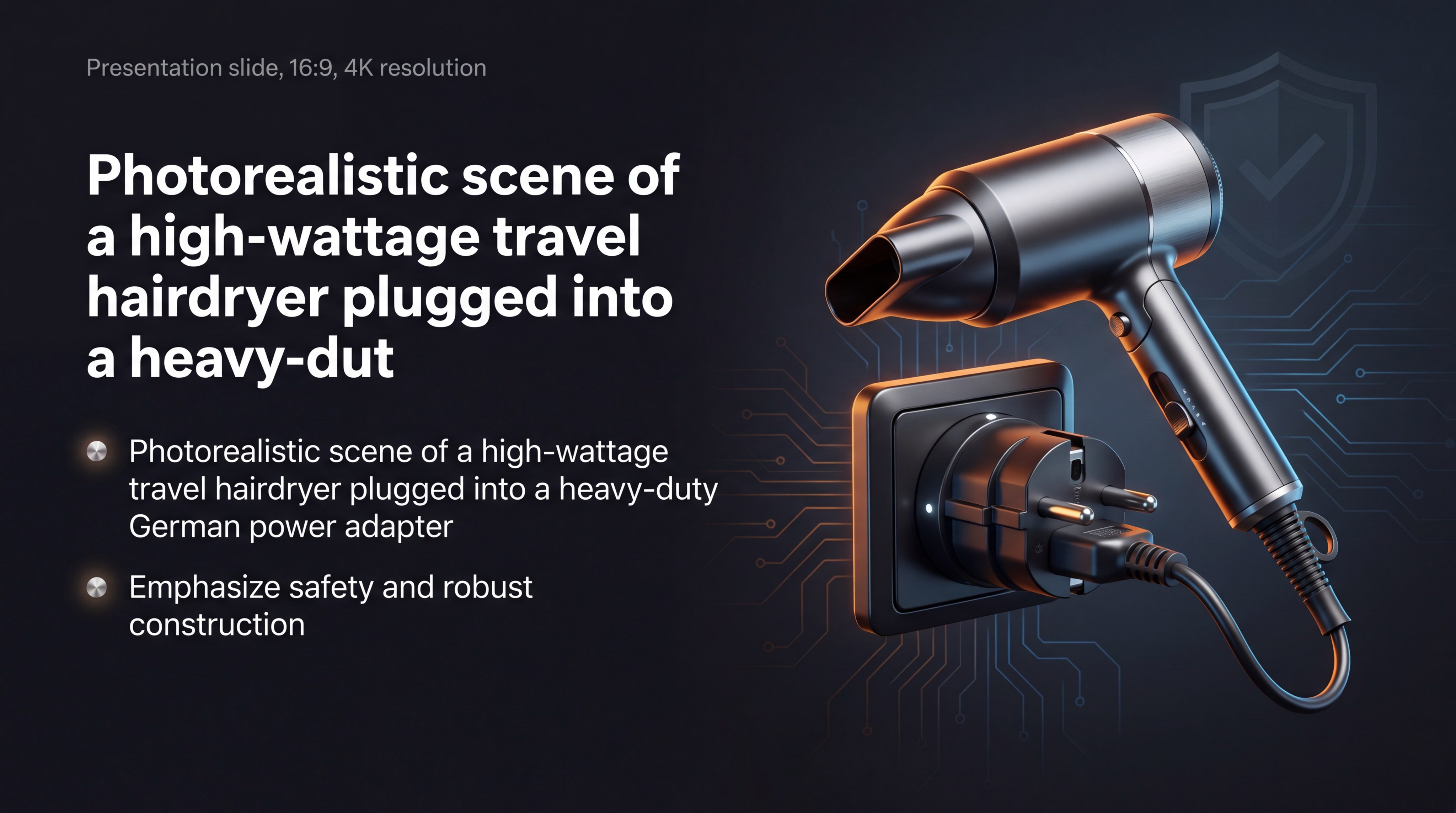
High-wattage small home appliances like hair dryers or travel kettles require a germany power adapter rated for at least 16 Amps and 230V. Most standard travel adapters are rated for only 10 Amps, which can cause them to melt or spark when used with heat-generating devices. Furthermore, if the appliance is not dual-voltage, a simple adapter will cause it to burn out almost instantly.
The danger of wattage mismatch
A typical US hair dryer is designed for 120V; plugging it into a 230V German outlet sends nearly double the voltage through the motor. This results in the device running at extreme speeds before the internal fuse blows or the heating element melts.
The reality is: Most travel adapters specifically warn against use with hair dryers for this exact reason.
- Check wattage (max 2300W).
- Ensure 16A rating.
- Verify voltage switch.
Using heavy-duty voltage converters
If you must bring a non-dual voltage high-power device, you will need a heavy transformer. These are bulky, heavy, and often cost more than simply buying a local German version of the appliance.
Think about it: Is it worth carrying a 5-kilogram transformer just to use your favorite coffee machine abroad?
Key Takeaway: Only use appliances in Germany if they are natively rated for 230V or have a physical voltage selector switch to prevent fire hazards.
This summary compares the power requirements for common professional travel appliances.
| Device | Typical Wattage | Voltage Check | Adapter Needed | |
|---|---|---|---|---|
| Hair Dryer | 1500 – 2200W | Mandatory | 16A Grounded | |
| Laptop | 60 – 100W | Dual-Voltage | Standard Grounded | |
| Electric Shaver | 10 – 20W | Usually Dual | Europlug (Type C) |
Why use a grounded germany power adapter for laptops?
For information and communication technology, a grounded germany power adapter is essential to prevent static buildup and electromagnetic interference. Laptops with metal chassis, like MacBooks, can develop a slight “vibration” sensation when touched if they are not properly grounded through a germany power adapter . This ground path also protects the motherboard from external electrical surges during grid fluctuations.
Protecting sensitive electronics
A grounded connection provides a safe path for excess electrical charge to return to the earth. Without it, your touchpad might become jittery, or your USB ports could experience signal noise during data transfers.
The kicker is: Over time, constant ungrounded operation can degrade the lifespan of your laptop’s internal power supply unit (PSU).
- Reduces EMI noise.
- Prevents chassis “tingling.”
- Protects against surges.
The importance of three-prong adapters
If your home country uses a three-prong plug (like the US Type B or UK Type G), you must use an adapter that maintains that third connection. A “cheater” adapter that only connects the two power pins leaves your hardware vulnerable.
Make no mistake: Your hardware’s warranty might even be voided if damage occurs while using an uncertified, ungrounded adapter.
Key Takeaway: Always invest in a grounded (3-prong) adapter for your primary computing devices to ensure user safety and hardware longevity.
Refer to the table below for the benefits of using grounded versus ungrounded power solutions.
| Feature | Grounded (Type F) | Ungrounded (Type C) | |
|---|---|---|---|
| Surge Protection | High | Minimal | |
| User Safety | High (No Shocks) | Moderate | |
| Equipment Noise | Low EMI | Possible Interference | |
| Max Power Load | 16 Amps | 2.5 Amps |
Is a germany power adapter safe for medical devices?
A medical-grade germany power adapter must be used for life-critical equipment like CPAP machines or portable oxygen concentrators to ensure a stable and low-resistance connection. Standard travel adapters often have loose internal contacts that can cause intermittent power loss, which is dangerous for medical use. Ensuring your equipment natively supports 230V is the first step before selecting a robust physical adapter.
Medical certification and reliability
Professional medical devices often require power supplies that meet IEC 60601-1 standards for patient safety. When traveling to Germany, verify that your power brick is rated for the 230V input and has a high-quality, snug-fitting plug.
Here is the kicker: A loose adapter falling out of a recessed Schuko socket in the middle of the night could have serious health consequences.
- Verify 230V native support.
- Use “snug-fit” connectors.
- Prioritize grounded plugs.
Redundancy and surge protection
Given the critical nature of medical hardware, using an adapter with built-in surge protection or a dedicated travel-sized UPS (Uninterruptible Power Supply) is highly recommended. While the German grid is exceptionally stable, local building wiring in older Berlin apartments can sometimes be unpredictable.
The bottom line is: Never risk your health on a €5 souvenir shop adapter.
Key Takeaway: For medical devices, only use high-quality, grounded adapters and double-check that your machine is natively compatible with the 230V/50Hz grid.
The following checklist helps ensure your medical equipment is ready for the German power system.
| Requirement | Specification | Importance | |
|---|---|---|---|
| Voltage Input | 100-240V AC | Critical | |
| Physical Fit | Recessed Type F | Critical | |
| Grounding | Must be grounded | High | |
| Certification | CE / Medical Grade | Recommended |
Should your germany power adapter include USB-C PD?
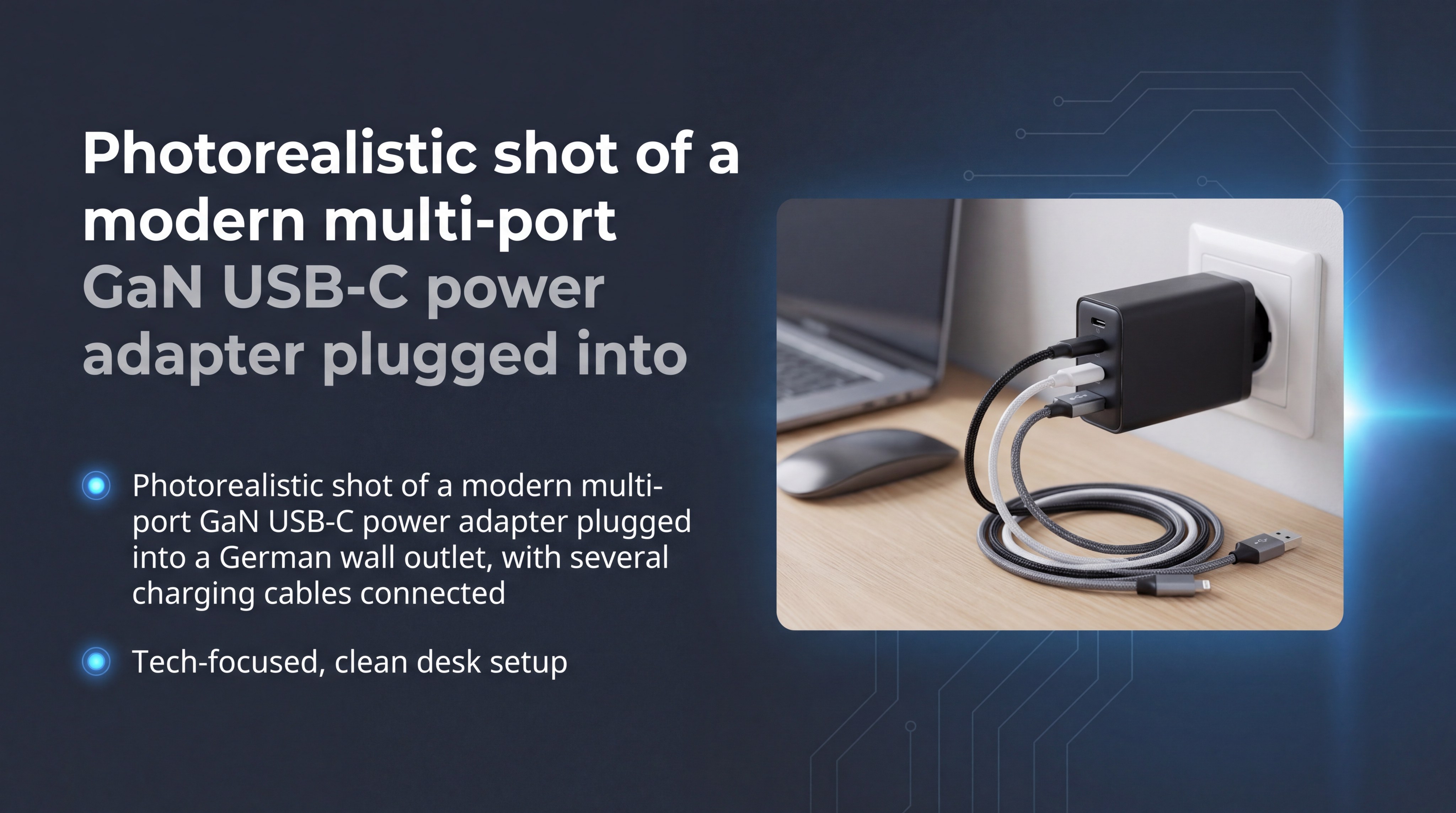
Integrating USB-C Power Delivery (PD) into your germany power adapter is the most efficient way to charge modern laptops and smartphones simultaneously without multiple wall bricks. Using a germany power adapter with built-in GaN technology allows for a smaller form factor while delivering high-wattage output for professional hardware. This reduces the weight of your travel kit while ensuring you have enough ports for all your devices in limited hotel outlets.
The advantages of GaN technology
Gallium Nitride (GaN) chargers are the new standard for B2B travelers because they generate less heat and are significantly more compact than traditional silicon-based chargers. A single 65W or 100W GaN adapter can replace your laptop brick and several phone chargers.
The best part? You only have to worry about one German wall socket to keep your entire digital ecosystem powered.
- Charges laptops via USB-C.
- Supports fast charging.
- Ultra-compact for travel.
Understanding Power Delivery (PD)
USB-C PD allows the charger and the device to “talk” to each other to determine the fastest safe charging speed. This prevents overcharging and ensures your device gets exactly the power it needs, whether it’s a 5W set of headphones or a 96W workstation.
But wait, there is more: Multi-port adapters allow you to prioritize which device gets the most power during a quick layover.
Key Takeaway: Switch to a GaN-based adapter with USB-C PD to streamline your travel gear and ensure fast, safe charging for all your professional devices.
The following table compares standard wall chargers with modern GaN PD solutions.
| Feature | Standard Charger | GaN PD Charger | |
|---|---|---|---|
| Size | Large/Bulky | Compact | |
| Efficiency | ~80% | >92% | |
| Multi-Device | Usually 1 Port | Up to 4 Ports | |
| Heat Output | High | Low |
How do you find a quality germany power adapter?
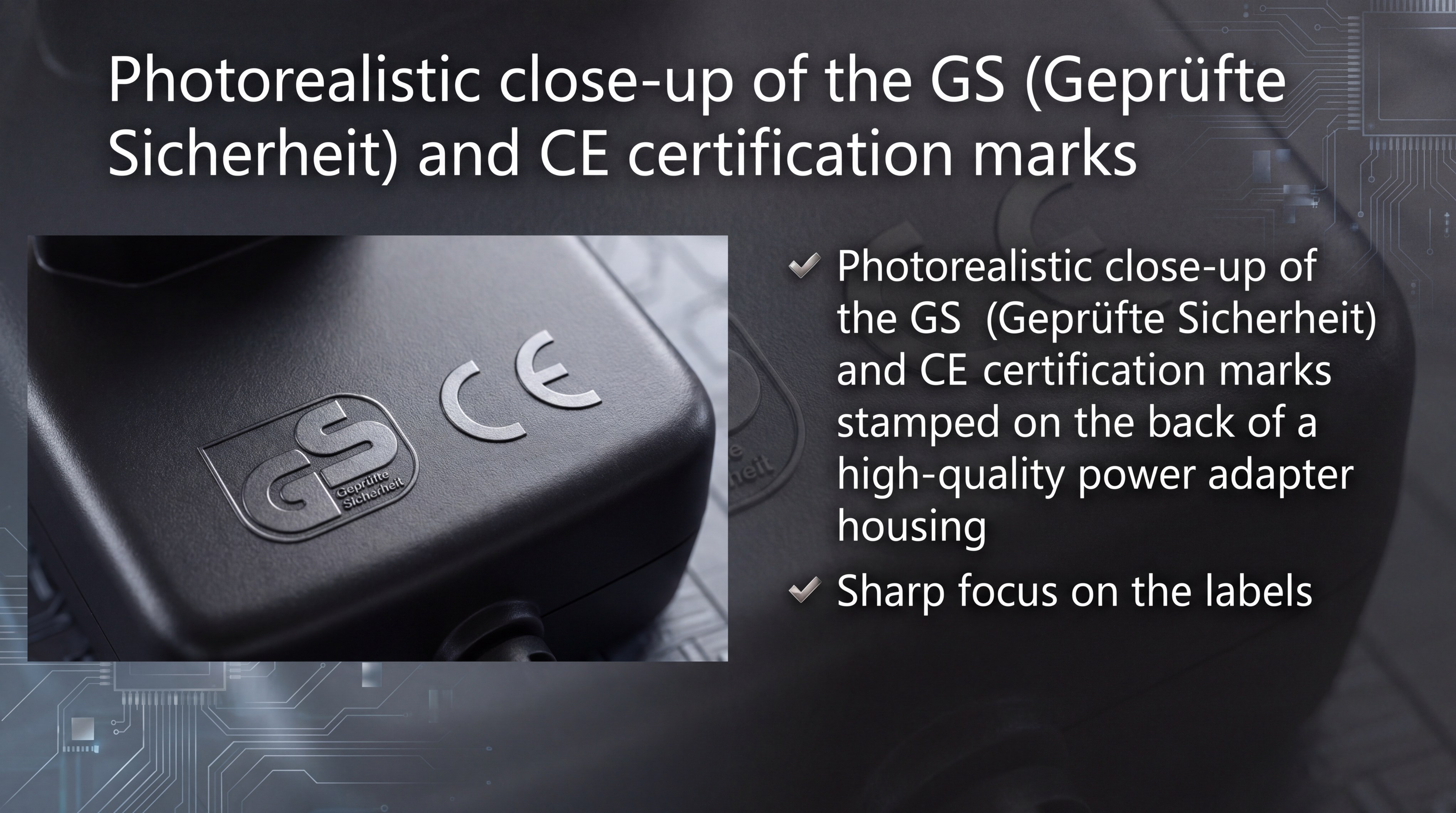
To find a durable and safe germany power adapter, you should prioritize products that carry the CE (European Conformity) and GS (Tested Safety) marks. The GS mark is particularly valuable as it indicates the product has been independently tested by a German state-approved body for safety compliance. Cheap, uncertified adapters often use thin copper or flammable plastics, which can lead to fires under heavy loads.
Identifying safety certifications
The CE mark is mandatory for electronics sold in the EU, signifying that the manufacturer has met health, safety, and environmental standards. The GS mark is a voluntary, more rigorous certification that German consumers look for to guarantee reliability.
Make no mistake: A fake CE mark (often used to mean “China Export”) lacks the proper spacing and is a hallmark of low-quality, dangerous hardware.
- Look for the GS logo.
- Verify proper CE spacing.
- Check for flame-retardant PC.
Evaluating material build quality
A professional-grade adapter should feel solid and be made from flame-retardant polycarbonate (PC) rather than cheap ABS plastic. High-quality internal components, such as thick copper pins and solid soldering, ensure the adapter won’t fail after a few weeks of use.
The kicker is: You can often tell the quality of an adapter simply by its weight—heavier units usually contain better internal shielding and materials.
Key Takeaway: Always prioritize GS-certified adapters with flame-retardant housings to ensure your business equipment is protected and your workspace remains safe.
The table below outlines the key quality markers to look for when purchasing power equipment.
| Quality Marker | Why it Matters | Status | |
|---|---|---|---|
| GS Mark | Independent safety test | Essential | |
| CE Mark | EU regulatory compliance | Essential | |
| Material | Flame-retardant PC | Mandatory | |
| Warranty | Indicates longevity | Recommended |
Frequently Asked Questions
Can I use a North American power strip in Germany with an adapter?Generally no. Most North American power strips have built-in surge protectors designed for 120V; plugging them into a 230V outlet will cause them to trip, blow a fuse, or even catch fire.
What’s the best way to charge a MacBook in Berlin?The most reliable method is using Apple’s own “World Travel Adapter Kit,” which swaps the duckhead plug on your charger for a native German Schuko or Europlug, maintaining full grounding.
How do I know if my device is dual-voltage?Look at the power brick or the back of the device for the text “Input: 100-240V”. If it only says “110V” or “120V,” you absolutely must use a voltage transformer.
Can I use a UK plug in a German socket with a simple adapter?Yes, but since the UK uses the Type G standard which is 230V, you only need a physical plug adapter. Ensure the adapter is grounded to maintain safety for the three-pin UK plug.
What’s the best adapter for high-wattage devices?You should look for a “Type F Schuko Travel Adapter” specifically rated for 16 Amps (approximately 3600 Watts). Avoid “universal” adapters for heat-generating appliances.
Conclusion
Successfully powering your devices in Germany requires more than just a physical plug change; it demands a clear understanding of the Type F Schuko standard and the 230V/50Hz grid. By prioritizing grounded, certified adapters and verifying your equipment’s voltage compatibility, you can avoid costly hardware damage and focus on your business goals. For companies looking to outfit an international workforce or source bulk power solutions with global certifications, contact us today to find the perfect match for your technical needs.