USB-C PD Power Adapter Trends for 2026
The main trends shaping the USB-C PD power adapter landscape in 2026 are higher efficiency GaN architectures, Extended Power Range (EPR) up to 240W, and intelligent dynamic power distribution. Modern device procurement teams are constantly struggling with fragmented charging accessories and slow charging cycles that bottleneck enterprise productivity. This disorganization causes massive operational clutter and spikes hardware replacement costs year over year. Transitioning to a unified charging standard is the only reliable way to future-proof your hardware deployment and streamline power delivery across all company assets.
Is USB-C PD market growth accelerating?
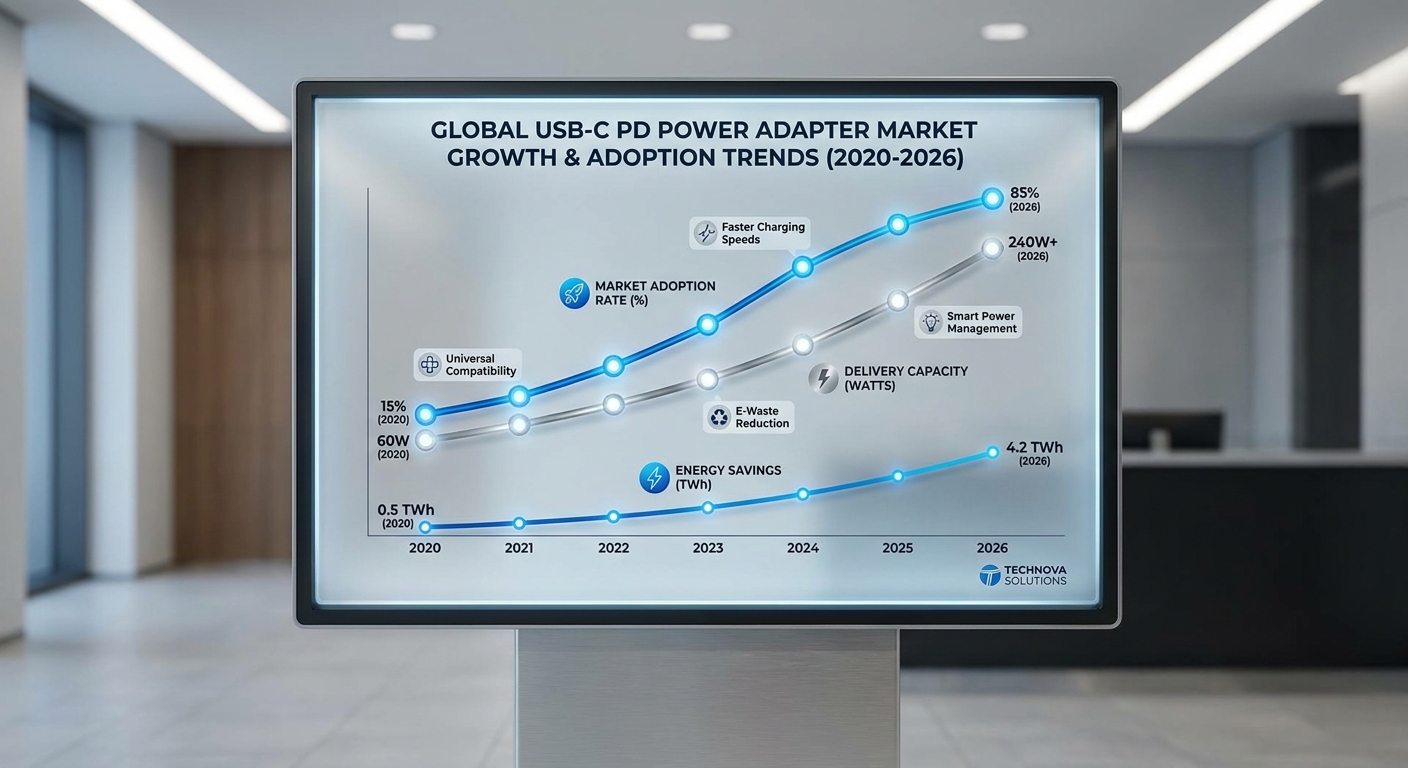
Yes, the global market is experiencing explosive exponential growth, with enterprise adoption rates projected to hit 85% by the end of 2026. Deploying a reliable USB-C PD power adapter fleet simplifies hardware logistics across your entire corporate campus. Organizations are rapidly moving away from legacy power supplies to embrace a unified standard.
Rapid updates to electronic waste policies worldwide have further accelerated this mass transition. Standardizing on a single, powerful standard means less electronic scrap and lower purchasing overhead over time.
Why are enterprises switching now?
Think about it: managing a dozen different power bricks for diverse laptop models is an operational nightmare. You are likely losing valuable hours of IT productivity tracking down specific replacement parts. Transitioning to unified hubs resolves this issue instantly.
Here is why: standardizing on advanced charging profiles protects your devices from incorrect voltage damage. Your team will enjoy seamless cross-device compatibility with zero risk of frying internal chipsets.
- Drastic reduction in device deployment and onboarding timelines.
- Lower shipping weights and packaging waste for bulk orders.
- Streamlined internal hardware auditing processes.
What is driving global volume?
Global consumer demand and legislative actions are the dual engines driving this manufacturing surge. You must prepare for upcoming regulatory compliance by updating your supply chain now.
But wait, there’s more: as volume increases, production efficiencies lower unit costs. This makes scaling your hardware inventory remarkably cost-effective.
- European Union universal charger mandate enforcement.
- Increased corporate sustainability directives.
- Rising demand for high-wattage mobile work setups.
Key Takeaway: Standardizing on high-capacity charging reduces operational overhead and future-proofs your hardware investments.
| Metric | 2020 Figure | 2026 Projection | Business Impact | |
|---|---|---|---|---|
| Adoption Rate | 15% | 85% | Universal device compatibility | |
| Max Power Delivery | 60W | 240W+ | Fast-charge high-power systems | |
| Carbon footprint | High | Extremely Low | Enhanced corporate ESG ratings |
Let us look closely at the underlying silicon innovations making this massive growth wave possible.
Why is GaN technology dominating designs?
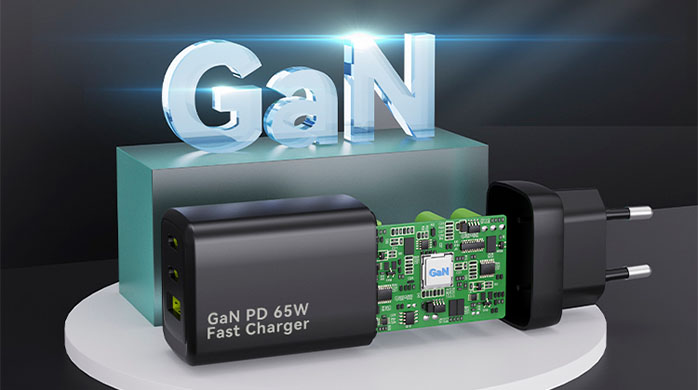
Gallium Nitride (GaN) technology dominates because it operates at much higher frequencies than silicon, allowing for smaller, cooler adapters. Integrating a GaN-based USB-C PD power adapter into your operations delivers unmatched power density and thermal safety. These advanced semiconductors are transforming how electronics handle high currents.
Traditional silicon transistors struggle with high-temperature resistance at modern power levels. GaN solves this by handling elevated voltage capacities without requiring heavy passive cooling parts.
How does GaN reduce thermal load?
Think about it: high temperatures are the primary killer of power supplies and connected laptops. You need components that can handle continuous heavy loads without radiating extreme heat.
Here is why: GaN semiconductors convert power far more efficiently than legacy silicon options. Your office stays cooler, and your devices experience less thermal stress during intensive work cycles.
- Excellent thermal conductivity that reduces local hotspots.
- Lower energy loss during voltage conversion steps.
- Minimal cooling space required for long-term safe operation.
Is the cost-to-performance ratio shifting?
You might worry that advanced technology carries a premium price tag that ruins your budget. But wait, there’s more: the extended operating lifespan of GaN hardware rapidly offsets initial setup costs.
Ultimately, investing in these advanced configurations lowers your total cost of ownership over a typical three-year hardware cycle. Choosing the cheaper alternative frequently leads to premature device failures.
- Fewer replacements due to thermal wear and component fatigue.
- Reduced energy bills due to top-tier conversion efficiency.
- Consolidated shipping fees for lighter physical products.
Key Takeaway: GaN technology dramatically improves device reliability and lowers thermal-related downtime in high-stress work settings.
| Semiconductor Material | Thermal Conductivity | Energy Conversion Efficiency | Physical Volume Required | |
|---|---|---|---|---|
| Silicon (Legacy) | Moderate | ~85% | 100% (Baseline) | |
| GaN (2026 Standard) | High | ~95%+ | 40% to 50% Less |
Transitioning to GaN efficiency unlocks new options for building smart workspace power stations.
How do smart setups optimize power allocation?
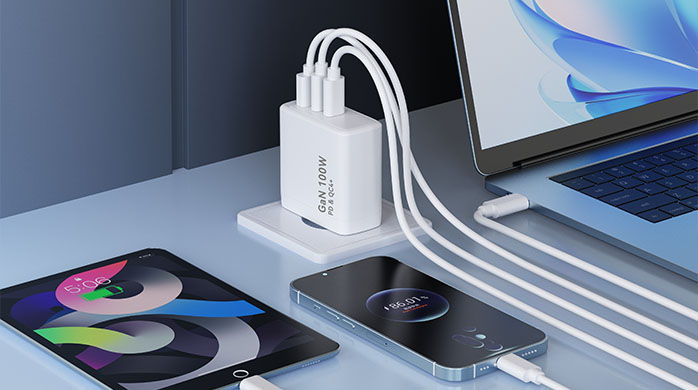
Smart workspace setups optimize power allocation through advanced firmware that dynamically divides current based on active device demands. Utilizing an intelligent USB-C PD power adapter eliminates the need to buy separate bricks for different device classes. The adapter automatically reads the connected device’s profile and delivers the precise wattage requested.
This active communication prevents overcharging and optimizes charging speed across multiple accessories simultaneously. No manual setup is needed by the user.
Can dynamic power division save energy?
Think about it: how much power is wasted when a fully charged phone sits plugged in all day? You can reduce idle consumption by deploying smart adapters that shut off current when devices reach capacity.
Here is why: real-time monitoring means every watt generated goes directly to active battery rejuvenation. Your operations become instantly more green with this simple structural change.
- Auto-negotiating profiles prevent trickle-charge wastage.
- Standby energy draw is reduced to fractional levels.
- Intelligent scheduling handles peak and off-peak demands.
Will intelligent desks become the norm?
Your employees expect modern work stations to handle their phones, laptops, and smartwatches seamlessly. But wait, there’s more: smart power integration makes hybrid desk systems highly adaptable.
Seamless power access directly improves productivity and overall team morale in flexible office environments. It represents a subtle but powerful upgrade to the everyday corporate user experience.
- Clutter-free setups keep office spaces looking premium and organized.
- Shared hotdesks handle any device brand instantly.
- Reduced socket requirements lower overall installation costs.
Key Takeaway: Dynamic power allocation maximizes energy efficiency while providing a flexible, high-utility workspace for modern hybrid workforces.
| Workspace Setup Type | Adapter Configuration | Multi-Device Support | Clutter Level | |
|---|---|---|---|---|
| Legacy Desks | Multiple proprietary bricks | Poor (Brand Locked) | High (Cable Chaos) | |
| Smart Desks (2026) | Single multi-port USB-C | Universal (Dynamic allocation) | Zero (Clean setup) |
Let us explore how you can secure custom hardware to align with your organization’s unique branding strategy.
Can OEM branding elevate your product lineup?
Yes, OEM customization allows businesses to build brand equity and customer trust by shipping high-performance accessories featuring their unique corporate identity. Delivering a customized USB-C PD power adapter alongside your primary hardware release creates a unified, premium product experience. Your clients will recognize your dedication to quality from the moment they unbox.
Consistent brand presence on a user’s desk ensures your company remains top-of-mind every single day. It turns an ordinary utility accessory into an effective, long-term brand asset.
Why does custom labeling matter?
Think about it: a generic white-label charger looks cheap and raises doubts about quality and safety standards. You can stand out instantly by presenting an aesthetic, professionally customized accessory.
Here is why: customers associate robust, bespoke accessories with high-end, reliable primary hardware systems. Protecting your core product’s image starts with the accessories you ship alongside it.
- Laser-engraved logos provide a premium, wear-resistant look.
- Custom housing colors match your core brand guidelines perfectly.
- Unique custom packaging adds an extra layer of professionalism.
How do bulk orders lower acquisition costs?
You might worry that custom engraving and tailored packaging will break your project budget. But wait, there’s more: scaling up order volume brings down the unit price significantly.
Large-scale procurement lets you secure premium, branded units for the cost of generic consumer-grade retail alternatives. This optimizes margins while elevating client satisfaction.
- Significant volume discounts on initial material procurement.
- Lower tooling fees per unit for large-scale production runs.
- Consolidated logistics pipelines that lower overall freight expenses.
Key Takeaway: Custom OEM branding transforms simple charging accessories into valuable brand-reinforcing assets while keeping unit procurement costs highly competitive.
| Branding Strategy | Visual Recognition | Perceived Product Value | Bulk Cost Efficiency | |
|---|---|---|---|---|
| Generic Accessories | Extremely Low | Minimal | High | |
| OEM Custom Branded | Unmatched | Premium | Excellent |
Beyond external branding, the true value of your power solutions lies in their internal safety architectures.
What safety protocols define next-gen adapters?
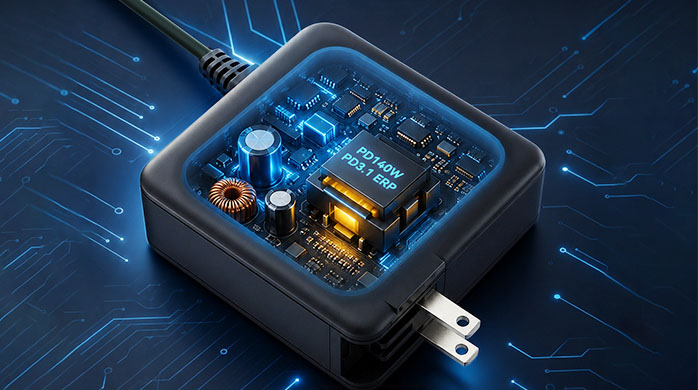
Next-gen safety protocols rely on real-time temperature tracking, overcurrent shutoffs, and fireproof structural materials to protect expensive client devices. Sourcing a USB-C PD power adapter equipped with advanced safety chips is paramount to avoiding costly device repairs and liability concerns. Modern hardware requires precise safety measures to operate safely at high wattages.
Multiple safety layers within the hardware build act as active defensive systems during grid voltage fluctuations. These automated safeties handle electrical issues before they reach your connected devices.
How do intelligent chips prevent overload?
Think about it: a sudden voltage spike can instantly destroy thousands of dollars in high-end company laptops. You need smart chips that act as active, microsecond-fast circuit breakers.
Here is why: smart microcontrollers continuously check electrical conditions and terminate power flows if limits are exceeded. Your high-value devices remain perfectly safe, even during unpredictable power grid surges.
- Active over-voltage protection limits electrical exposure.
- Short-circuit safety shutoffs isolate dangerous connections instantly.
- Real-time thermal monitoring prevents internal components from melting.
Are international safety certifications mandatory?
You must avoid selling or distributing hardware that lacks respected international safety marks. But wait, there’s more: official compliance certifications protect your brand from massive legal and regulatory risks.
Displaying clean, certified markings builds immediate buyer trust and allows your products to clear international customs smoothly. Skipping these essential validations can shut down your distribution pipelines overnight.
- UL and CE listings certify compliance with rigorous safety rules.
- RoHS alignment ensures your products use non-toxic components.
- FCC testing guarantees no wireless signal interference in office spaces.
Key Takeaway: Investing in adapters with certified, multi-layer safety architectures prevents devastating device failures and mitigates corporate liability issues.
| Safety Protection Layer | Activation Speed | Core Business Benefit | |
|---|---|---|---|
| Intelligent Temp Control | Continuous | Prevents thermal wear and fire hazards | |
| Overload Protection | < 1 Microsecond | Isolates high-voltage spikes instantly | |
| Premium Fireproof Housing | Passive Defense | Ensures external containment under structural failure |
Let us look at how multi-port designs implement these safety features while charging multiple systems.
How does multi-port charging boost efficiency?
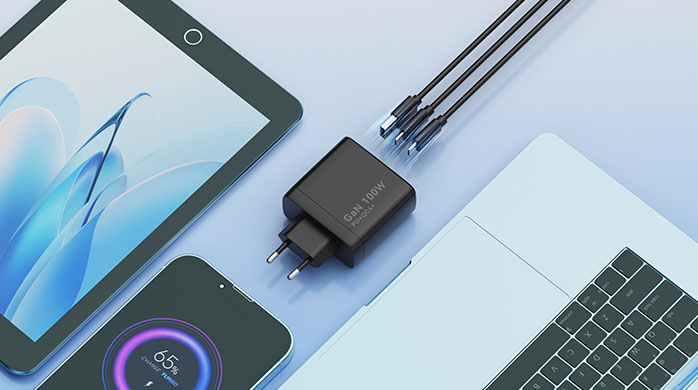
Multi-port charging drastically boosts enterprise operational efficiency by powering high-wattage laptops, tablets, and peripherals simultaneously from a single outlet. Deploying a multi-port USB-C PD power adapter simplifies desk setups and maximizes the value of your workspace assets. No longer do you need to hunt for several free wall outlets.
These units act as central charging stations that streamline day-to-day work routines for your entire team. They help maintain high workspace organization and clean layout standards.
Can you eliminate cable clutter entirely?
Think about it: a messy desk covered in tangled cords destroys focus and looks incredibly unprofessional to visiting clients. You can resolve this issue instantly by switching to integrated multi-port setups.
Here is why: consolidations allow you to run an entire work station off one heavy-duty main adapter. Your employees will love the neat, highly functional environment this simple upgrade creates.
- One high-power unit replaces up to four separate bricks.
- Shorter, targeted cables match modern desk configurations perfectly.
- Fewer cables mean easier cleanup and safer walkways.
How does simultaneous charging affect latency?
You might worry that charging three devices at once will slow down power delivery to crawl speeds. But wait, there’s more: advanced power distribution chips ensure high-wattage hardware keeps charging rapidly.
This means your laptop stays powered at peak rates while your mobile phone gets a quick top-up in the background. It delivers high-efficiency performance with zero manual adjustments.
- Smart priority ports route major power to laptops.
- Dynamic adjustment handles device connection and disconnection smoothly.
- Stable output prevents device cycle restarts during power shifts.
Key Takeaway: Multi-port systems consolidate power distribution, reducing hardware clutter while maximizing device uptime across critical corporate environments.
| Charging Setup | Outlets Required | Laptop Charging Status | Peripheral Support | |
|---|---|---|---|---|
| Traditional | 3 to 4 Sockets | Fast (Dedicated Brick) | Requires multiple brick accessories | |
| Multi-Port (2026) | 1 Socket | Fast (Dynamic allocation) | Fully integrated simultaneous ports |
Producing these complex multi-port solutions demands rigorous manufacturing standards on the factory floor.
Are advanced testing lines mandatory for quality?
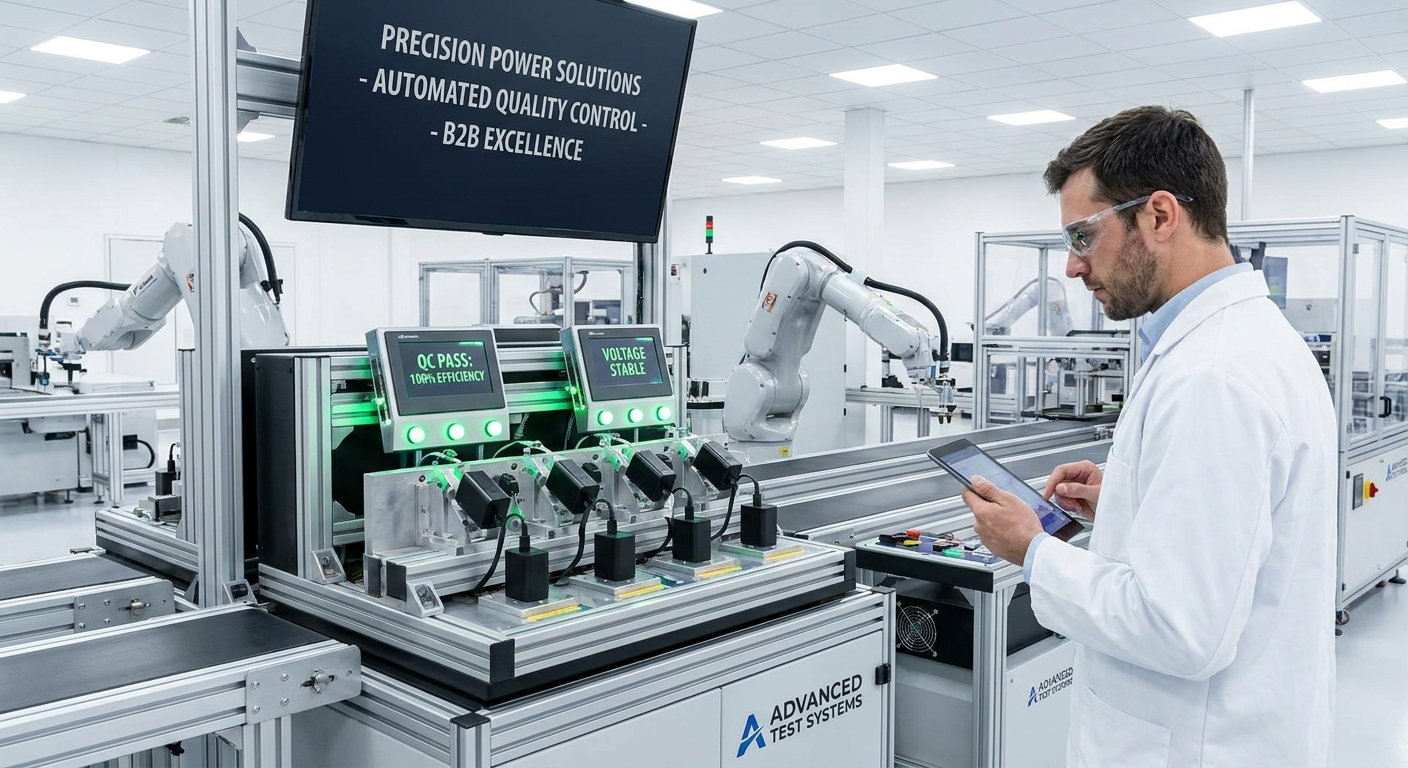
Advanced automated testing lines are absolutely mandatory to eliminate defects, verify multi-stage voltage outputs, and guarantee long-term field reliability. Selecting a certified manufacturer that tests every USB-C PD power adapter on the line ensures you receive flawless shipments. Automated inspection keeps defective components from ever entering your supply chain.
Human error in manual testing can lead to catastrophic hardware failures down the road. Automated precision systems ensure consistent, high-standard assembly quality for every single unit produced.
What parameters are verified during quality control?
Think about it: a quality power supply must withstand unstable grid environments without skipping a beat. You need to know exactly how much physical stress your units can endure before deploying them.
Here is why: testing multiple parameters in a controlled environment ensures the adapter handles real-world challenges easily. Your brand’s reputation remains secure because your products work reliably out of the box.
- High-temperature burn-in tests evaluate safety under heavy prolonged load.
- Precise ripple-voltage tracking confirms clean, stable power delivery.
- Drop and vibration resistance checks protect against transit damage.
How does automated testing reduce failure rates?
You cannot afford high product return rates that eat up your business’s operating margins. But wait, there’s more: robotic testing identifies microscopic internal defects that human eyes miss completely.
This rigorous screening process drops production defect rates to fractions of a percent. It provides you with reliable supply chains that support your business growth goals.
- Automated optical inspections check for precise solder connections.
- Computerized voltage sweeps test every profile setting instantly.
- Unified digital tracking logs the performance of each device manufactured.
Key Takeaway: Automated industrial testing guarantees exceptional product consistency and eliminates costly product recalls from your operations.
| Testing Methodology | Defect Detection Rate | Process Tracking | Solder Verification | |
|---|---|---|---|---|
| Manual Testing | High Error Margin | Paper Logs | Visual Estimate | |
| Automated Lines | Near 100% Precision | Digital Databases | Automated Optical Inspection |
This high level of manufacturing quality allows brands to push the limits of power density in compact designs.
Does power density redefine portable adapters?
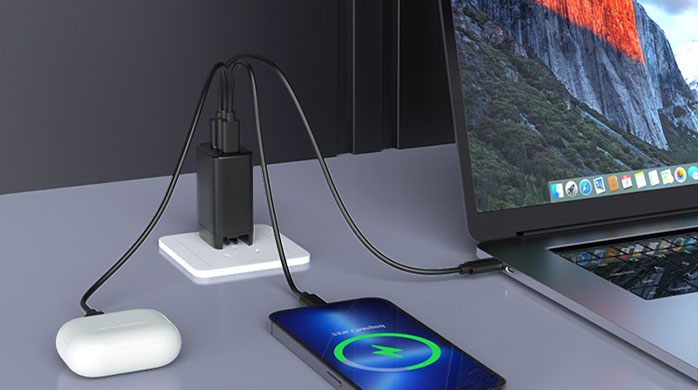
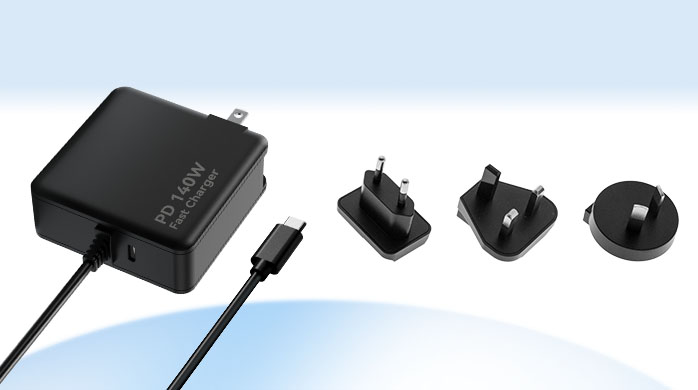
Elevated power density completely redefines portable options by providing desktop-level wattage in pocket-sized accessories optimized for mobile workers. Sourcing a high-density USB-C PD power adapter means you no longer have to carry heavy, oversized accessories during corporate business trips. These streamlined solutions keep your teams fully productive wherever they happen to work.
Advanced architectural scaling allows developers to shrink component sizing while increasing maximum power capabilities. It represents a massive leap forward for professional mobile work setups.
Why is high power-to-size ratio essential?
Think about it: your sales and field teams are constantly traveling and working in cramped spaces. You cannot expect them to carry heavy luggage packed with oversized power bricks.
Here is why: reducing physical volume lets your team travel light and work productively on the move. Fast charging on the go keeps important client communications running without disruption.
- Fits easily into standard briefcase and backpack pockets.
- Replaces multiple single-purpose travel wall chargers.
- Maximizes workspace efficiency in trains, flights, and cafes.
Will travel-friendly form factors increase adoption?
Your corporate hardware must support modern, flexible hybrid work routines to be highly effective. But wait, there’s more: compact travel designs see much higher daily usage rates than heavy home-bound blocks.
Devices that are easy to pack and transport are loved by employees and clients alike. High usability translates directly to improved hardware investment returns for your company.
- Foldable AC prongs prevent damage to other items in bags.
- Scratch-resistant outer shells protect long-term aesthetic appeal.
- Universal input voltage support works seamlessly on global grids.
Key Takeaway: High power density accessories ensure your remote workforce stays energized and operational without the burden of heavy travel accessories.
| Adapter Category | Power Output | Relative Size | Key User Benefit | |
|---|---|---|---|---|
| Legacy Travel Charger | 15W – 30W | Bulky / Heavy | Slow, single-device charging | |
| High-Density GaN (2026) | 65W – 140W | Ultra-Compact | Fast, multi-device charging |
Keeping these highly dense adapters cool requires the use of specialized, premium internal shielding.
Which advanced materials prevent thermal issues?
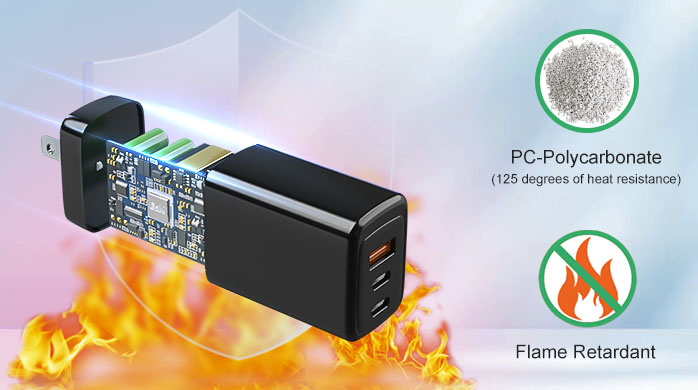
Thermally conductive polymers, ceramic potting, and aluminum heatsinks work together to prevent heat buildup and maintain safe operating temperatures under continuous load. Selecting a premium USB-C PD power adapter built with specialized materials ensures consistent power throughput without the risk of thermal throttling. High-end materials protect internal electronics from heat degradation.
Cheaper alternatives often use basic plastics that trap heat, leading to premature breakdown and fire safety risks. Investing in premium housing materials is a key safety measure for enterprise buyers.
Why are premium fireproof materials non-negotiable?
Think about it: an electrical malfunction in an office environment can lead to devastating property damage or serious injuries. You must guarantee that every accessory you distribute adheres to strict fire-safety rules.
Here is why: premium materials contain thermal incidents completely within the adapter’s physical shell. Your employees and facilities remain safe even under rare, extreme component failures.
- V-0 rated flame retardant polycarbonate prevents active combustion.
- Self-extinguishing materials isolate internal spark failures.
- Structural impact resistance protects internal parts from damage.
How do heat dissipation structures extend longevity?
You want your electronic hardware investments to last for years rather than failing after just a few months. But wait, there’s more: advanced internal cooling configurations directly double the operating lifetime of your adapters.
Lowering internal operating temperatures by even ten degrees reduces semiconductor aging rates significantly. It ensures your hardware investments continue delivering value year after year.
- Thick copper heat spreaders distribute thermal energy evenly.
- Thermal paste transfers heat rapidly to external shell layers.
- Airflow-optimized layouts eliminate internal high-temperature pockets.
Key Takeaway: Premium fireproof materials and heat-dissipating designs protect your assets, ensure facility safety, and extend component lifespans.
| Material/Structure Component | Main Thermal Function | Safety Rating Achievement | |
|---|---|---|---|
| V-0 Polycarbonate | Frame-retardancy & flame prevention | UL94 V-0 Certified | |
| Copper Heat Spreaders | Thermal conduction & uniform cooling | Reduces internal hotspots by 15°C | |
| Ceramic Thermal Potting | Heat transfer & high voltage insulation | Delivers stable high-wattage outputs |
Let us explore how these advanced thermal designs support maximum power outputs under the new EPR standard.
Can EPR 240W adapters replace legacy bricks?
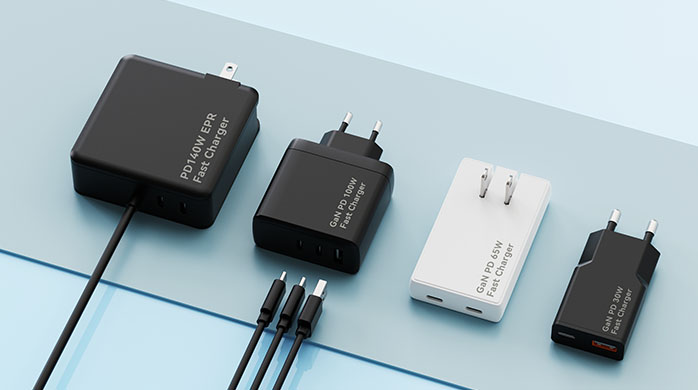
Yes, 240W Extended Power Range (EPR) adapters can replace heavy, proprietary power bricks for power-hungry workstations, gaming laptops, and high-draw industrial tools. Utilizing a single, unified USB-C PD power adapter for your high-performance machines simplifies inventory management across your engineering and creative departments. The era of carrying separate, massive charging blocks is coming to an end.
EPR technology establishes a universal standard that covers everything from low-draw mobile phones to massive workstation platforms. It represents the ultimate consolidation of power delivery technology.
What devices benefit most from 240W EPR?
Think about it: heavy CAD laptops, 3D rendering setups, and power tools have historically relied on bulky, non-compatible power supplies. You can now power all of these demanding platforms through standard, interchangeable cables.
Here is why: the Extended Power Range standard safely delivers up to 48V at 5A across standard-compliant cables. Your most demanding team members get the high-wattage power they need without proprietary clutter.
- High-end developer laptops and mobile workstations.
- Large external displays that require integrated power input.
- Industrial testing equipment and remote scientific instruments.
Is the transition to EPR cost-effective?
You might think that high-power EPR accessories are too expensive for wide-scale deployment. But wait, there’s more: standardizing on a single adapter type drastically simplifies your spare parts inventory.
Consolidating your hardware standard cuts maintenance costs and simplifies user transitions in dynamic office spaces. It provides a highly scalable framework that grows easily with your company.
- Eliminates the need to buy different back-up power accessories.
- Allows flexible desk assignments as any station handles any laptop.
- Reduces overall procurement research time for IT purchasing departments.
Key Takeaway: High-wattage EPR adapters eliminate proprietary hardware dependency, enabling universal power access for your highest-performance computing assets.
| Power Profile Class | Power Limit | Target Device Applications | Compatibility Status | |
|---|---|---|---|---|
| Standard USB-C PD | Up to 100W | Ultrabooks, Tablets, Smart Phones | Universal legacy standard | |
| EPR USB-C PD (2026) | Up to 240W | Power Workstations, Heavy Hardware | Universal next-gen standard |
Transitioning to these universal standards helps procurement teams solve major logistics and sustainability challenges.
Conclusion
Standardizing your corporate energy infrastructure around the latest 2026 power adapter standards directly solves the operational hurdles of device fragmentation, excessive electronic waste, and slow charging workflows. By utilizing Gallium Nitride (GaN) efficiency, smart power negotiation, and robust EPR 240W capacities, your business can significantly lower deployment costs while raising workplace productivity. Partnering with a dedicated, certified ODM manufacturer ensures that every component shipped matches your precise quality metrics and safety requirements.
To future-proof your enterprise supply chain and design custom power solutions tailored to your unique hardware lineup, contact us today and let our expert engineering team guide your transition.
FAQ
Can I charge a lower-wattage device with a 240W EPR adapter?
Yes, you absolutely can. The integrated Smart Power Delivery chip automatically communicates with the connected device to deliver only the precise wattage requested, keeping low-power devices perfectly safe.
What’s the best way to verify international safety compliance?
The best approach is to verify that the manufacturer provides valid, registered UL, CE, FCC, and RoHS certification test documents that match their specific product model numbers.
How do I know if my existing USB-C cables support 240W EPR?
No, standard legacy cables will not work safely at maximum ratings. You must verify that your cables are specifically labeled and electronically marked (E-Marked) to support 240W, 48V/5A power transmission.
Can I customize the external housing color for our brand?
Absolutely, yes. We provide comprehensive OEM customization services, including custom color matching, professional laser engraving, and custom-designed packaging to align perfectly with your brand identity.
What’s the best approach to handling bulk shipping logistics?
The most reliable method is to partner directly with an experienced ODM supplier who coordinates consolidated ocean or air freight channels and handles all localized customs clearance documentation smoothly.