Securing high-performance external power supplies requires a systematic verification framework that validates electrical safety, structural durability, and regulatory compliance at every manufacturing stage. B2B procurement managers often face the silent threat of unvetted factory shipments that fail standard safety checks, resulting in costly product recalls or severe hardware damage. Imagine the catastrophic brand damage when your newly launched enterprise product begins overheating in customer offices, leading to liability lawsuits and immediate contract cancellations. Implementing a strict power adapter quality control protocol eliminates these manufacturing risks and guarantees consistent performance across every single imported unit.
What Is the Power Adapter Quality Control Process?
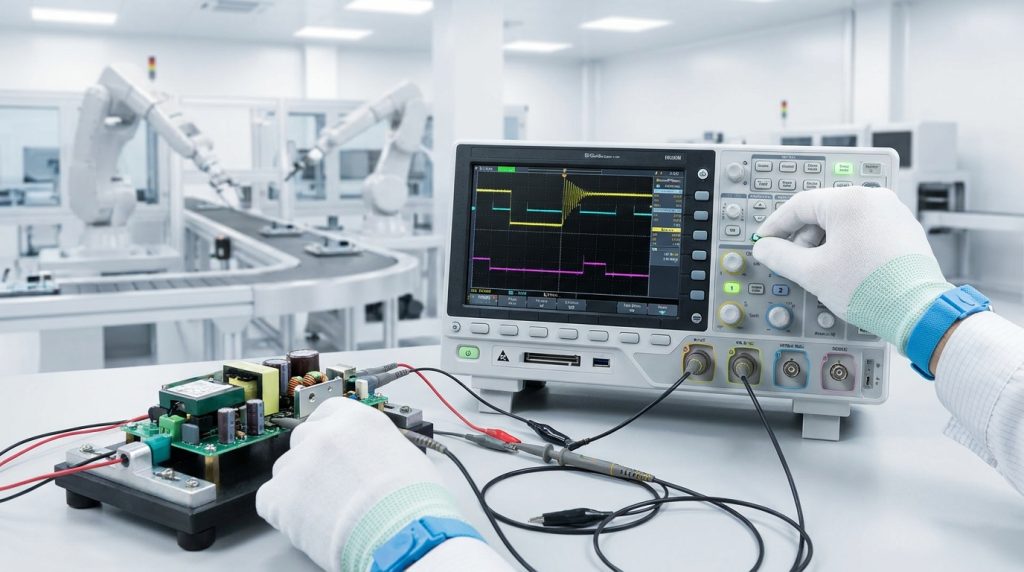
The power adapter quality control process is a multi-phased verification framework spanning raw material sourcing, in-line manufacturing monitoring, and final performance validation. Establishing a strict power adapter quality control protocol ensures that every shipped device operates within tight electrical tolerances.
Modern factories divide this oversight into three strict gates of verification to ensure total transparency. Each phase utilizes specialized testing equipment to monitor critical performance metrics continuously.
What Are the Core Phases of Quality Verification?
You must verify that your manufacturer performs rigorous testing at every major milestone. This hands-on tracking shields your business from the risk of receiving completely dead units.
Here is the deal:
- Incoming Quality Control (IQC) inspects raw components.
- In-Process Quality Control (IPQC) monitors the assembly line.
- Outgoing Quality Control (OQC) verifies the finished adapters.
Key Takeaway: Implementing a clear, three-tiered verification strategy is the most effective way to eliminate hardware defects during mass production.
| Phase | Primary Objective | Inspection Focus | |
|---|---|---|---|
| IQC | Component Verification | Transformers, PCBs, and capacitors | |
| IPQC | Real-Time Monitoring | Soldering quality and functional assembly | |
| OQC | Final Performance Audit | Safety, aesthetic finish, and packaging |
Evaluating these core operational phases helps procurement teams identify weak links in a supplier’s assembly line before production begins.
Why Is Power Adapter Quality Control Critical for Buyers?
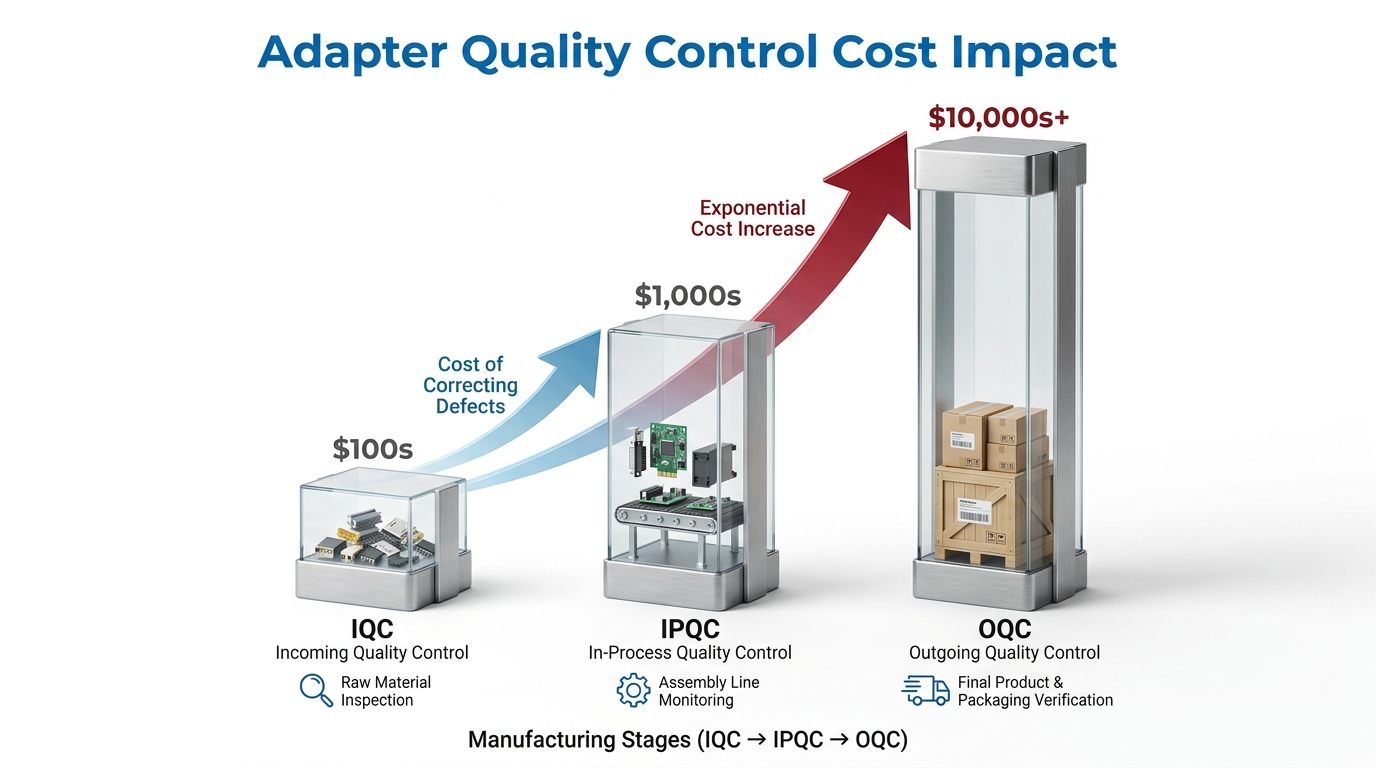
Proper validation is critical because power supplies are the single most common point of failure in electronic systems and represent significant safety liabilities. Implementing rigorous power adapter quality control protects your business from catastrophic financial losses and devastating product recalls.
A single poorly manufactured batch can result in extensive property damage, negative user reviews, or costly import customs rejections. Buyers must hold their suppliers to strict electrical engineering standards to prevent these structural issues.
How Does Quality Verification Prevent Costly Recalls?
You will quickly discover that stopping defects at the factory floor is infinitely cheaper than handling field failures. A robust validation plan is your primary defense against unexpected financial liabilities.
Think about it:
- Early-stage defect detection prevents mass assembly rework.
- Documented testing reports simplify global import clearance.
- Consistent thermal management reduces long-term warranty expenses.
Key Takeaway: Proactive quality verification on the production line remains the ultimate shield against expensive product recalls and logistics disasters.
| Risk Category | Without QC Protocol | With QC Protocol | |
|---|---|---|---|
| Recall Rates | High risk of batch-wide failures | Virtually non-existent (<0.1%) | |
| Warranty Costs | Uncontrolled and unpredictable | Low, predictable budget allocation | |
| Customs Clearance | Frequent seizures and delays | Smooth, fully compliant transit |
Assessing these critical risks demonstrates how standard validation protocols save thousands of dollars in post-sale support costs.
How Does IQC Aid the Power Adapter Quality Control Process?
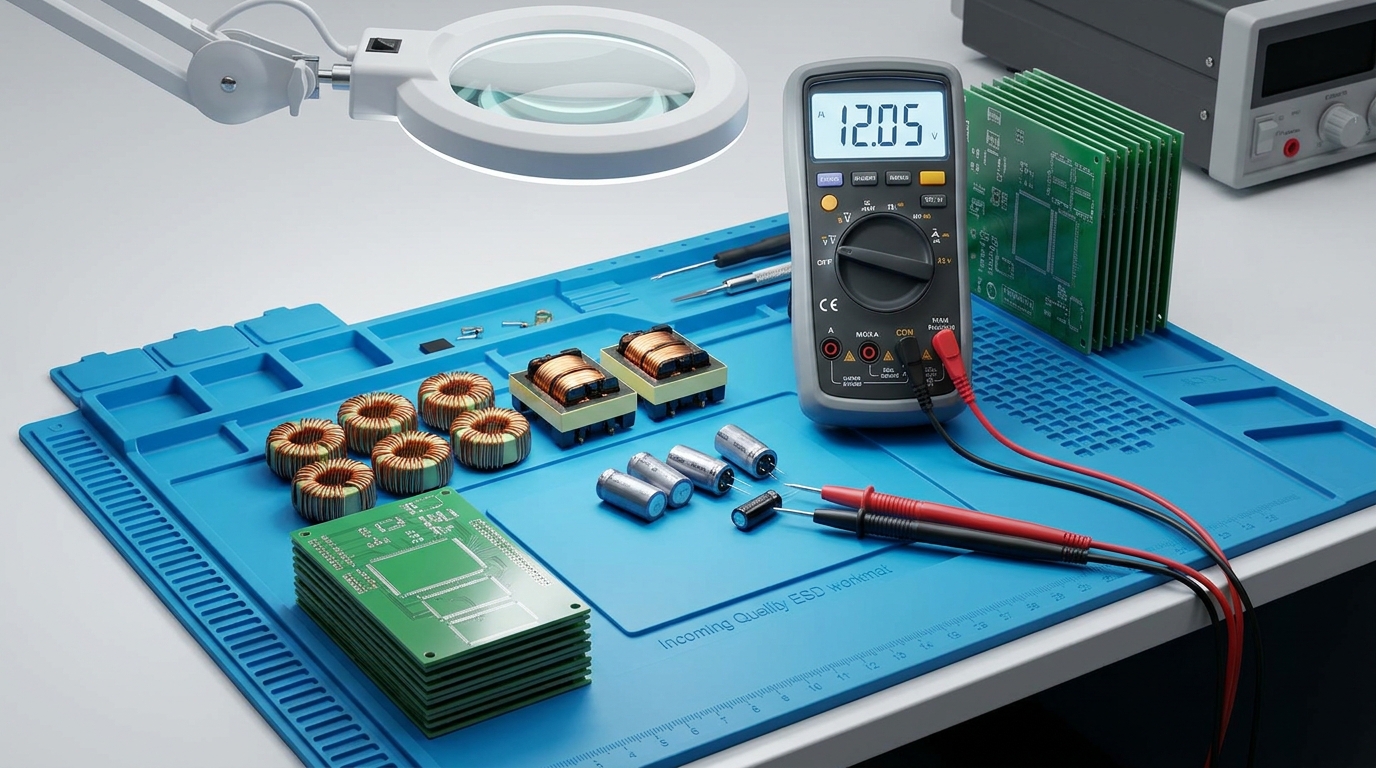
Incoming Quality Control (IQC) prevents substandard raw components from entering the assembly line by filtering them out at the warehouse gate. This initial phase reinforces the overall power adapter quality control process by validating raw materials against the bill of materials.
Substandard capacitors or poorly wound transformers will inevitably degrade the performance of the finished power supply. Strict raw material checks keep your manufacturing pipeline clean and highly predictable.
Which Raw Materials Need Strict Screening?
You must ensure that the manufacturer monitors critical component specifications prior to physical assembly. If a factory uses cheap, unvetted silicon, your devices will suffer from early field failures.
Check this out:
- Transformers are measured for winding resistance and turn ratios.
- Capacitors undergo ESR testing and thermal rating validation.
- Fire-retardant plastic housings are verified for UL94 V-0 compliance.
Key Takeaway: Rigorous screening of raw magnetic and plastic components at the factory gate prevents structural degradation of the final adapter.
| Component | Critical Test Parameter | Industry Standard | |
|---|---|---|---|
| Electrolytic Capacitor | Equivalent Series Resistance (ESR) | Vendor Data Sheet Match | |
| Enclosure Plastic | Flammability Resistance | UL94 V-0 Rating | |
| Power Cord | Pull Force and Conductor Purity | IEC 60227 / UL 817 |
Reviewing incoming raw component tolerances prevents systemic manufacturing line stoppages caused by materials variation.
What IPQC Checks Run in Power Adapter Quality Control?

In-Process Quality Control (IPQC) checks monitor the physical assembly, circuit soldering, and enclosure sealing in real-time on the factory floor. Real-time monitoring of assembly lines is a crucial cornerstone of modern power adapter quality control.
Inspectors utilize automated optical scanning and manual inspection booths to catch structural misalignments instantly. This continuous feedback loop ensures that the assembly processes remain highly consistent.
Why Is Solder Joint Inspection Critical?
You must realize that poor soldering is the primary cause of intermittent power connection failures. Spotting microscopic bridges before the enclosure is ultrasonically welded is vital.
Look:
- Automated Optical Inspection (AOI) scans every SMT component.
- Solder wave temperatures are calibrated and logged hourly.
- Manual visual checks inspect through-hole transformer joints.
Key Takeaway: Identifying soldering and assembly anomalies during the in-line phase protects critical circuitry from electrical shorts.
| Assembly Stage | Critical IPQC Check | Detection Method | |
|---|---|---|---|
| SMT Placement | Component alignment and presence | Automated Optical Inspection (AOI) | |
| Wave Soldering | Joint integrity and solder volume | X-Ray and Visual Inspection | |
| Enclosure Sealing | Ultrasonic weld strength | Mechanical stress testing |
Implementing these tight assembly checks prevents internal manufacturing faults from being sealed inside the permanent outer housing.
Which Safety Tests Are in Power Adapter Quality Control?
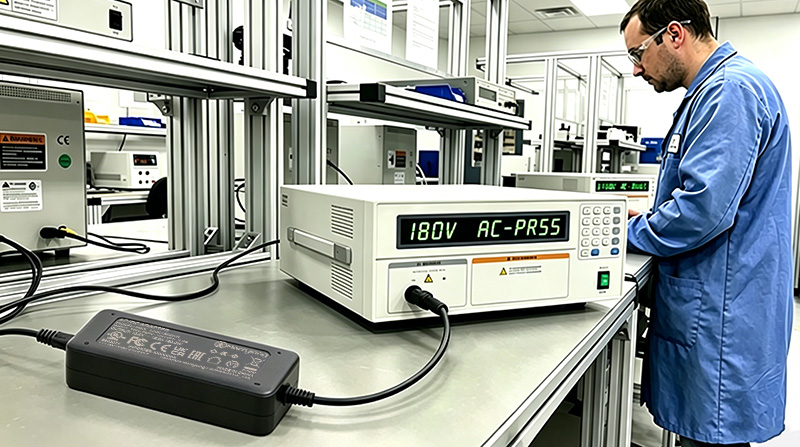
Safety testing is designed to verify that the power supply can handle high voltages safely without presenting shock or fire hazards. Executing these strict safety protocols is the most critical phase of power adapter quality control for global distribution.
Every single adapter must pass these high-voltage isolation checks before it leaves the factory floor. Skipping this step risks legal liability, consumer safety, and import customs seizures.
How Does the Hipot Test Protect Users?
You must require a 100% Hipot test on every single production unit to guarantee user safety. This test applies massive electrical pressure to ensure internal insulation barriers remain intact.
Here is the kicker:
- Primary-to-secondary circuits are subjected to high-voltage stress.
- Leakage current is measured to verify isolation efficiency.
- Ground continuity is confirmed for all metal-clad desktop models.
Key Takeaway: Completing a full high-potential safety test ensures that the adapter’s electrical insulation will not rupture under voltage spikes.
| Test Type | Test Parameter | Acceptable Threshold | |
|---|---|---|---|
| Hipot Test | Input to Output Voltage | 3000V AC to 4242V DC with zero dielectric breakdown | |
| Leakage Current | Ground leakage at maximum input | <100 µA for medical, <0.75 mA for IT | |
| Insulation Resistance | Resistance at 500V DC | >100 Megaohms |
Running these mandatory electrical stress checks prevents user-facing shock hazards and secures your global regulatory compliance.
How Does Burn-In Help Power Adapter Quality Control?
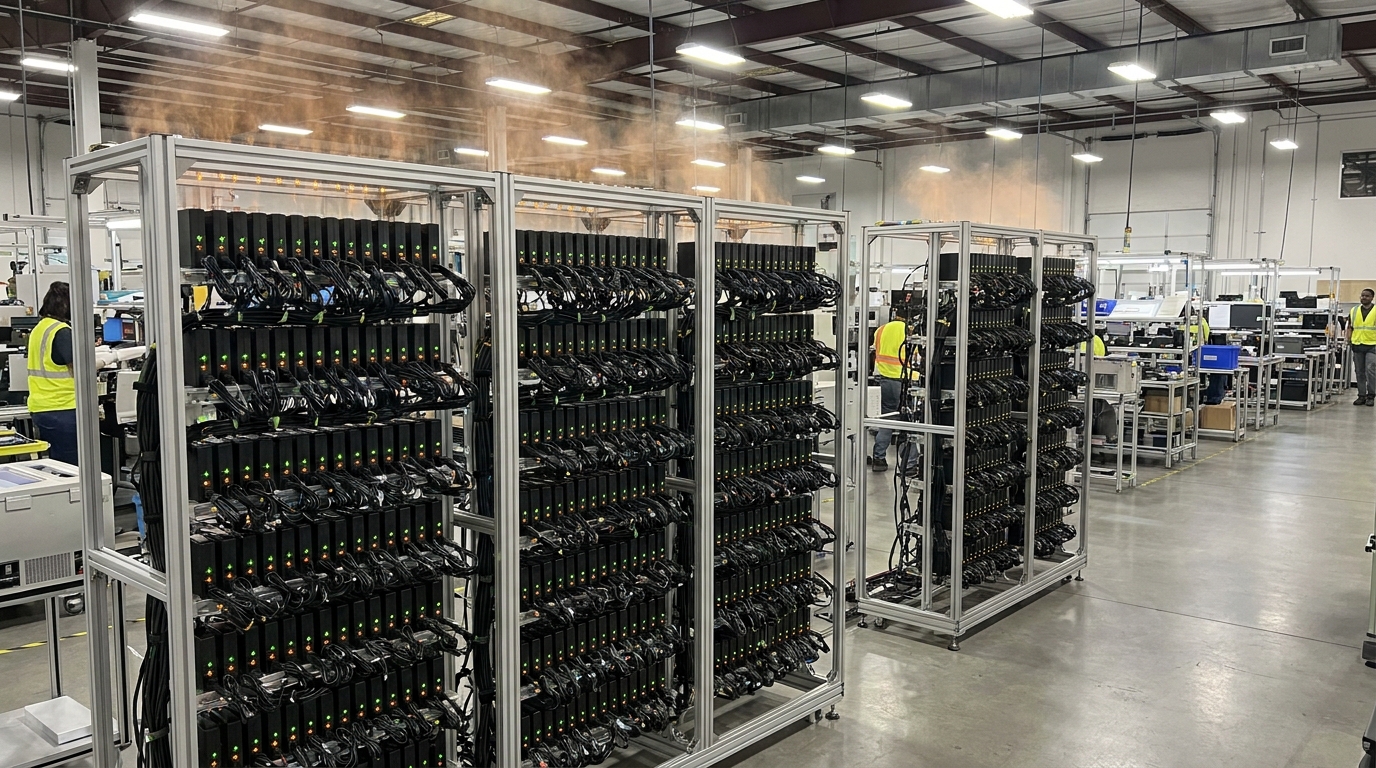
Burn-in testing identifies early component failures by operating power adapters under full load and high temperatures for extended periods. This aggressive thermal aging is an essential phase of power adapter quality control that exposes infant mortality in semiconductors.
Adapters are mounted onto heavy-duty rack systems inside specialized chambers designed to mimic extreme operating conditions. This phase guarantees that the surviving adapters are exceptionally stable and ready for deployment.
How Does Burn-In Capture Infant Mortality?
You will find that most semiconductor failures occur within the first few hours of active use. Running these units under stress on-site ensures your customers receive only highly stable hardware.
Think about it:
- Operational heat causes minor circuit cracks to expand and break.
- Continuous electrical loads weed out unstable power transistors.
- Automated monitoring systems flag voltage drops in real-time.
Key Takeaway: Running adapters under high thermal stress is the ultimate method to weed out defective semiconductors before final shipment.
| Parameter | Standard Burn-In | Extended Burn-In | |
|---|---|---|---|
| Temperature | 40°C to 45°C | 50°C | |
| Duration | 2 to 4 Hours | 8 to 24 Hours | |
| Load Capacity | 100% Rated Load | 100% to 110% Rated Load |
Checking the results of these thermal aging trials ensures that your custom power supplies deliver long-term operational durability.
What Reliability Tests Are in Power Adapter Quality Control?
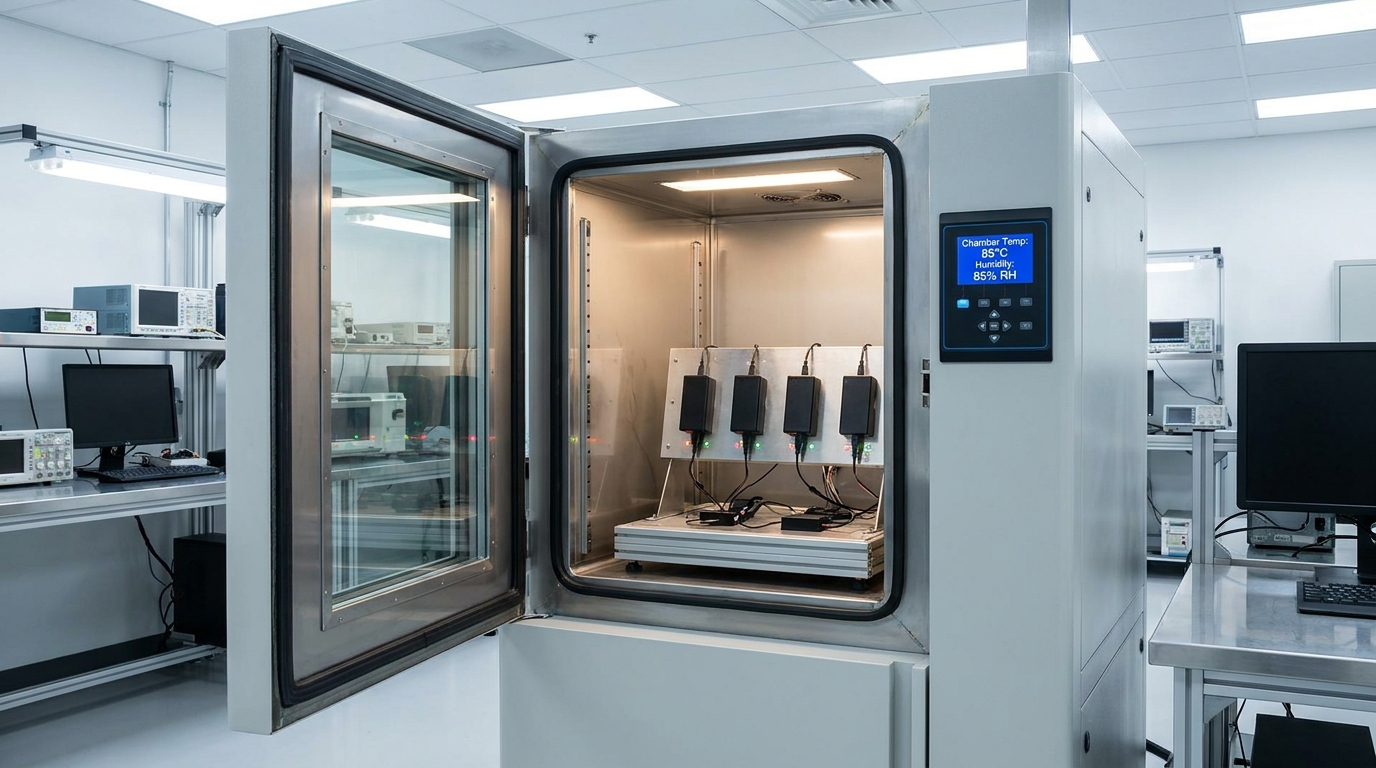
Reliability testing evaluates the long-term structural and environmental durability of adapters under extreme physical stress over simulated years of use. Thorough environmental testing represents the final frontier of power adapter quality control before a product design is finalized for mass production.
Technicians perform drop, vibration, thermal shock, and cable bending tests to simulate a lifetime of intense consumer abuse. These demanding physical tests ensure your adapters will not crack, break, or fail prematurely in the field.
How Does Environmental Cycling Verify Durability?
You must confirm that your power supply can survive extreme climate changes during global transit and storage. Subjecting hardware to sudden temperature swings highlights expansion mismatches in the housing materials.
Check this out:
- Thermal shock cycling quickly swings temperatures from hot to cold.
- High humidity chambers test the corrosion resistance of contacts.
- Mechanical drop tests confirm that the plastic housing resists heavy impacts.
Key Takeaway: Subjecting power adapters to physical drops and extreme thermal cycling proves their physical resilience prior to commercial launch.
| Reliability Test | Test Parameter | Failure Criteria | |
|---|---|---|---|
| Thermal Shock | -40°C to +85°C, 50 cycles | Outer casing cracking or electrical drift | |
| Cable Flexing | ±90° angle, 300g weight, 2000 cycles | Intermittent connection or conductor breakage | |
| Drop Test | 1 meter height, concrete floor, 6 faces | Exposure of live high-voltage parts |
Reviewing these physical durability metrics ensures your chosen power hardware can survive the toughest consumer environments.
How to Audit a Supplier’s Power Adapter Quality Control?

Auditing a supplier requires physically visiting their manufacturing plant to inspect their machinery, quality records, and operational discipline. A physical audit is the only reliable way to confirm that a factory actually follows high-standard power adapter quality control procedures.
Buyers must inspect the calibration status of test equipment and observe assembly workflows first-hand. This physical validation guarantees that your components are being handled with professional care.
What Key Processes Must Be Audited on the Floor?
You must verify that the factory actively segregates rejected components from the primary assembly lines. A lack of organization on the factory floor is a clear warning sign of impending quality issues.
Look:
- Active ESD protection wristbands and floor mats must be present.
- Equipment calibration stickers must display current and valid dates.
- Production logs must show real-time recording of testing metrics.
Key Takeaway: Conducting hands-on inspections of calibration records and workspace cleanliness remains the gold standard for vendor vetting.
| Audit Area | Critical Verification Check | Warning Sign | |
|---|---|---|---|
| Quality Standards | Direct ISO 9001 registration with verified registrar | Expired dates or mismatched manufacturer names | |
| Test Equipment | Calibration stickers showing valid dates and tech signatures | Missing stickers or outdated calibration cycles | |
| Defect Control | Securely locked quarantine boxes for failed units | Rejects mixed with passing units on benches |
Running this deep operational audit turns promise-based supplier relationships into reliable, evidence-based business partnerships.
What Issues Does Power Adapter Quality Control Prevent?
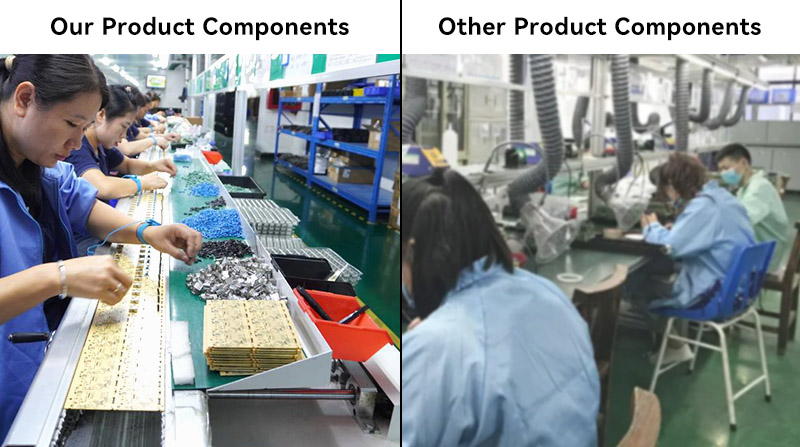
Quality control prevents high electrical noise, voltage fluctuations, electromagnetic interference, and structural housing failures from damaging host electronic devices. Active oversight during assembly is the primary method to reinforce power adapter quality control against invisible power spikes.
Poor electrical regulation can silently degrade sensitive processors inside your expensive primary devices. Robust validation steps ensure that your hardware receives a highly stable stream of current.
How Are Voltage Swings and Noise Stopped?
You need to ensure that the internal filter circuits are fully functional before shipping. Unfiltered electrical noise can easily disrupt close-range wireless signals and cause processor crashes.
Here is the deal:
- Electromagnetic interference is blocked using certified choke filters.
- Voltage ripple is verified using precision oscilloscope analysis.
- Short-circuit protection circuits are verified under full-load faults.
Key Takeaway: Filtering out voltage swings and structural weaknesses prevents catastrophic down-line failures in connected consumer hardware.
| Issue Prevented | Operational Consequence | Prevention Method | |
|---|---|---|---|
| Voltage Ripple | Erratic device behavior and processor crashes | Precision oscilloscope verification under load | |
| Shell Separation | Electric shock risk and exposed wiring | High-frequency ultrasonic weld validation | |
| EMI Failures | Radio interference and regulatory fines | Anechoic chamber testing for electromagnetic noise |
Eliminating these critical electrical anomalies safeguards the structural integrity of your primary electronics.
How Does Power Adapter Quality Control Protect Your Brand?

Quality verification builds trust by delivering highly reliable accessories that prevent safety incidents and user frustration in the field. Consistently executing your power adapter quality control steps creates an unshakeable reputation for safety and reliability.
Users associate high-quality power cables and accessories with professional engineering. Choosing validated power solutions is an investment in long-term customer satisfaction and market retention.
Do Safe Power Supplies Build Customer Trust?
You will discover that zero-defect shipments lead to positive product reviews and higher conversion rates. When hardware runs cool and safe, corporate clients are far more likely to reorder.
Think about it:
- Cool-to-the-touch enclosures reassure users of engineering quality.
- Long-lasting cords eliminate annoying, repeat replacement purchases.
- Certified safety stamps speed up enterprise corporate procurement.
Key Takeaway: Investing in certified, cool-running power accessories forms the core foundation of global product safety and consumer trust.
| Brand Asset | Without Quality Standards | With Certified Quality | |
|---|---|---|---|
| Brand Perception | Risky, unreliable, cheap | Premium, reliable, professional | |
| Market Reach | Restricted by local import laws | Globally scalable and accessible | |
| Legal Protection | Vulnerable to liability lawsuits | Shielded by validated test logs |
Standardizing these high-tier accessories ensures your global distribution networks remain unhampered by regulatory hurdles.
Frequently Asked Questions
Can I trust standard factory testing reports without a physical audit?
No, you cannot fully rely on written reports alone because they often omit critical testing edge-cases. Physically auditing the testing apparatus is the only way to confirm actual compliance metrics.
What’s the best way to handle defective batches during an audit?
You must immediately quarantine the entire shipment in a locked area and issue a formal CAPA request. This ensures the factory isolates the root cause before starting any replacement production.
How do I know if a supplier’s quality certification is authentic?
You should check the certificate registration number directly against the official issuing body’s database. This direct validation exposes expired credentials or mismatched factory locations.
Can I skip burn-in testing to reduce manufacturing lead times?
Absolutely not, because eliminating this phase dramatically increases the risk of early-life component failures in the field. Burn-in testing remains mandatory to filter out defective semiconductors on-site.
What’s the best sample size for testing high-volume adapter shipments?
You should implement the standard ANSI/ASQ Z1.4 tables to establish a statistically valid testing cohort. This mathematical model balances logistical efficiency with rigorous quality assurance thresholds.
Conclusion
Securing absolute reliability in hardware manufacturing requires a partner who treats engineering safety and quality verification as non-negotiable standards. Cheap, unvetted components present extreme financial and operational risks that can jeopardize your entire product launch. By implementing a standardized, multi-phase quality control strategy, your organization can completely bypass structural failures, regulatory seizures, and warranty bottlenecks. If you are ready to secure high-performance, fully certified, and strictly validated power hardware tailored to your device requirements, contact us today to build a safe foundation for your brand’s future.