Choosing between a wall mount and a desktop adapter depends entirely on your product’s power requirements, space constraints, and deployment environment. As a product designer or procurement manager, you face intense pressure to deliver sleek, reliable devices on incredibly tight deadlines. Cluttered workspaces, saggy power supplies that slip from vertical wall sockets, and delayed product launches due to unexpected thermal or compliance issues can quickly derail your project and inflate budgets. You cannot afford to let an afterthought like a power supply jeopardize your hardware launch or degrade the end-user experience. To resolve these pain points, selecting a high-performance wall mount power adapter provides a compact, integrated solution that eliminates external AC power cords and keeps working surfaces clean.
Is a wall mount power adapter best for compact spaces?
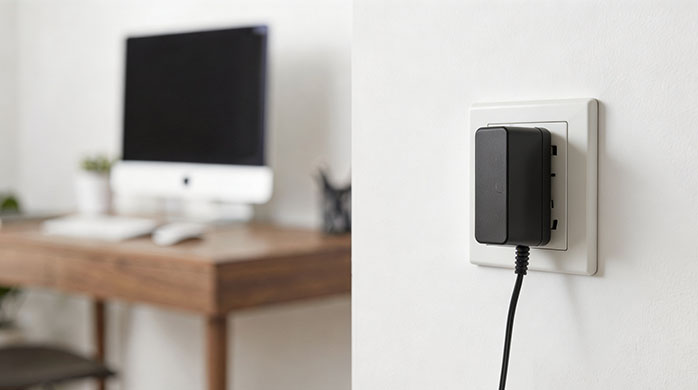
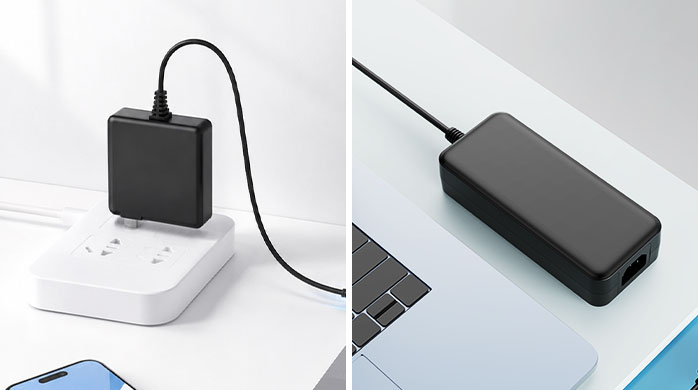
Yes, a wall mount power adapter is the ideal choice for compact spaces because it integrates the plug prongs directly into the main housing, saving valuable desk and floor area. This consolidated design plugs straight into a vertical wall receptacle or power strip, which means you do not have to accommodate a bulky, loose brick on your work surface. By removing the need for a separate AC input cable, you can significantly reduce spatial clutter in tight environments.
In modern workspaces, physical space comes at a premium, and managing bulky hardware setups can be a logistical headache. Eliminating extra cabling makes it much easier to position equipment in confined cabinets, retail kiosks, or micro-workstations. This spatial optimization directly translates to lower shipping weights and more streamlined end-user setups.
Why is direct wall mounting highly efficient?
When you choose to plug your power source directly into the wall, you immediately eliminate the physical clutter of trailing AC lines. Here is the deal: removing the extra line cord reduces the number of physical connections, which inherently minimizes potential electrical failure points in the field. This setup keeps the electrical conversion process safely elevated away from floor hazards and dust accumulation.
This configuration provides immediate benefits for compact consumer electronics and telecom setups.
- It cuts down the total package shipping weight for lower logistical costs.
- It simplifies the installation process for end-users.
- It provides a cleaner, more professional physical aesthetic.
How does it compare to desktop configurations?
Desktop configurations rely on separate AC input cords and DC output lines, which inevitably split the power supply path across several feet of surface space. Think about it: if your hardware sits on a compact desk, a desktop brick will steal valuable room that should belong to your primary device. Choosing a wall-plug design instead ensures that the active workspace remains completely clear of power-brick clutter.
You will find that this direct integration creates a highly optimized setup for low-to-medium power devices.
- Zero desktop space wasted by bulky external blocks.
- Neater routing paths with only a single DC cable.
- Minimized clutter behind desks or work benches.
Key Takeaway: Utilizing a direct wall-plug design maximizes usable work surfaces and simplifies product packaging by completely removing unnecessary external AC power cables.
| Parameter | Wall Mount Adapter | Desktop Adapter | |
|---|---|---|---|
| AC Input Method | Integrated wall plug | Detachable/Fixed AC power cord | |
| Footprint Level | Zero surface footprint | Moderate surface footprint | |
| Cable Clutter | Minimal (DC only) | High (AC input + DC output) | |
| Typical Wattage | 5W to 45W | 45W to 300W+ |
Analyzing this data reveals that optimizing space early in design saves downstream installation costs.
How does a wall mount power adapter manage thermal heat?
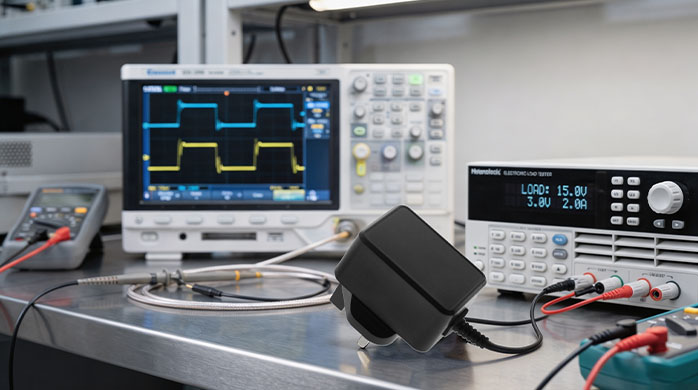
A wall mount power adapter manages thermal heat by relying on passive air convection, transferring heat through high-performance thermal plastics directly into the surrounding room. Because these sealed enclosures do not feature noisy internal cooling fans, proper housing design is critical to prevent internal heat build-up. By mounting the adapter vertically on a wall outlet, you encourage natural airflow to rise across its outer surfaces and dissipate thermal energy efficiently.
Unlike desktop bricks that often get trapped under desks or covered by carpets, a wall-plug unit operates in an elevated, open space. This natural positioning ensures consistent air circulation, keeping internal temperatures well within safe limits. Proper thermal dissipation is key to extending the lifetime of the internal capacitors and transformers.
Why is natural convection cooling so reliable?
Natural convection cooling operates entirely without moving mechanical components, which eliminates a major point of hardware failure. Think about it: cooling fans eventually collect dust, slow down, and fail, causing the power supply to overheat and shut down. By engineering high-conductivity thermal enclosures, you ensure continuous, silent, and highly reliable heat rejection throughout the life of your product.
You can achieve reliable, uninterrupted performance in any quiet residential or commercial setting.
- Complete lack of operational noise or fan-induced vibration.
- Highly resistant to dust and fiber build-up on critical components.
- Extended Mean Time Between Failures (MTBF) due to fewer moving parts.
What materials optimize thermal dissipation?
Manufacturers use flame-retardant polycarbonates with superior thermal conductivity to house the internal electronics safely. Here is the deal: these advanced plastics are formulated to draw heat rapidly away from internal hot spots while maintaining excellent electrical insulation. This guarantees that the exterior remains safe to touch even when the adapter operates under a full electrical load.
You can rely on these thermal safety measures to keep your critical devices running without overheating.
- Specialized heat-dissipating housing designs that maximize surface contact.
- High dielectric strength to survive high-voltage surges.
- Built-in thermal shutoff protection circuits to prevent damage.
Key Takeaway: Passive convection cooling in wall-plug units eliminates mechanical fan failures and ensures quiet, reliable thermal management in active working conditions.
| Thermal Aspect | Convection Wall Mount | Fan-Cooled Desktop | |
|---|---|---|---|
| Cooling Method | Passive air convection | Active fan air movement | |
| Moving Parts | None (solid-state) | Rotating mechanical fan | |
| Acoustic Noise | 0 dBA (completely silent) | 15 dBA to 35 dBA (audible) | |
| Dust Vulnerability | Very low | High (dust drawn inside) |
Analyzing this data reveals that selecting passive convection designs minimizes the risk of mechanical cooling failures in dust-heavy environments.
Can a wall mount power adapter support high-wattage devices?
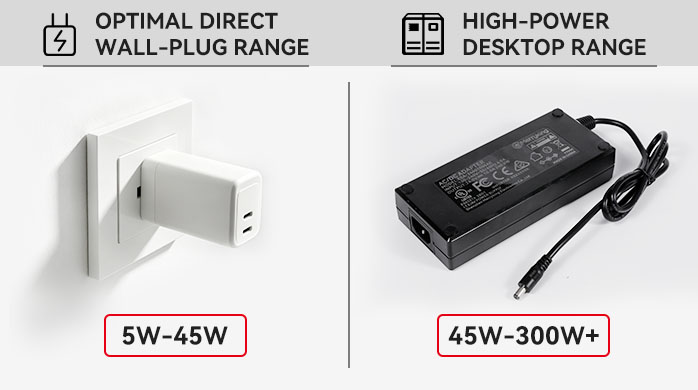
No, a wall mount power adapter cannot support high-wattage devices because mechanical weight limits and thermal boundaries restrict these compact units to low-to-medium power applications. For heavy-duty electronics requiring massive energy outputs, you must rely on a dedicated desktop power adapter to ensure electrical safety and stable performance. Wall-plug models are optimized to operate efficiently between 5W and 45W, beyond which weight and heat become difficult to manage without a larger surface-resting enclosure.
When a power supply exceeds 60 watts, the internal magnetic components and capacitors must grow in size. This increase in physical volume makes the adapter too heavy to hang safely from a standard wall outlet. Understanding these physical limits helps you select the correct power form factor during the early stages of product design.
Why do physical boundaries limit wall adapter wattage?
To prevent the unit from falling out of the wall, engineers must strictly limit the physical weight of the electrical components. Think about it: if you pack heavy high-wattage components into a wall-plug shell, gravity will pull the unit downward and loose from the receptacle. This sagging can leave the metal prongs partially exposed, creating a severe shock and fire hazard for end-users.
You must design with these rigid weight bounds in mind when choosing your power source.
- Maximum weight typically restricted to under 250 grams for outlet stability.
- Compact enclosure sizing to prevent blocking adjacent wall outlets.
- Internal safety features designed to shut down during overload conditions.
How does this affect your device design?
If your device requires high-performance processing, built-in heating elements, or high-speed motors, its power demands will naturally exceed the limits of wall-mount units. The best part? Selecting a high-quality desktop power adapter allows you to safely deliver higher wattages without risking physical sag at the outlet. You must align your device’s energy profile with the right adapter style to avoid critical field failures.
Ensuring a proper power match during prototyping prevents costly re-engineering steps prior to production.
- Delivers continuous stable power for heavy-duty system components.
- Keeps the heavy magnetic elements resting safely on flat surfaces.
- Protects delicate electronics from sudden voltage sags and drops.
Key Takeaway: Respecting the physical wattage limits of wall-mount designs protects users from outlet hazards and ensures stable, uninterrupted power delivery.
| Wattage Range | Wall Mount Suitability | Desktop Suitability | |
|---|---|---|---|
| 5W to 24W | Excellent (highly compact) | Poor (unnecessarily bulky) | |
| 25W to 45W | Good (requires slim design) | Fair (often oversized) | |
| 46W to 90W | Limited (specific plug styles only) | Good (standard configurations) | |
| 91W to 300W+ | Not feasible (mechanical hazard) | Excellent (handles high power loads) |
Analyzing this data reveals that matching adapter style to load wattage early avoids mechanical instability at the wall outlet.
Are wall mount power adapter options easier to certify?
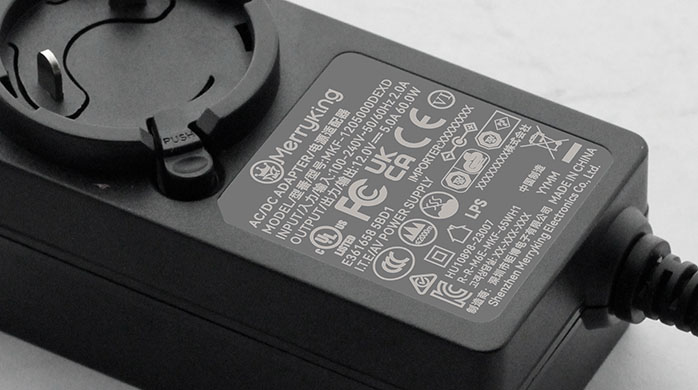
Yes, wall mount power adapter options are often easier to certify for global markets because their integrated, single-component design simplifies the testing path for electromagnetic compliance and electrical safety. By combining the AC plug and conversion circuitry in one housing, you eliminate the need to test separate AC power cords. This consolidated layout streamlines the evaluation process for safety bodies like UL, CE, and GS, helping you clear regulatory hurdles faster.
Choosing a pre-certified power supply allows you to bypass expensive, time-consuming laboratory testing for the power block itself. This strategy drastically reduces compliance costs and minimizes the risk of delayed product launches. It represents a major competitive advantage for B2B procurement teams.
Why does a single enclosure simplify testing?
Testing laboratories evaluate how electromagnetic interference radiates from all connected cables and enclosures. Think about it: an external AC line cord acts like a small antenna, transmitting electrical noise that can interfere with other devices. By eliminating the AC cord, you remove this antenna completely, making it far easier to pass stringent emissions standards.
You will quickly see how this reduction in system complexity accelerates your approval timeline.
- Fewer components in the power path to analyze for safety compliance.
- Reduced electromagnetic radiation risk due to direct wall connection.
- Streamlined documentation and faster processing times at test labs.
What certifications speed up international sales?
Obtaining standard certifications like CE, FCC, UL, and PSE is mandatory if you plan to distribute your products across international borders. Here is the deal: if your power adapter lacks these global marks, customs officials can block your shipments and expose your company to massive fines. Purchasing pre-certified wall units ensures your supply chain remains fully compliant from day one.
You can easily protect your business from liability by choosing pre-certified solutions.
- Immediate access to major global markets without custom testing.
- Clear marking showing compliance with international environmental laws.
- Confirms safety designs to reassure commercial distributors and consumers.
Key Takeaway: Pre-certified wall-plug power solutions lower testing expenses and compress product development schedules by streamlining the regulatory approval process.
| Certification Mark | Target Market | Key Evaluation Criteria | |
|---|---|---|---|
| UL / cUL | North America | Electrical safety and fire prevention | |
| CE / GS | European Union | Electromagnetic compatibility and health | |
| PSE / KC | Japan / South Korea | National grid safety and isolation testing | |
| CCC | China | Factory quality control and safety compliance |
Analyzing this data reveals that utilizing pre-certified power adapters significantly reduces the timeline for global market entry.
Why choose a wall mount power adapter for retail packaging?
You should choose a wall mount power adapter for retail packaging because its ultra-compact, cord-free form factor significantly reduces packaging volume and shipping weights. This reduction in package size allows you to fit more product units onto every shipping pallet and retail shelf. By eliminating the bulk of a separate AC power cord, you can design cleaner, more attractive retail boxes that appeal to modern buyers.
Lowering package weight and volume has a massive positive impact on your logistical bottom line. It directly reduces sea, air, and ground freight costs while optimizing warehouse storage efficiency. For high-volume consumer goods, these savings can represent a substantial increase in your product’s profit margin.
Reducing physical volume and shipping weights
Traditional desktop power adapters require dedicated compartments in your packaging to house the heavy power block and its two long cables. Think about it: this extra cardboard and plastic insert volume drives up your manufacturing costs and increases shipping waste. A compact wall-plug unit slips neatly into a small corner of your box, allowing for a much tighter packaging layout.
You can immediately leverage this spatial efficiency to decrease your supply chain overhead.
- Less plastic and cardboard packaging waste in the retail box.
- More units fit per shipping carton to reduce bulk shipping rates.
- Lower dimensional weight charges when shipping via air freight.
How does a clean presentation drive consumer trust?
Modern consumers expect a premium unboxing experience characterized by clean layouts and minimal clutter. The bottom line is simple: pulling a single, neat adapter out of the box feels modern and intuitive, whereas untangling a web of heavy power cords feels frustrating. A wall-mount design elevates the perceived quality of your product, fostering brand loyalty right from the very first interaction.
You can communicate high engineering standards to your customers through this attention to detail.
- Promotes a highly modern, minimalist, and luxury unboxing appeal.
- Eliminates complex cable ties and unnecessary plastic protective bags.
- Shows your brand’s commitment to clean, functional hardware design.
Key Takeaway: Optimizing your retail packaging with compact wall-plug power adapters cuts down logistical expenses and provides a premium unboxing experience.
| Packaging Metric | Wall Mount Packaging | Desktop Brick Packaging | |
|---|---|---|---|
| Required Box Volume | Minimal (saves up to 40% space) | High (requires multi-compartment design) | |
| Packaging Materials | Highly reduced (simpler inserts) | High (demands extra cable ties and bags) | |
| Logistical Density | High (more units per pallet) | Low (bulky cords limit shipping density) | |
| Unboxing Appeal | Clean, modern, plug-and-play | Cluttered, cable-heavy, complex |
Analyzing this data reveals that switching to wall-mount power configurations directly lowers shipping costs per unit by maximizing box density.
Does a wall mount power adapter offer global versatility?
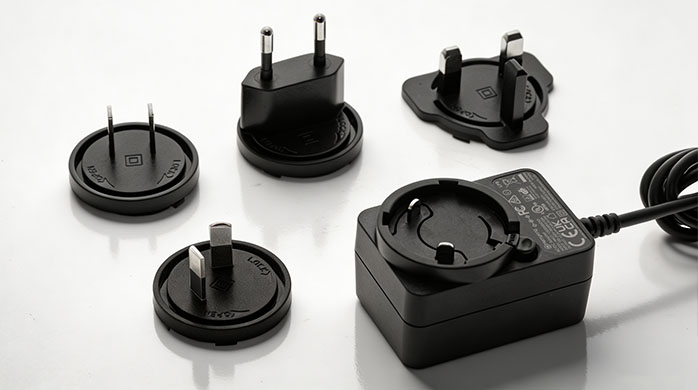
Yes, a wall mount power adapter offers remarkable global versatility when designed with interchangeable AC prongs that allow it to fit into various regional wall sockets. This interchangeable plug system enables a single power supply to serve international markets, including North America, Europe, the United Kingdom, and Australia. By stocking one central adapter body and swapping out the modular pins, you can greatly simplify your global inventory management.
These versatile adapters feature universal voltage input circuitry that supports electrical grids worldwide. This universal capability ensures the device operates safely from 100V up to 240V AC without needing manual voltage selectors. This built-in adaptability makes international deployment simple and worry-free.
Utilizing interchangeable AC plug systems
Interchangeable prongs allow you to customize your product’s power interface for different geographic locations instantly. Think about it: instead of manufacturing and stocking four separate power adapter models, you only need to produce one base unit and package it with the appropriate local plug tips. This strategy reduces your manufacturing complexity and prevents warehouse stock imbalances.
You can simplify global logistics by adopting this modular plug architecture.
- Easily swap plugs to meet US, EU, UK, and AU standards.
- Reduces global SKU count to streamline your supply chain.
- Simplifies localized product shipments to different continents.
Why is wide voltage support essential?
Global power grids exhibit significant differences in voltage and frequency levels, ranging from 110V in North America to 230V in Europe. Here is the deal: if your adapter is built only for a single country’s voltage, it will fail or burn out when plugged in abroad. A true universal wall-mount model automatically adjusts to these varying grid inputs to ensure continuous, safe performance.
You will have peace of mind knowing your devices are protected from local power spikes.
- Full support for wide inputs ranging from 90V up to 264V AC.
- Constant DC voltage output regardless of regional grid fluctuations.
- Protects sensitive microprocessors from sudden power brownouts.
Key Takeaway: Implementing interchangeable plug designs with universal input voltage limits SKU complexity and allows your products to launch globally without re-engineering.
| Region / Country | Voltage Range | Required Plug Pattern | |
|---|---|---|---|
| North America | 120V AC @ 60Hz | Type A / Type B (Flat Parallel) | |
| European Union | 230V AC @ 50Hz | Type C / Type E / Type F (Round Pin) | |
| United Kingdom | 230V AC @ 50Hz | Type G (Three Rectangular Blades) | |
| Australia | 240V AC @ 50Hz | Type I (Angled Flat Pins) |
Analyzing this data reveals that choosing a universal input adapter body with swappable plugs optimizes global inventory and simplifies logistics.
How secure is a wall mount power adapter in vertical sockets?
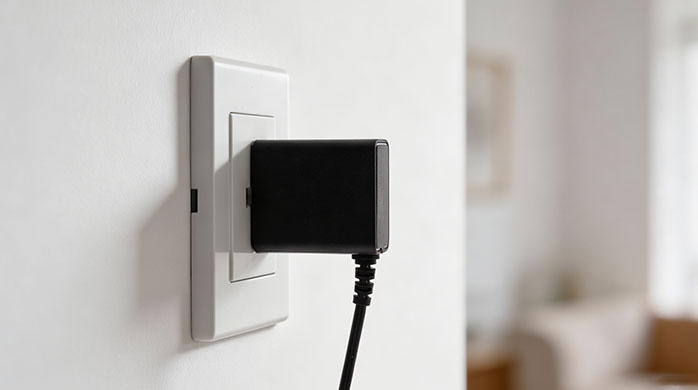
A wall mount power adapter is exceptionally secure in vertical sockets when its physical dimensions, weight distribution, and prong retention force are precision-engineered to prevent sagging. By positioning the heaviest internal components closest to the plug blades, designers can dramatically reduce the rotational leverage that would otherwise pull the unit loose. High-quality plug prongs are built with exact tolerances to ensure strong mechanical friction within the wall receptacle.
When an adapter sits securely, it maintains constant electrical contact, preventing intermittent power dropouts and sparks. This mechanical stability is crucial for commercial, industrial, and smart home systems that must run continuously without human intervention. Selecting a well-balanced unit protects both the wall outlet and the connected equipment.
Optimizing component weight distribution
The physical placement of the transformer and capacitors inside the plastic housing dictates how gravity acts upon the plug. Think about it: if the heavy components sit far away from the wall, they act as a lever, pulling the adapter down and out of the socket. Smart engineering places these heavy parts flush against the wall face, minimizing this leverage and ensuring the unit stays put.
You can depend on this balanced architecture to prevent accidental physical disconnections.
- Concentrated weight near the outlet plate reduces rotational leverage.
- Keeps the prongs fully inserted to avoid dangerous exposed conductors.
- Maintains a clean, flush appearance against vertical wall surfaces.
How does prong retention force prevent sagging?
The mechanical grip of the wall outlet’s internal spring contacts provides the friction needed to hold the adapter in place. Here is the deal: if your power adapter features cheap, undersized prongs, the outlet will not be able to grip them firmly, causing the unit to fall. Premium manufacturers use high-strength brass alloys that maintain their precise shape and provide high retention force over thousands of plug cycles.
You will avoid loose connections that can lead to electrical arcing and system reboots.
- High-grade brass alloys maximize electrical conductivity and physical grip.
- Resists surface oxidization and long-term mechanical deformation.
- Tested to withstand heavy continuous vibration on industrial work floors.
Key Takeaway: Precision weight balancing and robust prong design ensure wall adapters remain firmly seated, preventing accidental disconnections and safety hazards.
| Mechanical Factor | Engineered Wall Mount | Low-Cost Wall Mount | |
|---|---|---|---|
| Center of Gravity | Placed close to the wall surface | Extended outward (creates leverage) | |
| Prong Material | Premium thick brass (with nickel plating) | Thin brass or soft copper alloys | |
| Socket Retention | High friction (prevents sagging) | Loose fit (prone to falling out) | |
| Vibration Resistance | Strong (holds tight in vertical sockets) | Poor (easily disconnected by minor vibrations) |
Analyzing this data reveals that positioning internal component weight close to the mounting face prevents plug sagging and connector wear.
Is a wall mount power adapter more cost-effective for B2B?
Yes, a wall mount power adapter is highly cost-effective for B2B procurement because it eliminates the need to source, stock, and package external AC power cords. By working with an experienced OEM power supply manufacturer , business buyers can simplify their supply chain and reduce total bill of materials (BOM) costs. This direct integration of the AC plug onto the adapter body also lowers assembly times and product packaging volume.
In high-volume B2B rollouts, shaving pennies off each unit’s cost yields massive savings over the life of a project. Minimizing component counts also translates to fewer quality control checks and lower overall warranty risks. This financial efficiency makes wall-mount designs the default choice for budget-conscious procurement teams.
Simplifying the bill of materials (BOM)
Managing multiple suppliers for power blocks, AC cables, and localized adapters increases administrative overhead and shipping complexities. Think about it: every extra line item on your BOM represents a potential supply chain bottleneck or quality issue. Consolidating these pieces into a single, integrated wall adapter simplifies purchase orders and ensures components arrive together.
You can work with a trusted OEM power supply manufacturer to simplify your production scheduling.
- Eliminates separate purchasing cycles for AC mains power cables.
- Reduces inventory storage footprint and tracking complexities in warehouses.
- Lowers quality inspection times with only one power module to review.
How does this affect shipping and warehousing?
Warehousing and distribution costs are heavily influenced by the physical size and weight of your packaged products. Here is the deal: a lighter, smaller package allows you to stack more pallets per truck and fit more units into overseas shipping containers. These combined shipping efficiencies can lower your per-unit logistical costs by up to twenty percent.
You will boost your bottom line and maintain highly competitive pricing in your target market.
- Reduces total weight charges for ocean and ground logistics.
- Simplifies picking and packing workflows in distribution centers.
- Minimizes storage overhead in high-rent third-party logistics warehouses.
Key Takeaway: Integrated wall-plug designs simplify B2B supply chains, minimize assembly times, and lower shipping costs by removing extra power cable lines.
| Cost Factor | Wall Mount Procurement | Desktop Brick Procurement | |
|---|---|---|---|
| AC Cable Cost | $0.00 (integrated plug) | 0.80to2.50 (detachable cord) | |
| BOM Line Items | 1 item (power supply only) | 2+ items (brick + power cable) | |
| Assembly Overhead | Zero (plug-and-play) | Moderate (manual cable attachment) | |
| Logistical Cost | Low (compact packaging volume) | High (bulky cords add shipping weight) |
Analyzing this data reveals that eliminating external AC cables significantly lowers component costs and total logistical expenses.
How do you customize a wall mount power adapter output?
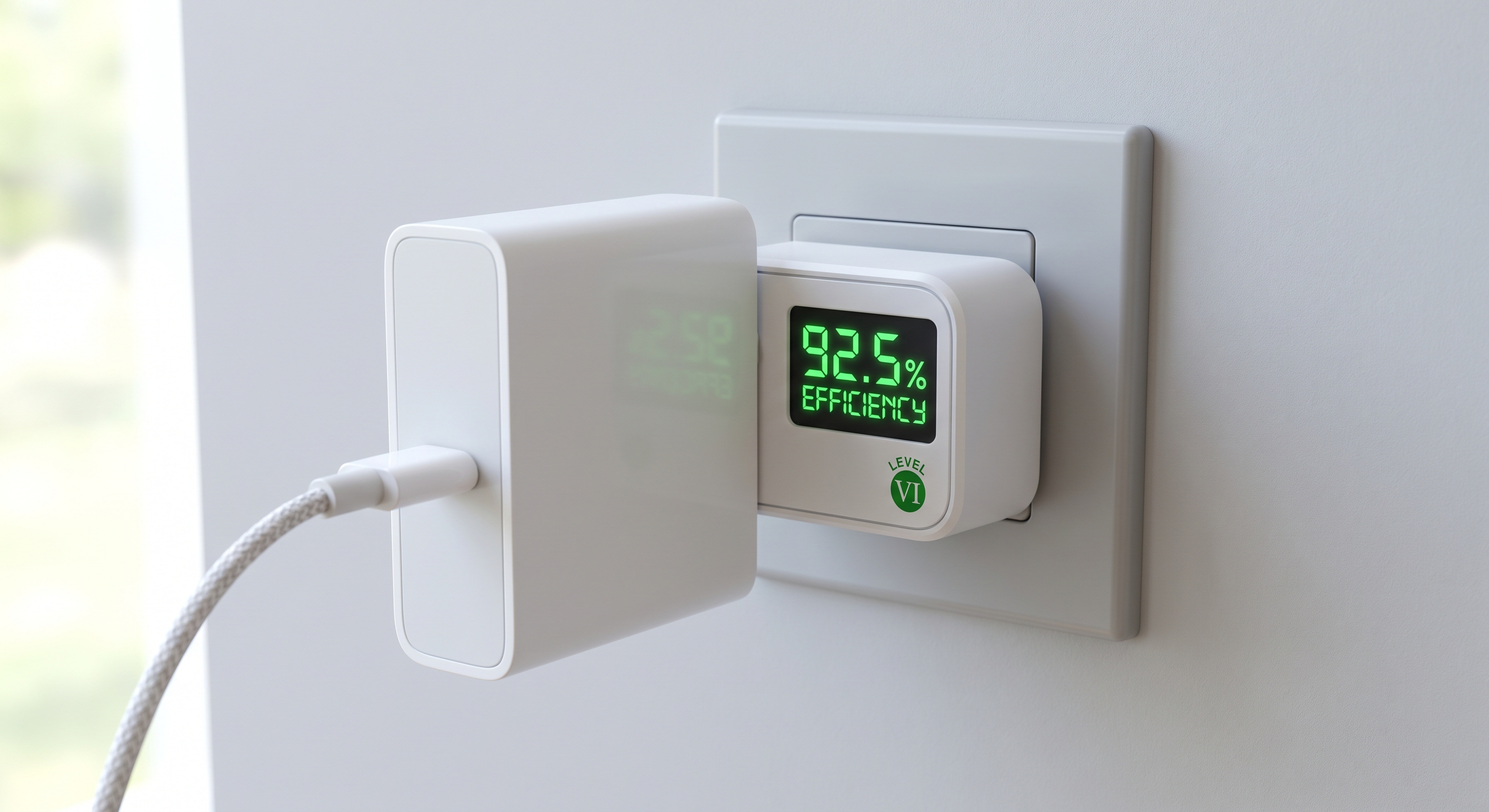
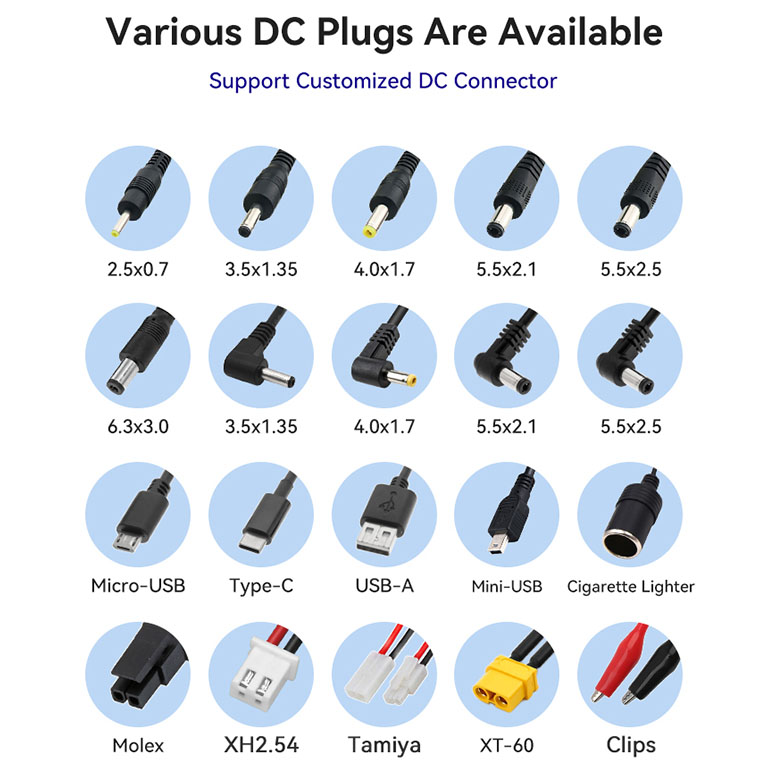
You can customize a wall mount power adapter output by working with our engineering team to tune the internal transformer windings and control circuitry to deliver your exact required DC voltage and current. This precision customization ensures that your device receives stable, clean power tailored specifically to its sensitive internal microprocessors. From custom DC barrel connector sizes to specialized cable lengths, we adapt every aspect of the output line to match your hardware’s mechanical housing.
Custom labeling and corporate branding can also be applied to the outer plastic casing to create a cohesive brand look. This professional presentation reinforces your brand’s quality standards in the eyes of the consumer. This design flexibility helps you maintain a strong competitive edge in highly crowded tech markets.
Designing custom voltage and current profiles
Off-the-shelf power supplies often fail to meet the tight voltage tolerances or unique current spikes of specialized hardware. Think about it: using a standard 12V supply on a device that operates best at 11.5V can cause overheating, system instability, or permanent damage. Custom engineering allows you to define the precise voltage curves and overcurrent thresholds your product requires to operate perfectly.
You can optimize your hardware’s lifespan and operational efficiency through this direct tuning.
- Custom DC voltages built to exact device specifications.
- Selectable cable lengths to fit your specific product installation environment.
- Custom output protection circuits to handle unique power spikes.
What mechanical connector options are available?
Matching the physical input jack of your device is essential to ensure a reliable electrical connection and prevent water ingress. Here is the deal: we offer a vast range of output options, including standard barrel plugs, USB Type-C, Micro-USB, and specialized multi-pin lockable connectors. Selecting a lockable connector ensures the power cable cannot be accidentally pulled loose during critical operations.
You will gain immense mechanical reliability in clinical, field, and industrial settings.
- Rugged molded strain relief designs prevent wire fatigue at connector joints.
- Wide choice of plug diameters, pin lengths, and internal polarities.
- Water-resistant overmolding options for harsh external deployment zones.
Key Takeaway: Customizing electrical output profiles and mechanical connectors ensures your devices receive highly stable, reliable power that maximizes performance.
| Customization Option | Engineering Impact | Key Advantage | |
|---|---|---|---|
| Voltage Tuning | Adjusts internal transformer windings | Matches unique microprocessor tolerances | |
| Connector Type | Selects barrel, USB-C, or locking plugs | Prevents accidental disconnections in use | |
| Cable Customization | Changes cable gauge (AWG) and length | Minimizes line loss and voltage drops | |
| Brand Labeling | Laser-engraves company logo and ratings | Creates a premium, unified product brand |
Analyzing this data reveals that custom-tuned voltage and mechanical connectors improve overall system stability and elevate product branding.
Which wall mount power adapter safety standards matter most?
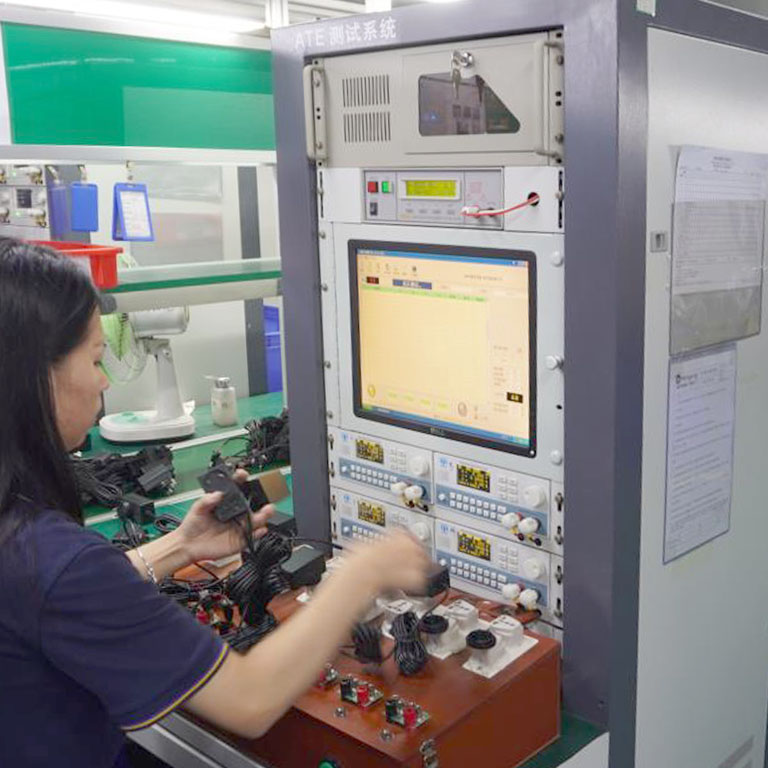
The wall mount power adapter safety standards that matter most depend on your product’s target industry, with IEC 62368-1 regulating standard consumer audio/video equipment and IEC 60601-1 governing sensitive medical electronics. These strict global standards establish the safety baselines for high-voltage insulation, low electrical leakage currents, and robust fire protection. By choosing certified power supply solutions , you guarantee that your products comply with international law and protect users from electrical hazards.
Ensuring compliance with these standards is critical to shielding your business from severe liability risks and costly product recalls. It also builds immediate credibility with distributors, commercial buyers, and global retail chains. Selecting certified components is the foundation of building a reliable, highly trusted electronic brand.
Understanding the shift to IEC 62368-1
The newer IEC 62368-1 standard replaced legacy standards by introducing a modern, hazard-based approach to electronics safety engineering. Think about it: this framework analyzes potential energy hazards and verifies that the adapter contains robust safeguards to protect users. This comprehensive approach ensures the power block remains fully safe under normal, abnormal, and single-fault conditions.
You will satisfy major regulatory agencies globally by choosing compliant, modern components.
- Mandates rigorous electrical insulation barriers to prevent shock.
- Requires fire-resistant materials to limit combustion hazards.
- Enforces strict temperature limits on outer touch surfaces.
Why medical IEC 60601-1 certifications are vital
Medical electrical equipment requires far stricter safety measures because patients may be physically connected to the device or highly vulnerable. Here is the deal: medical-grade power supplies must implement two Means of Patient Protection (2xMOPP) to guarantee complete electrical isolation. This level of safety keeps leakage currents below trace levels, ensuring complete safety even during unexpected internal component failures.
You can select our certified power supply solutions to accelerate your medical clinical validation.
- Patient-connected safety with verified 4,000 VAC isolation voltage.
- Ultra-low electrical leakage levels (typically under 100 microamps).
- Approved for global clinical and home-healthcare applications.
Key Takeaway: Sourcing power supplies certified to IEC 62368-1 and IEC 60601-1 standards minimizes regulatory risks and guarantees absolute user safety in all environments.
| Safety Standard | Primary Product Focus | Core Safety Requirements | |
|---|---|---|---|
| IEC 62368-1 | Audio, Video, and IT Equipment | Hazard-based safety, fire prevention, touch temps | |
| IEC 60601-1 | Medical Devices and Clinical Gear | Patient isolation (2xMOPP), ultra-low leakage | |
| IEC 61558 | Household and Industrial Transformers | Robust safety isolation, basic grid protection | |
| IEC 60335-1 | Home Appliances and Smart Home Tech | High moisture resistance, strict leakage limits |
Analyzing this data reveals that aligning your power supply early with industry-specific safety standards accelerates regulatory clearance.
FAQs
Can I use a wall mount power adapter for high-power devices like gaming laptops?
No, you cannot safely use a wall mount adapter for high-power devices like gaming laptops. Gaming laptops typically require between 120 and 330 watts of continuous power to run high-performance processors and graphics cards. Because of their compact size and reliance on passive convection cooling, wall-plug adapters are limited to a maximum output of 45 to 65 watts. For high-power applications, you must use a larger desktop power brick that has the physical space to house larger heat sinks or active cooling fans.
What’s the best way to choose between wall mount and desktop adapters for medical devices?
The best way to choose is to evaluate the device’s electrical isolation requirements and where it will be physically used in the clinic. If the medical device will be used close to patients (such as bedside monitors or handheld diagnostic tools), a wall mount adapter is often the best choice because it keeps high-voltage AC cables off the floor and away from patient contact. However, if the medical equipment requires more than 60 watts of power or needs a long cable reach to connect to distant outlets, a medical-grade desktop power supply is the more appropriate solution. Regardless of form factor, you must ensure the power supply is fully certified to IEC 60601-1 standards with dual Means of Patient Protection (2xMOPP).
How do I know if a wall mount power adapter will block other outlets on my power strip?
You can determine this by checking the adapter’s physical width and plug orientation on its technical datasheet. Many standard wall adapters are designed with vertical, slim bodies that fit within the boundaries of a single outlet, leaving adjacent receptacles completely clear. However, some wider models or those with horizontal plug layouts can block adjacent outlets on standard vertical power strips. To avoid this issue, look for modern, slim-line wall adapters specifically designed to be “outlet-friendly,” or select adapters with interchangeable global AC plugs that orient the main body vertically.
Can I replace a desktop adapter with a wall mount power adapter of the exact same output voltage?
Yes, you can make this replacement, provided the wall mount adapter matches the exact output voltage, polarity, and meets or exceeds the original current (amperage) requirements. For example, if your desktop adapter outputs 12V DC at 2A (24W), you can safely replace it with a 12V DC, 2A or 3A wall-mount unit. However, you must verify that the barrel connector plug matches the size and polarity (usually center-positive) of your device’s input jack. Never use an adapter with a lower current rating than the original, as this will cause the power supply to overheat and fail.
How do I know if a wall mount power adapter is certified safe for international travel?
You can confirm this by checking the input voltage range and the safety certification marks printed on the adapter’s specification label. A travel-ready adapter must support a universal input voltage range of 100V to 240V AC at 50/60Hz, which allows it to operate on electrical grids worldwide. Additionally, check the label for international safety certification marks such as UL (North America), CE (Europe), CCC (China), PSE (Japan), and KC (South Korea). If the adapter features universal voltage support and holds these safety marks, you can safely use it internationally with a simple physical plug adapter.
Conclusion & Action Guidelines
Choosing the right power adapter configuration is a critical decision that impacts your product’s safety, aesthetics, and overall performance.
- Select a wall mount adapter if your system operates below 60 watts, requires a minimalist setup with zero desk footprint, and benefits from a streamlined bill of materials with fewer loose cables.
- Opt for a desktop adapter if your equipment demands high output wattages, requires a long cable reach to connect to distant power sources, or needs to sit securely on flat surfaces.
To ensure your next product design meets all global safety, efficiency, and performance standards, partner with an established, quality-focused manufacturer. Contact us today to discuss your technical specifications, request evaluation samples, or design a customized power supply tailored to your OEM requirements. Our experienced team is ready to guide you from early-stage prototyping to full global compliance and high-volume production.