To get INMETRO certification for power adapters in Brazil, you must partner with an accredited Organismo de Certificação de Produto (OCP) to conduct rigorous product safety testing, submit detailed technical documentation, and undergo a comprehensive manufacturing factory audit. Imagine spending months designing a high-performance power adapter, only to have your entire shipment seized at Brazilian customs because of a missing safety seal. This regulatory bottleneck can completely drain your budget, stall your product launch, and leave you falling behind agile competitors in Latin America’s largest economy. Navigating the mandatory Brazil power adapter certification process doesn’t have to be a barrier if you understand the exact regulatory steps and requirements.
What Is Brazil Power Adapter Certification for INMETRO?
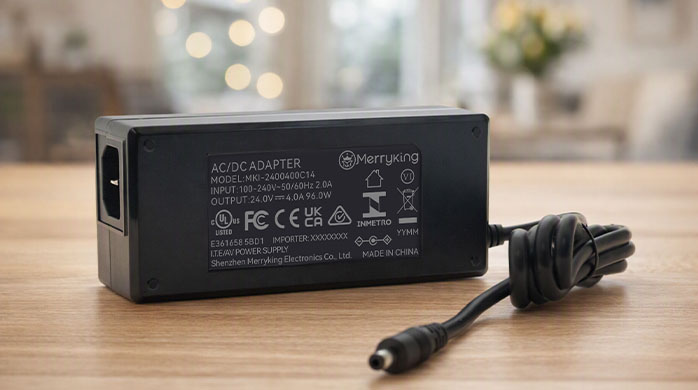
INMETRO certification for power adapters is a mandatory safety compliance system regulated by the National Institute of Metrology, Quality and Technology in Brazil to ensure all imported or domestic electrical products meet strict local safety standards. If you want to sell electronic products in the Brazilian market, obtaining this Brazil power adapter certification is a legal requirement that cannot be bypassed. The process verifies that your power supply units can handle local voltage fluctuations without posing fire or shock hazards to users.
The certification is managed through third-party accredited certification bodies known as OCPs. These bodies oversee the entire evaluation process, from initial laboratory testing to the final issuance of the compliance certificate. By securing this safety mark, you demonstrate that your hardware aligns perfectly with Brazilian consumer protection laws.
What Does the INMETRO Logo Represent on Your Product?
When you see the INMETRO logo on a power adapter, it represents a guarantee of safety and rigorous testing that builds immediate trust with local buyers. Without this recognizable seal, retailers in Brazil will refuse to stock your products, and customs authorities will block your shipments at the port of entry.
Think about it: the Brazilian market values certified safety above all else.
- It guarantees compliance with local standard NBR 14136 plug requirements.
- It provides a unique identification number linked to the official OCP registry.
- It showcases your brand’s commitment to international safety standards.
Here is the truth: skipping this visual seal will completely halt your expansion plans.
Key Takeaway: Understanding the INMETRO mark’s legal weight ensures you design compliant packaging and labels from day one, avoiding costly re-labeling delays.
| Feature | INMETRO Mark Significance | |
|---|---|---|
| Legal Status | Mandatory for AC/DC power adapters | |
| Authority | Under national metrology institute oversight | |
| Consumer Impact | Guarantees electrical and thermal safety | |
| Compliance Visual | Showcases OCP logo and registration number |
Designing your product labels to incorporate these certified details guarantees quick customs clearance and fosters trust with Brazilian distributors.
Why Is Brazil Power Adapter Certification Required?
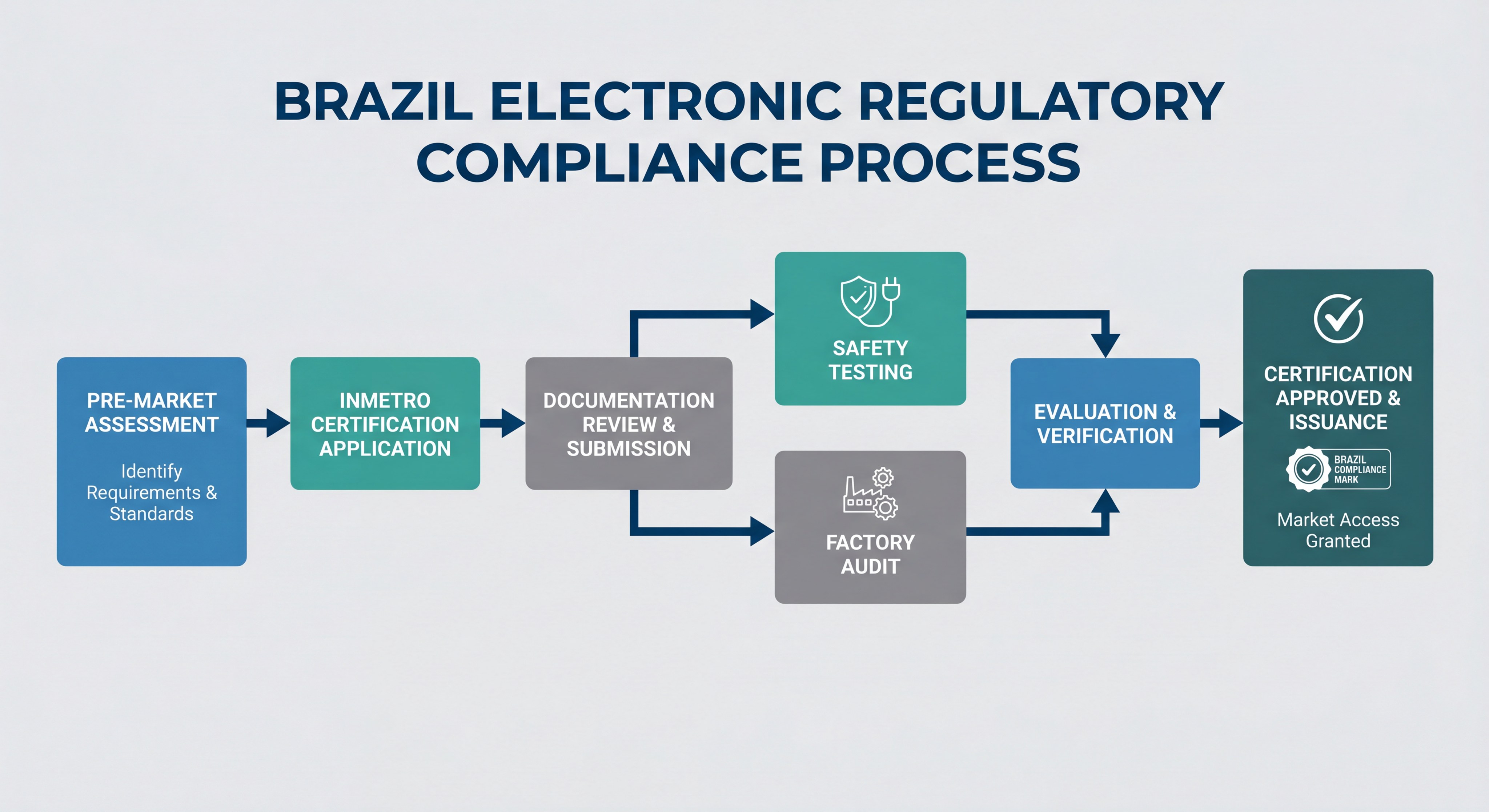
Brazil power adapter certification is required because the Brazilian government enforces strict consumer safety laws to prevent hazardous, low-quality electrical goods from entering the national grid. Electrical safety is a paramount concern for local regulators, especially given the diverse wiring standards across different Brazilian states. Obtaining a Brazil power adapter certification is the only legal way to safeguard consumers from potential shocks, fires, and equipment failures.
If you try to bypass this requirement, you risk severe financial penalties and the permanent confiscation of your inventory. Distributors simply will not touch uncertified power supplies because of the high liability risks involved. Therefore, compliance is not just a regulatory hurdle but a critical business protector.
What Are the Risks of Skipping Regulatory Compliance?
If you choose to ignore these regulatory requirements, you will face catastrophic blockages in your supply chain and potential legal prosecution in Brazil. Local customs offices utilize highly sophisticated tracking systems to flag uncertified electronic shipments immediately upon arrival.
Let’s face it: the consequences of non-compliance are devastating to your brand equity and bottom line.
- Immediate seizure and potential destruction of your imported adapters at customs.
- Severe financial fines levied against both the manufacturer and the local importer.
- Irreparable damage to your business relationship with Brazilian retail partners.
But wait, there is more: you could be blacklisted from importing any electronics into the country for years.
Key Takeaway: Prioritizing safety certification from the start protects your capital investment and maintains your brand’s global credibility.
| Risk Category | Consequence of Non-Compliance | Risk Level | |
|---|---|---|---|
| Financial | Heavy fines and lost cargo value | High | |
| Logistical | Customs seizures and shipping delays | Extreme | |
| Reputational | Blacklisting and loss of distributor trust | High |
These high-impact risks prove that budgeting for certification early in your product lifecycle is a necessary cost of doing business safely.
Which Adapters Need Brazil Power Adapter Certification?
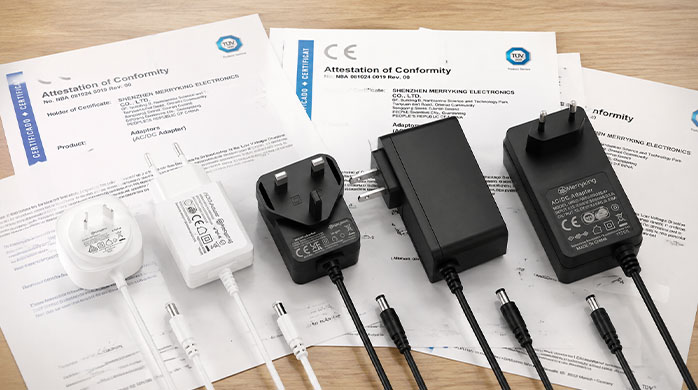
Power adapters that connect directly to the mains power supply, including wall-mount chargers, desktop power adapters, and USB-C power supplies, require mandatory INMETRO certification before they can be legally imported or sold in Brazil. Obtaining this Brazil power adapter certification is vital for any external power supply operating between 50V and 1000V AC. Regulators categorize these devices as high-risk electrical components due to their direct interface with domestic electrical grids.
This mandate covers consumer electronics chargers, IT equipment power supplies, and medical-grade adapters. If your device powers external hardware and plugs into a Brazilian wall socket, it falls directly under this mandatory scope.
What Specific Categories Fall Under Mandatory Scope?
You need to understand which exact product types require testing so you do not waste time preparing applications for exempt devices. Most external power adapters designed for laptops, smartphones, routers, and household appliances must undergo full compliance evaluations.
Here is the truth: almost every plug-in power solution is heavily regulated.
- Wall-mount AC/DC adapters with fixed or interchangeable plugs.
- Desktop style power supplies with separate IEC power cords.
- USB-C power delivery (PD) chargers used for mobile and computing devices.
Think about it: even small power adapters bundled inside other product packages must hold their own active certifications.
Key Takeaway: Identifying your specific adapter category early allows you to select the correct testing standards and save thousands in testing fees.
| Adapter Type | Primary Application | Certification Mandate | |
|---|---|---|---|
| Wall-mount | Mobile phones, smart home devices | Mandatory | |
| Desktop | Laptops, monitors, industrial tools | Mandatory | |
| USB-C PD | Fast-charging electronics, modern laptops | Mandatory |
Confirming your product classification with an experienced partner ensures you avoid applying incorrect, costly testing parameters.
What Are Brazil Power Adapter Certification Requirements?

The key requirements for obtaining Brazil power adapter certification include comprehensive electrical safety testing in accredited laboratories, a rigorous factory audit of your manufacturing facilities, and the appointment of a local Brazilian legal representative. Navigating these requirements demands a clear understanding of the IEC 62368-1 standards, which form the technical foundation of the process. Securing your Brazil power adapter certification requires satisfying both technical product safety standards and administrative compliance rules.
You must also ensure your factory maintains an active Quality Management System (QMS) equivalent to ISO 9001. Local regulators require continuous monitoring to ensure every batch produced matches the tested prototypes.
What Are the Essential Steps of Factory Audits?
You must prepare your manufacturing plant for a comprehensive on-site or remote audit conducted by an OCP-authorized inspector. The inspector will review your quality control processes, calibration records, and end-of-line safety testing procedures to verify consistent production standards.
But wait, there is more: the auditor is not just checking paperwork.
- Verification of routine testing equipment calibration (e.g., Hi-Pot testers).
- Inspection of incoming component quality control procedures.
- Review of traceability systems for critical safety components like transformers.
Think about it: a single failed routine test on your production line can halt your entire certification process.
Key Takeaway: Maintaining excellent quality control documentation on your production floor is the fastest way to sail through the mandatory factory audit.
| Audit Area | Critical Verification Point | Frequency | |
|---|---|---|---|
| Equipment Calibration | Calibration certificates of electrical testers | Annual | |
| Routine Testing | Hi-pot and ground continuity testing on line | 100% of Units | |
| Traceability | Critical component tracking (transformer, fuse) | Batch-level |
Establishing robust factory testing routines guarantees that your plant passes audit reviews with zero non-conformities.
How Does Brazil Power Adapter Certification Differ?
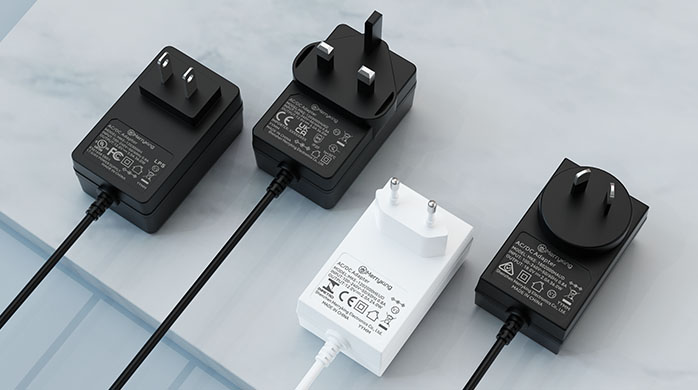
Brazil power adapter certification differs from global standards like CE or UL because it strictly mandates factory audits, local testing, and the integration of the unique Brazilian three-pin plug standard (NBR 14136). While many international markets accept self-declaration or simple lab reports, achieving a Brazil power adapter certification requires active, ongoing surveillance and an established local legal entity. This rigorous dual-layer requirement makes the process uniquely localized compared to European or North American schemes.
Additionally, the voltage and frequency characteristics in Brazil vary significantly by city, requiring highly robust internal circuitry. This means a standard universal adapter might need specific component adjustments to survive the unique local grid demands.
How Do Brazil Plugs and Voltages Differ Internationally?
You must redesign your adapter’s physical plug interface to match the distinct Brazilian NBR 14136 plug, which features a recessed hexagonal face and specific pin diameters. Attempting to sell standard European or US plugs with cheap external adapters is highly discouraged and illegal for certified goods.
Here is the truth: Brazil is a complex electrical environment with mixed voltage grids.
- Some regions use 127V AC, while others utilize 220V AC at 60Hz.
- Plugs come in 10A (4.0mm pins) and 20A (4.8mm pins) current ratings.
- Physical plug compatibility with the local socket is tested under strict mechanical stress tests.
Let’s face it: if your adapter’s plug pins fail the mechanical pull test, your certification is immediately rejected.
Key Takeaway: Designing a true wide-range voltage adapter (90V-264V) with native NBR 14136 plugs saves you from designing multiple SKUs for the Brazilian market.
| Parameter | Brazil (NBR 14136) | USA (NEMA) | Europe (Schuko/Europlug) | |
|---|---|---|---|---|
| Plug Shape | Recessed Hexagonal | Flat parallel pins | Round pins, flat sides | |
| Voltages | 127V / 220V | 120V | 230V | |
| Frequency | 60 Hz | 60 Hz | 50 Hz |
Adapting your power supply’s physical configuration to native Brazilian specs upfront eliminates structural redesign failures during lab testing.
What Docs Need Brazil Power Adapter Certification?

The documentation required for Brazil power adapter certification includes comprehensive circuit schematics, bill of materials (BOM), transformer specifications, ISO 9001 certificates, and Portuguese-translated user manuals. Preparing a complete and highly detailed technical dossier is critical to avoiding long review delays with the OCP. A successful Brazil power adapter certification application relies entirely on the accuracy and alignment of your technical records.
You must also provide legal registration documents for your local Brazilian representative. All customer-facing labels, packaging templates, and safety manuals must be localized into Portuguese before final approval.
What Technical Files Must You Prepare for Review?
You need to compile a technical construction file that details every safety-critical component used within your power adapter’s internal circuitry. The OCP will cross-examine your BOM with international safety approvals for parts like capacitors, optocouplers, and plastic housings.
Think about it: a single undocumented component change can void your entire test report.
- Full schematics and PCB layout designs showing electrical creepage distances.
- Transformer insulation specification sheets showing winding structures.
- Critical component list (CCL) with valid UL/VDE certificate numbers.
But wait, there is more: your localized user instruction sheet must contain specific safety warnings mandated by the Brazilian Consumer Defense Code.
Key Takeaway: Double-checking that your BOM matches your physical test samples precisely eliminates costly documentation revision cycles.
| Document Type | Crucial Content Requirement | Translation Needed? | |
|---|---|---|---|
| User Manual | Safety warnings, rated voltages, and OCP info | Yes (Portuguese) | |
| Schematics | Complete circuit diagram, component values | No (English accepted) | |
| CCL / BOM | Certifications for critical parts (safety capacitors) | No (English accepted) |
Organizing your technical folders using standardized international naming conventions helps the OCP review team execute approvals much faster.
How Long Does Brazil Power Adapter Certification Take?

The timeline to obtain INMETRO certification for power adapters typically ranges from 12 to 24 weeks, depending on product complexity, factory audit readiness, and lab scheduling. Planning your product launch with this timeframe in mind is essential to avoid delayed shipments and missed market opportunities. Accelerating your Brazil power adapter certification requires proactive planning, early sample preparation, and flawless documentation.
The testing phase alone can consume up to 8 weeks, as local labs put your adapters through extensive thermal and electrical stress tests. Adding the factory audit and administrative OCP review cycles can easily push projects past the three-month mark.
What Milestones Control the Approval Timeline?
You must treat the certification timeline as a critical path in your project management system. Identifying bottlenecks, such as international sample customs clearance or auditor scheduling, keeps your release plan on track.
Let’s face it: unpredictable delays are common if you don’t track milestones.
- Sample customs clearance in Brazil (can take 2 to 4 weeks).
- Laboratory queuing and actual product safety testing (4 to 8 weeks).
- On-site factory inspection scheduling and corrective action resolution (4 weeks).
Here is the truth: starting your paperwork before shipping samples is the ultimate way to compress the timeline.
Key Takeaway: Factoring a 4-week buffer into your marketing calendar prevents expensive delays during the critical commercial launch window.
| Phase | Average Duration | Primary Bottleneck Risk | |
|---|---|---|---|
| 1. Document Prep | 2 – 3 Weeks | Missing component certificates | |
| 2. Lab Testing | 6 – 8 Weeks | Test failures or queue delays | |
| 3. Factory Audit | 4 – 6 Weeks | Scheduling auditor travel | |
| 4. OCP Review | 2 – 3 Weeks | Minor administrative errors |
Proactively tracking these milestones ensures that your team resolves any technical issues before they impact your shipping schedule.
What Are Brazil Power Adapter Certification Challenges?

The main challenges of Brazil power adapter certification are navigating the high cost of local testing, overcoming Brazilian customs delays when shipping test samples, and managing annual factory maintenance audits. For many manufacturers, the sheer administrative complexity of dealing with local OCPs and Portuguese documentation can feel overwhelming. Successfully obtaining your Brazil power adapter certification means anticipating these hurdles and building a robust risk mitigation strategy.
In addition, any subsequent component changes to an already certified adapter require formal notification and potential retesting. This strict change control process can stall product updates if not managed dynamically.
How Can You Avoid Costly Testing Failures?
You can prevent devastating test failures by pre-screening your power adapters at your own facilities or at local partner labs before shipping them to Brazil. Checking for creepage distance, thermal insulation safety, and electromagnetic compatibility saves immense time.
Think about it: a single failure during final testing in Brazil means paying double fees and starting the entire wait list over again.
- Conduct pre-compliance testing for electromagnetic interference (EMI).
- Ensure the enclosure plastics utilize flame-retardant materials rated UL 94 V-0.
- Verify that your internal transformers can withstand local thermal requirements.
But wait, there is more: partnering with an expert manufacturer who already uses pre-approved designs practically eliminates these technical risks.
Key Takeaway: Investing in thorough pre-compliance testing pays massive dividends by securing a pass result on your very first official attempt.
| Typical Failure Point | Root Cause | Preventive Action | |
|---|---|---|---|
| Thermal Overheating | Poor internal component spacing | Optimize PCB layout and copper thickness | |
| Enclosure Cracking | Brittle plastic compound | Switch to high-impact, fire-rated PC/ABS | |
| EMI / Noise | Inadequate filtering components | Upgrade common-mode chokes and X/Y capacitors |
Resolving structural and electrical weaknesses prior to official submission guarantees a smooth, predictable path through foreign testing labs.
How Can Brazil Power Adapter Certification Expand Sales?

Obtaining INMETRO certification expands your sales by giving you legal, unrestricted access to Brazil, the largest and most lucrative consumer electronics market in Latin America. Once your products carry the official safety mark, you can easily pitch to major regional distributors and online e-commerce platforms. Securing this Brazil power adapter certification positions your brand as a premium, reliable hardware provider in a crowded marketplace.
Certified safety also allows you to win high-value corporate tenders and governmental contracts that mandate INMETRO-compliant hardware. This regulatory milestone transforms from a compliance headache into a highly profitable competitive differentiator.
What Opportunities Await in the Latin American Market?
You can leverage your newly won Brazilian compliance status to gain a massive foothold across neighboring South American countries that trust INMETRO standards. The expanding consumer demand for smartphones, smart homes, and IoT devices presents a huge playing field for agile brands.
Here is the truth: Brazil is the key gateway to unlocking the entire continent’s electronic trade.
- Access to over 210 million active tech consumers in Brazil alone.
- Lower competition because many smaller rivals choose to bypass compliance.
- Premium pricing power over uncertified or low-quality black-market alternatives.
Think about it: local corporate buyers will gladly pay a 30% premium for a reliable power supply that guarantees operational safety.
Key Takeaway: Securing compliance is the ultimate strategic move to capture market share and drive highly scalable, long-term B2B revenue.
| Business Benefit | Value Metric | Strategic Impact | |
|---|---|---|---|
| Market Expansion | Access to 210M+ consumers | High growth potential | |
| Brand Authority | Certified compliance badge | Builds long-term client trust | |
| Competitive Moat | Barriers to entry for non-compliant rivals | Higher profit margins |
Positioning your product as fully compliant from day one enables your sales team to easily sign multi-year distribution deals.
How Can You Choose Brazil Power Adapter Certification Partners?

To choose the right Brazil power adapter certification partner, you should select an experienced, globally recognized manufacturer that offers pre-certified power supply designs and has long-standing relationships with accredited OCPs. An experienced partner will seamlessly handle the technical file compilation, lab testing coordination, and factory audit preparation on your behalf. Choosing the right guide makes your Brazil power adapter certification process fast, predictable, and highly cost-effective.
This decision prevents you from wasting vital resources on trial-and-error attempts with inexperienced local brokers. A top-tier manufacturer will act as your technical shield, ensuring your designs are optimized for the Brazilian grid before testing starts.
What Criteria Matter Most in an OEM/ODM Partner?
You must evaluate potential manufacturing partners based on their regulatory history, engineering depth, and capacity to handle international compliance frameworks. A partner who already holds valid global safety marks can easily adapt those existing test reports for your Brazilian application.
Let’s face it: working with an amateur supplier is a recipe for project delays and unexpected compliance costs.
- Proven history of successful INMETRO and international certifications.
- In-house testing laboratories capable of performing strict pre-compliance checks.
- Transparent communication channels and fluent technical support in English.
But wait, there is more: a great partner will even help coordinate with your local Brazilian legal representative to finalize the OCP registration.
Key Takeaway: Choosing an expert power supply partner turns a complex regulatory challenge into a smooth, turn-key business operation.
| Partner Criteria | Ideal Standard | Red Flag | |
|---|---|---|---|
| Compliance Experience | 5+ years handling INMETRO/UC/IEC | Only has basic CE certificates | |
| Engineering Support | Active assistance with PCB and component layout | Refuses to share safety documentation | |
| Factory Auditing | ISO 9001 certified plant with regular OCP audits | No experience with international inspectors |
Performing this due diligence ensures your manufacturing partner can actively protect your schedule and secure your market access.
Conclusion
Navigating the complex waters of South American regulatory compliance doesn’t have to stall your growth. Partnering with a specialized, world-class power adapter manufacturer simplifies the entire technical pathway. If you are ready to secure your market entry, contact us today to access premium, pre-certified power supply solutions. We handle the complexity of global testing, factory audits, and localized physical standards so you can focus entirely on scaling your sales. Let’s work together to light up the Brazilian market with safe, reliable, and high-performance power technologies.
FAQ
Can I use my existing CE or UL test reports for INMETRO certification?
Yes, you can use CB scheme test reports (IEC 60950-1 or IEC 62368-1) to significantly accelerate your INMETRO certification process. However, these international reports must be reviewed by an accredited Brazilian OCP, and additional testing is still required to verify compliance with local deviations, such as the specific Brazilian plug design and regional voltage variations.
What’s the best way to handle the local representative requirement in Brazil?
The best way is to establish a contract with a professional, third-party local regulatory representative or your established Brazilian distributor. This local entity acts as the legal holder of your INMETRO certificate and takes responsibility for regulatory communications inside the country, ensuring your brand stays fully compliant with local laws.
How do I know if my power adapter needs an annual factory audit?
Yes, your manufacturing facility will absolutely require regular factory audits if you choose the standard certification model (Model 5), which is the most common path for power adapters. These recurring audits verify that your manufacturing processes and quality management systems continue to maintain the same strict safety standards as the initially tested samples.