Temperature directly affects power adapter performance by shifting electrical resistance, altering switching times, and dictating the degradation rate of sensitive internal electronics. When you expose your equipment to extreme hot or cold baselines, you risk system instability, immediate efficiency drops, and costly field failures. Understanding the nuances of power adapter temperature performance is critical to securing continuous system uptime for your industrial or medical setups.
Left unmanaged, thermal fluctuations act as a silent bottleneck, accelerating wear on critical capacitors and inductors under load. If you overlook these thermal limits during hardware procurement, you may experience unexpected shutdowns during peak shifts. This analytical guide breaks down how thermal factors stress your systems and highlights the core methods to insulate your equipment against thermal risks.
How Does Temperature Affect Power Adapter Temperature Performance?
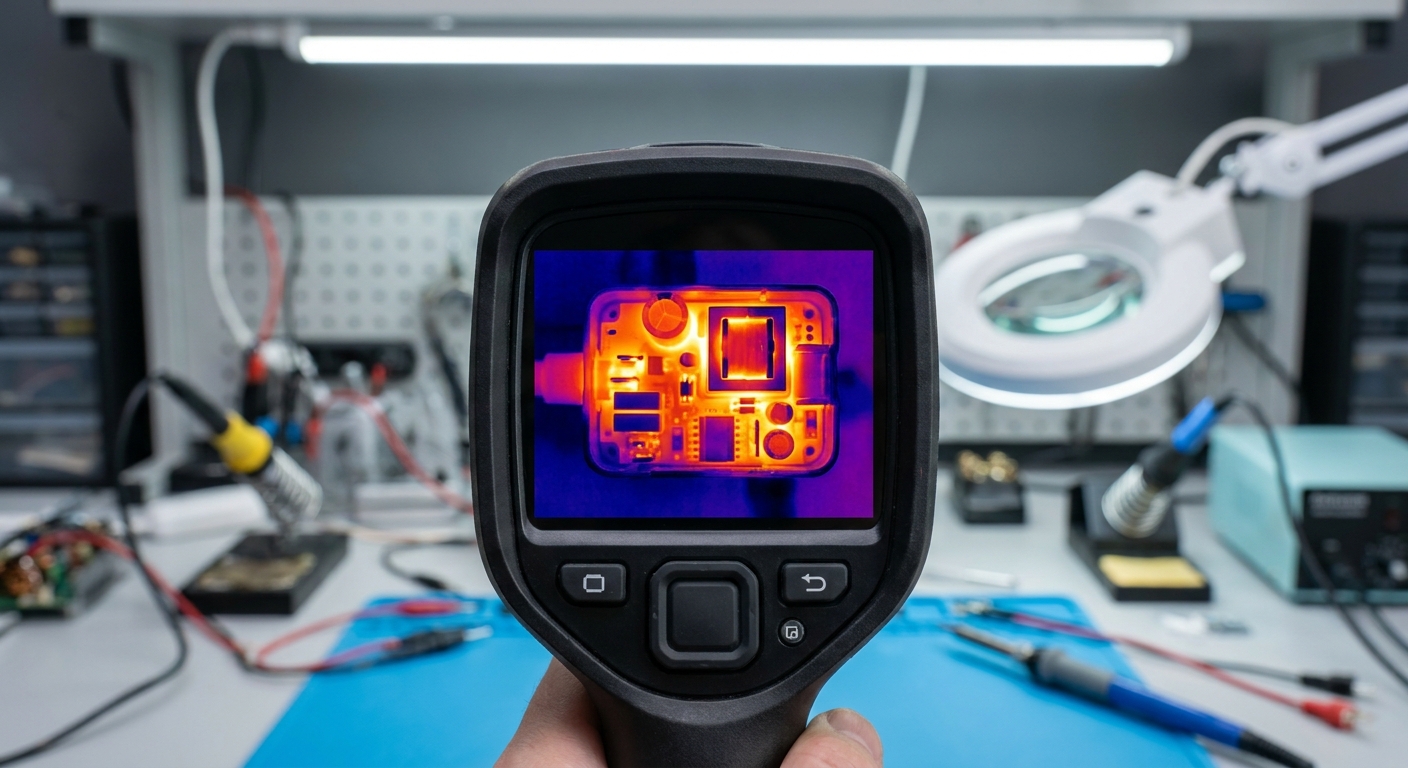
Temperature directly affects power adapter temperature performance by shifting the electrical resistance of conductive copper windings and modifying the carrier mobility of integrated silicon semiconductors. As the internal operating temperatures of your adapter rise, the conversion efficiency begins to degrade, leading to high thermal dissipation. If you do not actively manage this cycle, your device faces self-reinforcing heating loops that can lead to catastrophic component failure.
Why does operating temperature shift internal resistance?
When temperatures increase inside the power housing, atoms in the copper traces and transformer windings vibrate more intensely, impeding the natural flow of electrons. This increased electrical friction directly elevates conduction losses, turning valuable energy into waste heat.
Think about it:
- High temperatures cause copper windings to become less conductive.
- Semiconductor switching speeds begin to lag.
- Heat dissipation demands spike while your system’s output drops.
What are the cumulative thermal degradation risks?
Sustained operational heat breaks down the molecular structure of the primary insulation layers surrounding internal wires. This breakdown severely compromises the dielectric strength of your power supply, which can lead to high-voltage leakage.
Key Takeaway: By managing the thermal levels of your adapters, you directly prevent early insulation breakdown, ensuring your electronics maintain continuous electrical isolation over years of heavy use.
| Component Type | Nominal Temp Range | Degradation Threshold | Immediate Performance Impact | |
|---|---|---|---|---|
| Silicon Switchers | -20°C to 85°C | >110°C | Elevated switching delay, low efficiency | |
| Copper Windings | -40°C to 105°C | >130°C | Spiked resistance, core saturation risks |
Analysis Guidance: This data reveals that silicon switches are more sensitive to thermal degradation than passive copper windings, making semiconductors the primary bottleneck for operational safety.
Why Is Power Adapter Temperature Performance Important for Reliability?
Power adapter temperature performance is important for reliability because it directly determines the Mean Time Between Failures (MTBF) of your system by keeping critical components well within their designed safe operating areas. When you run equipment in 24/7 industrial frameworks, even minor thermal stress can compromise system stability. Ensuring stable power adapter temperature performance protects your connected devices from random voltage spikes and unprovoked shutdowns.
How does continuous heat shorten the life of your device?
Continuous exposure to extreme operating temperatures accelerates chemical degradation inside electronic components. For every 10°C rise in sustained internal temperature, the lifetime of standard filtering capacitors is cut in half.
Let’s face it:
- High-heat operating environments degrade capacitor life.
- Unstable power inputs force your systems to work harder.
- Frequent equipment maintenance cycles drive up operational costs.
Can voltage output fluctuate during thermal stress?
When your adapter undergoes thermal stress, its reference voltage circuit can drift, causing fluctuations in output levels. These voltage deviations can trigger internal protective shutdowns or even damage sensitive connected loads.
Key Takeaway: Selecting adapters with superior thermal stability protects your connected devices from dangerous voltage fluctuations, safeguarding your long-term capital investments.
| Thermal State | Ambient Temperature | Expected Lifespan (MTBF) | Output Ripple Voltage | |
|---|---|---|---|---|
| Optimized Cooling | 25°C | 100,000 Hours | <50mV (Excellent) | |
| Uncooled / Enclosed | 60°C | 25,000 Hours | >120mV (Unstable) |
Analysis Guidance: This lifecycle comparison illustrates how effective heat dissipation preserves the filtering capacity of internal electronics, keeping output ripple voltage within safe bounds.
What Happens to Power Adapter Temperature Performance in High-Temperature Environments?
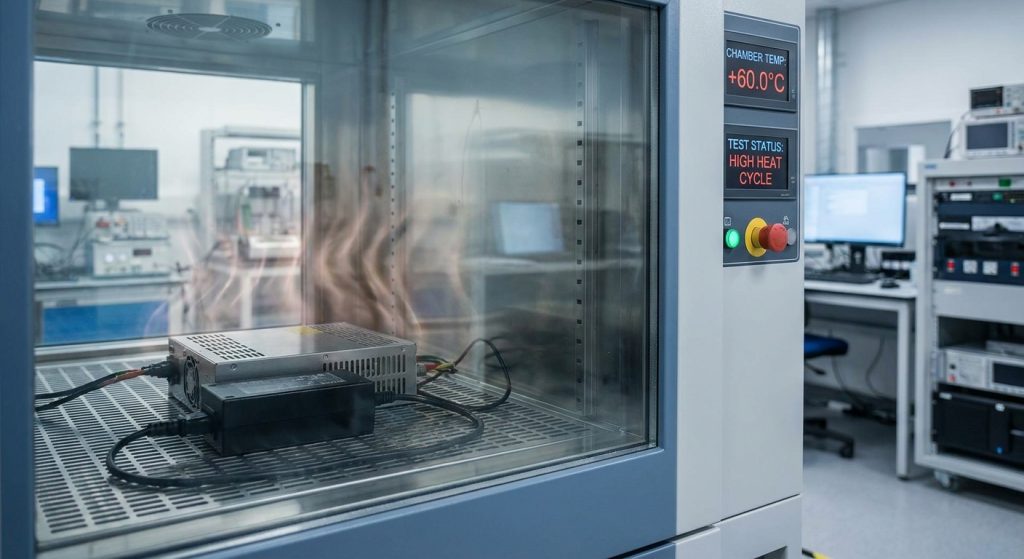
In high-temperature environments, power adapter temperature performance degrades as ambient heat levels reduce the temperature difference needed for natural heat dissipation, causing internal heat to accumulate. When you operate your machinery in unventilated industrial settings, the unit struggles to shed waste heat, which degrades overall power adapter temperature performance . This heat trap can trigger built-in Over-Temperature Protection (OTP) or result in immediate component failures.
Why does the thermal dissipation rate drop?
Natural heat transfer relies on a healthy temperature difference between the hot adapter body and the cooler surrounding air. When the ambient temperature rises, this difference decreases, causing internal heat to build up inside the case.
Here is the thing:
- Stagnant air blocks the natural cooling process.
- Internal component temperatures climb past safe design limits.
- Switching power output declines to protect internal electronics.
How does heat-induced voltage drift occur?
High temperatures can cause internal voltage references and optocouplers to drift from their factory settings. This drift alters the feedback loop, leading to poor output voltage regulation and increased electrical noise.
Key Takeaway: Keeping ambient temperatures within recommended limits maintains the accuracy of your adapter’s feedback loop, ensuring clean and steady power delivery.
| Ambient Temperature | Thermal Dissipation Rate | Voltage Regulation Error | Over-Temp Protection Risk | |
|---|---|---|---|---|
| 25°C | 100% (Maximum) | ±0.5% (Very Low) | Negligible | |
| 50°C | 60% (Reduced) | ±2.0% (Moderate) | High Risk |
Analysis Guidance: This thermal comparison highlights that high ambient temperatures degrade voltage regulation accuracy, stressing the need for external cooling or load de-rating.
How Does Cold Weather Impact Power Adapter Temperature Performance?
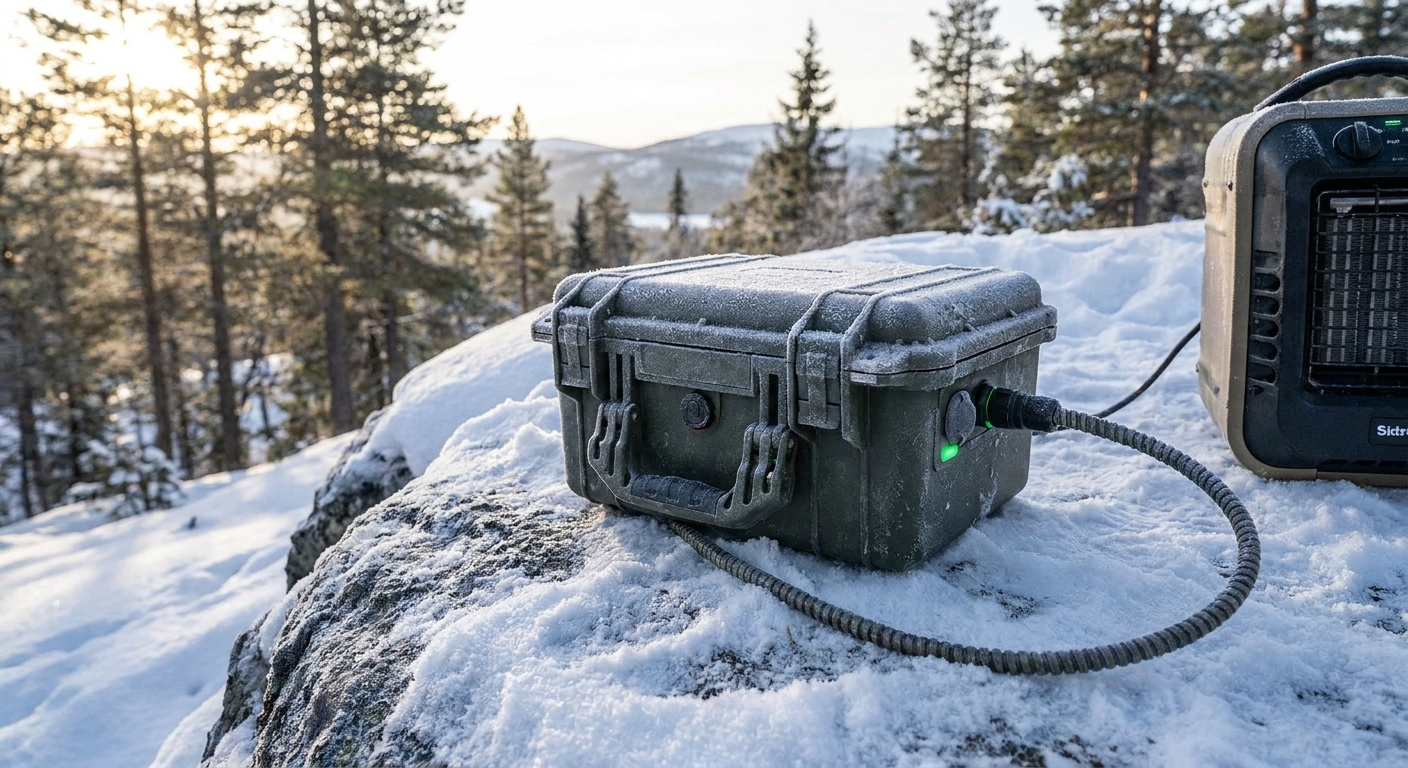
Cold weather impacts power adapter temperature performance by increasing capacitor equivalent series resistance (ESR) and introducing structural stresses through material contraction. When you deploy outdoor electronics in winter weather, freezing temperatures can prevent standard liquid electrolytes from conducting effectively, which impacts overall power adapter temperature performance during startup. This shift in internal chemistry can prevent the adapter from turning on or cause high electrical noise.
Why does low temperature spike capacitor ESR?
As temperatures drop below freezing, the liquid electrolyte inside standard capacitors becomes thick and viscous. This change limits ion movement, causing equivalent series resistance (ESR) to rise sharply.
Think about it:
- High ESR reduces the capacitor’s ability to filter out voltage noise.
- Startup current struggles to flow through the thickened electrolyte.
- The power adapter may fail to initialize or cycle continuously.
Can sub-zero conditions crack solid components?
Different materials inside your adapter expand and contract at different rates when exposed to freezing cold. This temperature-driven movement can crack delicate solder joints and fracture ceramic components during sudden startups.
Key Takeaway: Choosing adapters designed for cold-weather deployments prevents cold-start structural damage, ensuring stable outdoor operations year-round.
| Temperature | Electrolyte State | Capacitor ESR Multiplier | Cold-Start Success Rate | |
|---|---|---|---|---|
| 25°C | Liquid / Low Viscosity | 1.0x (Baseline) | 100% | |
| -20°C | Highly Viscous / Semi-solid | 8.0x to 10.0x | <30% (Standard Unit) |
Analysis Guidance: This data demonstrates that standard liquid electrolyte capacitors suffer severe performance drops in freezing conditions, making solid or polymer capacitors essential for cold environments.
Which Internal Components Are Most Affected by Power Adapter Temperature Performance?
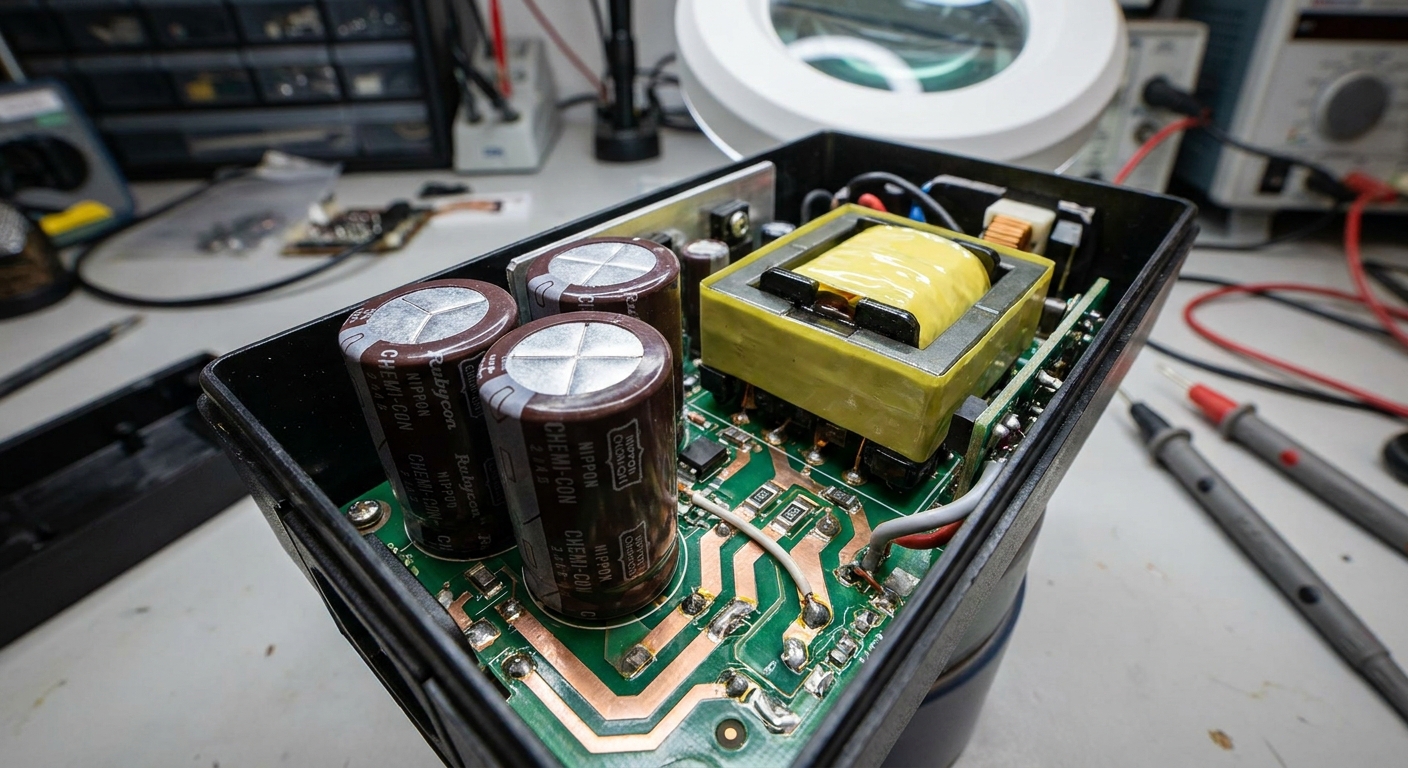
The internal components most affected by power adapter temperature performance are electrolytic capacitors, switching power MOSFETs, optocouplers, and magnetic transformers. If you design or integrate hardware for harsh environments, you must monitor how these components respond to temperature changes. Selecting a unit with high-quality components ensures stable, long-term power adapter temperature performance under tough operating conditions.
Why do electrolytic capacitors fail first?
Electrolytic capacitors contain liquid electrolytes that gradually dry out when exposed to heat, reducing their capacitance. This dry-out process speeds up at higher operating temperatures, making capacitors the primary limit on adapter lifespan.
Let’s be honest:
- Electrolytic capacitors are the most heat-sensitive components inside.
- High heat leads to rapid capacitor dry-out.
- Weakened capacitors allow excessive ripple voltage into your system.
How does heat stress power MOSFETs?
Rising temperatures increase the internal resistance of power MOSFETs, which increases conduction losses. This extra resistance generates more heat, which can lead to a damaging thermal cycle if the component is not properly cooled.
Key Takeaway: Upgrading to high-efficiency power MOSFETs with low internal resistance minimizes heat generation, protecting nearby sensitive electronics from thermal stress.
| Component Type | High-Temp Risk | Failure Mode | Lifetime Impact | |
|---|---|---|---|---|
| Electrolytic Capacitor | Electrolyte dry-out | High ESR, physical venting | Severe reduction | |
| Power MOSFET | Thermal runaway | Internal short-circuit | Immediate failure |
Analysis Guidance: This breakdown shows that while capacitors degrade gradually over time, semiconductor components like MOSFETs face immediate risks of catastrophic failure from thermal runaway.
How Does Power Adapter Temperature Performance Influence Efficiency and Power Output?
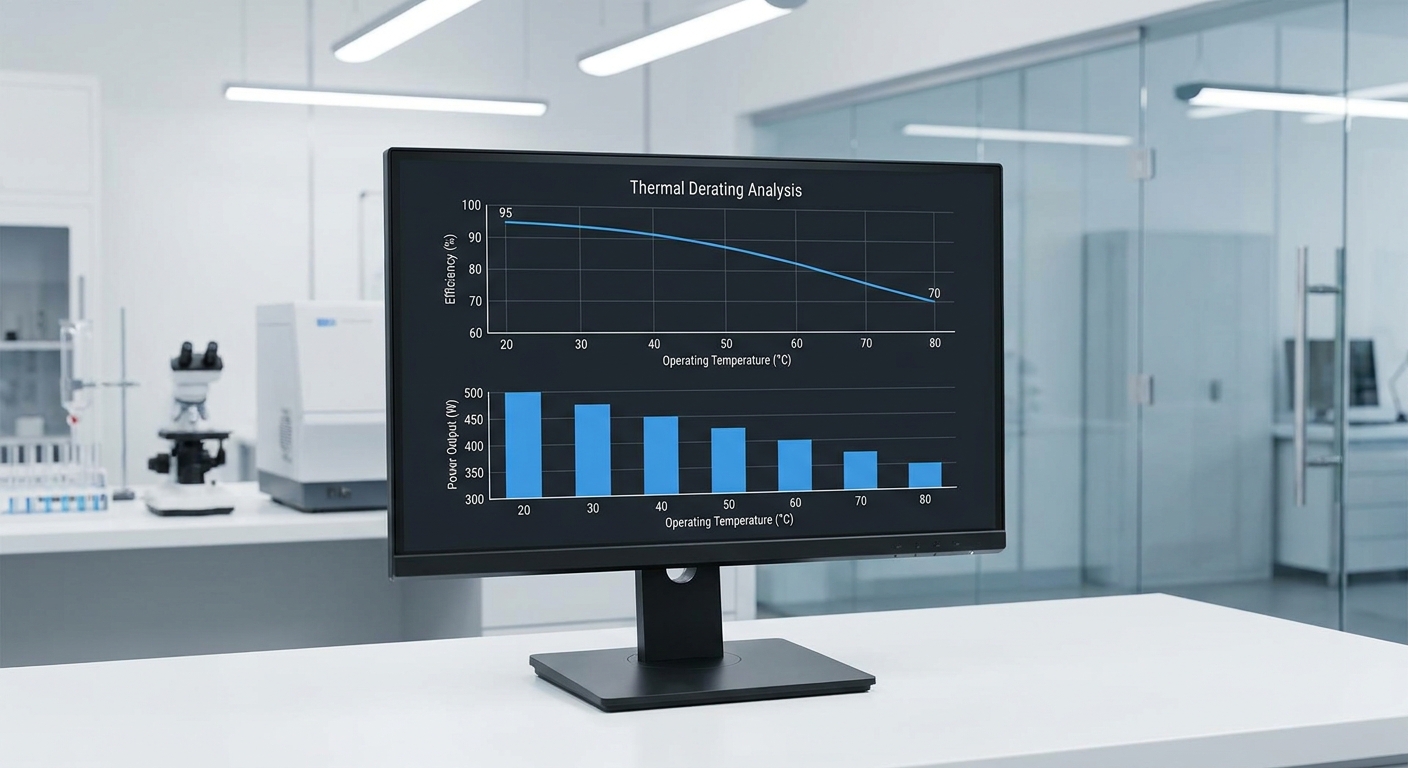
Power adapter temperature performance influences efficiency and power output by increasing switching losses and conduction resistance, which forces the system to de-rate its maximum output capacity. When your adapter operates in hot conditions, it loses more input power as waste heat, which reduces its overall conversion efficiency. To protect its internal components, the adapter must lower its power output to keep temperatures within safe limits, which directly affects power adapter temperature performance.
What is the physical cost of thermal derating?
Thermal derating is the intentional reduction of a power supply’s maximum output power as ambient temperatures rise. This approach ensures that the internal components do not exceed their maximum safe operating limits.
What does this mean for you?
- Your adapter cannot supply full rated power in hot environments.
- You must buy a larger adapter to handle the same load when hot.
- Ignoring derating curves can lead to unexpected shutdowns.
How do switching losses increase with temperature?
As semiconductors heat up, they turn on and off more slowly, which increases the energy lost during each transition. This increase in switching losses lowers overall conversion efficiency, generating even more internal heat.
Key Takeaway: Choosing adapters with minimal thermal derating allows you to use smaller, more cost-effective power supplies in hot operating environments.
| Ambient Temperature | Maximum Safe Output | Conversion Efficiency | Thermal Action Required | |
|---|---|---|---|---|
| 25°C | 100% of Rated Load | 92% (High) | Standard cooling | |
| 50°C | 70% of Rated Load | 88% (Reduced) | Load de-rating or active airflow |
Analysis Guidance: This table highlights how rising temperatures degrade both conversion efficiency and safe power output, making proactive load de-rating essential in hot environments.
What Safety Risks Are Associated With Poor Power Adapter Temperature Performance?
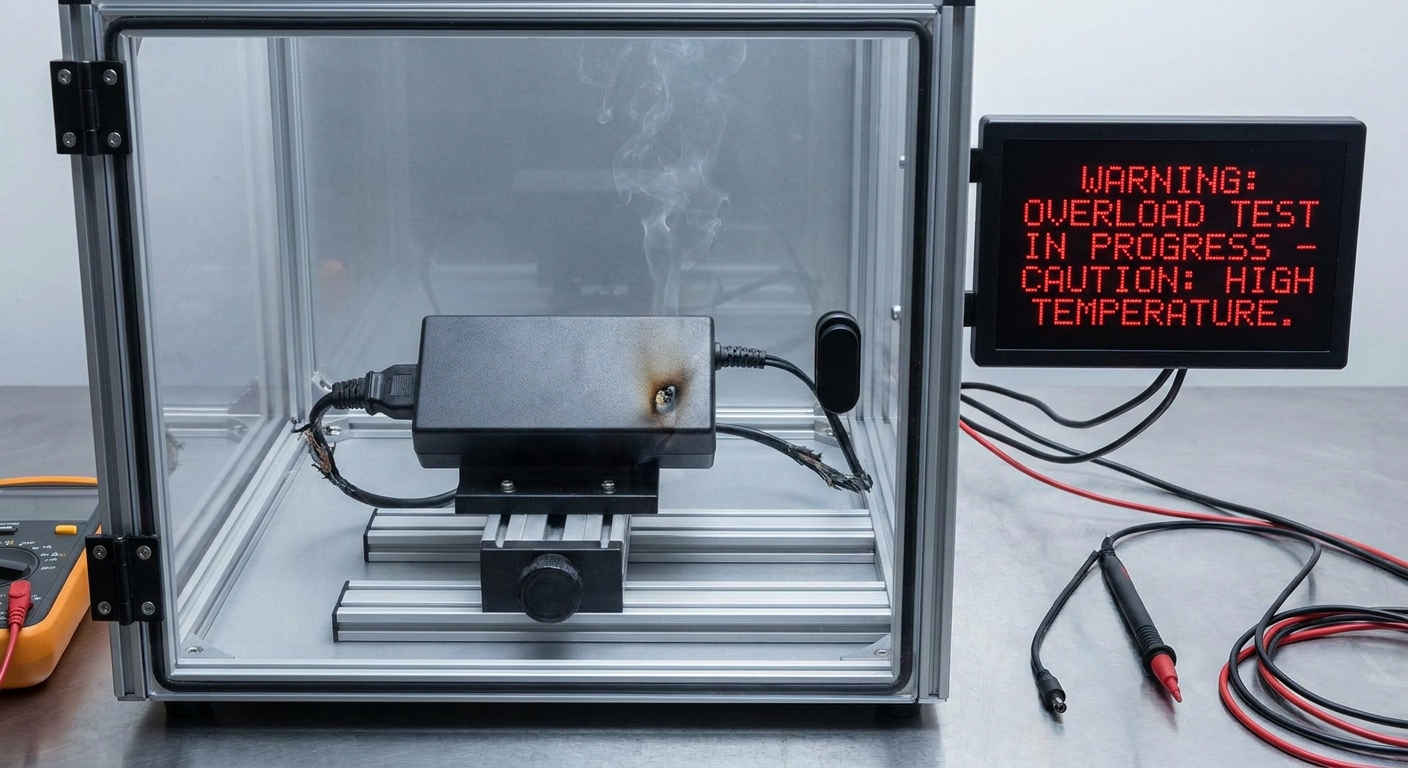
The safety risks associated with poor power adapter temperature performance include electrical fires, shock hazards from insulation melt, and physical burns from contact with overheating enclosures. If you use low-quality adapters, sustained high temperatures can break down protective plastic housings and internal barriers. This degradation compromises power adapter temperature performance and can lead to dangerous short-circuits or fire hazards.
How can insulation breakdown cause shocks?
High heat degrades the plastic and resin insulation that keeps high-voltage primary circuits isolated from low-voltage secondary outputs. If this insulation fails, dangerous high-voltage current can leak into connected devices, posing a shock risk.
Here is the reality:
- Thermal stress compromises internal dielectric barriers.
- High-voltage current can leak to touchable user interfaces.
- System operators face an increased risk of electrical shock.
What are the primary fire safety hazards?
When an adapter overheats without proper thermal protection, internal temperatures can reach the ignition point of nearby plastics. This thermal runaway can quickly cause smoking, melting, or open flames.
Key Takeaway: Selecting adapters with certified flame-retardant enclosures and thermal shutdown protections is essential to safeguard your facilities and personnel.
| Enclosure Material | Thermal Deflection Temp | Flame Retardancy Rating | Safety Risk Classification | |
|---|---|---|---|---|
| High-Grade Polycarbonate | >130°C | UL94 V-0 (Self-extinguishing) | Low Risk | |
| Standard ABS Plastic | ~85°C | UL94 HB (Slow burning) | High Risk |
Analysis Guidance: This safety material comparison shows that UL94 V-0 rated enclosures offer much better protection against fire and melting than standard ABS plastics during over-temperature events.
How Can Manufacturers Improve Power Adapter Temperature Performance Through Design?
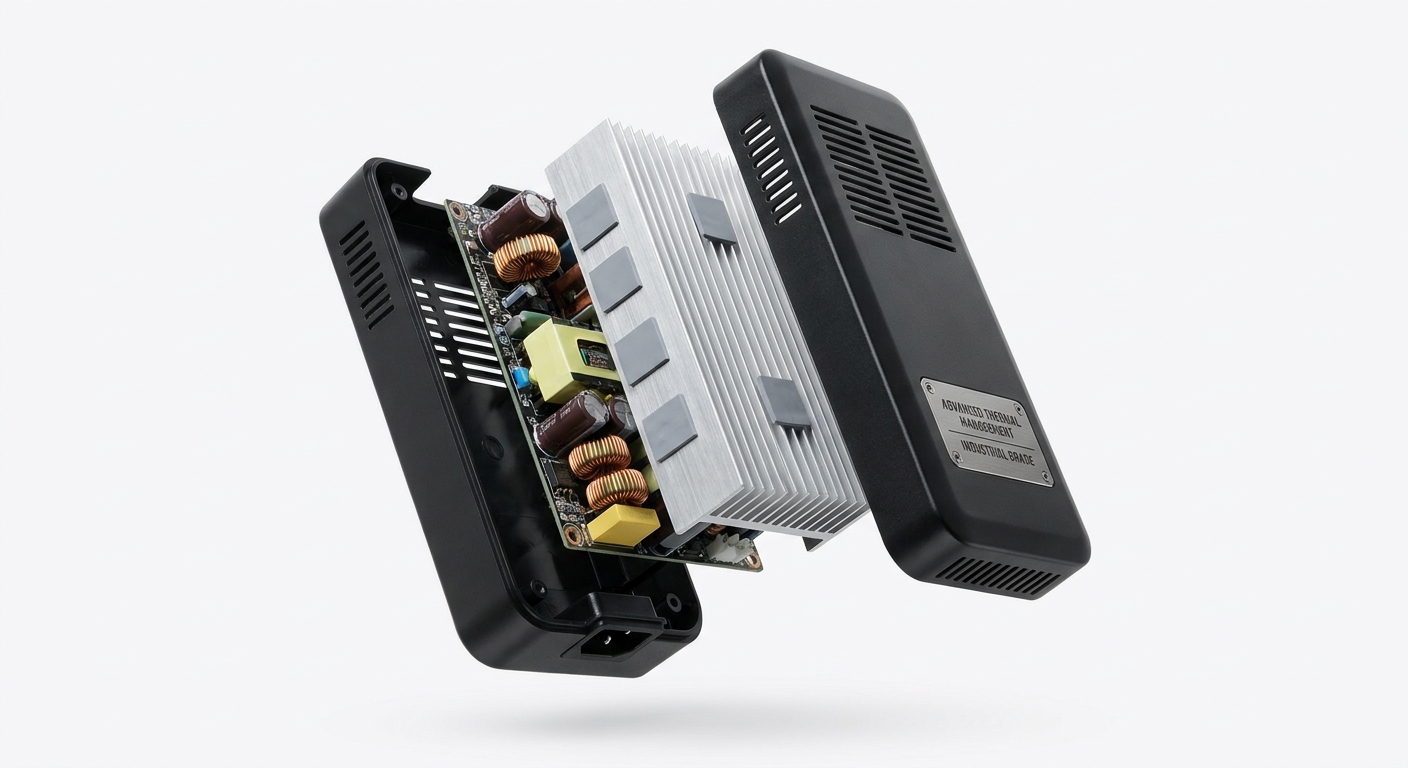
Manufacturers can improve power adapter temperature performance through design by using high-efficiency topologies, advanced thermal potting compounds, and optimized physical component layouts. When you buy custom power solutions, looking for models built with modern thermal materials ensures better heat dissipation. These smart engineering choices directly improve power adapter temperature performance, allowing the device to run cooler under heavy, continuous loads.
How do potting compounds help cool adapters?
High-grade thermal potting compounds completely encapsulate the internal circuit board, filling empty spaces that would otherwise trap hot air. These compounds act as a thermal bridge to move heat quickly from hot components to the outer case.
Think about it:
- Thermal potting removes hot spots inside the housing.
- Sensitive components are shielded from dust and moisture.
- Heat is distributed evenly across the entire enclosure surface.
Why is component spacing critical for cooling?
Smart board layouts place heat-sensitive components, like electrolytic capacitors, far away from hot-running semiconductors and transformers. This spacing prevents localized heat buildup from warming nearby components, extending their overall lifespan.
Key Takeaway: Choosing power adapters designed with smart component spacing and high-conductivity potting ensures maximum reliability and a longer service life.
| Design Method | Thermal Benefit | Production Cost Impact | Component Protection Level | |
|---|---|---|---|---|
| Thermal Potting | High heat dissipation | High | Excellent (Protects against shock & dust) | |
| Finned Copper Heatsink | Medium heat dissipation | Moderate | Good (Protects key semiconductors) |
Analysis Guidance: While thermal potting is more expensive, it offers the best protection by combining efficient heat dissipation with excellent environmental sealing.
How Is Power Adapter Temperature Performance Tested and Verified?
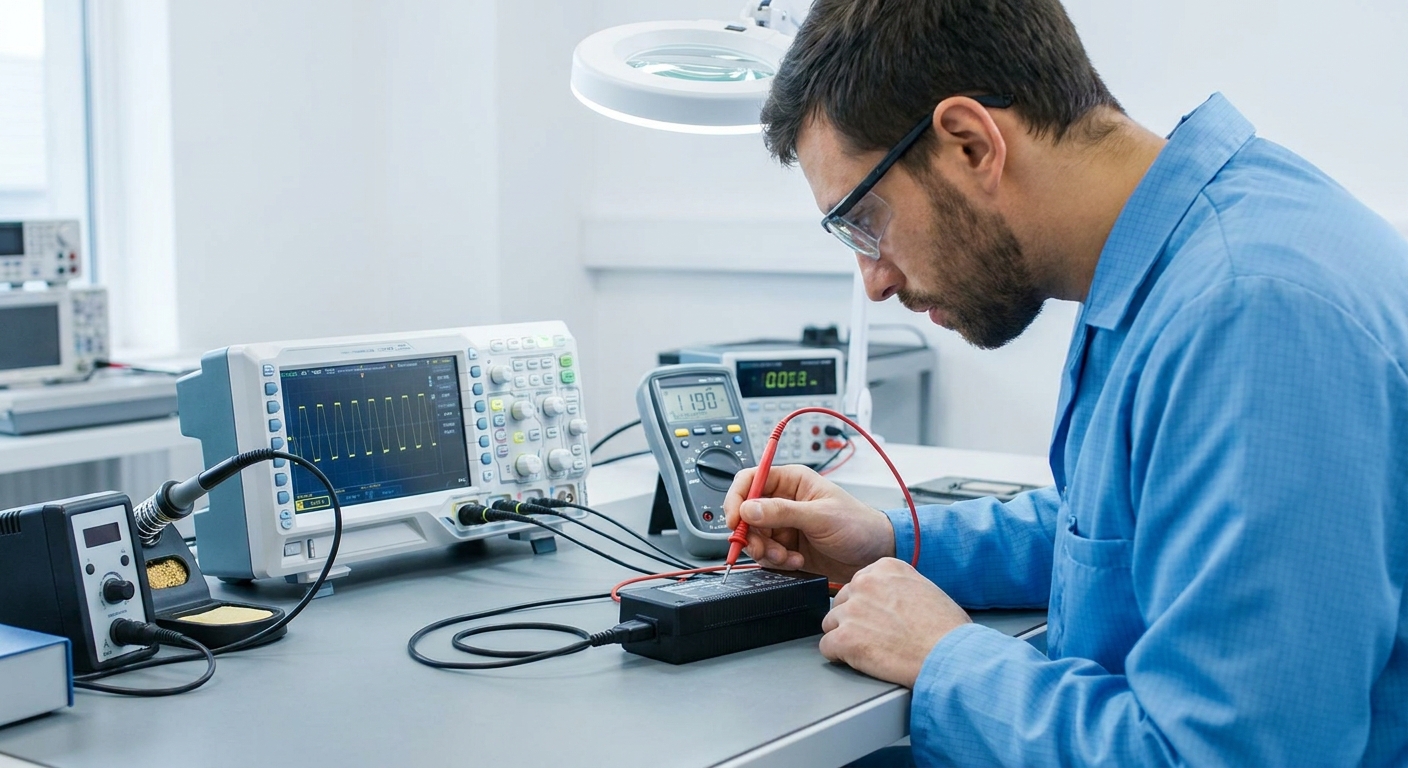
Engineers test and verify power adapter temperature performance by placing units under full load in controlled environmental chambers while monitoring components with thermal imaging and contact thermocouple arrays. When you look over product data sheets, verifying these test procedures ensures the adapter can handle real-world conditions. This rigorous testing confirms the unit maintains stable power adapter temperature performance without exceeding safe temperature limits under pressure.
How are environmental chambers used in testing?
Environmental chambers simulate extreme operating conditions, allowing engineers to test adapters at ambient temperatures ranging from -40°C to over 85°C. These tests confirm the adapter can start up and operate reliably in tough environments.
Let’s look at the steps:
- The chamber is set to target extreme temperatures.
- The adapter is run at maximum load for hours.
- Automated systems monitor voltage stability and ripple.
Why are infrared and thermocouple tests combined?
Thermal cameras provide a complete thermal map of the circuit board to locate overall hot spots, while thermocouples measure precise temperatures at specific component junctions. Combining these methods ensures no thermal design issues are missed.
Key Takeaway: Buying adapters that have undergone both infrared and thermocouple testing gives you confidence that the hardware will perform reliably in the field.
| Testing Method | Measurement Precision | Primary Focus | Best Practice Use Case | |
|---|---|---|---|---|
| Infrared Imaging | High gradient tracking | Whole board hot spots | Mapping circuit board heat flow | |
| Direct Thermocouple | High point-specific | Component junctions | Verifying specific MOSFET temperatures |
Analysis Guidance: This comparison shows that while infrared imaging is excellent for finding heat patterns, contact thermocouples are essential for precise component junction testing.
How Can You Select a Power Adapter With Excellent Temperature Performance?
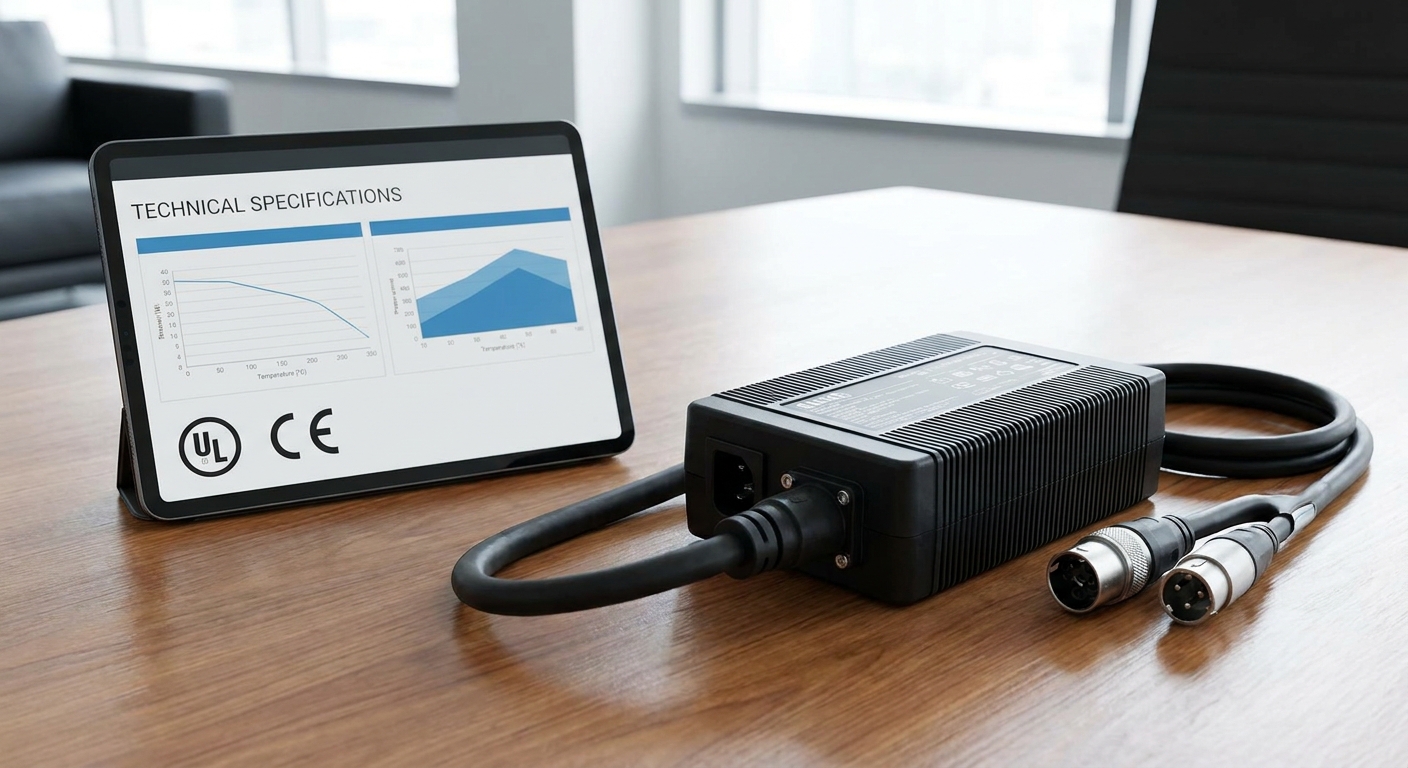
You can select a power adapter with excellent temperature performance by reviewing manufacturer derating curves, choosing units with wide-temperature rated components, and verifying international safety certifications. When you source hardware for challenging projects, checking these thermal specifications helps avoid early field failures. Prioritizing these technical details ensures you choose a design that delivers stable power adapter temperature performance in your application’s environment.
How do you read a thermal derating curve?
A thermal derating curve shows how much power an adapter can safely deliver at different ambient temperatures. This chart tells you exactly when you need to reduce the electrical load or add cooling airflow to prevent overheating.
Keep this in mind:
- Find the maximum ambient temperature for your application.
- Look at the derating curve to find the allowable output power.
- Size your adapter so it operates safely below this limit.
Which component specifications should you check?
Always check that key internal parts, such as capacitors, are rated for high-temperature operation (like 105°C or 125°C). Buying adapters built with these higher-rated components gives you extra safety margin and longer operational life.
Key Takeaway: Choosing adapters with conservative derating margins and high-temperature components reduces system downtime and lowers maintenance costs.
| Selection Criteria | Target Specification | Operational Benefit | Long-Term Value | |
|---|---|---|---|---|
| Capacitor Rating | 105°C or 125°C minimum | Extended service life | Lower maintenance costs | |
| Derating Margin | 20% to 30% safety buffer | Cooler operating temps | Reduced system downtime |
Analysis Guidance: This selection matrix demonstrates that investing in higher thermal safety margins upfront leads to significant savings by reducing equipment failures.
Conclusion
Ensuring stable and reliable operation in challenging environments requires power solutions engineered for high thermal performance. At MK Power, we build thermal resilience into every adapter we make, using advanced wide-bandgap GaN semiconductors, high-conductivity potting, and robust safety protections to ensure stable power delivery under any conditions. If you need to optimize your hardware configuration for extreme environments, partner with our engineering team to design custom thermal solutions tailored to your application. We invite you to contact us today to discuss your technical requirements and request thermal evaluation samples.
Frequently Asked Questions
Can I run a power adapter continuously at its maximum rated temperature?
No, you should avoid running an adapter at its maximum limits for extended periods of time. Sustained operation at absolute thermal thresholds accelerates component aging, degrades internal insulation, and shortens the overall service life. Best engineering practice is to de-rate your output load by 20% to 50% in hot environments to ensure long-term system stability.
What is the best way to keep an adapter cool in a closed metal enclosure?
The best approach is to use direct thermal potting or mount the adapter’s high-heat components directly to the metal housing. This setup uses high-conductivity thermal interface materials to bridge air gaps, turning the entire metal enclosure into an effective passive heatsink. Adding external cooling fins or ventilation slots to the enclosure also helps promote natural air circulation.
How do I know if my power adapter is overheating?
You can identify an overheating adapter by checking for symptoms like sudden voltage drops, hot spots on the casing, or persistent safety shutdowns. When the outer case is too hot to hold comfortably, the internal components are likely reaching dangerous operating temperatures. Measuring the unit with an infrared thermometer or a contact thermocouple under load will give you accurate thermal data to confirm.
Can cold temperatures damage a power adapter permanently?
Yes, extreme cold can cause permanent damage by cracking solder joints or fracturing ceramic components through physical material contraction. Although the electrical properties of capacitors usually return to normal once they warm up, the mechanical stress from extreme temperature changes can cause intermittent connections or open circuit failures. For outdoor applications, you should always specify adapters designed for sub-zero operation.