Choosing between a constant voltage vs constant current power supply depends entirely on whether your electronic load requires a fixed, stable voltage or a strictly regulated, continuous current. Selecting the wrong power topology can instantly destroy your sensitive LED arrays, industrial sensors, or medical equipment during product development, leading to costly field failures. A simple mismatch between electrical load behaviors and your driver’s output profile leads to overheating, voltage spikes, and catastrophic delays that ruin your time-to-market. By understanding the fundamental engineering differences of a constant voltage vs constant current power supply , you can safeguard your equipment and optimize your global supply chain. This ultimate B2B selection guide provides you with the exact criteria, application mappings, and testing workflows required to select the optimal power architecture.
Why select a constant voltage vs constant current power supply?
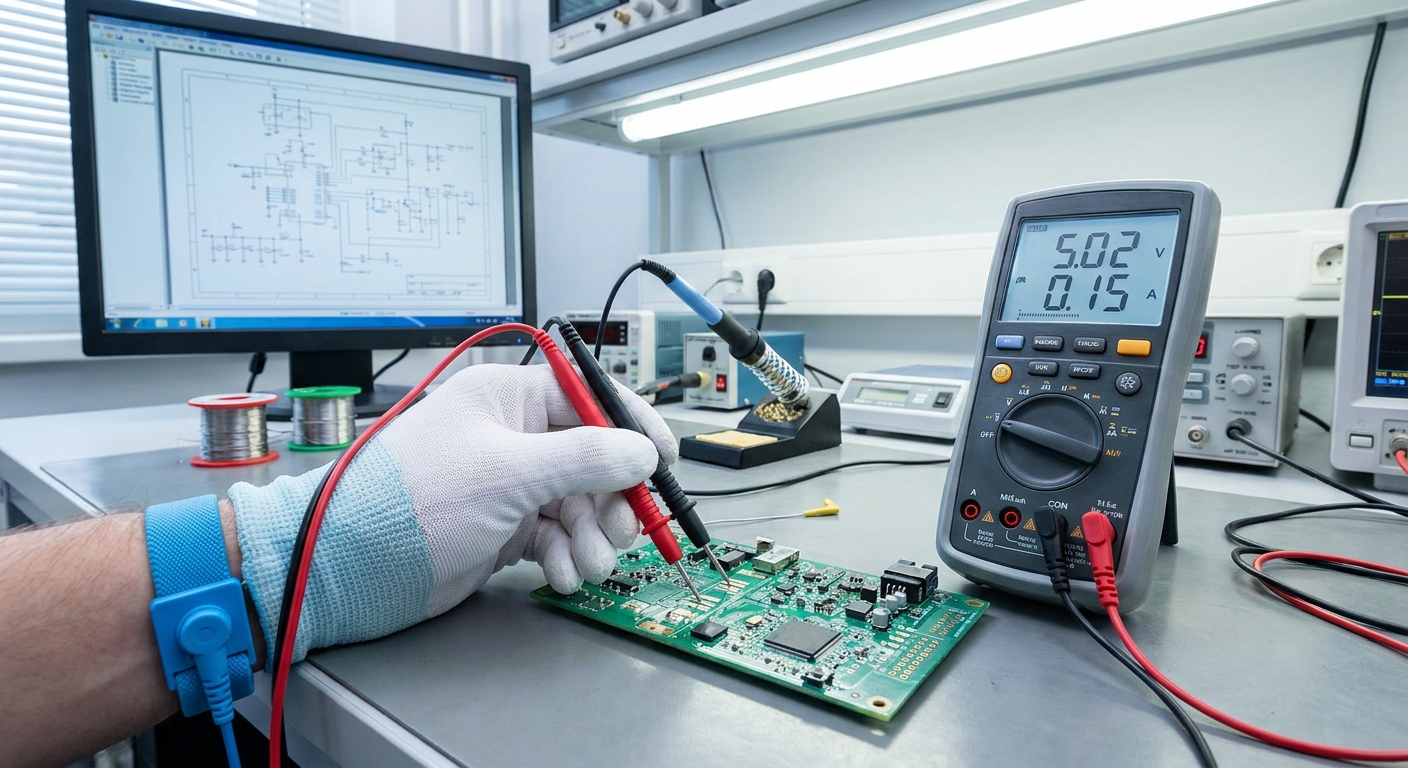
When you design complex electronic devices, choosing the right regulation scheme prevents premature system degradation. Making an informed decision on a constant voltage vs constant current power supply protects your sensitive downstream circuits from fluctuating impedances and thermal challenges.
The wrong choice could lead to immediate component stress or permanent damage. Designing with early alignment in mind ensures long-term device stability and eliminates costly certification delays.
Does your system require a fixed operating voltage?
If your product uses multiple modules connected in parallel, maintaining a steady, fixed operating voltage is your primary design priority. Under this setup, the power supply maintains a steady voltage output while the current scales based on active device demands.
Think about it: this approach is ideal for systems where individual load modules are switched on and off independently.
- Maintains steady output voltage regardless of current fluctuations.
- Allows independent control of parallel-connected sub-circuits.
How do LED arrays react to unregulated currents?
LEDs are highly sensitive, non-linear semiconductor devices whose internal resistance decreases as their operating temperature rises. If you power them with a fixed voltage without current regulation, they will draw increasing current as they warm up.
Here is why: this loop leads to thermal runaway, which causes catastrophic field failures and permanent damage.
- Prevents thermal runaway by limiting the maximum current flow.
- Ensures consistent brightness and extends the lifetime of LED arrays.
Key Takeaway: Pairing your devices with the correct regulation scheme ensures long-term operational stability and eliminates expensive warranty claims.
| Parameter | Constant Voltage (CV) | Constant Current (CC) | |
|---|---|---|---|
| Output Behavior | Fixed Voltage / Variable Current | Variable Voltage / Fixed Current | |
| Load Connection | Parallel | Series | |
| Primary Risk | Overcurrent / Overheating | Open Circuit Voltage Spikes |
Use this baseline comparison to determine which electrical parameter your load inherently dictates.
How does a constant voltage vs constant current power supply work?
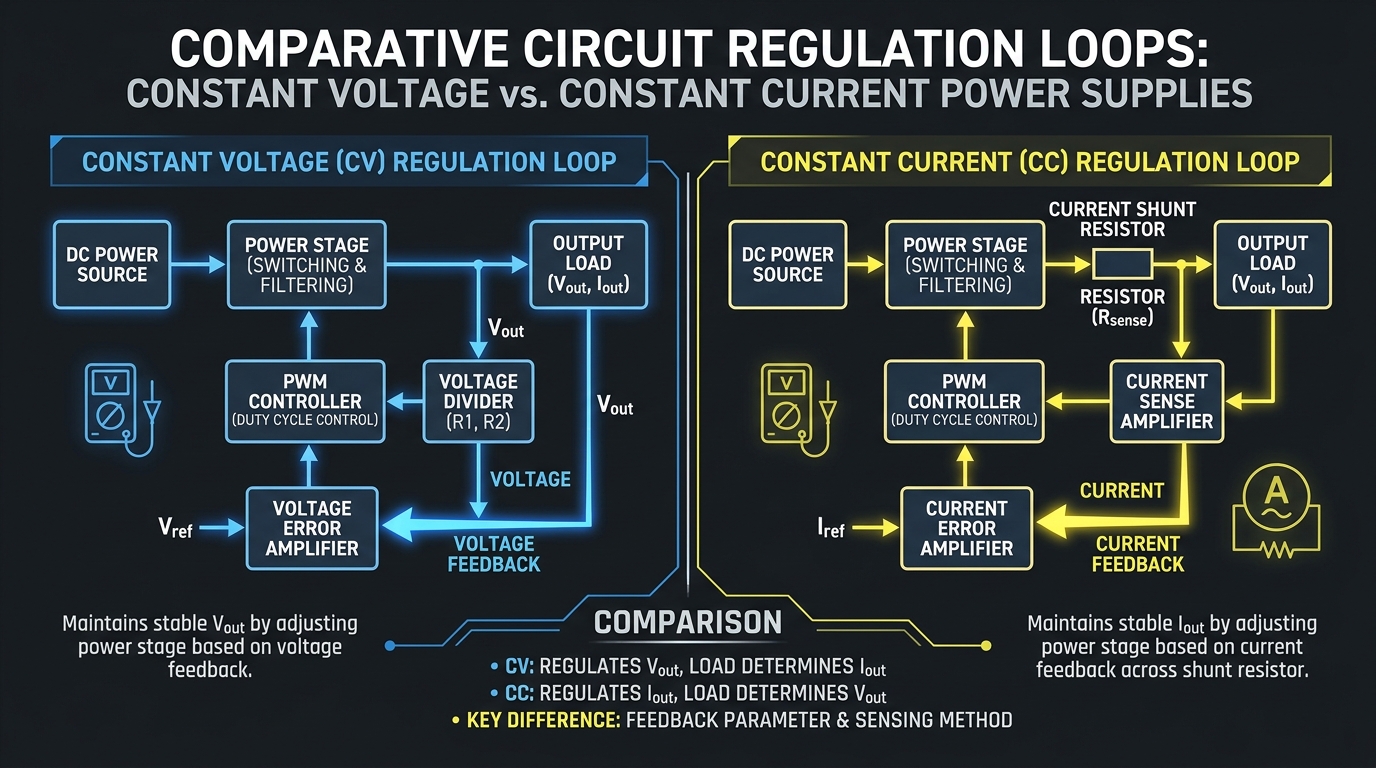
At their core, both power topologies rely on closed-loop feedback systems to monitor and adjust output parameters in real-time. The fundamental difference of a constant voltage vs constant current power supply lies in which specific electrical parameter the internal control loop prioritizes as its primary feedback variable.
Understanding this internal feedback mechanism is essential for integrating the adapter into your system’s power architecture. It allows engineers to predict how the supply will react to extreme load shifts.
What is the role of feedback loop regulation?
The feedback loop continuously samples the output terminal conditions via a voltage divider or a current-sense resistor. It compares these readings to a stable internal reference voltage and adjusts the duty cycle of the high-frequency switching transistor accordingly.
Look at it this way: these microsecond-level adjustments prevent transient fluctuations from damaging your downstream devices.
- Samples output conditions to maintain strict regulation limits.
- Adjusts switching duty cycle dynamically to absorb line fluctuations.
How do internal shunt resistors maintain stability?
In current-regulated topologies, a low-value precision shunt resistor is placed in series with the load to measure the exact current draw. The voltage drop across this shunt provides a direct feedback signal to the controller, which adjusts output voltage dynamically.
But that is not all: this simple, analog regulation method ensures rapid response to dynamic load changes.
- Utilizes a precision series resistor for high-accuracy current sensing.
- Enables instant regulation adjustments when load impedance shifts.
Key Takeaway: A well-regulated feedback loop guarantees that voltage or current spikes are neutralized before they reach sensitive microprocessors.
| Metric | CV Control Loop | CC Control Loop | |
|---|---|---|---|
| Sensing Component | Parallel Voltage Divider | Series Shunt Resistor | |
| Primary Variable | Output Voltage (Vout) | Output Current (Iout) | |
| Response Time | Fast transient response | Ultra-fast current limiting |
Selecting the correct feedback design ensures that power-up inrush currents do not degrade your circuit components over time.
When is a constant voltage vs constant current power supply used?

Different system layouts require distinct power topologies to operate efficiently and safely in commercial environments. Knowing when to apply a constant voltage vs constant current power supply ensures your project’s physical wiring configurations support reliable long-term operation.
Mismatching the wiring topology and the driver layout can lead to immediate operational failure. Choosing early determines whether your installation succeeds or fails in the field.
Why is parallel wiring ideal for constant voltage?
Parallel circuits maintain an equal voltage drop across all branches, allowing you to add or remove loads without affecting other modules. This setup is perfect for LED strips, modular signage, and office networking hubs where load demands fluctuate dynamically.
Here is why: it simplifies installation and reduces system-wide maintenance overhead significantly.
- Maintains consistent voltage drop across all connected loads.
- Allows flexible hot-swapping or adding of individual modules.
How does series wiring benefit from constant current?
Series wiring forces the exact same current through every single component, ensuring uniform output from series-connected LEDs or sensors. This eliminates brightness variations caused by small differences in forward voltage drop across individual semiconductor junctions.
The best part? It prevents single-point current overloads that can degrade entire chains of devices.
- Guarantees identical current flow through all series-connected elements.
- Eliminates the risk of current hogging in multi-semiconductor systems.
Key Takeaway: Selecting the correct wiring architecture simplifies system expansion and drastically reduces field wiring installation errors.
| Wiring Type | CV Applications | CC Applications | |
|---|---|---|---|
| Parallel Configuration | Excellent (standard for CV strips) | Poor (causes severe current imbalance) | |
| Series Configuration | Poor (voltage drops accumulate) | Excellent (ensures identical current) | |
| Scalability | Easy (plug-and-play parallel modules) | Complex (requires voltage range recalculation) |
Analyze your physical layout to determine whether series or parallel wiring minimizes your overall cable routing complexity.
What is a constant voltage vs constant current power supply choice?
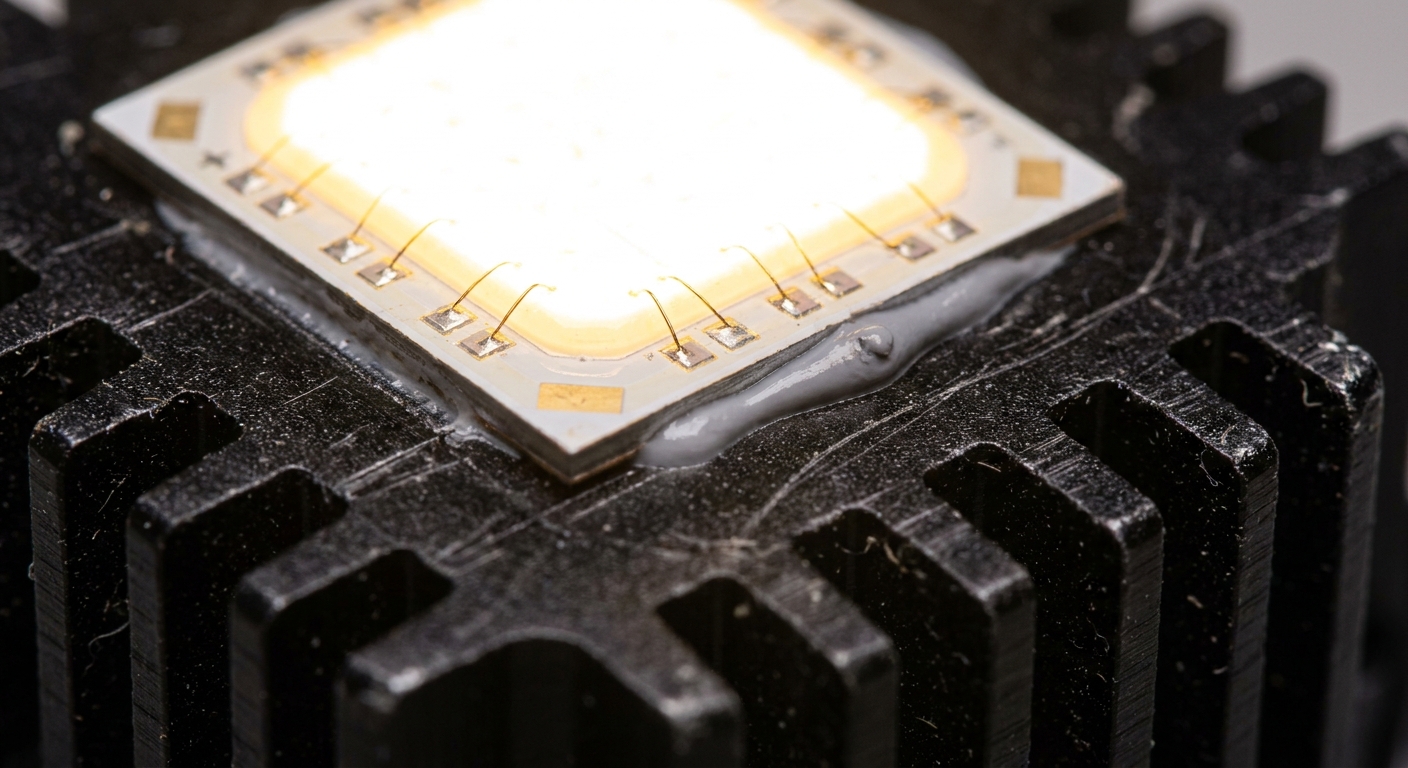
Your choice of power adapter topology has significant implications for overall thermal management, system efficiency, and safety compliance. Evaluating these performance parameters during the early design phase of a constant voltage vs constant current power supply choice prevents costly redesigns and certifications later.
Proper evaluation ensures your final product operates within safe, specified thermal boundaries. Neglecting these details could result in critical safety hazards.
How do driver efficiency ratings impact your decision?
Operating a power supply outside its optimal design window dramatically lowers its efficiency and increases waste heat. Constant voltage models are most efficient at or near their maximum rated load capacities.
Look at it this way: constant current models maintain high efficiency as long as the total load voltage remains within their designated output windows.
- Maximizes efficiency when the driver is matched to the exact load profile.
- Reduces internal heat generation, extending capacitor life.
Why does thermal runaway threaten unqualified circuits?
Without current limiting, heating semiconductors draw more current, generating more heat in a destructive loop known as thermal runaway. This thermal stress degrades internal encapsulation materials, causing color shifts in LEDs and dielectric breakdown in passive components.
Think about it: using a current-limiting power supply is your primary defense against this thermal failure mode.
- Stops the destructive positive feedback loop of temperature and current.
- Protects valuable semiconductor junctions from localized overheating.
Key Takeaway: Proactive thermal prevention reduces product return rates and protects your brand’s reputation for high reliability.
| Parameter | CV Thermal Impact | CC Thermal Impact | |
|---|---|---|---|
| Efficiency Window | Peak near max load limit | High across full voltage compliance | |
| Thermal Runaway Protection | None (requires on-board regulators) | Inherently protected by fixed current | |
| Heat Dissipation Requirement | Moderate | High (at maximum voltage limits) |
Ensure that your engineering team conducts detailed thermal mapping to match the driver’s thermal output with your system’s enclosure cooling capabilities.
Who needs a constant voltage vs constant current power supply unit?
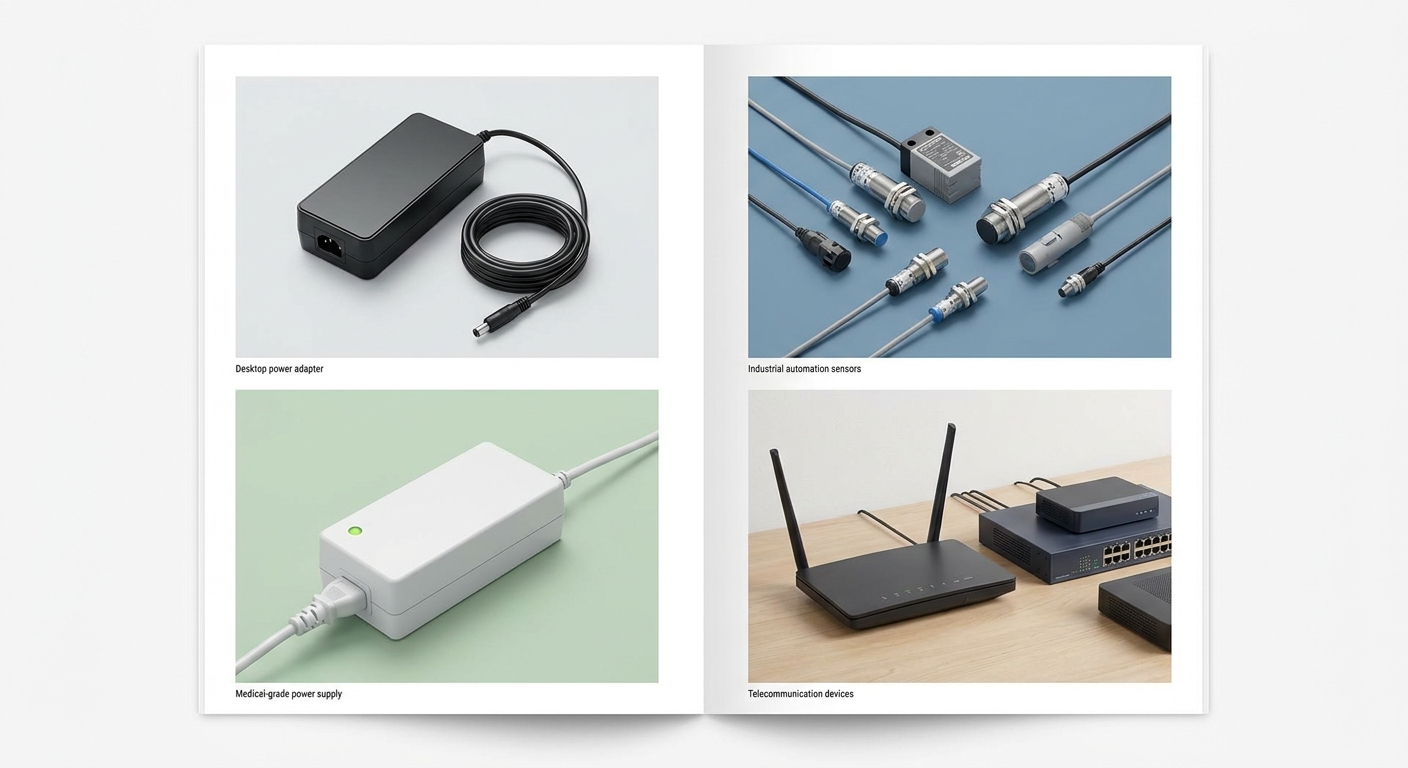
Procurement teams, product designers, and quality engineers across various high-value industries must make informed choices regarding these power configurations. Sourcing a high-quality constant voltage vs constant current power supply from a certified manufacturer ensures your products meet global market demands.
Aligning engineering and procurement goals early streamlines the entire global sourcing process. This cooperation keeps your manufacturing timelines on schedule.
Are you designing high-precision medical devices?
Medical diagnostics, patient monitoring systems, and surgical equipment require highly stable power to ensure accuracy and safety. These systems often utilize custom dual-mode or current-limited power architectures to safeguard patient-connected components from sudden electrical surges.
Here is why: strict compliance with international standards is mandatory for these life-critical applications.
- Ensures isolation and minimal leakage currents for patient safety.
- Provides ultra-stable outputs to maintain measurement accuracy.
Do industrial automated systems need stable voltage?
Industrial PLCs, sensors, and actuator networks require highly stable voltage rails to prevent operational errors on the factory floor. Sudden voltage drops can trigger false sensor readings, halt production lines, or cause safety systems to trip unexpectedly.
But that is not all: ruggedized, industrial-grade voltage adapters are essential to withstand these demanding electrical environments.
- Resists high-voltage transients common in industrial environments.
- Guarantees continuous operation of factory automation networks.
Key Takeaway: Sourcing pre-certified, industry-specific power adapters minimizes regulatory approval cycles and speeds up your time-to-market.
| Sourcing Group | CV Needs | CC Needs | |
|---|---|---|---|
| Medical OEMs | High (for stable diagnostic rails) | High (for laser and sensor arrays) | |
| Industrial Automation | Essential (for PLC and sensor networks) | Low (rarely used for control lines) | |
| Distributors | High demand (standard B2B items) | High demand (commercial lighting markets) |
Map your industry-specific certification requirements early to ensure the sourced power adapters possess the necessary global safety marks.
Where does constant voltage vs constant current power supply apply?

Real-world deployments demonstrate the practical application of these power concepts across various everyday technologies. Matching the correct constant voltage vs constant current power supply to your specific application environment prevents premature system failures in the field.
Understanding field conditions helps you select the appropriate ingress protection and casing durability. Testing in actual field environments is key to product longevity.
How are heavy-duty outdoor LED displays powered?
Large outdoor digital billboards and stadium displays utilize high-power constant current drivers to maintain uniform brightness across thousands of LED modules. These drivers are engineered with rugged, IP-rated enclosures to withstand extreme outdoor temperature swings and moisture.
Look at it this way: this design ensures consistent, high-performance visual output in demanding outdoor settings.
- Maintains consistent pixel brightness across vast outdoor display panels.
- Protects internal electronics against dust, water, and humidity.
What driving topology works best for CCTV security?
CCTV security cameras, motorized PTZ mounts, and infrared night-vision illuminators require a highly stable constant voltage supply to operate reliably. The camera’s active power draw fluctuates as the motors tilt, zoom, and activate infrared LEDs.
Here is why: a steady voltage supply ensures clean video signals and prevents camera resets during peak power demands.
- Provides stable power during dynamic motor and IR load changes.
- Prevents voltage drops that cause signal degradation or reboot loops.
Key Takeaway: Choosing application-specific power solutions reduces field maintenance costs and ensures unbroken service delivery.
| Application | Preferred Topology | Primary Benefit | |
|---|---|---|---|
| Outdoor LED Displays | Constant Current (CC) | Uniform brightness across long distances | |
| CCTV / Security Systems | Constant Voltage (CV) | Clean video signal and reliable motor operation | |
| Smart City Infrastructure | Hybrid / CV | Modular integration of varied sensors |
Review the operating environment’s moisture and dust exposure to determine the necessary IP rating for your power adapter.
Which is better: constant voltage vs constant current power supply?

Neither topology is universally superior; each is optimized for specific electronic loads and system architectures. Determining which is better for your project requires a balanced evaluation of flexibility, component costs, and warranty risks when looking at a constant voltage vs constant current power supply .
A thorough comparison highlights key trade-offs that directly affect your bottom-line manufacturing costs. Sourcing standard topologies typically yields the highest immediate savings.
Does your project demand maximum system flexibility?
If you are designing modular, field-expandable consumer electronics or smart home ecosystems, constant voltage provides greater installation flexibility. Users can easily attach additional devices or accessories in parallel without recalculating drive currents.
The best part? It makes this topology preferred for consumer-facing, plug-and-play product lines.
- Allows end-users to expand systems without technical expertise.
- Simplifies stocking requirements with standardized voltage levels.
How do upfront component procurement costs compare?
Constant voltage systems generally feature lower initial component costs because the adapters are highly standardized and produced in high volumes. Constant current systems, while occasionally more expensive due to specialized feedback circuits, eliminate the need for step-down regulators on your device’s internal PCB.
Think about it: this design can lower your overall bill of materials (BOM) cost.
- CV benefits from economies of scale on highly standardized models.
- CC reduces total component count on the receiver’s PCB.
Key Takeaway: Aligning your design choice with your manufacturing scale maximizes your gross margins and design simplicity.
| Evaluation Vector | Constant Voltage (CV) | Constant Current (CC) | |
|---|---|---|---|
| System Flexibility | High (ideal for modular expansions) | Low (requires fixed configurations) | |
| BOM Cost Impact | Lower adapter cost, higher PCB cost | Higher adapter cost, lower PCB cost | |
| Risk Mitigation | Requires additional on-board protection | Inherently protects active loads |
Calculate the total combined cost of both the external adapter and your internal PCB regulators to find the true economic sweet spot.
Can you mix constant voltage vs constant current power supply tech?
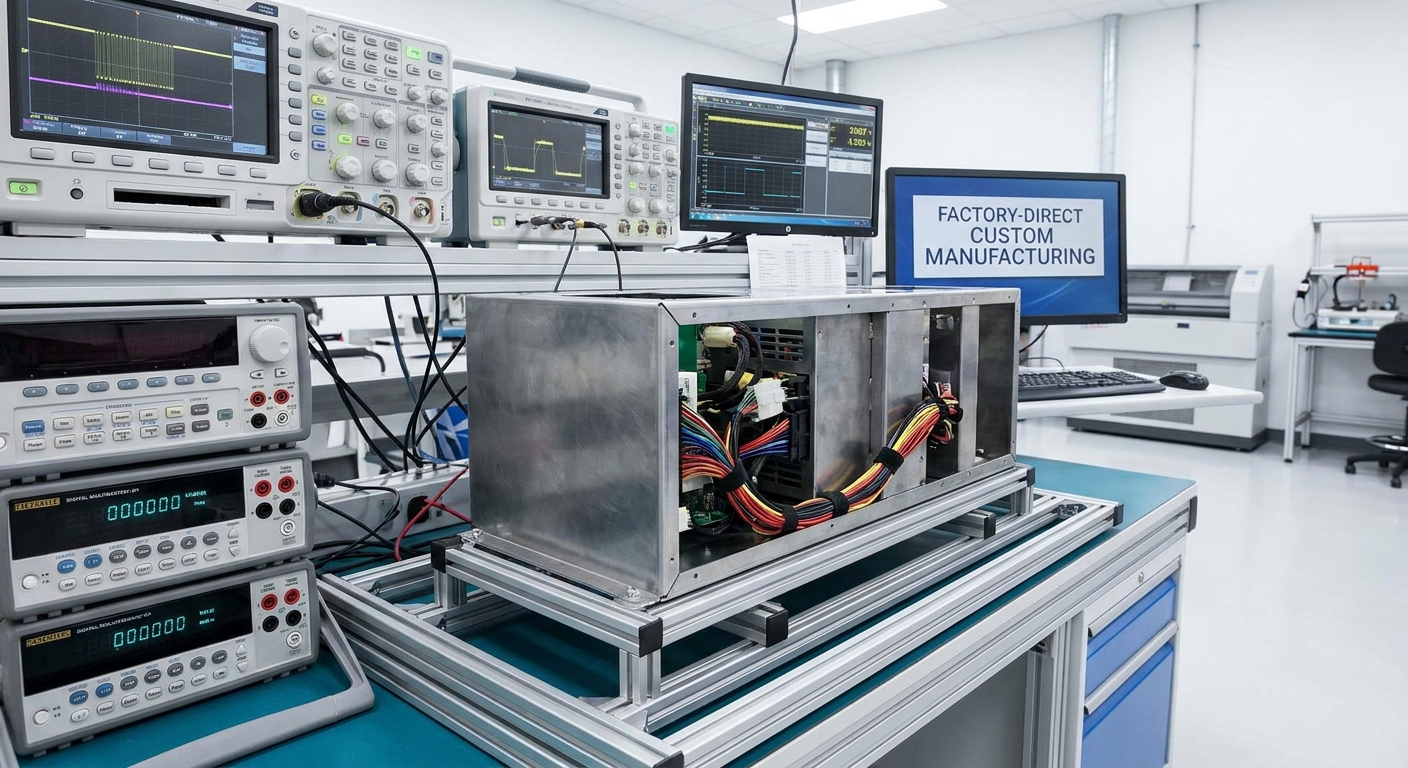
Advanced power designs often combine both topologies to achieve optimal efficiency, control, and system protection. Integrating both systems in a multi-stage layout is a powerful way to handle the constant voltage vs constant current power supply challenge in complex systems.
Understanding these hybrid configurations allows you to design highly sophisticated, multi-stage power systems. It gives you the best of both regulation styles.
What is a two-stage power conversion architecture?
A two-stage system uses a highly efficient, primary AC/DC constant voltage adapter to deliver stable bus voltage to your device. Locally, on the device’s internal PCB, compact DC/DC buck-boost regulators convert this voltage into precise constant current outputs for individual sub-circuits.
Look at it this way: this hybrid approach delivers both modular flexibility and high-precision load control.
- Combines the benefits of high-efficiency AC distribution with local control.
- Isolates sensitive sub-circuits from main power distribution noise.
How do buck-boost converters bridge the design gap?
Integrated buck-boost converter chips allow your system to step output voltage up or down as needed to maintain a constant current. This bridging technology is essential when input battery voltages fluctuate above and below the forward voltage drop of your LED array.
The best part? It maximizes battery efficiency and extends device runtime in portable applications.
- Maintains strict regulation even during high battery voltage drops.
- Minimizes waste heat by adjusting switching duty cycles dynamically.
Key Takeaway: Hybrid designs offer unmatched performance in critical applications like portable medical devices or professional aerospace electronics.
| Technology Layer | Primary Role | Output Characteristic | |
|---|---|---|---|
| Stage 1: Primary AC/DC | Voltage Distribution | Constant Voltage | |
| Stage 2: Local DC/DC | Precision Load Regulation | Constant Current | |
| Combined System | Complex Multi-Circuit Drive | Highly Stable Hybrid |
Use hybrid architectures when your product must support both high-speed processing chips and high-power LED arrays simultaneously.
Cost of a constant voltage vs constant current power supply line?
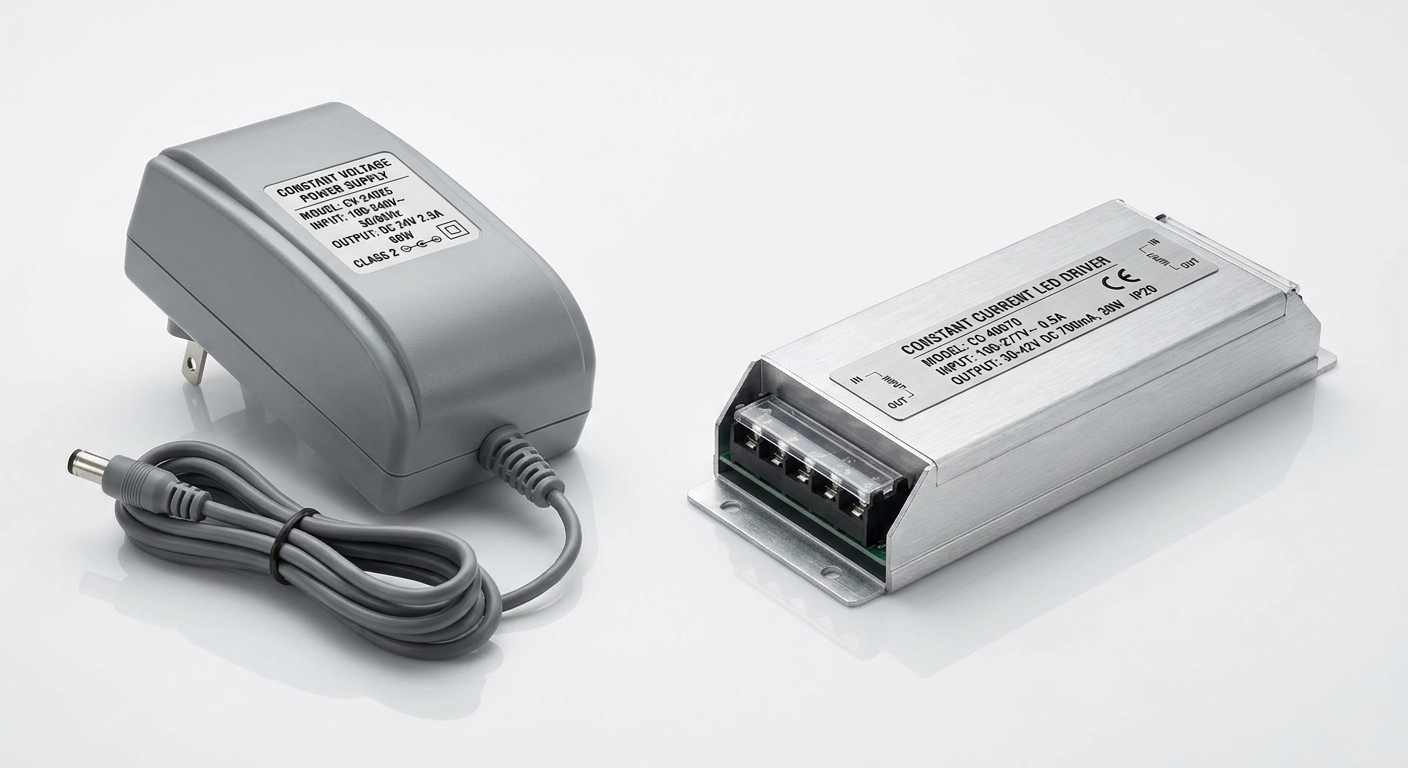
When sourcing power adapters at volume, you must balance unit costs against safety compliance and manufacturing quality. Sourcing a constant voltage vs constant current power supply line directly from an experienced OEM/ODM factory optimizes your total cost of ownership.
Working with a trusted partner guarantees consistent component quality across massive production runs. This consistency is vital for maintaining product performance.
Why do complex safety certifications affect unit cost?
Acquiring and maintaining global safety certifications (such as UL, CE, FCC, PSE, KC, and SAA) requires rigorous testing and continuous factory audits. These certifications protect your brand from legal liabilities and facilitate smooth entry into international markets.
Here is why: working with a pre-certified manufacturer eliminates these costly compliance roadblocks.
- Saves tens of thousands of dollars in independent testing fees.
- Ensures faster regulatory approval in strict global jurisdictions.
How does manufacturing volume lower your bill of materials?
Sourcing your power adapters in larger production batches allows you to benefit from raw material economies of scale. High-volume manufacturing lines lower per-unit assembly, quality control, and testing costs.
But that is not all: this approach enables you to secure premium-grade components and stable build quality at competitive wholesale prices.
- Lowers unit costs through high-volume material procurement.
- Optimizes production line efficiency with continuous automated runs.
Key Takeaway: Certified factory-direct sourcing protects your downstream supply chain from expensive customs delays or recall risks.
| Cost Category | Small-Batch CV/CC Sourcing | High-Volume OEM/ODM Factory | |
|---|---|---|---|
| Per-Unit Cost | High (retail or distributor markups) | Low (factory-direct wholesale pricing) | |
| Certification Sharing | Restricted (requires custom filings) | Included (fully transferable global marks) | |
| Customization Flexibility | Extremely limited | High (custom cables, housings, and specs) |
Compare your projected annual volume against factory minimum order quantities (MOQs) to maximize your purchasing leverage.
What limits constant voltage vs constant current power supply gear?
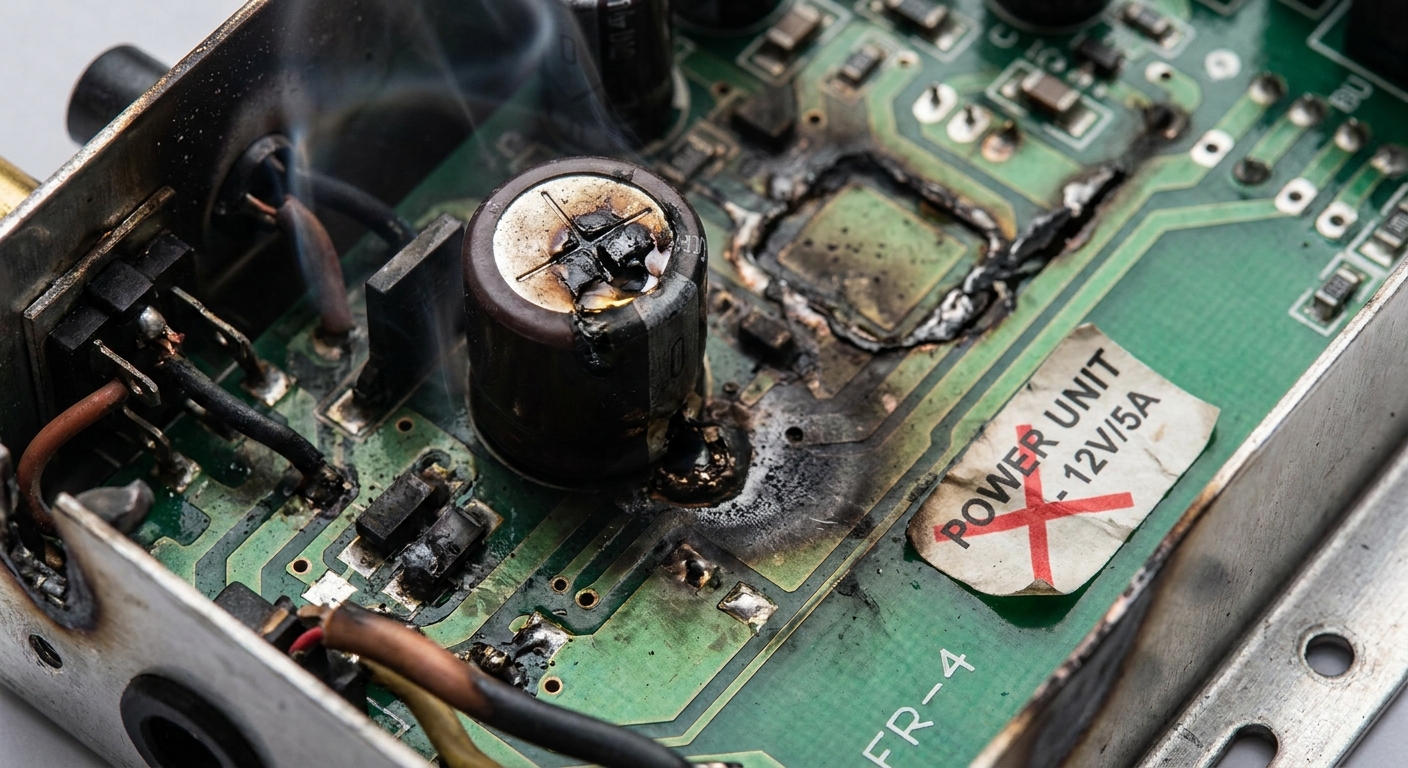
Every power supply topology has physical boundaries and operating limits that you must respect to ensure safety and reliability. Identifying these limiting factors in a constant voltage vs constant current power supply design prevents field failures under challenging environmental conditions.
Overlooking physical limits leads to premature component degradation and catastrophic thermal failure. Operating parameters must remain within specified tolerances.
How does environmental temperature degrade performance?
High ambient temperatures increase the internal operating stress on capacitors, switching transistors, and magnetic transformers. Power supplies must be de-rated when operated in environments above 40°C to prevent thermal shutdown or premature failure.
Think about it: proper thermal management, including adequate ventilation or heat sinking, is critical for sustained performance.
- Causes rapid depletion of liquid electrolyte in filter capacitors.
- Forces the control loop to de-rate current output to prevent overheating.
What are the limits of electromagnetic interference?
High-frequency switching power supplies naturally generate electromagnetic interference (EMI) that can disrupt sensitive communication circuits. Your power adapter must incorporate robust internal EMI shielding and line filtering to comply with FCC and CE electromagnetic compatibility standards.
Look at it this way: selecting a fully certified adapter ensures your device will not suffer from or cause EMI issues.
- Prevents high-frequency switching noise from feeding back into the AC mains.
- Protects adjacent wireless sensors from receiver degradation or range loss.
Key Takeaway: Designing with generous thermal and EMI headroom guarantees stable long-term operation under harsh environmental conditions.
| Operating Limit | Impact on CV Supplies | Impact on CC Supplies | |
|---|---|---|---|
| Thermal Overload | Causes voltage drop and ripple increase | Drops output voltage to limit internal heat | |
| EMI Generation | High (controlled by passive line filters) | High (requires optimized loop layouts) | |
| Overload Behavior | Shuts down or enters hiccup mode | Continuously adjusts voltage down |
Factor in a 20% performance margin on both temperature and load limits to maximize the operational lifespan of your hardware.
Conclusion
Choosing the correct power architecture is essential for ensuring product reliability, long-term performance, and regulatory compliance. At Merryking Power, we leverage over 20 years of specialized manufacturing experience to deliver certified, high-performance power adapters from 1W to 600W. Whether your project requires standard wall-mount adapters, rugged desktop units, or specialized medical-grade power supplies, our engineering team is ready to configure the ideal solution for your needs.
Don’t let power supply mismatches delay your product launch or compromise your quality standards. Please contact us today to discuss your technical specifications, request prototype samples, and secure a competitive factory-direct quote.
FAQ Section
Can I use a constant voltage power supply for raw LEDs?
No, you should not. Raw LEDs lack internal current regulation, so powering them with a constant voltage supply can quickly cause thermal runaway and destroy the diodes as they heat up.
What’s the best power supply topology for modular parallel systems?
Constant voltage is the best choice. This topology maintains a stable voltage across all parallel branches, allowing you to add or remove modules easily without altering the voltage delivered to the other components.
How do I know if my system requires a constant current supply?
You need constant current if your load has a variable impedance but requires a fixed operating current to prevent damage. This is most common in high-brightness LED arrays, battery charging circuits, and laser diodes.
Can I mix series and parallel wiring with a single standard driver?
Yes, but it requires highly complex balance circuits. Combining both styles with a standard driver is highly discouraged in B2B applications because a single component failure will unbalance the entire array, risking massive damage.
What’s the best way to handle wide ambient temperature variations in the field?
Choose a power supply with a wide temperature rating and built-in thermal de-rating protection. Sourcing a high-quality, fully enclosed power adapter with built-in thermal management guarantees consistent performance even in harsh outdoor environments.