Choosing between OEM and ODM power adapters depends on whether your brand requires a fully custom power solution built from scratch or a pre-certified, cost-effective design ready for rapid market launch. Imagine preparing for a major product launch, only to realize your custom power supply has failed EMI testing and delayed your ship date by three months. This nightmare scenario often stems from a lack of clarity during the sourcing phase, leaving procurement managers frustrated with unexpected development fees and regulatory roadblocks. By comparing OEM vs ODM power adapters , you can make an informed decision that protects your development budget and ensures a seamless path to market.
What Are OEM vs ODM Power Adapters?
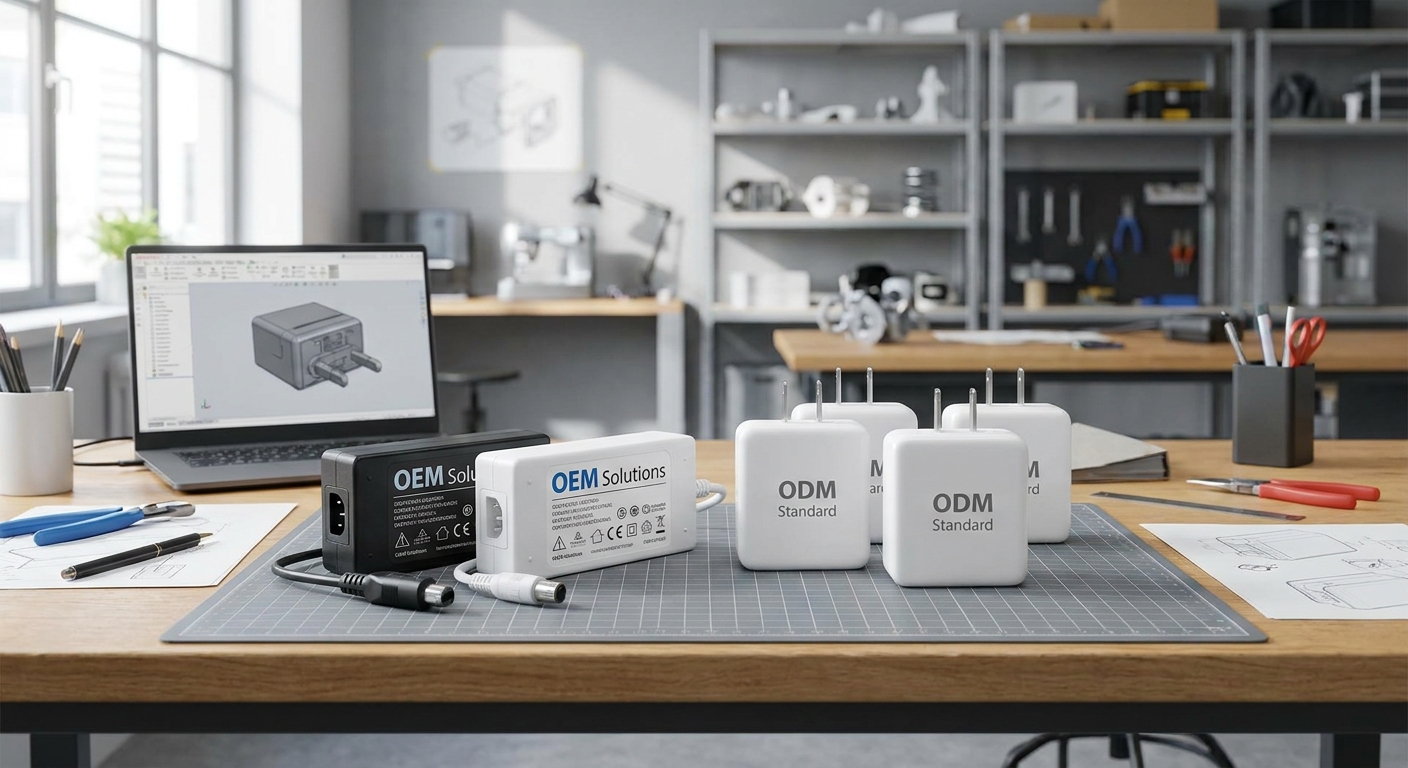
These two manufacturing models represent fundamentally different approaches to product engineering, where OEM means building your custom design and ODM utilizes the factory’s pre-existing design. Whether you are launching a consumer device or an industrial network switch, your choice determines who owns the underlying electrical blueprint. Understanding the operational boundaries of OEM vs ODM power adapters allows you to align your hardware procurement with your business’s technical resources.
What Is an OEM Power Adapter Design?
An OEM power adapter is a custom-engineered power supply built specifically to match your company’s proprietary electrical and physical specifications. Your engineering team defines the PCB layout, component selection, housing dimensions, and performance characteristics from scratch.
You should consider this route if you need specialized features:
- Unique multi-rail voltage configurations
- Specialized medical-grade leakage tolerances
- Custom-molded physical enclosures
What Is an ODM Power Adapter Platform?
An ODM power adapter is a turnkey, pre-certified power supply designed and manufactured entirely by the factory. You simply browse the supplier’s existing catalog, select a model that fits your output needs, and apply your custom branding. Think about it: why spend months in laboratory testing when pre-approved platforms are ready to ship?
Key Takeaway: Choose OEM for absolute custom design freedom, but leverage ODM to launch rapidly using field-proven, pre-certified factory hardware.
| Feature | OEM Power Adapter | ODM Power Adapter | |
|---|---|---|---|
| Design Ownership | Your Brand | Manufacturer | |
| Engineering Phase | Full Custom R&D | Turnkey Platform | |
| Initial Cost | High (Tooling/NRE) | Low (No Tooling) |
Evaluating your internal engineering capabilities is the first step in deciding which development path is viable for your brand.
What Is the Difference Between OEM vs ODM Power Adapters?
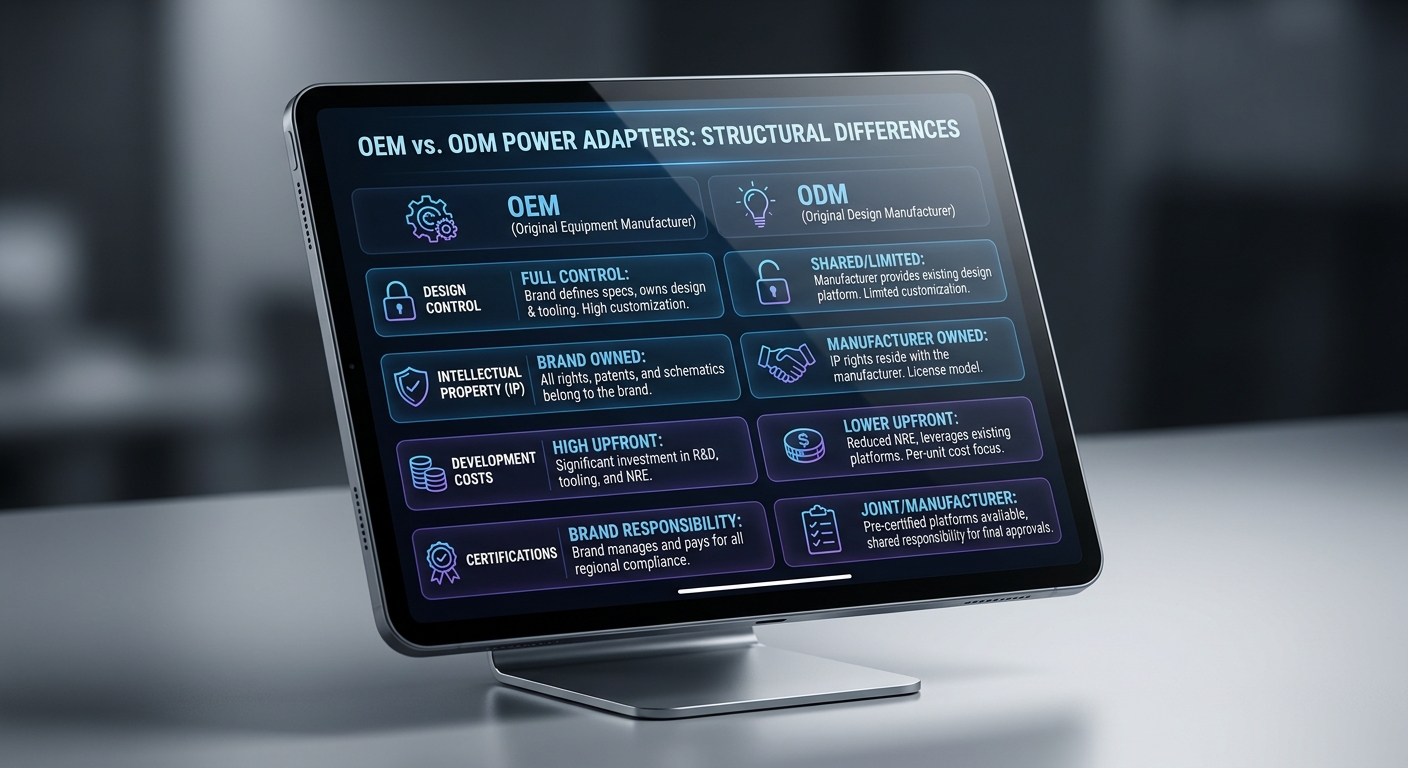
The primary difference lies in intellectual property ownership, tooling control, and the regulatory compliance path chosen for your hardware. Sourcing OEM vs ODM power adapters requires you to evaluate who takes responsibility for compliance testing and who owns the manufacturing molds. This decision sets the foundation for your unit cost, supply chain stability, and vendor portability.
Who Controls the Design and Bill of Materials?
With an OEM model, you maintain complete authority over the bill of materials, allowing you to specify exact semiconductor brands or capacitor grades. This strict component control ensures consistent quality and protects your design from unexpected factory substitutions.
You should track these key hardware variables:
- Full traceability of internal components
- Immunity to unauthorized manufacturer changes
- Standardized performance across multiple production runs
Who Manages the Regulatory Compliance Filings?
Under the ODM model, the manufacturer has already completed the expensive global safety certifications under their own name. You can quickly register your brand on these certificates through a low-cost multiple listing process. But wait, there is more: this shortcut saves your business thousands of dollars in laboratory testing fees and shields you from compliance risks.
Key Takeaway: OEM gives you total component control at your expense, while ODM transfers compliance burdens and development risks entirely to the factory.
| Metric | OEM Model | ODM Model | |
|---|---|---|---|
| IP Ownership | Fully Owned by You | Retained by Factory | |
| Safety Certifications | Brand Funded | Pre-Certified by Factory | |
| BOM Control | Absolute | Standardized by Supplier |
Your regulatory risk tolerance should dictate whether you inherit certification processes or license pre-certified hardware.
Why Compare OEM vs ODM Power Adapters Before Sourcing?

Comparing these two paths beforehand prevents severe financial bottlenecks, launch delays, and uncompetitive unit margins that can destroy your product’s profitability. A thorough comparison of OEM vs ODM power adapters ensures you do not waste valuable engineering hours or select an incompatible power architecture. This upfront analysis secures a robust supply chain tailored to your specific market segment.
How Do Unit Costs and Capital Outlays Scale?
Sourcing without a clear cost analysis can quickly drain your working capital during the pre-production phase. While OEM adapters lower your unit cost at massive volumes, their initial non-recurring engineering fees can be prohibitive for smaller projects.
You must balance these financial factors carefully:
- Amortization of custom mold tooling
- Minimum order quantity (MOQ) thresholds
- Long-term margins versus upfront cash flow
How Does Sourcing Affect Brand Differentiation?
A generic power supply can undermine a high-end product’s premium market positioning. Custom OEM power housings let you design sleek, brand-aligned adapters that improve the consumer’s unboxing experience. Think about it: does a standard off-the-shelf plastic brick match your brand’s aesthetic vision?
Key Takeaway: Pre-sourcing analysis keeps your upfront capital aligned with your target market positioning and volume expectations.
| Volume Scenario | Recommended Model | Primary Financial Driver | |
|---|---|---|---|
| Under 5,000 units | ODM Platform | Avoids heavy tooling costs | |
| Over 50,000 units | OEM Custom | Minimizes unit cost (COGS) |
Evaluating your volume projections early ensures you choose the model that maximizes your return on capital.
Which Businesses Benefit Most From OEM vs ODM Power Adapters?
Enterprise-level brands and specialized medical device companies benefit most from OEM models, while fast-growing startups and SMBs gain a massive advantage from ODM platforms. Aligning your company’s scale and target industry with the correct version of OEM vs ODM power adapters prevents major organizational friction. This alignment ensures you utilize your internal engineering resources where they add the most product value.
Why Do Enterprise and Medical Brands Require OEM?
Specialized industries require precise electrical tolerances and strict, non-standard compliance certifications that off-the-shelf hardware cannot deliver. For instance, medical equipment demands extremely low leakage currents to ensure patient safety under regulatory guidelines.
You can benefit from OEM for these sectors:
- Medical device standard IEC 60601-1
- Ruggedized industrial power systems
- Custom form factors for tight integration
How Do Agile Startups Leverage ODM Platforms?
Startups usually prioritize rapid software deployment and core feature optimization over power adapter engineering. Using pre-certified ODM adapters lets these lean teams conserve valuable capital and engineering bandwidth for critical tasks. Here is the real catch: trying to engineer a custom power brick from scratch can drain your early seed funding before you launch.
Key Takeaway: Enterprises leverage OEM for unique technical demands, while lean companies use ODM to preserve vital startup capital.
| Industry / Scale | Sourcing Fit | Key Operational Goal | |
|---|---|---|---|
| Medical Devices | OEM | Strict patient safety compliance | |
| Consumer Startups | ODM | Low capital risk and rapid launch | |
| Industrial Tech | OEM | Harsh environment durability |
Your industry’s compliance landscape should be the primary indicator of whether custom engineering is mandatory.
How Do Development Costs Differ for OEM vs ODM Power Adapters?

OEM development costs include high upfront engineering, custom plastic tooling, and global compliance testing fees, whereas ODM options feature near-zero initial development costs. When sourcing OEM vs ODM power adapters , your budgeting strategy must balance high non-recurring engineering (NRE) costs against per-unit manufacturing margins. A failure to map these costs correctly can leave your business with outstanding development debt before your product reaches mass production.
What Are the Upfront Fees for Custom OEM Projects?
Custom power adapters require significant initial investments to move from concept to actual mass production. You must pay for custom copper winding designs, unique plastic injection molds, and dedicated testing rigs.
These upfront fees include several elements:
- Custom plastic enclosure tooling molds
- Non-recurring engineering (NRE) layout fees
- Complete laboratory regulatory test reports
Why Do ODM Adapters Have Lower Financial Entry Barriers?
ODM power adapters eliminate almost all development costs because the factory has already paid for the design, tooling, and compliance testing. You only pay for the cost of production runs and minor branding custom labels. Think about it: why spend thousands on a custom mold when a pre-made enclosure fits your design perfectly?
Key Takeaway: OEM demands heavy upfront capital for custom molds and tests, while ODM offers a virtually zero-cost entry point into production.
| Expense Category | OEM Custom Cost | ODM Turnkey Cost | |
|---|---|---|---|
| Molds & Tooling | High ($10,000+) | $0 (Standard) | |
| Lab Certifications | High ($15,000+) | Low ($1,000 transfer) | |
| Prototyping Fees | Paid per iteration | Typically free samples |
Selecting ODM allows young brands to allocate capital to market traction rather than back-end power supply development.
How Does Time to Market Compare for OEM vs ODM Power Adapters?
ODM power adapters can launch in as little as four to six weeks, while custom OEM adapters require six to nine months of rigorous engineering, tooling, and validation. In highly competitive sectors, choosing the wrong path for OEM vs ODM power adapters can cause you to miss critical seasonal retail windows entirely. Speed to market remains a major competitive differentiator that directly impacts your market share.
Why Does the OEM Engineering Timeline Take So Long?
Developing a custom power supply requires an extensive, multi-phase hardware engineering process that cannot be rushed without risking safety. You must navigate iterative PCB revisions, physical enclosure tooling runs, and rigorous safety agency test schedules.
The typical timeline phases include:
- PCB layout and thermal testing (6 weeks)
- Tooling mold fabrication and tuning (5 weeks)
- Laboratory safety testing and certification (8 weeks)
Can ODM Platforms Meet Urgent Seasonal Deadlines?
ODM adapters bypass the entire development pipeline since the product is already fully engineered, certified, and ready for assembly. This allows you to launch your product rapidly and beat your competitors to market. Here is the real catch: even a minor delay in your custom power brick can halt your entire product’s assembly line.
Key Takeaway: OEM requires a long-term engineering runway of up to nine months, while ODM enables agile, rapid market launches.
| Sourcing Phase | OEM Timeline | ODM Timeline | |
|---|---|---|---|
| Engineering & Prototyping | 8 – 12 Weeks | 0 Weeks | |
| Safety Testing & Auditing | 8 – 10 Weeks | 1 – 2 Weeks | |
| Total Lead Time | 24 – 36 Weeks | 4 – 6 Weeks |
If your product launch is scheduled for the upcoming holiday season, ODM is the only realistic supply path.
What Customization Options Exist for OEM vs ODM Power Adapters?
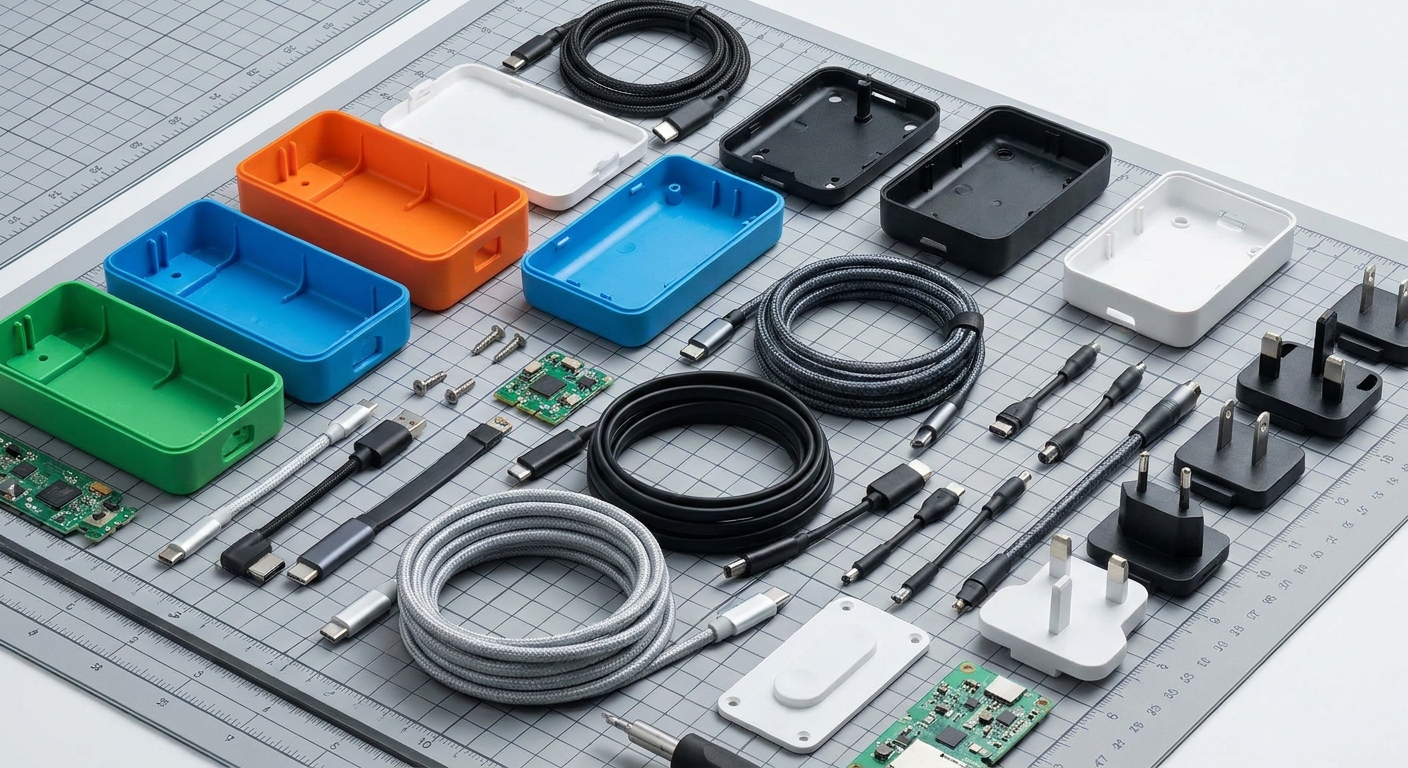
OEM models offer completely unlimited design, structural, and electrical customization, while ODM platforms restrict your changes to cosmetic branding, housing colors, and cable lengths. When evaluating customization levels for OEM vs ODM power adapters , you must decide if your product requires a bespoke physical form factor. Standardizing your requirements can help you leverage cost savings without sacrificing essential product functionality.
What Are the Limits of OEM Custom Engineering?
There are virtually no physical or electrical limitations when developing a fully custom OEM power supply. You can design unique form factors that slide directly into specialized slots, or customize internal PCB layouts for ultra-low noise floor demands.
You have freedom over these elements:
- Bespoke multi-pin DC connector shapes
- Specific internal semiconductor brands
- High-efficiency gallium nitride (GaN) integration
How Much Flexibility Do ODM Adapters Really Offer?
ODM adapters are highly versatile, allowing brands to customize outer casing colors, wire insulation textures, and laser-etched compliance labels. These options let you achieve a premium, coordinated brand look without altering the underlying pre-certified electronics. Think about it: do you truly need custom internal circuits, or is a brand-matching color scheme and custom logo sufficient?
Key Takeaway: OEM delivers total design and electrical freedom, while ODM provides low-cost, smart cosmetic brand integration.
| Customization Scope | OEM Capability | ODM Capability | |
|---|---|---|---|
| Enclosure Shape | 100% Bespoke | Catalog standard only | |
| Electrical Output | Custom Voltages | Standard Voltages | |
| Branding Placement | Deep embossing/molding | Laser etching/silkscreen |
Most brand differentiation happens on the outer casing, which makes ODM highly practical for standard consumer electronics.
How Does Intellectual Property Affect OEM vs ODM Power Adapters?
OEM models guarantee that your company retains complete ownership of all design patents and schematics, whereas the manufacturer owns all intellectual property under an ODM agreement. Navigating intellectual property rights with OEM vs ODM power adapters determines your long-term supply chain leverage and vendor portability. Protecting your intellectual property ensures that competitors cannot legally copy your unique hardware architecture.
Why Is OEM Critical for Proprietary Technologies?
Under the OEM model, your company owns all blueprints, Gerber layout files, and utility patents for the custom power supply. This ensures that the contract factory cannot sell your custom-engineered power system to any other business.
You get these crucial protections:
- Legal recourse against design copying
- Complete control over your technical patents
- Freedom to move production to alternative factories
What Are the Intellectual Property Risks of ODM Sourcing?
With an ODM model, the manufacturer holds all design rights, making your brand dependent on their factory for long-term supply. You cannot transfer their production files to a competitor’s factory if prices rise or quality slips. Here is the real catch: because you do not own the design, your direct competitors can purchase the exact same power adapter from that supplier.
Key Takeaway: OEM protects your competitive advantage and proprietary hardware assets, whereas ODM locks you into the supplier’s intellectual property.
| IP Parameter | OEM Sourcing | ODM Sourcing | |
|---|---|---|---|
| Patent Ownership | Your Brand | Factory Manufacturer | |
| Schematics Access | Fully Available | Restricted/Proprietary | |
| Vendor Portability | High (Move anytime) | None (Locked to factory) |
Ensure your legal counsel reviews mold and layout ownership clauses before finalizing any custom production contracts.
What Factors to Evaluate When Choosing OEM vs ODM Power Adapters?
You must evaluate your total available capital, target launch timeline, required level of customization, and specific regulatory demands before choosing a sourcing model. Analyzing these primary operational factors for OEM vs ODM power adapters protects your business from expensive manufacturing mistakes. A structured evaluation helps procurement managers select a partner that aligns with both immediate budgets and future scale.
How Do Capital Reserves and Cash Flow Impact Sourcing?
Your cash flow is the most critical constraint when managing hardware production schedules and component lead times. Paying for custom molds and safety testing upfront can restrict the capital you need to scale product inventory.
You should assess these cash factors:
- Available cash reserves for upfront R&D
- Amortization timelines for custom tooling
- Cash conversion cycles for early production runs
How Critical Are Your Industry’s Regulatory Standards?
Standard consumer products can easily utilize existing ODM safety certificates for rapid international shipping. However, medical, military, or specialized telecom products often require custom PCB engineering to pass strict safety agency audits. Think about it: will standard off-the-shelf power configurations meet your target market’s safety rules?
Key Takeaway: Score your capital reserves and safety compliance needs side-by-side to determine your optimal sourcing strategy.
| Evaluation Pillar | Sourcing Choice: OEM | Sourcing Choice: ODM | |
|---|---|---|---|
| Financial Reserve | Strong ($50k+ allocation) | Lean / Agile budget | |
| Launch Schedule | Flexible (6+ months) | Rapid (Within 2 months) | |
| Compliance Complexity | Non-standard / Strict | Standard Consumer |
A balanced scorecard approach removes emotional bias and identifies the most stable, cost-effective manufacturing route.
Which Option Is Best for Your Brand: OEM vs ODM Power Adapters?
The best option depends on your technical complexity and budget, where OEM fits proprietary, high-volume products and ODM is ideal for standard, fast-launch applications. Choosing between OEM vs ODM power adapters requires a deep assessment of your brand’s current maturity and long-term scaling strategy. Many successful companies start with pre-certified ODM models before investing in custom OEM designs as their volume grows.
When Is OEM the Absolute Right Choice?
You should choose an OEM power adapter when your main product’s physical design requires an integrated, non-standard power supply format. This is critical for enterprise networking hardware and high-precision medical equipment.
You will benefit from OEM when:
- Complete control over the supply chain is required
- Your power supply is a core product differentiator
- Custom, patented electronics are central to your IP
When Does an ODM Solution Make the Most Business Sense?
ODM is the most logical choice when your product uses standard voltage rails like 5V, 12V, or 24V. This path lets you eliminate engineering overhead, minimize capital risks, and launch your product in record time. But wait, there is more: you get a field-tested product with a proven track record of reliable global operation.
Key Takeaway: Select OEM for custom-engineered proprietary systems, but rely on ODM to secure a fast, low-risk global product launch.
| Business Strategy | Best Manufacturing Path | Strategic Priority | |
|---|---|---|---|
| Rapid Market Testing | ODM Platform | Speed and capital preservation | |
| Proprietary Technology | OEM Custom | Intellectual property control | |
| High Volume Scaling | OEM Custom | Long-term unit cost optimization |
Choose the model that aligns with your current cash flow while leaving room for future custom engineering upgrades.
Conclusion
Selecting the right power partner is just as critical as choosing your manufacturing path. At Merryking Power, we specialize in helping brands solve their hardware challenges by delivering robust power solutions that match exact specifications and strict regulatory requirements. Whether your brand needs custom OEM electrical engineering with unique PCBs and specialized housing dimensions, or fast-launch, pre-certified ODM desktop and wall-mount adapters, our team has the tools and expertise to bring your hardware to market safely. We provide end-to-end support from rapid prototyping and component validation to multiple-listing safety transfers and mass production. If you want to streamline your supply chain, protect your intellectual property, and secure competitive margins, contact us to work with a dedicated factory partner committed to your brand’s global growth and industrial reliability.
Frequently Asked Questions
Can I customize the cable length of an ODM power adapter?
Yes, you absolutely can. Most professional ODM power supply manufacturers allow brands to adjust output cord lengths and choose specific DC connector tips without voiding the underlying safety certifications.
What’s the best way to avoid safety certification delays during sourcing?
Selecting a pre-certified ODM adapter is the fastest path. Because the manufacturer has already secured global certifications, you can skip the lengthy laboratory testing phase completely and transfer compliance quickly.
How do I know if my brand should invest in custom OEM tooling?
Only invest if your product requires a completely unique physical shape or specialized electrical performance. If a standard power brick fits your budget and design, ODM remains the more cost-effective choice.
Can I start with an ODM model and switch to OEM production later?
Yes, this is an excellent strategy. Many businesses launch with ODM adapters to minimize upfront capital risk, then switch to proprietary OEM hardware once high sales volumes justify custom tooling costs.
How do I know if an ODM adapter has genuine global safety certifications?
You must request the active test reports and certificate numbers directly from the supplier. A reputable manufacturer will readily provide valid UL, CE, FCC, and CB verification documents for your compliance team to audit.