Navigating power adapter energy efficiency standards requires understanding the evolving global landscape of Department of Energy (DOE) Level VI mandates, European Ecodesign directives, and advanced wide-bandgap semiconductor designs. You face an increasingly complex, fragmented grid of international compliance rules where a single non-compliant external power supply can cause costly port-of-entry custom delays, trigger heavy financial penalties, or completely derail a multi-million-dollar product launch. To successfully deploy your hardware in international markets, partnering with an experienced manufacturer who strictly adheres to power adapter energy efficiency standards is essential.
What Are Power Adapter Energy Efficiency Standards?
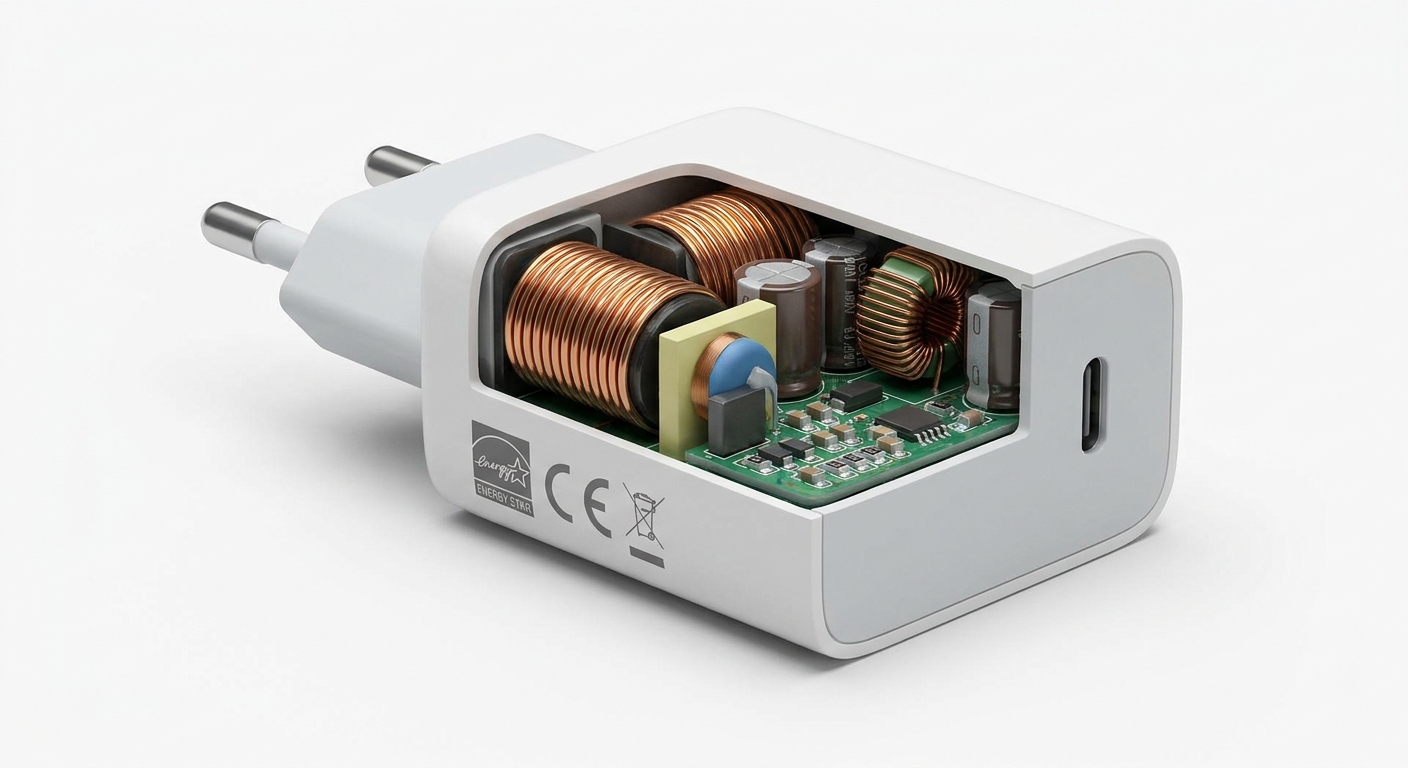
Power adapter energy efficiency standards are mandatory regulatory frameworks that define the minimum active-mode efficiency and maximum standby no-load power consumption allowed for external power supplies. In a highly competitive global market, aligning your procurement strategy with certified power adapter energy efficiency standards is crucial to ensure both legal access and optimized thermal performance.
What Goals Do These Standards Target?
Let’s face it: idle electronic devices can silently drain massive amounts of electricity from the grid. This phenomenon, known as “vampire draw,” led international bodies to establish unified rules. By regulating both operational and standby states, these benchmarks ensure hardware does not waste precious energy when not in active use.
Sourcing compliant units helps you build a highly reliable product ecosystem. When you integrate components built to strict baselines, you achieve:
- Reduced system heat generation.
- Enhanced hardware lifecycle duration.
- Lower utility expenses for your end-users.
Who Regulates These Standards Worldwide?
Here is the deal: navigating the global regulatory web requires knowing who calls the shots. Different regions utilize distinct national authorities to enforce efficiency benchmarks for power adapters. Maintaining compliance means aligning your designs with the correct regional oversight bodies.
Different entities govern market entrance across North America, Europe, and Asia. Key bodies include:
- The US Department of Energy (DOE).
- The European Commission (CE/ErP).
- The Natural Resources Canada (NRCan).
Key Takeaway: Understanding standard definitions early prevents costly engineering re-works. By selecting power components that adhere to international efficiency baselines, you ensure legal safety and superior thermal performance for your devices.
| Metric | Target Goal | Primary Regulatory Body | |
|---|---|---|---|
| Active Mode Efficiency | Average efficiency at 25%, 50%, 75%, & 100% load | US Department of Energy (DOE) | |
| No-Load Power Draw | Standby consumption under idle conditions | European Commission (CE/ErP) | |
| Harmonized Standards | Uniform baseline limits across borders | International Electrotechnical Commission (IEC) |
Verify your current component certifications against these global baseline thresholds to prevent market-entry delays.
Why Do Power Adapter Energy Efficiency Standards Matter?

Power adapter energy efficiency standards matter because they protect manufacturers from severe legal liabilities, ensure global market access, and dramatically reduce the environmental footprint of connected hardware. Sourcing hardware that satisfies global power adapter energy efficiency standards is no longer just a design choice; it is a critical commercial necessity.
How Do They Cut Carbon Footprints?
Think about it: millions of connected devices draw continuous power 24/7. Even a minor 2% drop in conversion efficiency across millions of units scales up to massive grid waste. Modern rules enforce highly efficient power paths that collectively prevent megatons of carbon emissions globally.
By implementing high-efficiency adapters, your company directly contributes to:
- Decreased peak-load grid demands.
- Dramatically lowered industrial greenhouse gas emissions.
- Smarter, greener corporate sustainability metrics.
What Are the Risks of Non-Compliance?
The truth is: ignoring compliance limits is a fast track to business disruption. Customs audits at major ports are increasingly strict regarding energy documentation. Failing to verify efficiency specifications can freeze your entire supply chain overnight.
Non-compliant hardware risks several severe business penalties, including:
- Immediate customs impoundment at regional borders.
- Heavy statutory financial penalties.
- Highly damaging public product recalls.
Key Takeaway: Prioritizing certified components shields your business from legal liabilities while building consumer trust. Making efficiency a non-negotiable metric ensures your products remain competitive and legally compliant.
| Business Metric | Impact of Compliance | Risk of Non-Compliance | |
|---|---|---|---|
| Customs Clearance | Seamless, rapid port transit | Shipments impounded at border | |
| Legal Liability | Complete protection from regulatory fines | Heavy statutory financial penalties | |
| Brand Integrity | High reputation for green sustainability | Damaging public product recalls |
Review your supply chain compliance documentation today to safeguard your shipments from port audits.
Which Global Power Adapter Energy Efficiency Standards Should Manufacturers Follow?
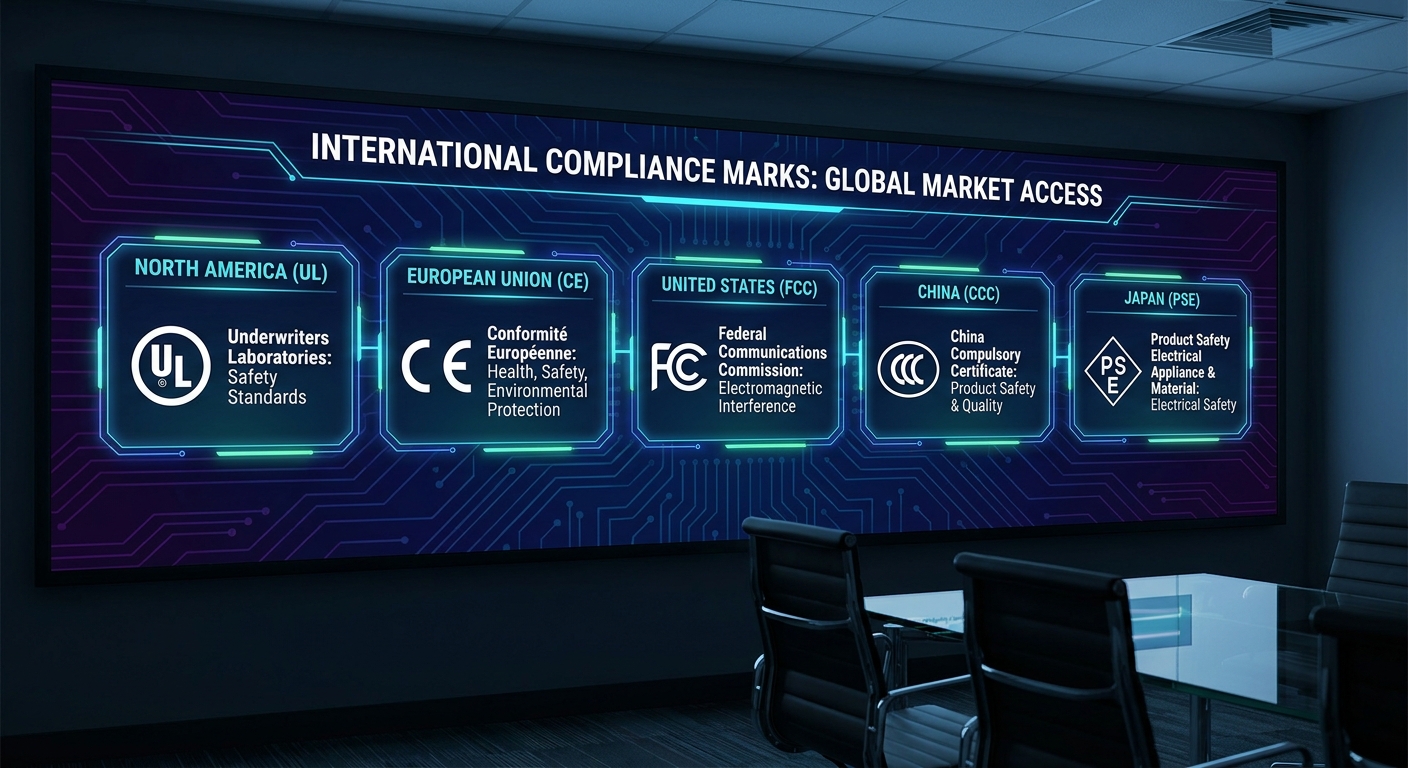
Manufacturers must follow a complex network of regional mandates, specifically the US Department of Energy (DOE) Level VI, the European Union’s Ecodesign ErP Directive, and various national Asian frameworks. Developing a single global SKU that complies with international power adapter energy efficiency standards dramatically simplifies logistics and reduces engineering overhead.
What Dictates North American Sourcing?
Make no mistake: entering the US market requires absolute compliance with federal law. The Department of Energy mandates strict efficiency marks for all external power supplies. Sourcing unapproved components will block your hardware from ever reaching American shelves.
To safely distribute products in the US and Canada, you must satisfy:
- DOE Level VI federal efficiency minimums.
- California Energy Commission (CEC) Title 20 limits.
- Natural Resources Canada (NRCan) standards.
How Does Europe Regulate Efficiency?
But here is the kicker: European regulations extend beyond basic safety declarations. The Ecodesign ErP Directive links energy efficiency directly to the essential CE marking process. This means non-compliant power supplies render your entire hardware system illegal in the EU.
Selling your devices in European territories requires:
- Mandatory compliance with ErP Stage 2.
- Adherence to strict CE mark declarations.
- Compliance with voluntary CoC Tier 2 recommendations.
Key Takeaway: Engineering a single, globally compliant SKU simplifies your warehousing and manufacturing. Aligning your product design with the strictest global benchmarks guarantees frictionless international trade.
| Region | Regulatory Standard | Mandatory Certification Mark | |
|---|---|---|---|
| United States | DOE Level VI (10 CFR Part 430) | Roman Numeral VI | |
| European Union | ErP Stage 2 (Ecodesign Directive) | CE Mark | |
| China | GB Standards | CCC Mark |
Audit your current product line to verify if your adapters meet the combined requirements of DOE and ErP frameworks.
How Do Power Adapter Energy Efficiency Standards Reduce Energy Consumption?
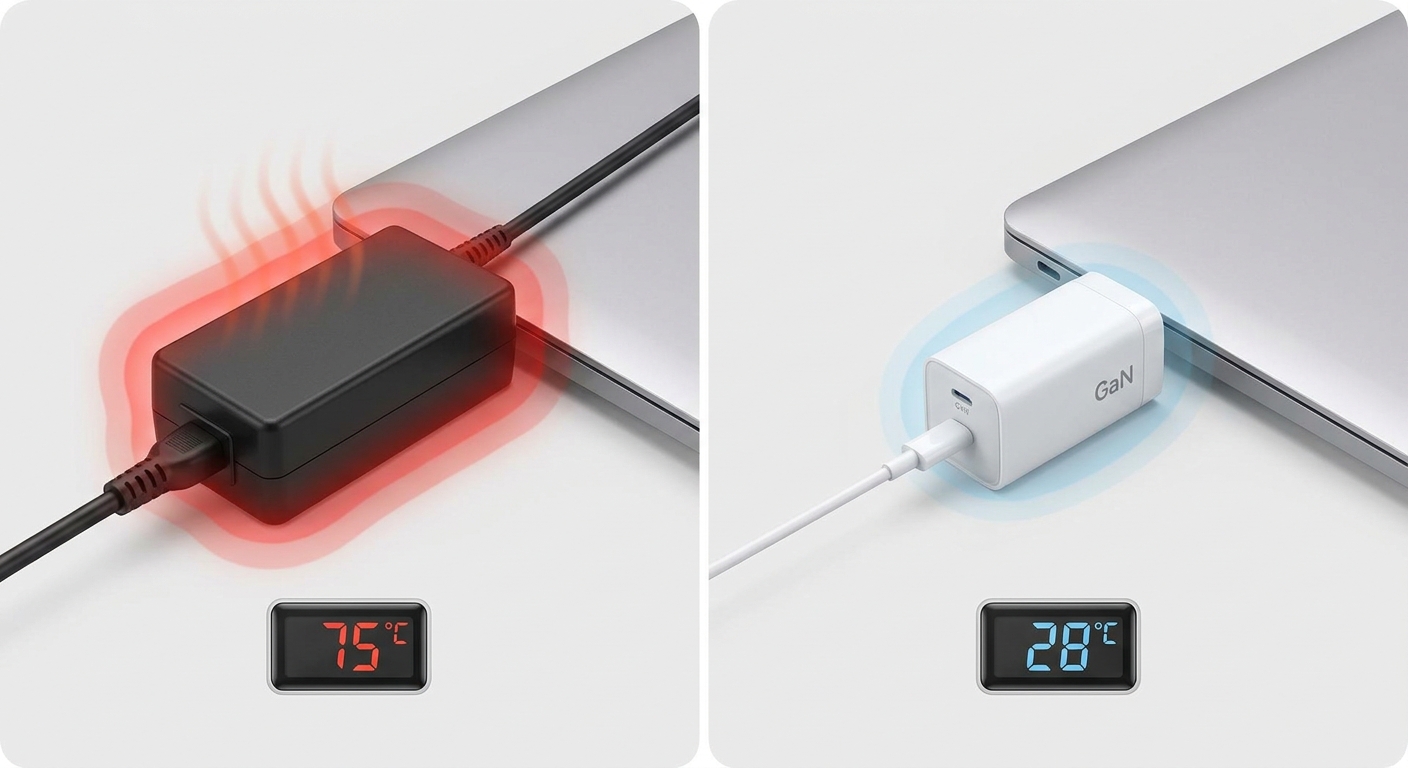
Power adapter energy efficiency standards reduce energy consumption by forcing the implementation of advanced Switched-Mode Power Supply (SMPS) topologies that minimize internal switching and conduction thermal losses. By setting clear performance boundaries, global power adapter energy efficiency standards drive power semiconductor innovations that keep operating temperatures low.
What Is Active Mode Optimization?
Let’s dig deeper: active mode efficiency is calculated across a broad range of load conditions. Regulations require a high mathematical average efficiency at 25%, 50%, 75%, and 100% of rated load. This forces designers to optimize conversion across the entire operating spectrum.
Achieving these active-mode benchmarks requires:
- Advanced controller ICs that modify switching frequencies.
- Highly efficient synchronous rectification circuits.
- Minimized copper and core losses in transformer designs.
How Is No-Load Standby Dissipated?
The reality is: power adapters spend a significant portion of their lives plugged in but idle. Modern standards target this idle state by restricting maximum standby power draw. Advanced ICs now enter special “burst modes” to cut standby losses down to milliwatts.
Effective standby reduction is achieved through:
- Pulse-skipping techniques under light loads.
- Disengaging startup resistors during operation.
- Using high-voltage startup circuits inside controller ICs.
Key Takeaway: High conversion efficiency directly lowers heat dissipation. By choosing adapters with optimized active and standby performance, you extend the lifetime of nearby internal electronics.
| Load State | Optimization Technology | Performance Benefit | |
|---|---|---|---|
| Active Load (25% – 100%) | Synchronous Rectification | Maximized energy transfer, reduced heat | |
| Light Load (10% – 25%) | Dynamic Switching Frequency | Maintained efficiency at partial power | |
| Standby Load (0%) | Burst / Pulse-Skipping Mode | Standby draw minimized below 75mW |
Examine your adapter’s average active efficiency curve to ensure optimal energy performance.
What Is DOE Level VI in Power Adapter Energy Efficiency Standards?
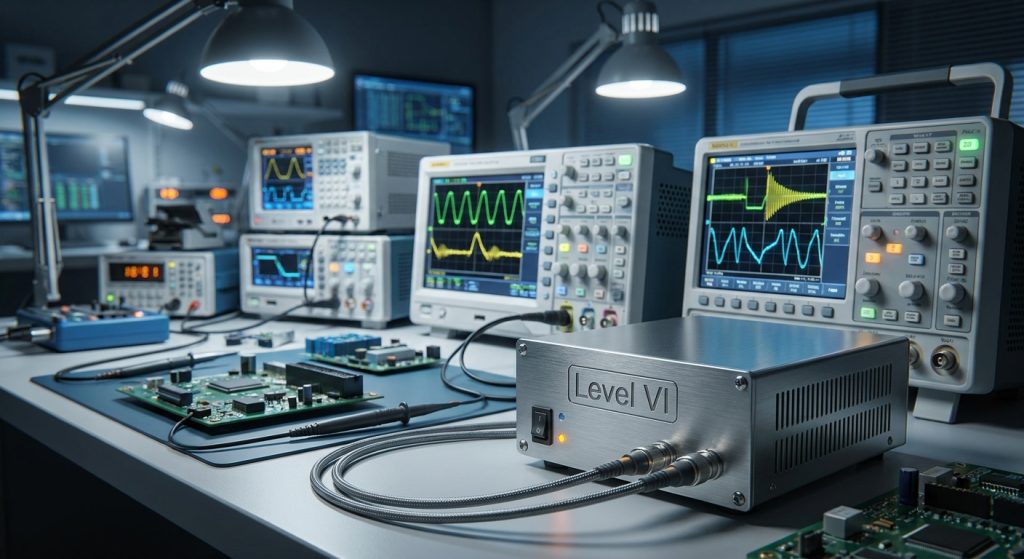
DOE Level VI is a mandatory federal regulation enforced by the United States Department of Energy that sets strict active-mode efficiency and standby power limits for external power supplies. If you intend to sell hardware in the United States, your components must conform to DOE Level VI power adapter energy efficiency standards to legally clear customs.
What Are the Level VI Limits?
You might be wondering: what exactly makes Level VI so challenging to achieve? It significantly lowers the allowed no-load power draw for basic-voltage adapters to less than 75 milliwatts. This requires highly sophisticated control circuitry to pass laboratory audits.
Under these regulations, external power supplies are categorized by:
- Single-voltage vs. multiple-voltage outputs.
- Low-voltage vs. basic-voltage classifications.
- Output power boundaries under or over 250 Watts.
How Does It Differ From Level V?
Here is the deal: Level VI represents a dramatic technical step-change over older Level V requirements. The transition forced a complete redesign of many standard silicon architectures. It expanded the scope to include previously exempt high-power adapters and multiple-output systems.
The primary structural differences include:
- Maximum standby power reduced from 300mW to 75mW.
- Tighter logarithmic formulas for active mode efficiency curves.
- Inclusion of high-power adapters greater than 250 Watts.
Key Takeaway: Level VI compliance is absolutely mandatory for accessing the lucrative US commercial market. Ensuring your sourcing meets this benchmark guarantees your hardware remains future-proof.
| Specification | DOE Level V Limits | DOE Level VI Limits | |
|---|---|---|---|
| Standby Power (<49W) | Max 300 milliwatts | Max 75 milliwatts | |
| Standby Power (49W – 250W) | Max 500 milliwatts | Max 150 milliwatts | |
| Active Average Formula | 0.0622×ln(Pout)+0.567 | 0.071×ln(Pout)−0.0014+0.67 |
Verify that all your power supplies feature the Roman Numeral VI mark before launching in North America.
How Does CoC Tier 2 Affect Power Adapter Energy Efficiency Standards?
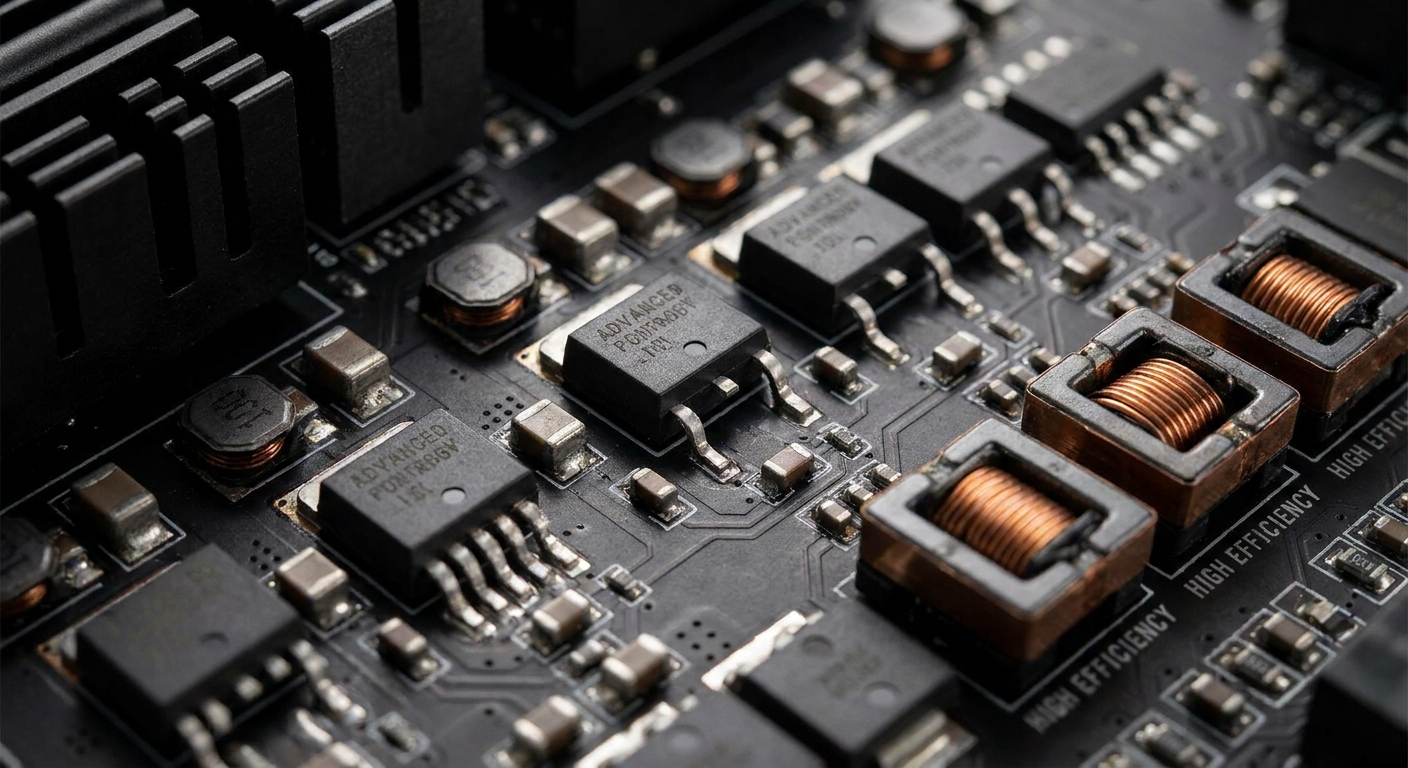
CoC Tier 2 affects power adapter energy efficiency standards by introducing a mandatory 10% load efficiency threshold, which is significantly more stringent than standard US federal regulations. Understanding how European Union Code of Conduct Tier 2 affects power adapter energy efficiency standards helps you prepare for future mandatory revisions of European Ecodesign laws.
Why Is the 10% Load Limit Crucial?
Let’s face it: most connected devices spend hours in low-power standby or sleep modes. Standard tests historically ignored efficiency below a 25% load state. CoC Tier 2 changes this by measuring active efficiency at a strict 10% load level.
Optimizing for 10% light-load efficiency forces hardware engineers to use:
- Advanced controller ICs with specialized light-load modes.
- Extremely low-loss magnetic core designs.
- Highly efficient synchronous output rectifiers.
Is This Standard Mandatory for B2B?
Think about it: although CoC Tier 2 is technically a voluntary European framework, it has become a standard requirement in corporate procurement. Major B2B buyers routinely mandate it to meet corporate environmental goals. Failing to provide CoC Tier 2 certification can disqualify you from premium enterprise tenders.
Designing to CoC Tier 2 compliance provides several business advantages:
- Future-proofs your product lines against upcoming Ecodesign updates.
- Satisfies corporate ESG procurement requirements.
- Positions your product as a premium energy-saving option.
Key Takeaway: Adopting CoC Tier 2 standards elevates your product’s competitive edge in the European market. Sourcing adapters that meet this strict threshold ensures your hardware operates highly efficiently even in idle states.
| Testing Metric | Standard Ecodesign Limits | Voluntary CoC Tier 2 | |
|---|---|---|---|
| 10% Load Active Efficiency | No measurement required | Mandatory efficiency threshold enforced | |
| No-Load Standby Draw (<49W) | Max 100 milliwatts | Max 75 milliwatts | |
| No-Load Standby Draw (49W – 250W) | Max 210 milliwatts | Max 150 milliwatts |
Ask your manufacturing partner for 10% load test reports to confirm CoC Tier 2 alignment.
How Are Power Adapter Energy Efficiency Standards Tested and Verified?
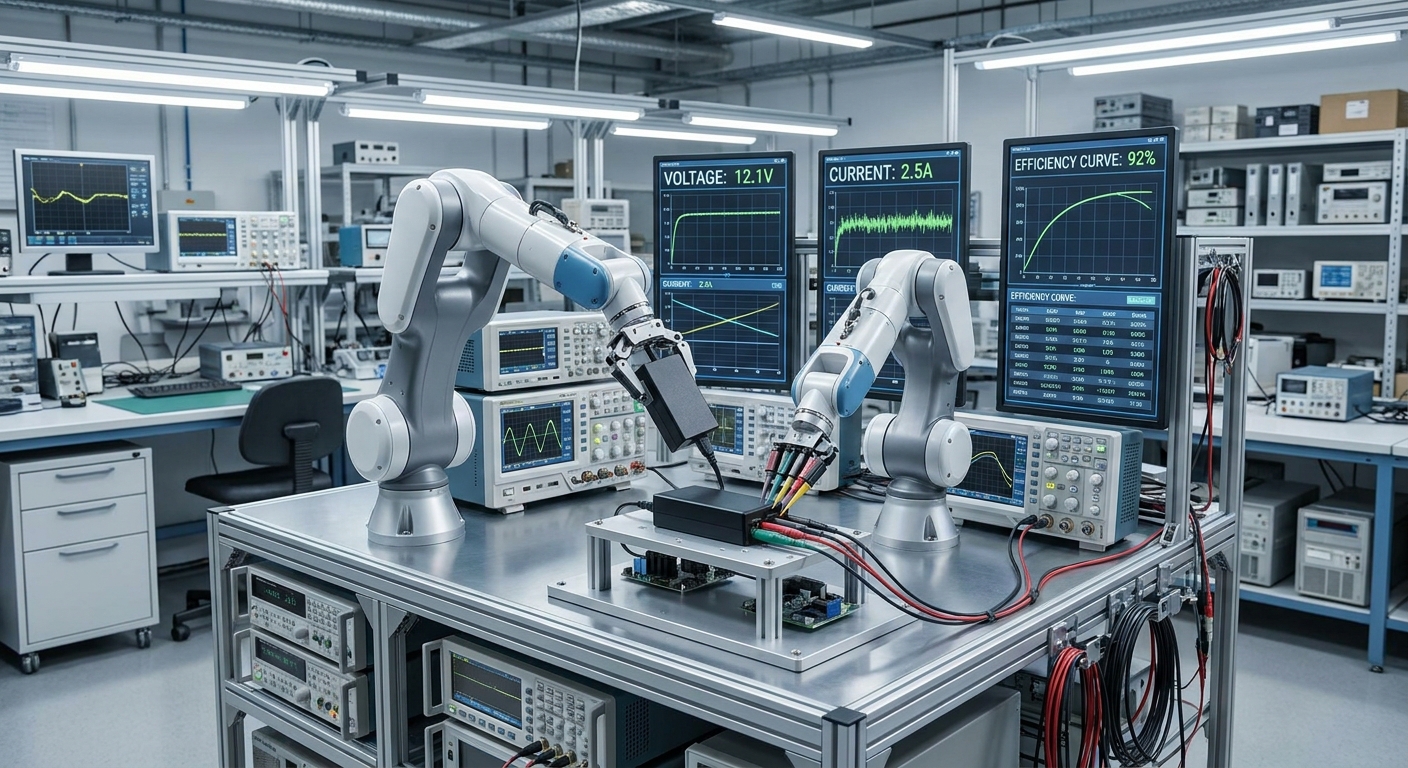
Power adapter energy efficiency standards are tested and verified in accredited laboratories using highly precise digital power analyzers and programmable electronic load systems. Partnering with a manufacturer that possesses in-house testing equipment certified to global power adapter energy efficiency standards ensures that your technical documentation will withstand strict customs audits.
What Equipment Underpins Certified Labs?
You might be wondering: how do laboratories guarantee such precise and repeatable measurements? The answer lies in specialized, highly calibrated instruments. Engineers must isolate the device under test from power grid fluctuations to ensure absolute data integrity.
The standard test bench for efficiency verification requires:
- Ultra-stable programmable AC power sources.
- Digital power analyzers with milliwatt resolution.
- Dynamic electronic loads simulating real-world draw.
How Is the Warm-Up Protocol Executed?
Make no mistake: testing cannot begin immediately after plugging in the adapter. The unit must undergo a mandatory thermal stabilization phase first. This ensures all components operate at actual internal working temperatures before measurements are recorded.
The standard scientific warm-up protocol requires:
- Operating the adapter at full load for 30 minutes.
- Maintaining an ambient laboratory temperature of 23°C (±5°C).
- Recording stabilized power values before calculating average efficiency.
Key Takeaway: Rigorous lab-validated test reports are the only acceptable proof of efficiency compliance. Working with a certified manufacturer ensures your documentation survives regulatory scrutiny.
| Equipment Type | Technical Requirement | Operational Purpose | |
|---|---|---|---|
| AC Source | Highly stable, <2% Total Harmonic Distortion | Eliminates power grid noise/fluctuations | |
| Power Analyzer | High resolution, milliwatt capability | Measures precise standby and active draw | |
| Warm-Up Phase | Mandatory 30-minute full-load run | Achieves true operating thermal equilibrium |
Ensure your partner’s laboratory test reports are signed by an ILAC-accredited certification body.
What Design Factors Influence Power Adapter Energy Efficiency Standards Compliance?

Design factors that influence power adapter energy efficiency standards compliance include the selection of semiconductor materials, the choice of power topology, and the optimization of magnetic components. Making informed decisions regarding materials and topologies ensures your custom adapter satisfies global power adapter energy efficiency standards without expanding its footprint.
How Do GaN Semiconductors Reduce Losses?
But here is the kicker: traditional silicon MOSFETs are hitting their physical efficiency limits. This is where Gallium Nitride (GaN) enters the picture as a massive game-changer. GaN’s superior electron mobility allows devices to switch faster with lower conduction losses.
Implementing GaN technology in adapter designs yields:
- Dramatically reduced heat generation.
- Ultra-compact external enclosure designs.
- High efficiency over 93% at full operating load.
What Role Do Topologies Play?
The truth is: choosing the wrong circuit architecture can doom your efficiency targets from the start. Designers must match the adapter’s output power with the correct converter topology. Using advanced topologies ensures minimal energy is lost during voltage conversion.
The primary topologies used to achieve compliance include:
- Active Clamp Flyback (ACF) for compact low-power adapters.
- LLC Resonant Converters for medium-to-high power outputs.
- Synchronous Rectification (SR) to replace lossy diodes.
Key Takeaway: Upgrading to advanced semiconductor materials and efficient topologies is a strategic design choice. It allows you to build highly compact, cool-running adapters that easily pass global audits.
| Design Element | Silicon (Si) Standard | Gallium Nitride (GaN) Upgrade | |
|---|---|---|---|
| Switching Frequency | Lower (60 kHz – 100 kHz) | High (200 kHz – 1 MHz+) | |
| Conduction Losses | Higher due to silicon physical resistance | Dramatically lowered, cooler running | |
| Transformer Size | Large, bulky magnetic elements | Ultra-compact, reduced overall weight |
Consider switching your product line to GaN-based adapters to gain a compact, high-efficiency edge.
How Do Power Adapter Energy Efficiency Standards Benefit OEM and ODM Buyers?

Power adapter energy efficiency standards benefit OEM and ODM buyers by lowering product operating temperatures, improving long-term device reliability, and streamlining global logistics through unified compliance SKUs. Purchasing power components certified to international power adapter energy efficiency standards protects your brand from premature hardware degradation and costly customs complications.
How Do Standardized Units Lower TCO?
Think about it: buying cheap, non-standardized power adapters is a classic false economy. Higher thermal dissipation accelerates the degradation of internal capacitors, increasing field failure rates. Investing in highly efficient units directly lowers your operational and warranty costs over time.
Deploying certified high-efficiency units lowers TCO by:
- Extending the Mean Time Between Failures (MTBF).
- Reducing waste heat in enclosed customer installations.
- Minimizing post-purchase product liability claims.
How Do Standardized SKUs Simplify Logistics?
Here is the deal: managing separate SKUs for different global regions is a logistical nightmare. Sourcing a single power adapter that meets both US and EU standards simplifies warehousing immensely. It allows you to ship your products globally without changing power accessories.
Utilizing a globally compliant power SKU enables:
- Streamlined international inventory control.
- Fewer product variants to manufacture and store.
- Rapid response to shifting regional market demands.
Key Takeaway: Procuring highly compliant adapters protects your brand equity and minimizes warranty expenses. Investing in efficiency upfront always pays dividends through reduced field failures.
| Operational Factor | Non-Standardized Adapter | Globally Standardized Adapter | |
|---|---|---|---|
| Logistics Complexity | Multiple regional SKUs required | Single, universal SKU global transit | |
| Warranty Claims | Higher failures due to thermal stress | Lowered failure rates, high reliability | |
| Inventory Overhead | Large capital tied up in diverse stock | Streamlined, centralized warehousing |
Assess your internal logistics costs to see how a single globally certified SKU can streamline operations.
How Can Manufacturers Meet Future Power Adapter Energy Efficiency Standards?

Manufacturers can meet future power adapter energy efficiency standards by proactively adopting wide-bandgap semiconductors and developing advanced programmable power delivery firmware. Keeping your product development cycle ahead of emerging power adapter energy efficiency standards prevents sudden regulatory bottlenecks.
Why Is Wide-Bandgap Sourcing Vital?
Let’s face it: regulatory limits will only get tighter as global energy networks become more strained. Standard silicon has reached its thermal and physical thresholds. Transitioning to wide-bandgap materials like Silicon Carbide (SiC) and GaN is the only viable path forward.
Investing in next-generation wide-bandgap platforms delivers:
- Ultra-fast switching with virtually zero energy waste.
- Compatibility with incoming strict carbon-neutral policies.
- Unmatched power density for next-generation consumer hardware.
How Does Firmware Drive Future Compliance?
But here is the kicker: hardware alone cannot solve future efficiency challenges. Intelligent, firmware-controlled charging protocols are becoming essential to match dynamic loads in real time. Dynamic firmware adjustments minimize energy waste across variable device charging states.
Advanced firmware integration enables:
- Smart USB Power Delivery (USB-PD) negotiations.
- Real-time thermal monitoring and load throttling.
- Adaptive switching control based on output demands.
Key Takeaway: Future-proofing your power architecture requires proactive engineering relationships. Engaging an expert manufacturing partner today guarantees compliance with the next decade’s efficiency mandates.
| Sourcing Strategy | Traditional Approach | Future-Proof Strategy | |
|---|---|---|---|
| Semiconductor Sourcing | High-loss Silicon (Si) MOSFETs | High-efficiency GaN or SiC devices | |
| Firmware Adaptability | Fixed-voltage hardware setups | Dynamic, updateable USB-PD firmware | |
| Compliance Approach | Reactive (redesigning after changes) | Proactive (designing for upcoming rules) |
Begin co-developing your next-generation USB-PD platform to stay ahead of upcoming regional green initiatives.
Moving Forward: Secure Your Market Entry Today
Successfully deploying your hardware globally requires minimizing supply chain friction and regulatory risks. Partnering with a dedicated power manufacturing specialist ensures your accessories are fully certified, thermally optimized, and compliant with all current and future international standards.
Whether you need low-voltage wall mounts or heavy-duty desktop adapters, Merryking provides robust, factory-direct ODM/OEM engineering solutions. Each unit is precision-engineered to meet strict global thresholds, reducing your time-to-market and shielding your business from compliance risks.
Don’t let regulatory bottlenecks delay your next product launch. To optimize your hardware design and secure seamless international compliance, contact us today and collaborate with our experienced B2B engineering team.
Frequently Asked Questions
Can I sell external power supplies in the United States without a DOE Level VI mark?
No, you cannot. US federal law strictly prohibits the import and distribution of external power supplies that lack the official Level VI marking, making compliance a absolute requirement for clearing customs.
What’s the best way to determine if my power adapter needs CoC Tier 2 certification?
You should assess your end-market procurement requirements. Although CoC Tier 2 is technically voluntary in Europe, major enterprise buyers and telecom projects require it in their RFQs to align with their sustainability policies.
Can a single power adapter comply with both US and European energy standards?
Yes, it is entirely possible. Manufacturers regularly design universal input adapters that satisfy the strict overlapping criteria of both US DOE Level VI and European ErP Stage 2 standards.
What is the primary difference between basic-voltage and low-voltage categories in Level VI?
Basic-voltage adapters output higher voltage levels, whereas low-voltage models output less than 6 volts with an output current greater than or equal to 550 milliamperes. Low-voltage models feature slightly relaxed active efficiency limits under Level VI rules.
How does Gallium Nitride (GaN) help power adapters meet strict energy standards?
GaN drastically minimizes both switching and conduction energy losses compared to traditional silicon. This thermal optimization allows adapters to exceed 93% active efficiency metrics while reducing the overall device footprint.